Agricultural robotics and automation use advanced tools like drones and self-driving tractors to make farming more efficient and sustainable. Drones monitor crop health and soil conditions in real time, allowing targeted treatment and reducing chemical use. Autonomous tractors follow precise routes for planting, fertilizing, and harvesting, cutting labor costs and increasing productivity. These technologies work together to optimize workflows and promote eco-friendly practices. Keep exploring to see how these innovations are shaping the future of farming.
Key Takeaways
- Deploys drones with high-resolution sensors for real-time crop health monitoring and early pest detection.
- Utilizes autonomous tractors equipped with GPS and sensors for precise planting, fertilizing, and harvesting tasks.
- Integrates drone data with autonomous systems to optimize resource application and minimize chemical usage.
- Enhances farm safety and efficiency by automating repetitive, labor-intensive, and risky operations.
- Promotes sustainable farming through data-driven decision-making, reducing environmental impact and increasing productivity.
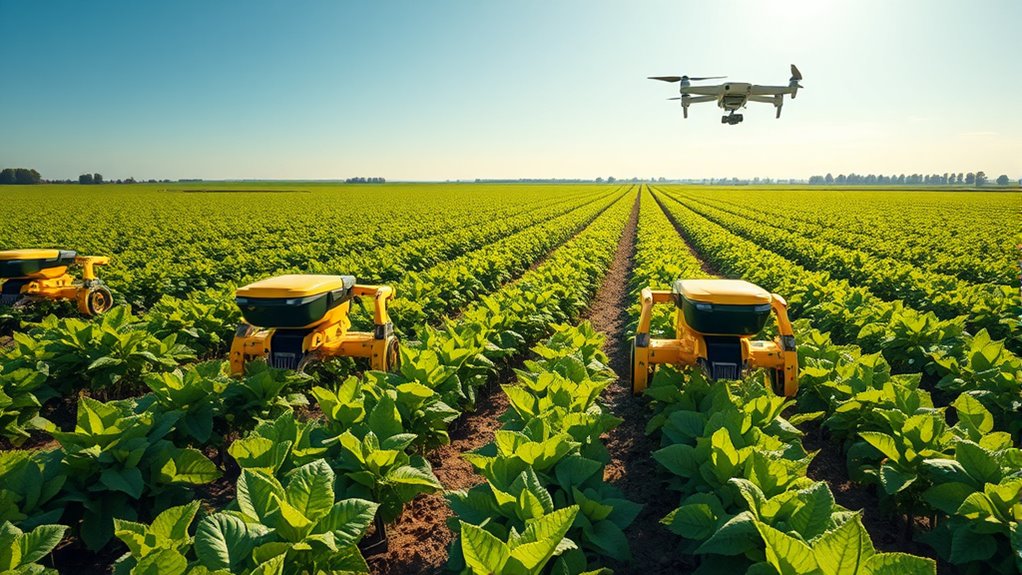
Agricultural robotics and automation are transforming how we manage farms, making operations more efficient, precise, and sustainable. You now have access to advanced tools like drone crop monitoring and autonomous tractor technology that streamline tasks once done manually or with less accuracy. Drones equipped with high-resolution cameras and sensors fly over fields, capturing detailed data on crop health, soil conditions, and pest infestations. This real-time information allows you to identify issues early, target specific areas for treatment, and reduce the use of chemicals. With drone crop monitoring, you gain a bird’s-eye view that enhances your decision-making and optimizes resource allocation, ultimately boosting yields while lowering costs.
Autonomous tractor technology takes automation a step further by replacing traditional machinery with intelligent, self-driving systems. These tractors operate without human intervention, following pre-programmed routes and adjusting their actions based on real-time data. You can schedule precise planting, fertilizing, and harvesting routines, ensuring each task is performed with uniformity and accuracy. Autonomous tractors can work around the clock, reducing labor costs and increasing productivity, especially during critical planting and harvesting windows. They are equipped with GPS and sensor arrays that allow for highly accurate navigation, avoiding overlaps and missed spots, which minimizes waste and maximizes efficiency.
Autonomous tractors improve efficiency through precise, self-driving operations around the clock.
The integration of drone crop monitoring with autonomous tractor technology offers a seamless workflow. Data gathered by drones can inform autonomous systems on where to focus their efforts, such as applying fertilizers or pesticides only where needed. This targeted approach minimizes chemical use, promotes environmental sustainability, and maintains healthier crops. You’ll find that these technologies not only save time but also improve your ability to respond swiftly to changing conditions, whether it’s a sudden pest outbreak or uneven soil fertility.
Moreover, these innovations reduce the physical burden on farm workers and improve safety by taking over risky tasks. Instead of manual inspections or operating heavy machinery in potentially hazardous conditions, you and your team can oversee and manage farm operations remotely, with the confidence that autonomous systems are performing consistently and accurately. As these technologies become more accessible and affordable, you’ll likely see more farms adopting them, pushing agriculture toward a future where productivity and sustainability go hand in hand.
Ultimately, embracing drone crop monitoring and autonomous tractor technology means transforming your farm into a more intelligent, responsive, and eco-friendly operation. You’ll be able to make smarter decisions faster, optimize inputs, and boost output—all while reducing environmental impact. These advancements are not just innovations; they’re essential tools for modern farming’s next chapter.
Frequently Asked Questions
How Cost-Effective Are Agricultural Robots for Small Farms?
Agricultural robots can be cost-effective for small farms by providing significant cost savings through increased efficiency and reduced labor costs. Although the initial investment might seem high, over time, automation can lower operational expenses and boost productivity. You’ll find that the long-term benefits often outweigh the upfront costs, making these robots a worthwhile investment, especially as technology becomes more affordable and tailored to smaller-scale farming needs.
What Are the Environmental Impacts of Robotic Farming?
You might wonder if robotic farming harms or helps the environment. It can reduce chemical use and soil disturbance, supporting sustainable practices. However, increased energy consumption and electronic waste pose risks. Picture a farm where biodiversity conservation thrives because robots precisely target pests and weeds, minimizing chemical runoff. The key is balancing technological advances with eco-friendly strategies, ensuring that automation benefits both your land and the planet’s health.
How Do Robots Handle Unpredictable Weather Conditions?
Robots handle unpredictable weather conditions through advanced weather adaptation features and sensor integration. You’ll find that sensors constantly monitor environmental factors like rain, temperature, and wind, allowing robots to adjust their operations in real-time. They can modify planting, watering, or harvesting schedules based on weather changes, ensuring peak performance. This seamless adaptation helps maintain efficiency and crop health despite sudden weather shifts, giving you reliable automation even in unpredictable conditions.
What Cybersecurity Risks Are Associated With Automated Farming Systems?
Imagine hackers gaining access to your automated farming system, causing data breaches or sabotaging equipment. Cybersecurity vulnerabilities in these systems pose serious risks, such as unauthorized control or data theft. These risks include potential data breaches, where sensitive farm data is exposed, and system manipulation, leading to crop damage or equipment failure. Protecting your systems with strong security measures is essential to prevent cyberattacks and safeguard your farm’s operations.
How Is Data Privacy Managed in Agricultural Automation?
You manage data privacy in agricultural automation by implementing data encryption, which protects sensitive information from unauthorized access. You also follow strict privacy policies that outline how data is collected, stored, and shared. Regular audits and updates guarantee compliance with regulations, giving you control over your data. By actively managing these measures, you can safeguard your farm’s information and maintain trust with partners and stakeholders.
Conclusion
By embracing agricultural robotics and automation, you can increase efficiency, improve precision, and reduce labor costs. You harness innovative technology to optimize crop yields, minimize waste, and enhance sustainability. You adopt smarter solutions to tackle climate challenges, streamline operations, and secure food production. You lead the way into a future where farming is more productive, more sustainable, and more resilient. Together, through automation and robotics, you transform agriculture into a resilient, innovative, and sustainable industry.