
Women’s suffrage movements worldwide show how women fought tirelessly to gain voting rights and challenge societal norms. They organized protests, lobbied for change, and faced opposition from those wanting to keep traditional roles. Notable victories came in countries like New Zealand and the US in 1893 and 1920, inspiring future struggles for gender equality. If you’re curious, you’ll discover how these courageous efforts reshaped history and continue to influence today’s fight for women’s rights.
Key Takeaways
- Women’s suffrage movements emerged globally in the late 19th and early 20th centuries, advocating for women’s voting rights.
- Countries like New Zealand (1893) and Australia (1902) were pioneers in granting women voting rights.
- Activists such as Susan B. Anthony and Elizabeth Cady Stanton led efforts in the US, inspiring worldwide movements.
- Movements often faced opposition, using protests, petitions, and civil disobedience to challenge societal norms.
- Achieving voting rights significantly advanced gender equality and empowered women’s political participation worldwide.
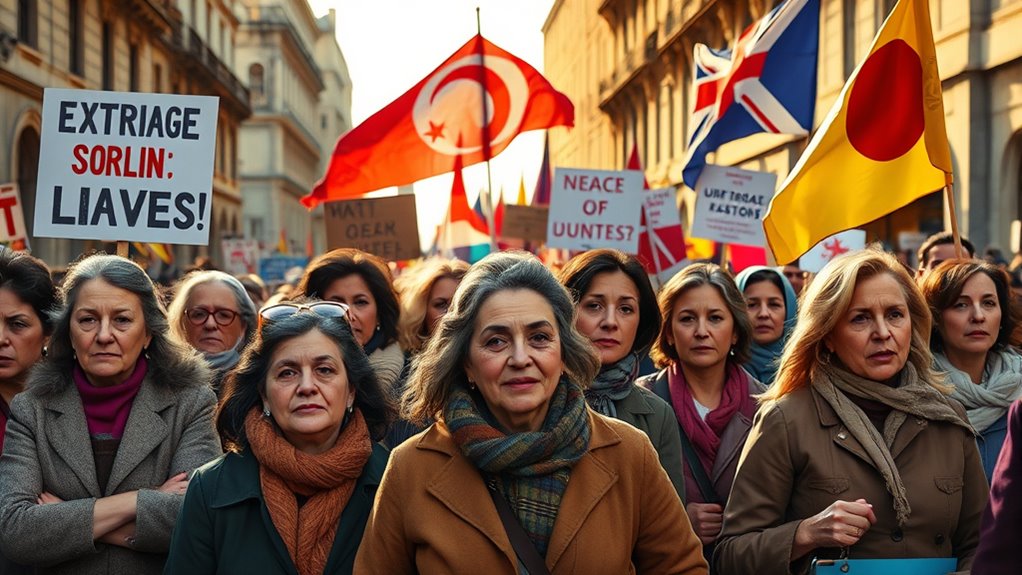
Have you ever wondered how women fought for the right to vote? It’s a story filled with determination, resilience, and a relentless pursuit of gender equality. Women across the globe organized protests, lobbied lawmakers, and endured hardships to secure voting rights. They understood that voting wasn’t just about individual preference; it was about claiming their place in society and challenging the systemic inequalities that kept them silent and powerless. Their efforts laid the foundation for modern democracy, highlighting that gender equality isn’t just a goal but a fundamental right.
Women’s fight for voting rights was driven by resilience, determination, and the pursuit of true gender equality.
Throughout history, women’s suffrage movements have taken many forms, from peaceful marches to bold civil disobedience. In the early 20th century, the women’s suffrage movement gained momentum in countries like the United States, the United Kingdom, and Australia. Women such as Susan B. Anthony and Elizabeth Cady Stanton fought tirelessly, facing resistance from political institutions that believed women should remain in traditional roles. Their activism focused on securing voting rights, which they saw as a vital step toward achieving broader gender equality. These movements weren’t just about individual rights—they aimed to transform societal perceptions and dismantle gender-based discrimination.
In many nations, women’s fight for voting rights was met with fierce opposition. Opponents argued that women were too emotional or unfit to participate in politics. Despite this, women persisted, organizing rallies, writing petitions, and even risking imprisonment. Their perseverance paid off in 1920 when the 19th Amendment was ratified in the United States, granting women the right to vote. Similar victories occurred elsewhere—New Zealand became the first self-governing country to grant women voting rights in 1893, setting a precedent for others to follow. These victories marked pivotal moments in the broader struggle for gender equality, emphasizing that denying women the vote was a form of systemic injustice.
Women’s suffrage movements worldwide weren’t only about voting; they challenged the very structure of gender inequality. Securing voting rights empowered women to influence laws and policies affecting their lives, families, and communities. It also inspired future generations to continue advocating for gender equality in all areas—from education and employment to representation in government. The fight for voting rights demonstrated that when women stand together, they can challenge deeply rooted societal norms and reshape history. Achieving these rights required not only activism but also a recognition of the importance of home furnishings such as safe and comfortable spaces to support their efforts. Today, the legacy of these movements reminds us that gender equality is an essential journey, paved by the courage and sacrifices of women who refused to be silenced. Their stories continue to inspire change and reinforce the idea that everyone deserves a voice in shaping their future.
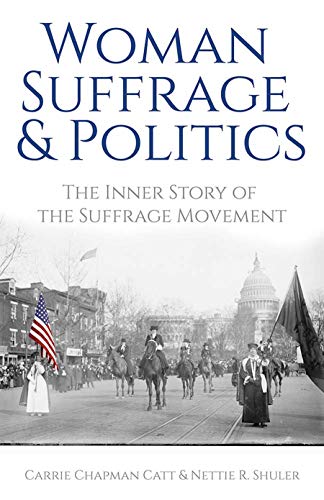
Woman Suffrage and Politics: The Inner Story of the Suffrage Movement
As an affiliate, we earn on qualifying purchases.
As an affiliate, we earn on qualifying purchases.
Frequently Asked Questions
Which Countries Granted Women Voting Rights First?
You should know that New Zealand was the first country to grant women voting rights in 1893. Early voting campaigns and suffrage activist networks played vital roles in this achievement. As you study these movements, you’ll see how activists organized protests and lobbied policymakers, creating a ripple effect. Their efforts paved the way for other nations to follow suit, expanding voting rights for women globally.
How Did Women’s Suffrage Influence Other Social Reforms Globally?
Like a ripple spreading across a pond, women’s suffrage fueled global social reforms. You see, it challenged intersectionality challenges, exposing inequalities beyond voting rights. Feminist alliances grew stronger, inspiring movements for education, labor, and reproductive rights. This momentum pushed societies toward equality, proving that when women gain political voice, they ignite broader change, shaping a more just and inclusive world. Your activism becomes part of this ongoing, powerful transformation.
Were There Notable Differences in Suffrage Movements Across Continents?
You’ll notice notable differences in suffrage movements across continents, shaped by cultural, political, and social contexts. In some regions, gender disparities limited women’s political participation, leading to prolonged struggles for voting rights. For example, Western countries often saw organized campaigns, while others faced resistance rooted in tradition. These variations influenced how women fought for equality, highlighting the unique challenges and strategies in overcoming gender disparities worldwide.
What Role Did Men Play in Women’s Suffrage Campaigns?
You might be surprised to learn that around 20% of male voters supported women’s suffrage in some regions, showing their significant influence. Men played a critical role as male allies, actively participating in protests and advocacy. However, opposition strategies often targeted men, portraying suffrage as a threat to traditional values. Their involvement helped sway public opinion, making them essential allies or opponents in the fight for women’s voting rights.
How Did Cultural Attitudes Impact Women’s Voting Rights Historically?
Cultural attitudes, including gender stereotypes and religious influences, substantially impacted women’s voting rights. You might notice that society often viewed women as less capable or suited for politics, reinforcing gender stereotypes. Religious beliefs also played a role, sometimes opposing women’s suffrage on moral grounds. These cultural attitudes slowed progress, making it harder for women to gain voting rights, and required persistent efforts to challenge and change these deeply ingrained views.
Being Heumann: An Unrepentant Memoir of a Disability Rights Activist
As an affiliate, we earn on qualifying purchases.
As an affiliate, we earn on qualifying purchases.
Conclusion
So, after fighting for decades, women finally won the right to vote—only to find that many still struggle for equality today. It’s almost funny how progress can feel like a finish line that keeps moving. You’d think by now, they’d be done, right? But here we are, celebrating victories while knowing the real work of equality isn’t finished. Ironically, voting was just the start of a much longer journey.

Poster Foundry Set Of 4 Equality Posters Black History Month Posters Classroom Decorations Historical Quotes Civil Rights
- Size: 16×24 inches poster set
- Theme: Black History Month and Civil Rights
- Design: Inspirational quotes and portraits
As an affiliate, we earn on qualifying purchases.
As an affiliate, we earn on qualifying purchases.

Anti-Trump Equality Social Justice Decor Sign, Equality Human Rights Feminist Feminism Political Protest Decor, Feminism Feminist Rights Gifts for Women, Fight for Those Without Your privilege
- Gift for Various Causes: Ideal for women, men, and activists
- Equality-Themed Decor: Adds rustic artistic touch to any space
- Compact Size: Measures 5x5x1.3 inches, lightweight
As an affiliate, we earn on qualifying purchases.
As an affiliate, we earn on qualifying purchases.