
You can access Sardinian history online through the Sardinia Digital Library, which offers a wealth of digital collections like images, documents, audio, and video. These resources cover Sardinian culture, archaeology, genealogy, and more, all organized with detailed metadata for easy search and retrieval. The platform supports multimedia formats, digital preservation standards, and advanced technologies to enhance your experience. Continuing will reveal how this digital archive brings Sardinia’s heritage closer to you.
Key Takeaways
- The Sardinia Digital Library (SDL) provides free online access to extensive Sardinian cultural, historical, and genealogical collections.
- It features multimedia resources including images, audio, videos, and digitized documents with detailed metadata.
- Advanced search tools and browsing categories enable users to explore archives by themes, formats, and metadata standards.
- Content includes civil, parish, and archival records accessible through specialized portals like Antenati and FamilySearch.
- Digital preservation standards and interoperable metadata ensure long-term, reliable access to Sardinian historical resources online.

Western Digital WD 5TB Elements Portable External Hard Drive for Windows, USB 3.2 Gen 1/USB 3.0 for PC & Mac, Plug and Play Ready – WDBU6Y0050BBK-WESN
Plug-and-play expandability
As an affiliate, we earn on qualifying purchases.
As an affiliate, we earn on qualifying purchases.
Overview of the Sardinia Digital Library
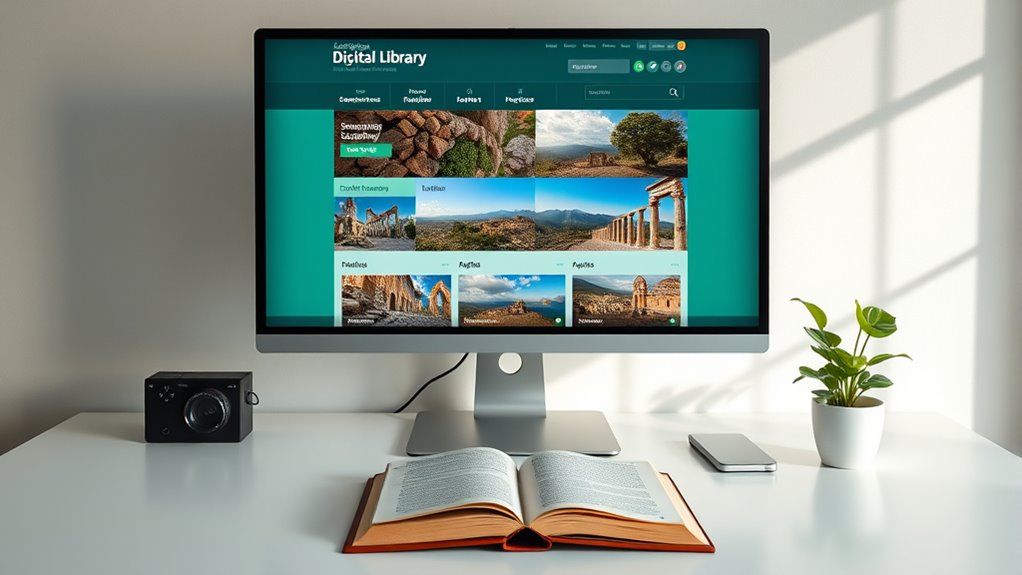
The Sardinia Digital Library (SDL) is an official regional digital archive launched online in April 2008 by the Sardinia Region’s Council. Managed under the initiative of Governor Renato Soru, it functions as a thorough portal for Sardinian cultural heritage. You can explore a constantly growing collection of digital content that highlights Sardinia’s history, arts, landscapes, and environment. The library offers a diverse range of multimedia materials, including images, audio recordings, videos, and publications. It features over 33,000 images, 5,600 audio files, and 2,000 videos, capturing everything from folk music and religious festivals to historical documents. The SDL guarantees accessibility through adherence to archival standards, making it a crucial resource for researchers, students, and anyone interested in Sardinia’s rich cultural identity. Staying current with digital archive standards and content organization ensures the preservation and effective dissemination of Sardinian heritage.

Sennheiser HD 599 SE Open-Back Headphones, Premium Design, Natural Balanced Audio, Comfortable Fit, Wired Headphones for Music, Gaming, School, Work, Black
Audiophile-Grade Open-Back Sound: Enjoy natural, balanced audio with a spacious soundstage for an immersive listening experience with Sennheiser…
As an affiliate, we earn on qualifying purchases.
As an affiliate, we earn on qualifying purchases.
Exploring Multimedia Cultural Resources
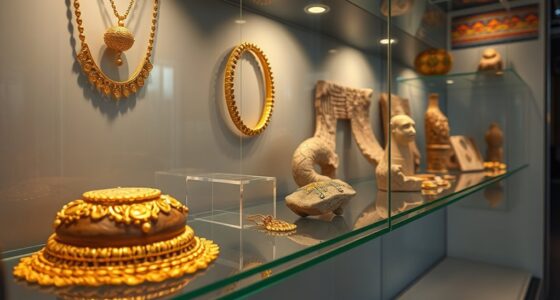
You can explore Sardinian culture through a variety of multimedia formats, from audio recordings of traditional music to mesmerizing videos of artisans at work. These digital collections include images of Nuragic artifacts, textiles, and artworks that highlight Sardinia’s rich heritage. By engaging with these resources, you gain a deeper understanding of Sardinian identity and craftsmanship across multiple digital platforms. Human habitation in Sardinia dates back to the Neolithic period (~6000 BCE). Additionally, many of these digital archives utilize interactive technologies to make the cultural experience more immersive and educational.
Diverse Media Formats
Have you ever wondered how digital archives preserve the richness of Sardinian culture across different media? They support a wide variety of formats, ensuring diverse cultural expressions are accessible. You’ll find over 33,000 images showcasing Sardinian heritage, about 5,600 audio tracks of music, oral histories, and dialect recordings, and around 2,000 videos capturing documentaries, events, and historical footage. Text collections include roughly 2,600 publications like books and articles. The system supports formats such as FLV and MP3 for streaming, with downloadable WMV, iPod-MP4, and podcast options. This multimedia integration allows seamless online playback, enriched navigation with 3D reconstructions, and cross-referenced content. Advanced metadata tagging enhances searchability and organization within the archive.
Rich Cultural Collections
Ever wondered how Sardinian culture is preserved through multimedia resources? The Sardinian Digital Archives offer over 33,000 images, 5,600 audio tracks, 2,000 videos, and 2,600 publications, showcasing the island’s rich history, language, and traditions. These materials include interviews with native speakers, folk songs, religious festivals, and impromptu poetry, capturing intangible cultural heritage. Sourced from regional sites and Italian archives like ISRE, Rai, and Istituto Luce, they support both preservation and research. Managed by the Sardinian Regional Council and aligned with national standards, the archive ensures ongoing updates and diverse perspectives. It also highlights the sociolinguistic dynamics within communities, emphasizing the importance of language contact phenomena. Accessible free of charge through a user-friendly portal, it democratizes cultural knowledge, helping you explore Sardinia’s unique identity and vibrant traditions from anywhere.

kimire Video Camera Camcorder Digital Camera Recorder Full HD 1080P 15FPS 24MP 3.0 Inch 270 Degree Rotation LCD 16X Digital Zoom Camcorder Camera with 2 Batteries(Black)
【Video Camera as Webcam】: The video camera is useful to take the beautiful photos and share it in…
As an affiliate, we earn on qualifying purchases.
As an affiliate, we earn on qualifying purchases.
Navigating Genealogical Records From Sassari and Cagliari
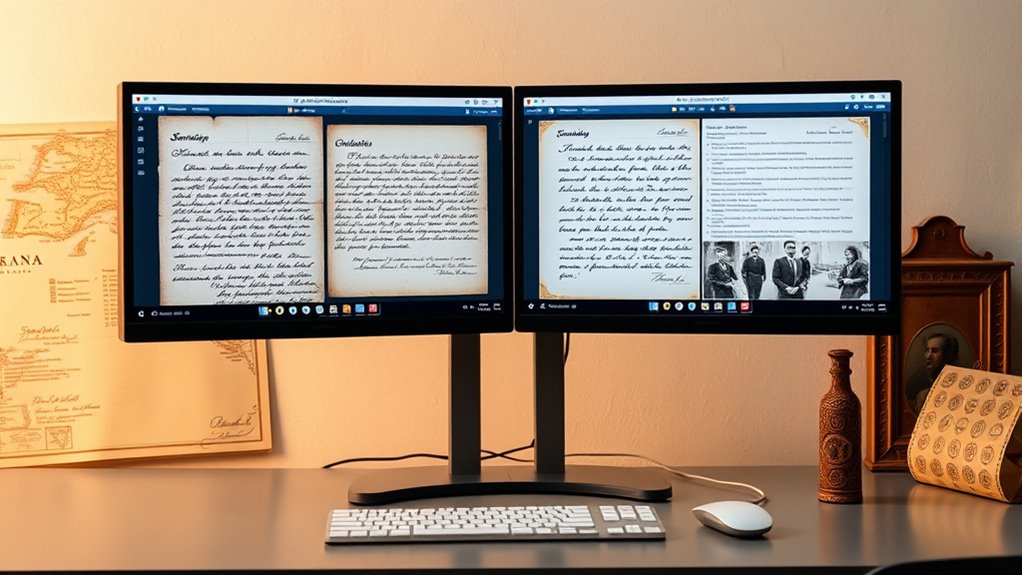
Exploring genealogical records from Sassari and Cagliari involves understanding the variety of available documents and where to find them. Civil registration records like births, marriages, and deaths are stored mainly at municipal archives, while parish records for older data are held by diocesan archives or churches. Some pre-1921 records require in-person visits or local expertise. The Italian State Archives hold extensive data, including military and notary records. Online platforms such as the Antenati Portal and FamilySearch offer indexes and images, streamlining your research. Use the following table to identify key record types and sources:
| Record Type | Available Sources | Key Details |
|---|---|---|
| Civil Records | Municipal archives, online databases | Birth, marriage, death info |
| Parish Records | Diocesan archives, churches | Baptisms, burials, older data |
| State Archives | Military, notary, family archives | Ancestors’ service, property info |
Additionally, understanding the record preservation practices in Sardinia can help you locate documents that may not be digitized or easily accessible online.

Burning Studio 26 – Burn, copy, save – the multimedia all-rounder – burning software – create covers, inlays, disk labels for Win 11, 10
Your powerful burning software for burning and copying CDs, DVDs and Blu-ray Discs
As an affiliate, we earn on qualifying purchases.
As an affiliate, we earn on qualifying purchases.
Integrating With International Digital Cultural Platforms
You can enhance Sardinian’s cultural reach by connecting with international digital platforms that prioritize global collaboration networks. Standardizing metadata guarantees your archives are easily discoverable and interoperable across diverse systems. Additionally, implementing remote work practices facilitates collaboration among researchers and cultural institutions worldwide, fostering a more dynamic exchange of knowledge. By leveraging these practices, you help bring Sardinian heritage into the worldwide digital cultural conversation. Initiative to attract remote workers also opens opportunities for local communities to share their history and traditions with a broader audience.
Global Collaboration Networks
Global collaboration networks play a crucial role in expanding the reach and impact of Sardinian digital archives by integrating them with prominent international cultural platforms. You can explore Sardinian content through partnerships with Italian archives like ISRE, Istituto Luce, and Rai, which aggregate multimedia collections. Collaborations with local museums and heritage associations enrich the digital offerings, while platforms like Europeana enable worldwide dissemination. Advanced technologies such as CIDOC-CRM and ArCo ontologies facilitate semantic interoperability, linking Sardinian data with global collections. Projects like Virtual Sardinia connect geographic, archaeological, and touristic data to create accessible hypermedia experiences. Additionally, implementing high-quality color accuracy in digital reproductions enhances the visual fidelity of Sardinian artifacts, ensuring that digital representations are as true to the original as possible. These efforts, combined with open access policies, ensure Sardinian heritage reaches international audiences, fostering cross-cultural exchange and increasing global visibility of Sardinian history and culture.
Metadata Standardization Practices
Metadata standardization is essential for guaranteeing Sardinian digital archives can seamlessly connect with international cultural platforms. You’ll find that adopting standards like Dublin Core provides a simple, versatile way to describe cultural heritage objects, while CIDOC CRM offers a rich semantic framework for complex data integration. Using domain-specific ontologies, such as Bistìris for traditional costumes, allows culturally precise metadata. Implementing OWL2 DL supports detailed, formal modeling of heritage objects. Harmonizing schemas like Dublin Core and CIDOC CRM enhances semantic depth and collection unification. Ontology-based mediators facilitate data integration across diverse systems. Mapping metadata to international vocabularies ensures multilingual, multicultural access, and supports federated searches. Participation in global standards bodies keeps Sardinian metadata practices aligned with evolving international digital heritage protocols. Formal ontologies play a crucial role in enabling precise semantic interoperability between diverse collection descriptions.
Delving Into Sardinian Historical and Archaeological Content
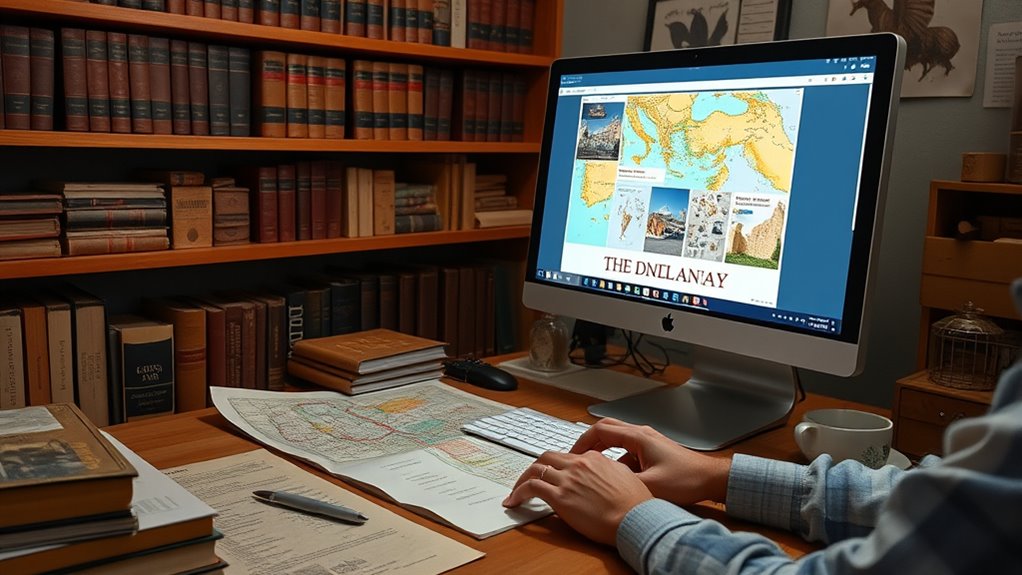
Exploring Sardinian history and archaeology has become more accessible thanks to a wealth of digital archives and online resources. The Sardegna Digital Library offers over 33,000 images, 5,600 audio tracks, 2,000 videos, and 2,600 publications, all categorized with strict metadata standards. You can explore diverse content—from regional sites, Italian archives, and private authors—using a specialized search engine that makes research straightforward. Digital files support online viewing and downloading in formats like MP3, WMV, and MP4, allowing you to study remotely. Additionally, the Cagliari State Archives preserves medieval to 20th-century documents, accessible onsite for in-depth research. These resources combine to give you an extensive, multimedia window into Sardinian history and archaeology. The archive’s holdings include approximately 9 km of shelving of archival collections, ensuring a comprehensive digital and physical repository of Sardinian heritage. The integration of multimedia formats enhances the research experience, making historical exploration more engaging and accessible.
Understanding Technical Standards and Digital Preservation

Understanding technical standards is essential for guaranteeing the long-term preservation and accessibility of digital archives. By following recognized metadata standards like PREMIS, you can support detailed preservation metadata that keeps digital objects usable over time. Standards such as METS help package digital materials with necessary archival metadata, making management easier. International standards like ISO 19005-2 (PDF/A) and ISO 14721 (OAIS) guide consistent preservation practices, ensuring your archives meet global benchmarks. Metadata schemas like Dublin Core and MODS enable clear resource description, while preservation principles emphasize maintaining content authenticity and integrity. Adhering to these standards facilitates interoperability, simplifies certification audits, and strengthens your archive’s reliability. Incorporating flexible preservation strategies that blend best practices with compliance ensures your digital collections remain accessible for generations. Implementing these standards also enhances trust and credibility with users and stakeholders, fostering confidence in the archive’s longevity. Additionally, embracing international frameworks helps align your preservation efforts with global best practices, promoting wider interoperability and recognition.
Accessing Archival Materials for Researchers and Enthusiasts

Accessing digital archival materials in Sardinian collections is designed to be straightforward and user-friendly. You can explore the Sardegna Digital Library (SDL), launched by the Sardinia Region Council in 2008, which offers multimedia content on Sardinian culture, history, and environment. The platform’s interface allows browsing by categories like Videos, Images, Audio, Texts, and thematic Arguments, with search functions supporting targeted queries. Materials are available in streaming formats and can be downloaded in various modes, such as podcast formats. There’s no fee, and access is open to researchers, students, and enthusiasts alike. The SDL’s metadata standards ensure precise search results, while links to international and regional archives expand your research options. Overall, it provides an accessible, rich resource for exploring Sardinian heritage online. metadata standards play a crucial role in ensuring the accuracy and discoverability of archival materials, enhancing user experience and research efficiency.
The Role of the Sardinian Digital Archive in Promoting Heritage
The Sardinian Digital Archive plays a pivotal role in promoting the island’s heritage by making its rich cultural, historical, and artistic assets widely accessible. It preserves and showcases Sardinia’s diverse legacy through multimedia collections, including images, audio, videos, and publications. By aggregating content from regional and national sources, SDL ensures broad representation of Sardinian culture. Its classification standards guarantee easy access and long-term preservation. The archive also employs advanced digitization techniques, like 3D modeling and cloud GIS, to enhance virtual exploration. Semantic web technologies improve searchability and linkages across collections, while open access encourages cultural engagement. This digital presence boosts tourism, education, and scholarly research, guaranteeing Sardinian heritage remains vibrant and accessible for future generations.
| Aspect | Details | Impact |
|---|---|---|
| Content Collection | 33,000+ images, 5,600 audio tracks, 2,000 videos | Rich cultural representation |
| Technologies Used | 3D modeling, semantic web, GIS | Enhanced access and interaction |
| Promotion Strategies | Free access, multimedia formats, virtual tours | Broader engagement, awareness |
Frequently Asked Questions
How Can I Contribute New Materials to the Sardinian Digital Library?
To contribute new materials, you should first guarantee your content aligns with Sardinia’s cultural and historical themes. Next, register on the SDL platform with valid ID, or use existing credentials if you’re already registered elsewhere. Then, contact the SDL or regional council to understand submission guidelines. Prepare your files in accepted formats, add detailed metadata, and follow provided instructions for uploading. Maintain communication to track your submission’s progress and get support if needed.
Are There Any Restrictions on Accessing Certain Sensitive or Private Records?
You should be aware that some records are restricted due to privacy laws and ethical considerations. Access might require special authorization, especially for sensitive or private materials like health data or personal histories. You may need to log in, prove your identity, or access materials on-site. Restrictions aim to protect individual privacy, cultural heritage, and prevent misuse, so always follow the archive’s policies and guidelines when seeking access.
Can I Access the Digital Archives via Mobile Devices or Tablets?
You can access the digital archives on your mobile device or tablet. The Sardegna Digital Library offers a responsive website compatible with modern browsers, and the Àndalas Sardegna app is specifically optimized for mobile use with augmented reality features. Keep in mind, some content might require specific media players or device capabilities like a camera. Overall, the platform is designed to be mobile-friendly, enabling you to explore history on the go.
What Languages Are Supported in the Digital Catalog and Metadata?
Imagine exploring a rich tapestry where each thread represents a language. In the digital catalog, you’ll find Sardinian dialects like Logudorese, Campidanese, Nuorese, and Sassarese woven alongside Catalan and Latin. Italian and Sardinian serve as your guiding languages for navigation. Metadata captures these linguistic varieties accurately, helping you discover historical texts, audio, and videos in their authentic tongues—making your search both precise and culturally meaningful.
How Often Are the Archives Updated With New Content or Records?
You might wonder how often the archives get new content. While there’s no fixed schedule, they’re described as “constantly updated,” meaning new materials are added regularly. Updates depend on contributions from regional sites, institutions, and authors. Content like videos, images, and texts are continuously integrated, ensuring the archive stays current. Although no specific timing is provided, expect ongoing, asynchronous additions rather than scheduled releases.
Conclusion
By exploring the Sardinian Digital Archive, you unearth a treasure trove of history, culture, and heritage at your fingertips. It’s a gateway that invites you to connect with the island’s rich past—like opening a timeless window. So, don’t just observe from afar; step inside, immerse yourself, and let Sardinia’s stories breathe new life into your curiosity. After all, isn’t discovering your roots the greatest adventure of all?