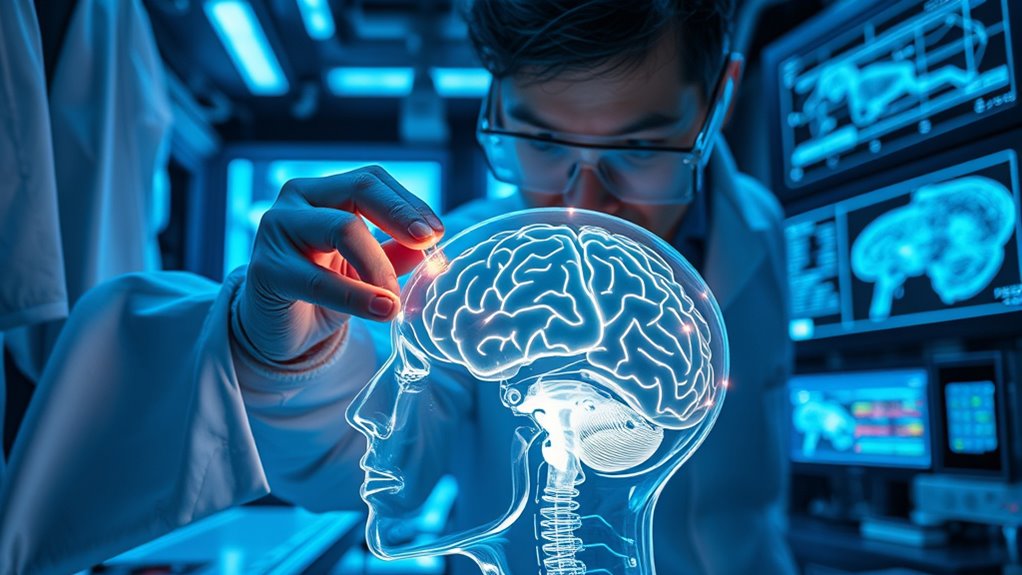

Neurological enhancement technologies can boost your memory, focus, and emotional health, offering exciting benefits for quality of life and mental health treatment. However, they also pose ethical concerns like access inequality, safety risks, and potential misuse, which could widen social divides. Technological limitations, such as safety, precision, and long-term effects, mean these tools are still experimental and often costly. To understand how responsible use balances promise and pitfalls, explore more about this evolving field.
Key Takeaways
- Neurological enhancements can improve memory, focus, and mental health but may exacerbate social inequalities and raise ethical concerns.
- Technological limitations include safety issues, inconsistent targeting, and uncertain long-term effects, requiring cautious development.
- Benefits include potential advancements in treatment and quality of life, balanced against risks of misuse and unintended consequences.
- Challenges involve high costs, accessibility barriers, and ongoing safety and reliability concerns due to experimental techniques.
- Responsible use depends on ethical guidelines, regulation, and ongoing research to ensure equitable access and minimize societal risks.
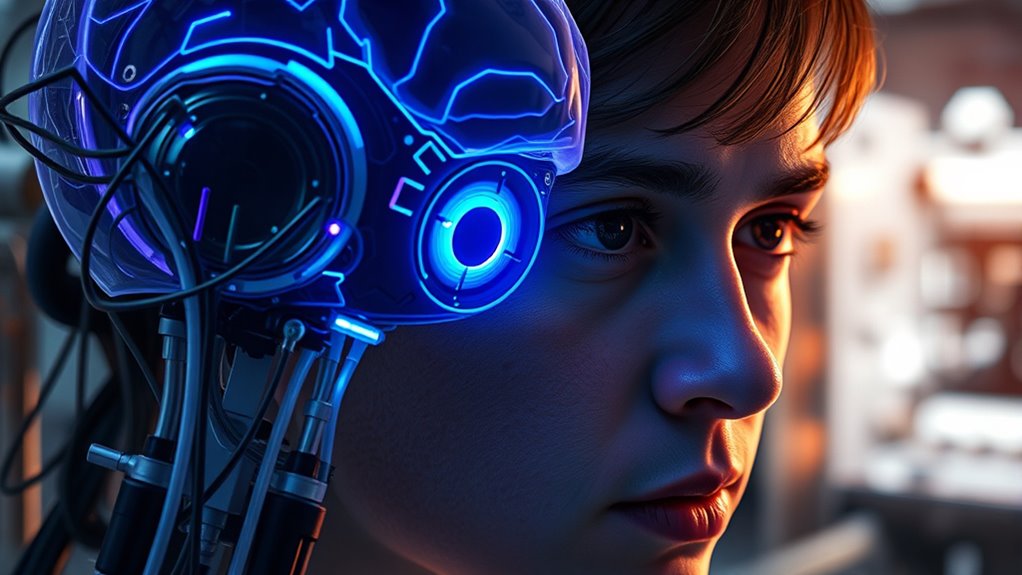
Neurological enhancement technologies are rapidly transforming the way we improve brain function and treat mental health conditions. As you explore these advancements, you’ll realize that they bring a host of exciting possibilities, but also raise important questions. One of the key issues to consider involves ethical considerations. With the ability to enhance cognitive abilities or alter mental states, you might wonder who should have access to these tools and under what circumstances. There’s a risk of creating inequalities if such technologies are only available to a privileged few, potentially widening social divides. Additionally, questions about consent and autonomy come into play—should individuals be able to modify their brains freely, or should there be restrictions to prevent misuse? These ethical dilemmas urge you to think carefully about how society regulates and guides the development of these powerful tools.
At the same time, technological limitations present hurdles that can’t be ignored. While the field has made remarkable progress, many devices and methods still face challenges related to safety, precision, and long-term effects. For example, current neurostimulation devices may not always target the intended brain regions accurately, risking unintended side effects. Moreover, the durability of these enhancements remains uncertain—some technologies might require repeated procedures, which raises questions about practicality and affordability. You’ll also find that many techniques are still in experimental stages, meaning their efficacy isn’t fully proven yet. This creates a dilemma: should you consider adopting a treatment or enhancement that might not be reliably safe or effective? As research continues, technological limitations may eventually be overcome, but for now, these constraints serve as a reminder that neurological enhancement isn’t without risks. Furthermore, the diversity of planters and accessories available underscores the importance of personalized solutions in the field of neurotechnology, highlighting that one-size-fits-all approaches are unlikely to meet individual needs.
Despite these challenges, the potential benefits are undeniable. You could experience improved memory, focus, or emotional regulation, which could greatly impact your quality of life. However, balancing these benefits against the ethical considerations and technological limitations is essential. You need to stay informed about the ongoing debates and scientific developments to make responsible decisions. As the field advances, a careful approach will be necessary to guarantee that these technologies are used ethically, safely, and equitably. Recognizing both the promise and the pitfalls helps you better understand the landscape of neurological enhancements. Whether you’re a researcher, patient, or policymaker, staying mindful of these factors will help guide the responsible integration of these powerful innovations into society.

The 2027-2032 World Outlook for Deep Brain Neurostimulation Devices
As an affiliate, we earn on qualifying purchases.
As an affiliate, we earn on qualifying purchases.
Frequently Asked Questions
Are Neurological Enhancements Approved by Regulatory Agencies?
Regulatory agencies have approved some neurological enhancement technologies, but approval depends on safety and efficacy data. You should know that these agencies carefully evaluate ethical considerations along with scientific evidence before granting approval. If you’re considering using such devices, it’s important to check whether they have received regulatory approval in your country, as unapproved technologies might pose risks and raise ethical concerns. Stay informed and prioritize safety when exploring these options.
How Long Do the Effects of Neural Implants Last?
Neural implants typically last between 5 to 10 years, depending on their design and usage. Interestingly, some implants have been known to function well beyond a decade with proper maintenance. Longevity concerns often relate to implant durability, as materials can degrade over time. You should consider that technological advancements are improving durability, but regular monitoring and potential replacements are vital to guarantee ideal performance and safety over the long term.
Can Enhancement Technologies Cause Long-Term Brain Damage?
Enhancement technologies can potentially cause long-term brain damage due to potential side effects like inflammation, scarring, or neural disruption. While these risks exist, ongoing research aims to minimize them, but ethical considerations remain vital. You should weigh the benefits against possible risks and consult with medical professionals before undergoing any neural procedures, ensuring you’re fully aware of potential long-term impacts on your brain health.
Are There Differences in Access Among Different Socioeconomic Groups?
You’ll find that access inequality exists among different socioeconomic groups when it comes to neurological enhancement technologies. Socioeconomic disparities often limit lower-income individuals from accessing these advancements, widening the gap in benefits. Wealthier groups typically have better access, which can lead to unequal opportunities and outcomes. Addressing these disparities is vital to guarantee fair and equitable access for everyone, regardless of their socioeconomic status.
What Are the Privacy Implications of Neural Data Collection?
Your neural data holds the power of a thousand minds, making privacy concerns enormous. You might face serious data security risks, as this sensitive information could be hacked or misused. Consent challenges also arise because it’s hard to guarantee you fully understand what you’re sharing or agree to how it’ll be used. Protecting your neural data requires strict safeguards and clear, informed consent to prevent exploitation.
cognitive enhancement headset
As an affiliate, we earn on qualifying purchases.
As an affiliate, we earn on qualifying purchases.
Conclusion
Imagine opening superhuman brainpower with neurological enhancements—your mind would outrun lightning, solve mysteries faster than a supercomputer, and remember every detail like a photographic eagle. While these tech wonders could make you a genius on steroids, they might also turn you into a sci-fi character with unforeseen side effects. So, as you consider riding this wave of mind-blowing innovation, remember: the future of your brain is on the line—are you ready to take the leap into the extraordinary?

Nootropic Brain Supplement for Memory and Focus Support – Vitamins for Mental Support & Clarity with Bacopa Monnieri, VIT A, B6, Riboflavin, Niacin, Thiamin & Folate – Cognitive Complex – 90 Count
ADVANCED BRAIN SUPPORT FOR MEMORY & FOCUS – Formulated to support cognitive function, mental clarity, and concentration, this…
As an affiliate, we earn on qualifying purchases.
As an affiliate, we earn on qualifying purchases.

Meditation Headband, EEG Biofeedback Devices, Real-Time Visual and Auditory Feedback for Neurofeedback Training, Brainwave Monitor | Measures Alpha, Beta, Gamma, Theta, Delta and SMR Brain Waves
Track and Understand Your Meditation State: The smart headband captures brain signals with built-in EEG sensors, delivering real-time…
As an affiliate, we earn on qualifying purchases.
As an affiliate, we earn on qualifying purchases.