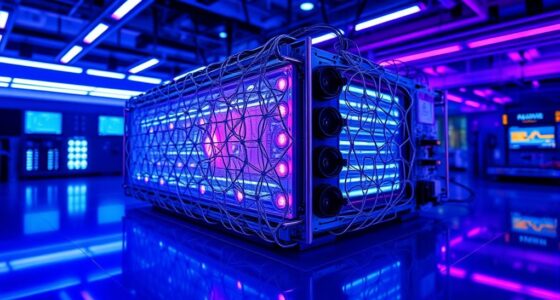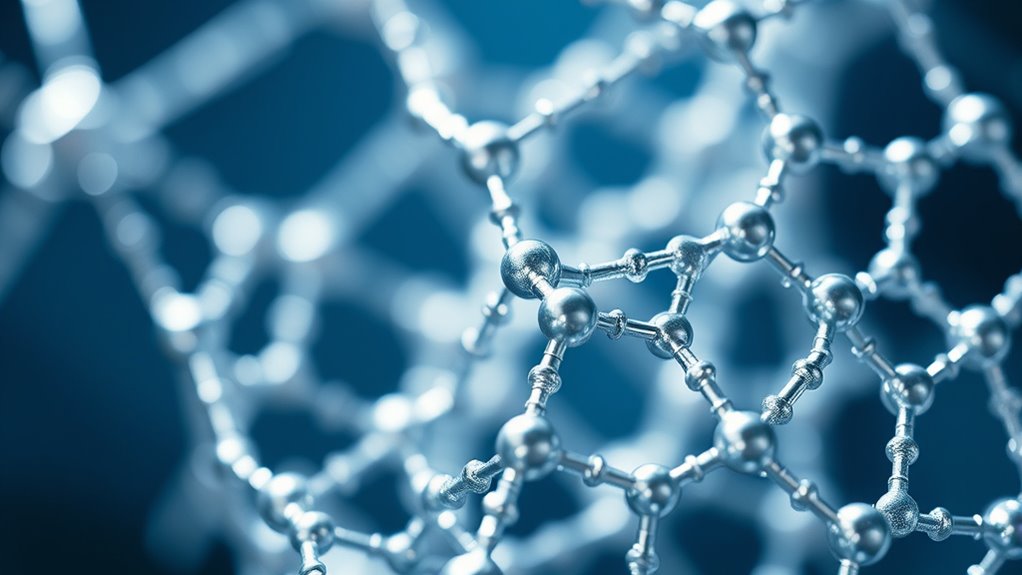

Metal-Organic Frameworks (MOFs) are advanced materials designed for efficient carbon capture and cooling applications. They have high adsorption capacities, customizable structures, and remarkable thermal stability, making them suitable for harsh industrial environments. MOFs can help reduce greenhouse gases and improve energy efficiency simultaneously. Their dual functionality supports sustainable solutions for climate challenges. If you explore further, you’ll discover how these versatile materials are shaping a greener future.
Key Takeaways
- MOFs offer high adsorption efficiency and selectivity for CO₂ capture from industrial emissions and the atmosphere.
- Their porous structure provides large surface areas for rapid and effective gas absorption.
- MOFs are thermally stable, enabling reliable use in both carbon capture and cooling applications under harsh conditions.
- They can serve as dual-function materials, simultaneously facilitating CO₂ capture and thermally driven cooling processes.
- Ongoing research aims to develop advanced MOFs with enhanced stability and performance, supporting sustainable climate solutions.
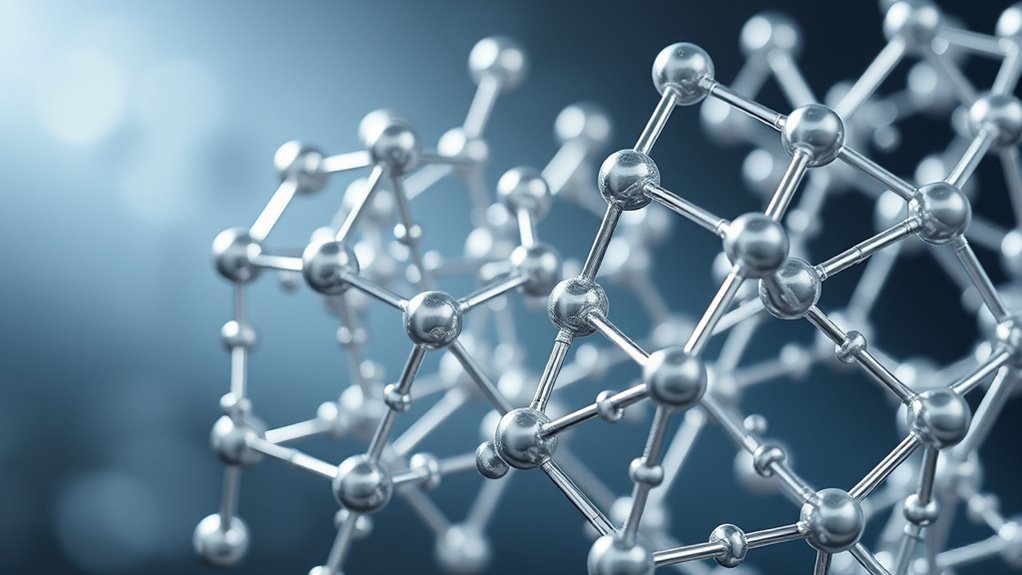
Have you ever wondered how advanced materials can help combat climate change? Metal-organic frameworks (MOFs) are emerging as powerful tools in this fight, especially for carbon capture and cooling applications. These materials boast remarkable properties that make them stand out. For starters, their high adsorption efficiency allows them to trap significant amounts of carbon dioxide from industrial emissions or the atmosphere. This means you can capture more CO₂ with less material, making the process more effective and cost-efficient. Their porous structure provides an extensive surface area, enabling rapid absorption of gases, which is essential for large-scale deployment. Plus, MOFs are customizable; scientists can tweak their design to target specific gases, enhancing selectivity and overall performance.
MOFs offer high efficiency and customization for effective carbon capture and environmental sustainability.
Another critical aspect of MOFs is their thermal stability. When used in industrial environments, materials often face high temperatures and harsh conditions. You need a solution that won’t degrade or lose effectiveness under such circumstances. MOFs with excellent thermal stability can withstand these conditions, ensuring consistent performance over time. This durability means fewer replacements and lower maintenance costs, making them a practical choice for long-term carbon capture systems. Additionally, their stability helps in regenerative processes—where captured CO₂ is released and the MOF reused—without risking structural breakdown. This reusability is crucial for sustainable and environmentally friendly operations.
In cooling applications, MOFs contribute considerably by serving as adsorbents in thermally driven chillers. They can absorb heat efficiently, lowering temperatures in buildings and industrial processes. Because of their high adsorption efficiency, MOFs can operate with minimal energy input, improving overall energy savings. Their thermal stability ensures they perform reliably over many heating and cooling cycles, which is essential for maintaining comfort and operational efficiency. By integrating MOFs into cooling systems, you can reduce reliance on traditional refrigerants that harm the environment, aligning with global efforts to decrease greenhouse gas emissions. Moreover, ongoing research aims to develop advanced MOF designs that further enhance their performance in both carbon capture and cooling.
Additionally, the versatility of MOFs means they can be tailored to optimize both carbon capture and cooling performance simultaneously. You could deploy these materials in settings where dual functions are needed, such as in power plants or large commercial buildings. Their ability to efficiently adsorb gases and withstand thermal stress makes them an attractive solution for tackling multiple climate challenges at once. As research advances, you’ll likely see even more sophisticated MOFs with enhanced adsorption efficiency and thermal stability, pushing the boundaries of what’s possible in sustainable environmental solutions. These materials hold great promise for making a tangible impact on reducing greenhouse gases and improving energy efficiency worldwide.

Consciot LED Battery Powered Camping Lantern, 1000LM, 4 Light Modes, IPX4 Waterproof Portable Tent Flashlight for Power Outages, Emergency, Hurricane, Hiking, Light Green, 2-Pack
Ultra Bright - The 360° glow of up to 1000 lumens will illuminate your space. The translucent reflector...
As an affiliate, we earn on qualifying purchases.
Frequently Asked Questions
How Do MOFS Compare to Traditional Carbon Capture Materials?
You’ll find MOFs outperform traditional carbon capture materials by offering higher selectivity and capacity. They are also more cost-effective over time because of their durability, which allows repeated use without significant degradation. Unlike conventional materials, MOFs can be tailored for specific applications, making them versatile and efficient. This combination of durability and cost effectiveness makes MOFs a promising choice for sustainable, large-scale carbon capture efforts.
Are MOFS Scalable for Industrial Carbon Capture Applications?
You can see that metal-organic frameworks are promising, but scalability challenges remain. While they have the potential for industrial carbon capture, manufacturing costs and production methods still need improvement. It’s a tall order to ramp up large-scale production efficiently. With ongoing research and technological advances, MOFs could become more feasible, but right now, they’re not quite ready to meet the demands of widespread industrial use.
What Are the Environmental Impacts of Synthesizing MOFS?
You should know that synthesizing MOFs can have notable environmental impacts, mainly due to greenhouse gas emissions and high energy consumption during production. The process often involves toxic chemicals and solvents, which could result in waste disposal issues. While MOFs are promising for carbon capture, you need to contemplate these environmental costs and work toward greener synthesis methods to minimize their overall ecological footprint.
Can MOFS Be Regenerated Multiple Times Without Loss of Efficiency?
You’ll be amazed at how resilient MOFs are—these materials can often be regenerated multiple times without losing their regeneration efficiency, thanks to their exceptional durability. While some degradation might occur over countless cycles, many MOFs maintain high performance for hundreds of uses, making them incredibly cost-effective and sustainable. With proper handling, you can rely on their long-term stability, ensuring your carbon capture or cooling systems stay efficient and effective for the long haul.
How Do MOFS Perform Under Real-World Operational Conditions?
You’ll find that MOFs perform well under real-world conditions if they exhibit strong material stability and favorable adsorption kinetics. However, factors like moisture, temperature fluctuations, and contaminants can impact their efficiency over time. To guarantee ideal performance, you should select MOFs designed for durability and fast adsorption/desorption cycles. Regular testing and maintenance help maintain their effectiveness, letting you harness their full potential in practical applications.
Eveready LED Camping Lantern X-250 (2-Pack), Super Bright Tent Lights, Rugged Water Resistant LED Lanterns, 100 Hour Run-time (Batteries Included), Red and Black
COMPACT CAMPING LANTERN: Pack of two Eveready GPAL411 Compact LED Lanterns, offering bright, reliable light in a compact...
As an affiliate, we earn on qualifying purchases.
Conclusion
You can confidently consider metal-organic frameworks as mighty marvels in managing emissions and easing environments. Their remarkable ability to capture carbon and cool climates paints a promising picture for future fixes. With innovation inspiring implementation, you’re part of a powerful push toward sustainable solutions. Embrace these extraordinary frameworks, as they pave the path for progress, progress powered by potential, and promise for a cleaner, cooler, clearer climate.

Glocusent 135 LED Ultra Bright Camping Lantern, Up to 200H, 5000mAh Camping Lights with 3 Colors & 5 Brightness, SOS, Max 1500LM, Rechargeable Lantern for Power Outages Camping Hiking Emergency
[Brighten Your Entire Campsite] With 135 upgraded LEDs, this camping lights floods 360° with ultra-bright, shadow-free light covering...
As an affiliate, we earn on qualifying purchases.
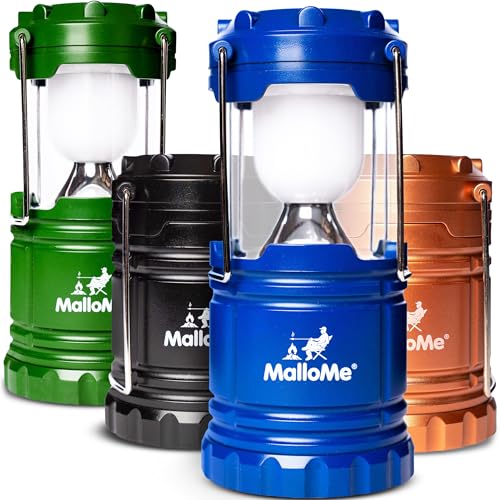
MalloMe Camping Lantern Multicolor 4 Pack Lanterns for Power Outages, Camping Lights for Tent Hanging, Camp Light Tent Lamp Emergency Battery Powered LED Lantern (Rechargeable Batteries Not Included)
ULTRA BRIGHT - Cut through the darkest of nights and survive an emergency storm. Light up an entire...
As an affiliate, we earn on qualifying purchases.