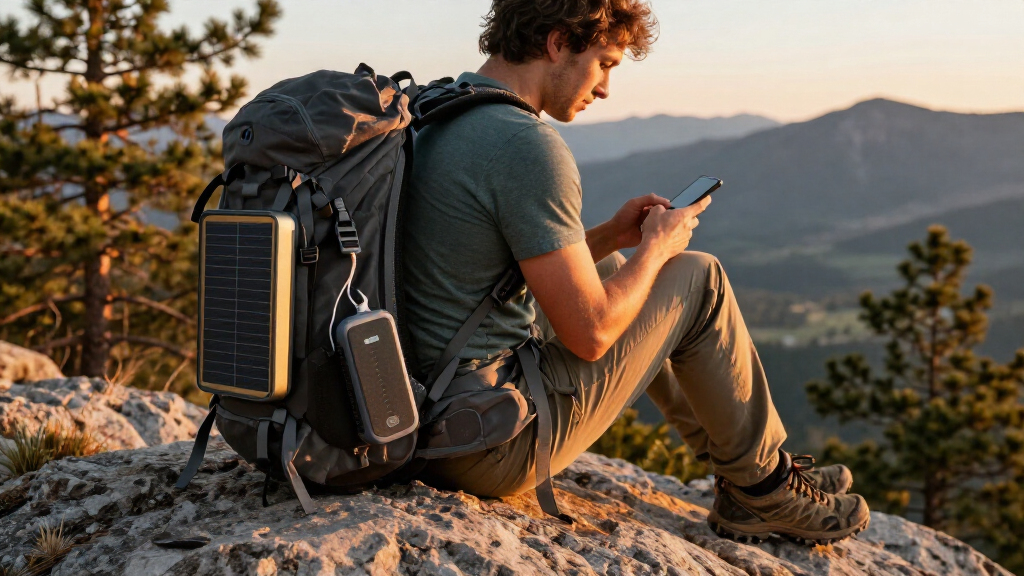
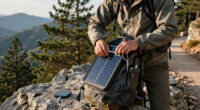
When people compare solar-powered portable chargers, they are often choosing between two products sold under similar names but built for different jobs: a solar power bank, with a battery and small panel in one case, and a foldable solar panel charger, which turns sunlight into power for a connected device or battery. The main difference is whether convenience and stored energy matter more than useful solar input. A power bank is easier to carry and can charge a phone after sunset, but its small panel may take a long time to refill it. A foldable panel is bulkier and needs direct sun while in use, yet its larger surface can make solar charging practical on a hike or at a campsite. Choose A for a compact backup that you can charge from a wall outlet before leaving; choose B if you expect to spend hours outdoors and want sunlight to contribute meaningfully to your power supply.

Get travel and outdoor gear delivered free with Prime
- Fast, free delivery on millions of items
- Prime Video, Amazon Music and more included
- Member-only deals all year

BLAVOR Solar Power Bank 10,000mAh Portable Wireless Charger
- ✔ Battery capacity: 10,000mAh
- ✔ USB-C output: 20W
- ✔ Wireless charging: Qi

Durecopow 20,000mAh Solar Power Bank with Built-In Cables and Dual Flashlight
- ✔ Battery capacity: 20,000mAh
- ✔ Power sources: Solar or USB
- ✔ Built-in cables: Type-C, Lightning, Micro USB, and USB-A input cable (listed)

YELOMIN 38,800mAh Solar Power Bank with LED Flashlights
- ✔ Battery capacity: 38,800mAh (listed)
- ✔ Ports: 2 USB-A outputs; 1 USB-C input/output
- ✔ Power source: Solar and USB-C
At a Glance
| Criteria | Solar power bank | Foldable solar panel charger | Winner |
|---|---|---|---|
| Solar charging speed | Typically slow: the small built-in panel gathers limited energy, and real-world charging depends heavily on direct sun and conditions. | Usually better because its larger panel area captures more sunlight; output still varies with sun, angle, heat, and shading. | B |
| Stored energy | Built-in battery stores energy for charging later; capacity varies by model and usable output is lower than the stated battery capacity. | Usually no built-in storage; connect a device directly or pair the panel with a separately purchased power bank. | A |
| Everyday portability | Usually compact and self-contained, though rugged models can be heavier and bulkier than ordinary power banks. | Folds for transport, but takes more space when packed and needs to be unfolded and positioned in use. | A |
| Charging devices in use | Can charge a phone from its battery while the panel receives sun, but panel input may not keep pace with use. | Can supply a compatible phone or battery in sunlight; output interruptions may affect direct device charging. | B |
| Reliability across conditions | The battery remains useful without sun if charged beforehand; solar replenishment is inconsistent in shade, clouds, and poor positioning. | Performance falls in shade or clouds; requires careful positioning and compatible cables or charging electronics. | A |
| Best use case | Daily carry, travel, or emergency backup when the bank is charged in advance. | Camping, hiking, or other extended outdoor trips where sunlight is available for sustained periods. | Depends |
| Value for regular solar use | Often a poor choice if the main goal is to recharge from sunlight regularly. | Usually better for repeated solar charging, especially when paired with a battery already owned. | B |
BLAVOR Solar Power Bank 10,000mAh Portable Wireless Charger
BLAVOR is our most balanced pick for someone who wants a portable backup battery with genuinely useful charging flexibility. Its 10,000mAh capacity is smaller than the Durecopow and far below YELOMIN’s listed figure, but the listing gives clearer wired performance: 20W USB-C fast charging, a stated four-hour corded recharge, and Qi wireless charging. That makes it easier to plan around than a capacity number alone.For a day trip with a phone and accessories, three simultaneous charging paths—USB-A, USB-C, and wireless Qi—can be more useful than carrying the biggest battery. BLAVOR also adds dual flashlights, a compass carabiner, and IPX5 protection. Those features give it a more complete outdoor kit than YELOMIN’s basic lights and port covers, though Durecopow counters with built-in cables that reduce packing.The main tradeoff is central to this roundup: solar charging is not emphasized, and the primary recharge route is a cord. Its 20W output also makes it a phone-focused choice, not a high-output solution for demanding devices. Choose BLAVOR when portability and well-described charging options matter more than maximum listed capacity or cable-free packing.
Pros:
- 20W USB-C fast charging with a stated iPhone 15 charging example.
- USB-A, USB-C, and Qi wireless charging allow up to three devices to connect simultaneously.
- IPX5 protection, dual flashlights, and compass carabiner suit outdoor carry.
- Listed 10,000mAh capacity in a stated 9.3-ounce package.
Cons:
- Solar charging is not emphasized; corded charging is the clear primary method.
- 20W USB-C output is limited for larger or more demanding devices.
- Waterproof silicone coating adds some bulk to the compact case.
Best for: Outdoor day-trippers who want a compact phone backup with wired fast charging, wireless Qi, and practical lights.
Not ideal for: Buyers who need the largest stated battery, depend on solar for regular recharging, or need higher-power output for larger devices.
Bottom line: Choose BLAVOR for the clearest mix of portable size and versatile phone charging, provided solar remains a backup rather than your main recharge plan.
“Choose BLAVOR for the clearest mix of portable size and versatile phone charging, provided solar remains a backup rather than your main recharge plan.”
Durecopow 20,000mAh Solar Power Bank with Built-In Cables and Dual Flashlight
Durecopow makes the most sense when fewer loose accessories are the priority. Its built-in Type-C, Lightning, and Micro USB charging cables cover several common phone connections, and the listing also mentions a USB-A input cable. That is a distinct advantage over BLAVOR, which offers wireless charging but does not list integrated cables, and over YELOMIN, whose description calls for connecting compatible devices to its ports.The stated 20,000mAh capacity puts Durecopow between BLAVOR and YELOMIN on paper. Three output ports, battery indicators, a compass, carabiner, and dual lights with steady, SOS, and strobe modes make it oriented toward outdoor use. Silicone rubber and ABS PC construction, protective corners, and covers are described as helping resist drops, dust, and water; those claims are useful context, though no specific ingress-protection rating is supplied.We rank it below BLAVOR because its charging performance is less clearly documented: the listing gives 5V and 2.4A figures but no fast-charge wattage, and its battery charge-time information does not clarify whether it refers to solar or USB. Solar remains sunlight-dependent, so the integrated cables solve a packing problem, not the slow-recharge problem. It is a practical fit for mixed-device travelers who value convenience over precise output details.
Pros:
- Built-in Type-C, Lightning, and Micro USB cables reduce the need to pack separate phone cables.
- 20,000mAh listed capacity offers a middle ground between BLAVOR and YELOMIN.
- Three output ports and dual flashlight modes support multi-device outdoor use.
- Compass, carabiner, battery indicators, and protective construction add field convenience.
Cons:
- No explicit fast-charge wattage is provided in the supplied specifications.
- The listed battery charge time does not identify whether it applies to USB or solar.
- Solar replenishment depends on sunlight, with no practical recharge duration specified.
Best for: Travelers and campers carrying several kinds of phones who want common charging cables attached to the power bank.
Not ideal for: Buyers who need a clearly specified fast-charge rate, a stated waterproof rating, or dependable solar replenishment during short trips.
Bottom line: Pick Durecopow when integrated cables matter more than a documented fast-charge rate or a clearly quantified solar recharge.
“Pick Durecopow when integrated cables matter more than a documented fast-charge rate or a clearly quantified solar recharge.”
YELOMIN 38,800mAh Solar Power Bank with LED Flashlights
YELOMIN is the capacity-first choice in this group. Its listed 38,800mAh is nearly four times BLAVOR’s stated capacity and substantially more than Durecopow’s 20,000mAh, which may appeal to buyers preparing for multiple phone top-ups or carrying backup power for a small group. It has two USB-A outputs and a USB-C input/output port, plus dual lights with steady, SOS, and strobe modes.That large figure comes with an important planning caveat. The listing says solar charging is slow and intended only as supplemental emergency charging; a full solar recharge may require dozens of hours of effective sunlight or longer. So we would treat the panel as a way to add some reserve when conditions permit, not as a routine refill method. Compared with Durecopow, YELOMIN does not include built-in cables, and it gives less detail about charging output performance.At a stated 9.9 ounces, its weight is close to BLAVOR’s 9.3 ounces despite the much larger advertised capacity. The supplied description also includes a carabiner and protective port covers for dust and everyday splashes, but does not specify an IP rating. Choose YELOMIN for its stated capacity when you can charge it by USB before a trip and accept the solar panel’s limited role. Skip it if you need a verified fast-charge rate or expect the panel to keep a high-use device topped up day after day.
Pros:
- Highest listed capacity in this comparison at 38,800mAh.
- Two USB-A outputs and one USB-C input/output port provide several wired connections.
- Dual LED lights include steady, SOS, and strobe modes.
- Carabiner and protective port covers suit basic outdoor carry.
Cons:
- Solar charging is explicitly described as supplemental and may take dozens of effective sunlight hours or longer for a full recharge.
- The listing does not provide a fast-charge wattage or detailed output performance.
- Protective port covers are described, but no specific waterproof rating is supplied.
Best for: Campers or travelers who prioritize the highest stated battery capacity here and can recharge the bank by USB before leaving.
Not ideal for: Anyone expecting solar to refill the battery quickly, or who needs more detailed output specifications and integrated charging cables.
Bottom line: Choose YELOMIN when maximum stated capacity matters most and you can rely on USB charging for the main refill.
“Choose YELOMIN when maximum stated capacity matters most and you can rely on USB charging for the main refill.”
As an Amazon Associate we earn from qualifying purchases.
Key Differences
The labels can make these products sound interchangeable, but a power bank with a solar panel is primarily a battery with a solar trickle-charging feature. Its advantage is that energy gathered earlier remains available later. The panel is often too small to refill the battery quickly, so it is most dependable when charged from a wall outlet before a trip. Treat its solar feature as a backup rather than a promise of rapid recharging.
A foldable panel gives sunlight a larger surface to work with, so it is the stronger choice when solar charging is the purpose of the purchase. It still needs direct sun and sensible placement, and it cannot store energy on its own. Pair it with a compatible power bank if you need dependable charging after dark or when clouds pass. That adds cost and gear, but also gives the panel a useful role beyond occasional emergency use.
The practical choice depends on when and where you need power. For a commute, travel day, or small emergency kit, a charged power bank is simpler. For a multi-day outdoor stay, a foldable panel paired with storage is more capable. If reliable phone charging is the priority and sunlight is uncertain, a conventional power bank may serve better than either solar option.
Detailed Comparison
Solar charging speed (Foldable solar panel charger wins — major)
Winner: B, by a major margin. The foldable panel has more surface area to collect sunlight, so it can provide substantially more useful input in good conditions. A small power-bank panel generally replenishes slowly; it may add some reserve over a long sunny day, but should not be expected to refill a depleted battery quickly. The panel still cannot deliver rated output consistently: shade, clouds, angle, heat, and cable compatibility all matter. For real trips, plan around the foldable panel producing power while exposed to sun, not at its best-case rating.
Stored energy (Solar power bank wins — moderate)
Winner: A, by a moderate margin. The integrated battery keeps energy available after sunset or when the sun disappears. A foldable panel has no reserve unless you connect a separate battery, adding weight and cost. The power bank’s solar panel does not erase this advantage, but frequent users should recharge it from a wall outlet before departure because sunlight may not restore much capacity during the trip. For all-day access to power, the panel and a separate bank can provide both generation and storage.
Everyday portability (Solar power bank wins — moderate)
Winner: A, by a moderate margin. A power bank stays contained in one pocket, pack, or emergency pouch and needs little setup. A foldable charger packs flat but occupies more room, then must be unfolded and positioned in clear sun. The extra size is worthwhile when you will use the panel for hours; for routine commuting or occasional top-ups, the power bank is easier to keep with you. Compare weight and folded dimensions for specific models, since rugged banks can be surprisingly heavy.
Charging devices while in sunlight (Foldable solar panel charger wins — moderate)
Winner: B, by a moderate margin. A foldable panel is designed to provide solar input to a connected phone or battery, making its larger collection area more useful in camp. Direct phone charging can be interrupted if sunlight or panel output fluctuates, so a power bank is often a steadier buffer. A solar power bank can also charge a device while exposed to sun, but its small panel may contribute less than the device consumes. Check the panel’s ports and output against the devices you intend to use.
Reliability across conditions (Solar power bank wins — minor)
Winner: A for immediate availability, by a minor margin. Neither option can dependably generate power in shade or poor weather. A power bank charged before leaving still works after the weather changes, which makes it a stronger standalone backup. A foldable panel can produce more when conditions are favorable, but its output varies with placement and sun. Pairing it with a battery narrows the reliability gap by storing energy gathered during brighter periods. Neither solar product should replace a charged backup for critical communication.
Best use case (major difference)
Winner: Depends on the trip. A power bank fits daily carry, short outings, and emergency kits where compact stored energy matters more than harvesting sunlight. A foldable panel fits extended outdoor stays where there is time and access to open sun. The difference is major for trip planning: carrying a panel makes little sense if you spend the day under tree cover, while relying on a tiny built-in panel can disappoint when it is expected to support several devices for multiple days.
Value for regular solar use (Foldable solar panel charger wins — moderate)
Winner: B, by a moderate margin. If sunlight will be a regular source of energy, paying for the larger panel is usually more productive than paying for a battery with a small solar surface. The foldable option can also work with a power bank you already own, reducing the added cost. If you need to buy both panel and storage, compare their combined price and weight with a larger standalone battery. A solar power bank may be better value for someone who mainly wants one compact battery and treats solar input as incidental.
Solar power bank: Pros and Cons
Pros:
- Stores energy for evening, shade, or travel between sunny stops.
- Compact, self-contained setup with no separate battery required.
- Convenient for daily carry and emergency backup when charged in advance.
Cons:
- Small panel usually gathers energy slowly.
- Solar charging may add little during short outings or changeable weather.
- Capacity and real phone charges vary by model and conversion losses.
Foldable solar panel charger: Pros and Cons
Pros:
- Larger panel area can make solar charging useful during extended outdoor trips.
- Can charge a compatible device or work with an existing power bank.
- Folds for transport and can serve multiple devices over time.
Cons:
- Needs direct sun and active positioning to produce useful power.
- Does not store energy without a separate battery.
- Adds packed bulk, setup, and possible cable or output compatibility concerns.
Who Should Choose What
Choose Solar power bank if:
- You want a compact battery for commuting, travel, or emergency use and can charge it before leaving.
- You need energy after sunset and prefer a single self-contained product.
- Solar input is a bonus rather than the main way you expect to recharge.
Choose Foldable solar panel charger if:
- You spend long periods outdoors with access to open sunlight.
- You want meaningful solar input and can pair the panel with a compatible power bank.
- You already own a battery and want to extend its usefulness on camping or hiking trips.
Skip both if: You need reliable charging in shade, indoors, or on short notice and cannot charge from a wall outlet; choose a conventional high-capacity power bank or another dependable power source.
Value for Money
Pay more for a foldable panel when you expect to use sunlight for hours across repeated trips. Its larger surface makes the extra cost more likely to translate into useful energy, especially if you already own a compatible power bank. If you need storage too, include the battery in the total price and account for carrying both pieces. A modest panel cannot guarantee its advertised output in field conditions, so avoid buying solely on peak-watt figures.
Pay for a solar power bank when one compact battery is the real need and its solar feature is incidental. For the same budget, a conventional power bank may offer more dependable capacity if you rarely have access to direct sun. The best value is the setup that matches the charging conditions you actually face: stored power for unpredictable days, or a larger panel and storage for sustained outdoor use.
Final Verdict
For most people who specifically want to charge from sunlight, choose the foldable solar panel and pair it with a compatible power bank. It has the larger collection area and is more likely to make solar charging useful in practice. Choose the solar power bank if portability and stored energy matter more than recharge speed, and charge it before leaving. The deciding factor is whether sunlight will be a regular power source or just an occasional backup. If you cannot count on direct sun and need dependable phone power, skip both solar formats and carry a conventional battery.
Frequently Asked Questions
Can a solar power bank recharge itself in one sunny day?
Some energy may be added in direct sun, but many compact built-in panels charge too slowly to refill a depleted bank in a day. Treat the panel as a supplemental source and charge the battery from an outlet before a trip.
Is a foldable solar charger worth the extra cost?
It can be worthwhile for repeated camping or hiking trips with sustained access to open sun, particularly if you already own a compatible power bank. For daily use or occasional emergency backup, a conventional power bank often delivers more dependable value.
Can I charge a phone directly from a foldable solar panel?
Usually, if the panel has a compatible output and cable. Output can vary as clouds pass or the panel shifts, so charging may pause. Connecting a power bank between the panel and phone can buffer that variability.
Which option works better on cloudy days?
Neither generates reliably in heavy cloud or shade. A power bank charged beforehand is more useful in those conditions because it has stored energy; a foldable panel can still contribute some power in bright overcast, but output will be lower and less predictable.