To conserve water in agriculture, you should adopt techniques like drip irrigation, which delivers water directly to plant roots, reducing waste and overwatering. Combining this with crop residue management helps retain soil moisture and protect the soil surface. These methods maximize water efficiency, especially in arid areas, and support sustainable farming practices. If you explore further, you’ll discover even more ways to improve water use and protect resources effectively.
Key Takeaways
- Implement drip irrigation systems to deliver water directly to plant roots, reducing wastage and overwatering.
- Practice crop residue management by leaving plant remains on fields to retain soil moisture and prevent erosion.
- Combine drip irrigation with crop residue management for enhanced water conservation and soil health.
- Utilize water-efficient techniques suited for arid and water-scarce regions to support sustainable farming.
- Promote water conservation awareness and adopt integrated practices to reduce overall water footprint in agriculture.

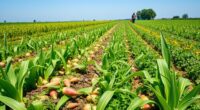
Have you ever wondered how agriculture can thrive while conserving water? It’s an essential question, especially as water resources become scarcer. Fortunately, farmers are adopting innovative techniques to reduce water use without sacrificing crop yields. One of the most effective methods is drip irrigation, which delivers water directly to the plant’s roots through a network of tubes and emitters. Unlike traditional flood or sprinkler systems, drip irrigation minimizes water wastage by targeting only the area where plants need moisture. This precise watering not only conserves water but also reduces weed growth and disease risk, leading to healthier crops and lower input costs. Implementing drip irrigation requires an initial investment, but the long-term savings on water and energy make it worthwhile. It’s especially beneficial in arid regions or areas facing water restrictions.
Drip irrigation efficiently delivers water directly to roots, reducing waste and promoting healthier crops in water-scarce areas.
Alongside technological solutions like drip irrigation, managing crop residue plays a critical role in water conservation. Crop residue management involves leaving plant remains, such as stalks and leaves, on the field after harvest. This practice helps retain soil moisture by reducing evaporation and protecting the soil surface from direct sunlight and wind. It also improves soil health over time, promoting better water retention and reducing the need for frequent irrigation. By maintaining a protective cover of crop residue, you help sustain soil structure, prevent erosion, and promote the growth of beneficial microorganisms. These microorganisms enhance the soil’s ability to retain water, making your crops more resilient during dry spells. Crop residue management is a simple, cost-effective way to enhance water efficiency and boost overall farm sustainability.
Combining drip irrigation with crop residue management creates a synergy that maximizes water savings. Drip irrigation ensures targeted delivery of water to roots, while crop residue reduces surface water loss and improves soil moisture retention. Together, these practices form a broad approach to water conservation tailored to diverse farming conditions. Implementing these methods also promotes sustainable agriculture, helping you adapt to climate variability and water scarcity challenges. As a farmer or grower, adopting such techniques requires commitment, but the benefits extend beyond water savings. You’ll notice healthier plants, better yields, and reduced environmental impact. Over time, these practices contribute to a more resilient and sustainable farming system that respects our precious water resources.
In essence, by integrating drip irrigation and crop residue management into your farming routine, you can make a significant difference in conserving water. These practices not only support your farm’s productivity but also help preserve water for future generations. Thoughtful planning and execution of water management strategies can significantly amplify your water conservation efforts. With such integrated approaches, sustainable water use in agriculture becomes a reality, ensuring the industry’s longevity and environmental health.
drip irrigation systems for farms
As an affiliate, we earn on qualifying purchases.
As an affiliate, we earn on qualifying purchases.
Frequently Asked Questions
How Can Farmers Measure Their Water Savings Effectively?
You can measure your water savings effectively by conducting regular water usage audits and using soil moisture monitoring tools. Water audits help you track how much water you’re applying and identify areas for improvement. Soil moisture sensors provide real-time data, so you know exactly when and how much water your crops need. Combining these methods allows you to optimize water use, ensuring efficiency and savings over time.
What Are the Costs Associated With Implementing New Water Conservation Methods?
Oh, the glamorous world of cost analysis—because nothing says excitement like crunching numbers on water-saving tech! You’ll find that new methods often require upfront investments in equipment, training, and maintenance, which can strain your budget considerations. While long-term savings are appealing, don’t forget to evaluate these costs carefully to guarantee your farm’s financial health. Plan strategically, and you’ll master the art of balancing eco-friendly practices with economic viability.
Are There Government Incentives for Adopting Water-Saving Technologies?
Yes, you can benefit from government grants and policy subsidies when adopting water-saving technologies. These incentives are designed to encourage farmers like you to implement efficient practices. You should check with local agricultural agencies or government programs to find available grants and subsidies. Taking advantage of these financial support options can reduce your costs and make it easier to invest in sustainable water conservation methods.
How Does Water Conservation Impact Crop Yield Quality?
Conserving water boosts crop resilience and improves soil moisture, leading to better crop yield quality. When you save water, your plants experience less stress, resulting in healthier growth and higher-quality produce. Maintaining ideal soil moisture ensures nutrients are effectively absorbed, enhancing flavor and texture. By adopting efficient water practices, you help crops withstand droughts and pests, ultimately producing more nutritious and market-ready yields that meet consumer expectations.
Can Traditional Farming Practices Be Adapted for Modern Water Conservation?
Yes, you can adapt traditional methods for modern water conservation. By integrating traditional practices like crop rotation and mulching with modern techniques such as drip irrigation and rainwater harvesting, you enhance efficiency. You’ll reduce water wastage and improve sustainability, making your farming more resilient. Combining these approaches allows you to preserve water resources while maintaining productivity, ensuring your farm stays productive and environmentally friendly in today’s changing climate.
crop residue management tools
As an affiliate, we earn on qualifying purchases.
As an affiliate, we earn on qualifying purchases.
Conclusion
By adopting these water conservation techniques, you become the gardener of a precious resource, nurturing your fields like a delicate bloom. Each mindful choice is a drop in the vast ocean of sustainability, symbolizing hope for future harvests. Remember, your actions are the seeds of change, and with care, they grow into a thriving, resilient landscape. Together, you and water can cultivate a greener, more sustainable tomorrow.
water-saving irrigation equipment
As an affiliate, we earn on qualifying purchases.
As an affiliate, we earn on qualifying purchases.
soil moisture retention products
As an affiliate, we earn on qualifying purchases.
As an affiliate, we earn on qualifying purchases.