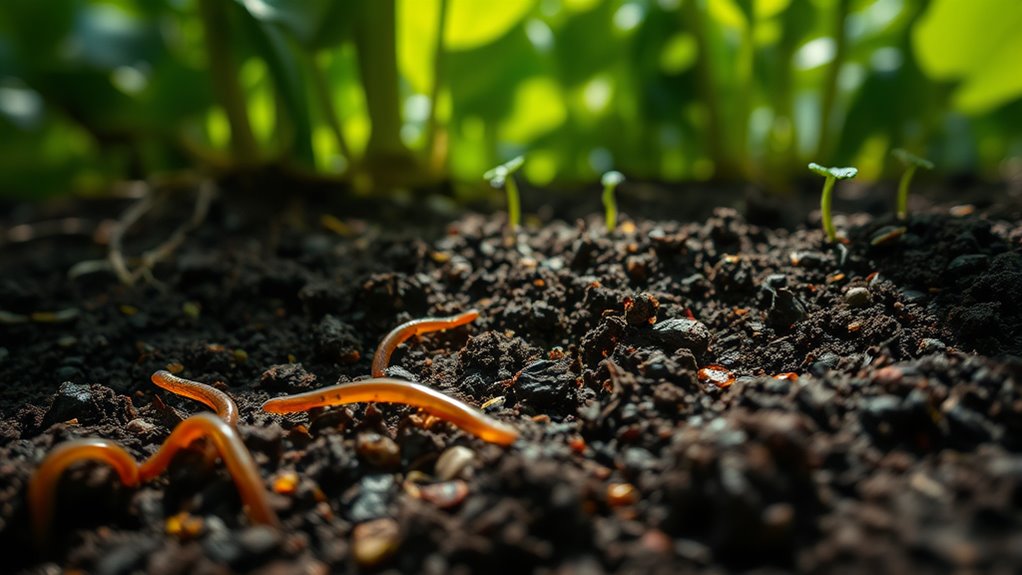

Building fertile grounds starts with nurturing a healthy soil microbiome, which drives nutrient cycling and supports plant growth. By promoting microbial diversity through practices like crop rotation, cover cropping, and minimal tillage, you enhance soil structure, water retention, and resilience against pests and weather stress. A vibrant soil ecosystem naturally maintains fertility and ecological balance, ensuring long-term productivity. Staying engaged with these strategies will help you unearth even more ways to boost soil health effectively.
Key Takeaways
- Promoting microbial diversity enhances nutrient cycling and soil resilience, leading to healthier, more fertile grounds.
- Practices like crop rotation and cover cropping boost soil microbiome complexity and ecosystem stability.
- Microbial activity improves soil structure, water retention, and aeration, essential for fertile soil formation.
- A diverse microbiome suppresses soil-borne diseases, reducing the need for chemical interventions.
- Supporting soil microbes fosters sustainable agriculture by maintaining long-term soil productivity and ecosystem balance.
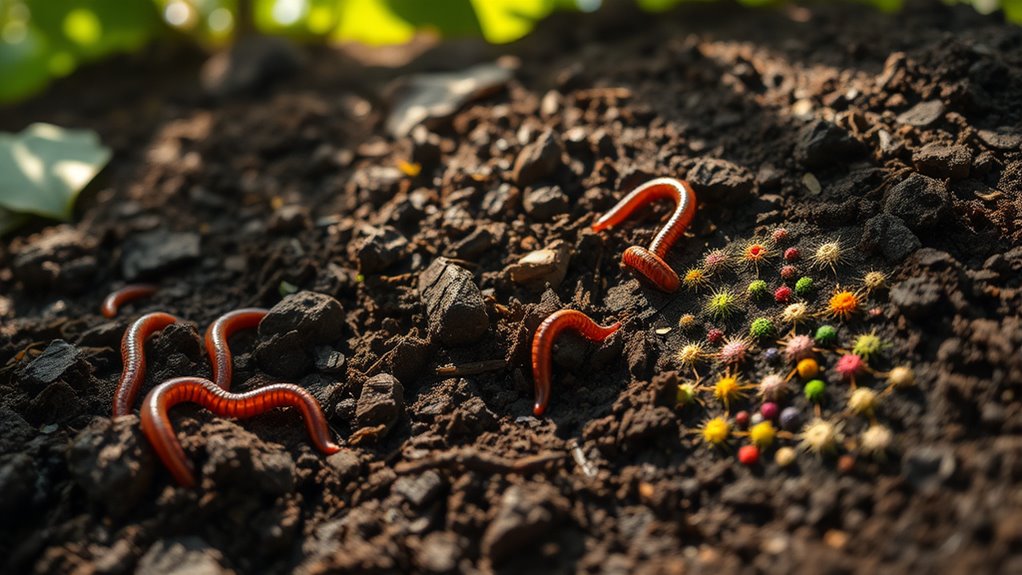
Have you ever wondered what makes healthy soil so vital for successful farming and vibrant ecosystems? The secret lies in the complex processes happening beneath the surface—especially soil nutrient cycling and microbial diversity enhancement. These elements form the backbone of fertile ground, ensuring plants get the nutrients they need and maintaining the delicate balance that supports life underground.
Healthy soil depends on nutrient cycling and diverse microbes supporting plant growth naturally.
Soil nutrient cycling is a dynamic process where nutrients like nitrogen, phosphorus, and potassium continuously move through the soil, plants, and microorganisms. When plants grow, they absorb nutrients from the soil, but those nutrients don’t just stay there. Microorganisms break down organic matter—dead plants, leaves, and other organic debris—and release essential nutrients back into the soil in forms plants can absorb. This natural recycling keeps nutrients available, preventing depletion and promoting healthy plant growth. By fostering effective nutrient cycling, you create a resilient ecosystem where plants thrive without the constant need for chemical fertilizers, which can disrupt soil health over time.
Microbial diversity enhancement plays a vital role in this process. The more diverse your soil’s microbial population, the more robust and resilient your soil becomes. Different microbes perform specialized functions—some fix atmospheric nitrogen, others decompose organic matter, and some produce growth-promoting substances. When microbial diversity is high, these processes happen more efficiently, and the soil’s ability to support healthy plant roots improves. This diversity also helps suppress soil-borne diseases, as a rich microbial community can outcompete harmful pathogens. You can boost microbial diversity by adopting practices like crop rotation, cover cropping, and minimal tillage, which provide a variety of organic inputs and habitats for different microbes to flourish.
Healthy soil isn’t just about adding nutrients; it’s about nurturing the ecosystem that manages those nutrients naturally. When you enhance microbial diversity, you’re building a living, breathing system that sustains itself. This makes your soil more productive, resistant to pests and diseases, and better equipped to withstand environmental stresses such as drought or heavy rain. By supporting soil nutrient cycling and microbial diversity enhancement, you lay the foundation for sustainable farming and vibrant ecosystems that flourish in harmony with nature. It’s a cycle of life that you can influence through mindful practices, ensuring your soil remains a fertile, vibrant ground for generations to come.
An important concept is that fostering microbial diversity not only improves nutrient availability but also enhances soil structure, leading to better water retention and aeration.
Top picks for "soil health microbiome"
Open Amazon search results for this keyword.
As an affiliate, we earn on qualifying purchases.
Frequently Asked Questions
How Do Different Crop Rotations Affect Soil Microbiome Diversity?
Different crop rotations boost soil microbiome diversity by introducing crop diversity, which supports a wider range of microbes. This enhanced microbial resilience helps break pest cycles, improve nutrient cycling, and maintain soil health. You’ll notice healthier crops and better yields over time. By rotating crops effectively, you create a dynamic soil environment that fosters a resilient and diverse microbiome, ensuring long-term soil fertility and sustainable farming practices.
What Are the Best Organic Amendments to Enhance Soil Microbial Life?
You might think chemical fertilizers are enough, but to truly boost your soil’s microbial life, try compost teas and biochar applications. Compost teas deliver a lively brew of beneficial microbes right into your soil, while biochar creates a cozy habitat for them to thrive. Together, they turn your garden into a vibrant microbial paradise, proving that organic amendments can work wonders for enriching soil health naturally and sustainably.
How Does Soil Ph Influence Microbial Activity and Soil Health?
You should know that soil pH greatly influences microbial activity and overall soil health. pH fluctuations can favor certain microbes while inhibiting others, leading to shifts in microbial adaptations. Maintaining a balanced pH ensures a diverse and active microbiome, which boosts nutrient cycling and plant growth. When pH is too acidic or alkaline, microbial functions decline, reducing soil fertility. Adjusting pH levels promotes a healthy, resilient soil ecosystem.
Can Soil Microbiomes Recover After Chemical Contamination?
Can your soil microbiome bounce back after chemical contamination? Absolutely, if you focus on fostering soil microbiome resilience through proper management. Techniques like organic amendments, crop rotation, and bioaugmentation support chemical detoxification and help restore microbial diversity. While recovery takes time, active efforts can rebuild a healthy, thriving soil ecosystem. Are you ready to implement these strategies to rejuvenate your soil’s microbiome?
What Role Do Cover Crops Play in Maintaining Soil Microbial Balance?
Cover crops play a essential role in maintaining soil microbial balance by providing diverse microbial habitats and organic matter. Their benefits include enhancing nutrient cycling, suppressing pests, and improving soil structure. By adding plant roots and residues, you support beneficial microbes, which boosts soil health. Regularly planting cover crops creates a thriving microbial community, helping your soil recover from disturbances and fostering a resilient, fertile environment for future crops.
Conclusion
By nurturing your soil’s microbiome, you’re planting the seeds of a thriving future. Think of your soil as a garden of possibilities, where each healthy microorganism is a crucial brushstroke in the vibrant masterpiece of life. When you care for this hidden universe, you’re not just building fertile grounds—you’re cultivating resilience, growth, and abundance. Remember, your hands are the keys to unearthing nature’s most precious treasure: a vibrant, resilient Earth ready to flourish under your care.