Smart greenhouses use advanced technology to create ideal growing conditions for plants. You’ll find automated systems that control irrigation, climate, and lighting, ensuring your plants get just what they need without waste. Sensors constantly monitor temperature, humidity, and soil moisture, allowing the environment to adjust automatically. This integration boosts efficiency and sustainability. If you keep exploring, you’ll discover how these innovations are transforming modern farming practices for better yields and eco-friendly growth.
Key Takeaways
- Smart greenhouses utilize automated systems to regulate temperature, humidity, and light for optimal plant growth.
- Advanced sensors monitor environmental conditions continuously, enabling real-time adjustments.
- Automated irrigation ensures precise watering based on soil moisture levels, reducing resource waste.
- Climate control mechanisms like ventilation, heating, and grow lights maintain stable conditions year-round.
- Integrated technology enhances efficiency, sustainability, and consistent crop production in controlled environments.
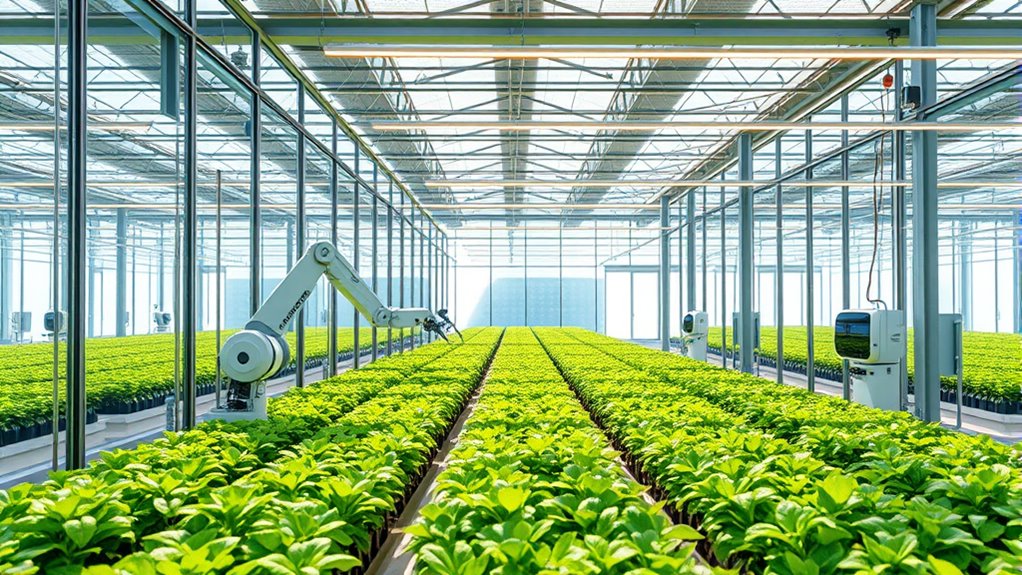
Have you ever wondered how technology is transforming traditional farming? In the world of agriculture, smart greenhouses are leading the way by creating controlled environments that maximize plant growth. These high-tech structures rely heavily on automated systems, making farming more efficient and sustainable. One of the key features is automated irrigation, which guarantees your plants receive the perfect amount of water at the right times, reducing waste and conserving resources. Instead of manual watering, sensors detect soil moisture levels and trigger watering systems precisely when needed. This not only saves you time but also helps prevent overwatering or underwatering, both of which can harm plant health. Automated irrigation works seamlessly with climate monitoring tools that continuously track temperature, humidity, light levels, and other environmental factors inside the greenhouse. This real-time data allows you to make informed decisions or set the system to adjust automatically, maintaining ideal conditions around the clock.
Climate monitoring plays a vital role in guaranteeing your plants thrive. With advanced sensors and data analytics, you can keep a close eye on the greenhouse’s internal environment, even from afar. If the temperature rises too high, ventilation systems can activate automatically to cool things down. Conversely, if it gets too cold, heating elements can turn on without you having to lift a finger. Humidity levels are also carefully managed to prevent disease and promote healthy growth. Light sensors help optimize sunlight exposure or activate grow lights when natural light dips, ensuring your plants receive consistent illumination. These integrated systems work together to create a stable, perfect environment that adapts dynamically to outside weather conditions and internal needs.
Frequently Asked Questions
What Are the Cost Benefits of Implementing Smart Greenhouses?
By implementing smart greenhouses, you achieve significant cost savings through optimized resource use, like water and energy, reducing operational expenses. These technologies also enable better crop yields and faster growth, boosting your investment returns. Although there’s an initial investment, the long-term savings and increased productivity outweigh costs, making smart greenhouses a financially smart choice for sustainable farming and higher profitability.
How Do Smart Greenhouses Impact Local Ecosystems?
Smart greenhouses can positively impact local ecosystems by preserving biodiversity and reducing habitat disruption. They cut down on land use, often needing 90% less space than traditional farms, which helps protect surrounding habitats. By controlling environments, they minimize pests and reduce chemical runoff, supporting biodiversity preservation. However, if not carefully managed, they might disrupt local habitats during construction or resource extraction, so mindful planning is essential for ecological benefits.
What Are the Main Challenges in Adopting This Technology Globally?
You’ll face significant challenges in adopting this technology globally, mainly due to technological barriers like limited infrastructure and high costs. Policy regulations also pose hurdles, as they can vary widely across countries, making it tough to implement consistent standards. Additionally, there’s often resistance to change and lack of expertise, which slow down adoption. Overcoming these issues requires coordinated efforts from governments, industries, and communities to promote sustainable, accessible smart greenhouse solutions worldwide.
How Secure Is the Data Collected by Smart Greenhouse Systems?
You can feel confident that the data collected by smart greenhouse systems is generally secure, thanks to robust cybersecurity measures like encryption and secure access controls. However, always stay vigilant about data privacy, as vulnerabilities exist. Regular updates and strong passwords help protect your data from cyber threats, ensuring your environmental and operational information remains safe and confidential.
Can Smart Greenhouses Be Customized for Different Crop Types?
You can definitely customize smart greenhouses for different crop types, and it’s quite exciting. With crop-specific enhancement, you tailor parameters like temperature, humidity, and lighting to each plant’s needs. Thanks to modular greenhouse design, you can easily adapt and expand sections for various crops, ensuring ideal growth conditions. This flexibility means you’re always ready to meet the unique demands of every crop, maximizing yields and efficiency.
Conclusion
Imagine stepping into a smart greenhouse where sensors automatically adjust lighting and watering to create the perfect environment. For example, a tomato farm in California uses this technology to boost yields and reduce water use. By embracing smart greenhouses, you can enjoy healthier plants and higher productivity with less effort. This innovative approach transforms traditional farming, making it more efficient and sustainable—helping you grow better crops while protecting the environment.