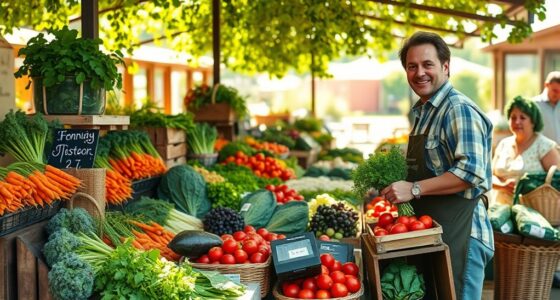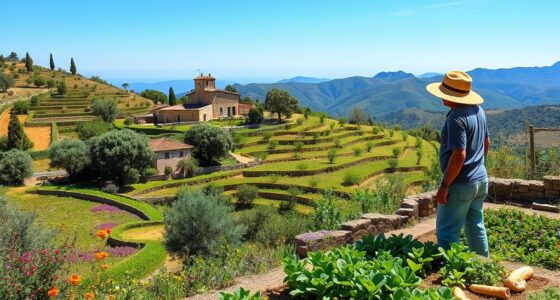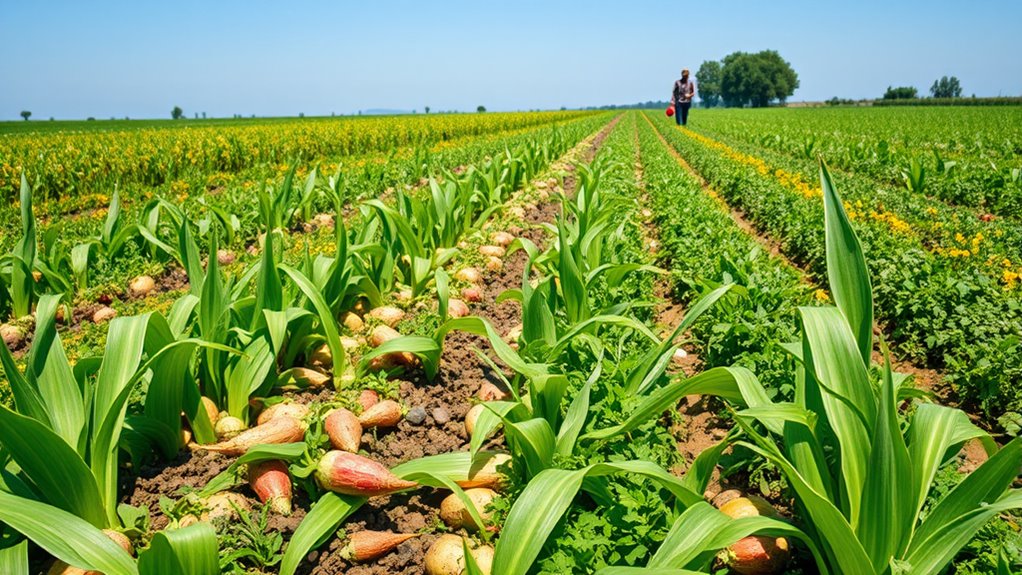

Implementing biodiverse crop rotations boosts your farm’s productivity by improving soil health, naturally managing pests, and supporting a resilient ecosystem. By rotating different crops each season, you enhance microbial diversity, reduce soil degradation, and minimize chemical use. This approach not only stabilizes yields but also promotes environmental sustainability and cost savings. To discover how these practices can transform your farm’s ecology and output, explore the detailed benefits further below.
Key Takeaways
- Diversifying crops in rotation improves soil health, boosts productivity, and reduces nutrient depletion naturally.
- Crop rotation disrupts pest and disease cycles, lowering reliance on chemical controls.
- Different crops foster diverse soil microbial communities that enhance nutrient cycling and soil fertility.
- Biodiverse rotations spread farming risks and promote yield stability under varying environmental conditions.
- Implementing crop diversity supports sustainable farming by reducing input costs and environmental impact.
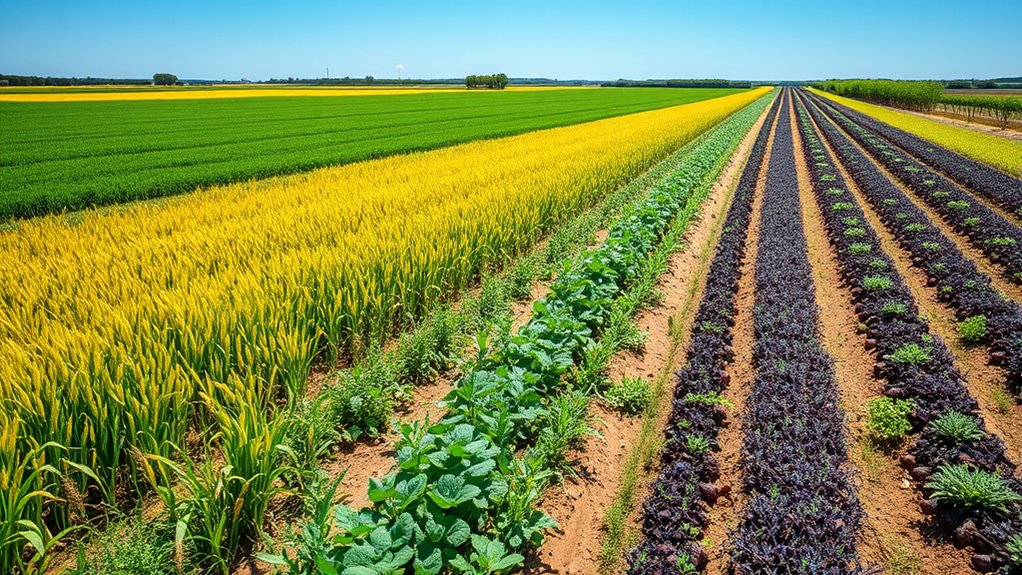
Implementing biodiverse crop rotations can substantially boost your farm’s productivity and sustainability. When you diversify the crops you grow each season, you’re not only reducing the risk of soil degradation but also improving overall soil health. Healthy soil is the foundation for strong plant growth, better nutrient cycling, and increased resilience against pests and diseases. By rotating different crops, especially those with varying root structures and nutrient demands, you prevent the continuous depletion of specific nutrients and disrupt pest and disease cycles. This natural approach minimizes your reliance on chemical inputs, making your farm more environmentally friendly and cost-effective.
Diversify crops each season to improve soil health and boost farm productivity naturally.
Incorporating a variety of crops into your rotation schedule directly benefits pest management efforts. Many pests are specialized, thriving on specific host plants, so by switching crops regularly, you break their life cycles and reduce their populations. For example, planting legumes one season and grains the next can confuse pests that target a particular crop, decreasing the likelihood of infestation. Additionally, some crops release natural compounds that repel pests or attract beneficial insects, further enhancing your integrated pest management strategy. This biological control method not only lowers pesticide use but also supports biodiversity on your farm, creating a balanced ecosystem where pests are kept in check naturally.
Furthermore, biodiverse crop rotations foster a more resilient soil ecosystem. Different crops contribute and extract nutrients uniquely, promoting diverse microbial communities that enhance soil structure and nutrient availability. These microbes play an essential role in decomposing organic matter, fixing nitrogen, and suppressing soil-borne diseases. As a result, your soil becomes more fertile and better equipped to support healthy plant growth year after year. This improved soil health reduces the need for synthetic fertilizers, cutting costs and minimizing environmental impacts like runoff and pollution. Incorporating diverse crop varieties can also improve soil microbial activity, leading to healthier and more sustainable farm systems.
You also benefit from the increased stability that comes with crop diversity. Monoculture farming can lead to soil exhaustion and vulnerability to pests and weather extremes. In contrast, rotating a variety of crops spreads out risk and ensures that your land remains productive over time. You’ll notice that with biodiverse rotations, yields tend to be more consistent, even in challenging weather conditions. Plus, this approach aligns with sustainable farming practices, helping you meet environmental standards and market demands for eco-friendly produce.
biodiverse crop rotation seeds
As an affiliate, we earn on qualifying purchases.
As an affiliate, we earn on qualifying purchases.
Frequently Asked Questions
How Do Crop Rotations Impact Soil Microbial Diversity?
Crop rotations positively impact soil microbial diversity by promoting soil health and supporting diverse microbial ecosystems. When you rotate different crops, you diversify the organic matter and nutrients in the soil, which fosters a variety of beneficial microbes. This variation helps prevent disease buildup and improves nutrient cycling, leading to healthier soil. As a result, your crops grow stronger, and the soil remains resilient, sustainable, and productive over time.
What Are the Economic Benefits of Biodiverse Crop Systems?
You gain economic benefits from biodiverse crop systems through increased market stability and crop diversification. By growing a variety of crops, you reduce risks associated with price fluctuations and crop failures, ensuring a steadier income. Diversification also opens new markets and demand opportunities, boosting profitability. Additionally, healthier soils and ecosystems lower input costs over time. Overall, implementing biodiverse rotations makes your farming more resilient and financially secure.
How Can Farmers Transition to Biodiverse Crop Rotations?
To shift to biodiverse crop rotations, start by carefully selecting cover crops that improve soil health and pest control. Next, plan your crop scheduling to guarantee a diverse sequence, which breaks pest cycles and enhances yields. Gradually introduce these changes over seasons, monitor soil and crop performance, and adjust your plan accordingly. This proactive approach helps you build a resilient, sustainable farming system with long-term benefits.
Are There Specific Crops Best Suited for Rotation in Certain Climates?
Think of crop selection like dressing for weather; you need climate-specific crops for best results. In arid regions, drought-tolerant plants thrive, while in humid climates, rice or sugarcane work well. Regional rotation strategies consider local soil and climate conditions, optimizing yields. For example, farmers in the Midwest often rotate corn with soybeans, aligning with regional climate and soil health needs, ensuring sustainable, productive farming year-round.
What Are Potential Challenges in Implementing Biodiverse Rotations?
You may face challenges like limited farmer training and lack of policy incentives when implementing biodiverse rotations. It can be difficult to convince farmers to adopt new practices without proper education or support. Additionally, policy gaps might hinder the adoption process, making it harder to sustain diverse crop systems. Overcoming these hurdles requires targeted farmer training programs and advocating for policy incentives that promote ecological farming methods.
soil health testing kit
As an affiliate, we earn on qualifying purchases.
As an affiliate, we earn on qualifying purchases.
Conclusion
By embracing biodiverse crop rotations, you plant seeds of resilience and harmony. Each cycle becomes a dance of balance, where variety fuels vigor and sustains the land. Like a symphony of nature’s rhythms, your efforts nurture a thriving ecosystem, echoing the promise of renewal. With every rotation, you sow hope—an enduring symbol of growth, sustainability, and the vibrant future that blooms from working in tune with the earth’s natural melody.
beneficial insect traps
As an affiliate, we earn on qualifying purchases.
As an affiliate, we earn on qualifying purchases.
organic pest control products
As an affiliate, we earn on qualifying purchases.
As an affiliate, we earn on qualifying purchases.