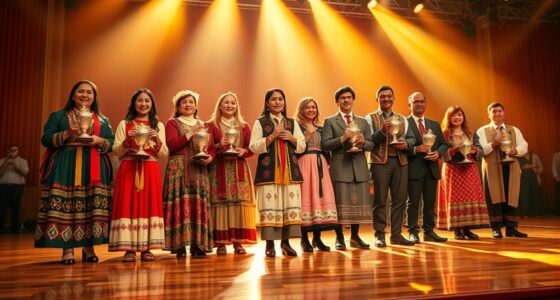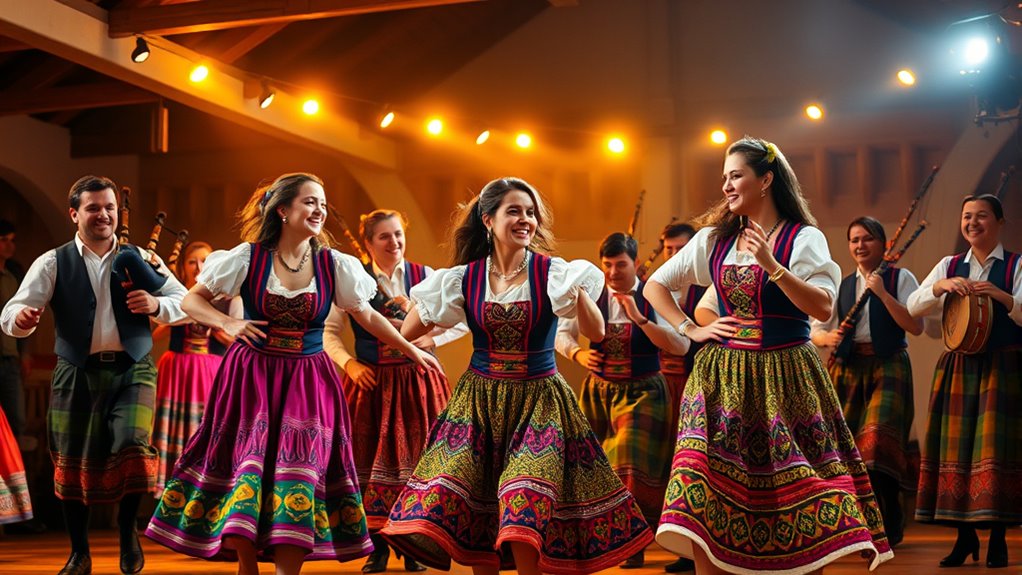
During Sonos De Ballu, you witness the vibrancy of Sardinian music and dance, highlighted by traditional costumes filled with bright embroidery, silver jewelry, and colorful sashes. These costumes, crafted with centuries-old techniques, add visual energy and cultural depth to performances. They symbolize Sardinia’s history and spirit, enhancing the lively choreography and music. If you keep exploring, you’ll discover even more about how these costumes preserve the island’s rich heritage and vibrant traditions.
Key Takeaways
- Sonos De Ballu showcases traditional Sardinian music and dance, emphasizing vibrant costumes that embody regional cultural identity.
- Costumes are handcrafted with detailed embroidery and jewelry, preserving Sardinian craftsmanship and heritage.
- The colorful attire enhances visual storytelling and energetic movement during lively performances.
- Music, dance, and costumes together create an immersive experience celebrating Sardinian history and community spirit.
- These cultural elements sustain Sardinian traditions, symbolizing resilience, authenticity, and the island’s rich cultural legacy.

As you immerse yourself further, you’ll see that music isn’t just about sound; it’s also about visual storytelling through traditional costumes. Sardinian traditional costumes are vibrant, intricate, and full of symbolism. Women often wear elaborate dresses made from richly embroidered fabrics, adorned with silver jewelry and colorful sashes. These costumes are carefully crafted, with each pattern and accessory holding cultural significance. Men, on the other hand, typically wear woolen shirts, vests, and wide trousers, often decorated with embroidery or metallic accents that reflect regional styles. When dancers wear these costumes during performances, they don’t just look beautiful—they embody the history and identity of Sardinia. The movement of the costumes, especially in lively dances, adds a visual energy that complements the music, making every step and twirl a celebration of Sardinian heritage.
Additionally, the traditional costumes are often handmade using age-old techniques passed down through generations, ensuring the preservation of Sardinian craftsmanship. Together, the musical instruments and traditional costumes create a sensory experience that’s both mesmerizing and authentic. Whether you’re watching a community festival or joining in a local dance, you’ll find that these elements serve as a bridge to Sardinia’s history, preserving its stories and soul. The music and dance of Sardinia aren’t just entertainment; they’re a living tribute to the resilience and vibrancy of its people. By exploring these traditions, you’ll gain a deeper appreciation of Sardinia’s cultural richness and the passionate spirit that keeps it alive.
Frequently Asked Questions
What Is the Origin of Sonos De Ballu?
You should know that the origin of Sonos de Ballu lies in Sardinian tradition, dating back centuries. Its cultural significance is profound, serving as a way to preserve community bonds and celebrate local heritage. The musical characteristics include lively rhythms and harmonious vocal arrangements, often accompanied by traditional instruments. By participating, you connect deeply with Sardinian history, experiencing the vibrant spirit and unique melodies that define this cherished dance and song tradition.
How Has Sonos De Ballu Evolved Over Centuries?
You see, sonos de ballu has evolved through musical transformations and dance evolutions over centuries. You notice how traditional rhythms blend with modern instruments and styles, creating new expressions while respecting roots. Dance movements have adapted, becoming more dynamic yet preserving their cultural essence. You can appreciate this ongoing evolution, as it keeps Sardinian music vibrant and relevant, allowing you to connect deeply with its rich history and lively spirit.
Are There Specific Regions Where Sonos De Ballu Is Most Popular?
You’ll find Sonos De Ballu most popular in Sardinia’s central and southern regions, where regional variations and traditional dance styles thrive. These areas preserve the vibrant, energetic dance forms, reflecting local customs and history. You might notice differences in rhythm, movements, and instruments, making each region’s style unique. If you attend a local celebration, you’ll experience firsthand how regional variations shape the lively, cultural expression of Sardinian music and dance.
What Instruments Are Traditionally Used in Sonos De Ballu?
Imagine the lively hum of traditional Sardinian celebrations; that’s sonos de ballu. You’ll hear musical instruments like the launeddas (a triple-pipe reed instrument), tambourines, and accordions, each adding its unique flavor. Regional variations influence instrument choices, but these core sounds create the vibrant, rhythmic tapestry of Sardinian dance. You feel the heartbeat of the island in every note, connecting you to its rich cultural heritage.
How Can Tourists Participate in Sonos De Ballu Events?
You can actively participate in Sonos de Ballu events by joining local dance workshops, where you’ll learn traditional Sardinian steps and rhythms. Wear a traditional costume to fully immerse yourself in the cultural experience, and even try singing along or playing simple instruments if offered. Engaging in these activities allows you to connect deeply with Sardinian music and dance, making your visit memorable and authentic.
Conclusion
As you immerse yourself in Sonos De Ballu, you become part of a vibrant tapestry where Sardinian melodies weave through your soul like a gentle breeze. The dance pulses like a beating heart, echoing centuries of tradition. Feel the rhythm ignite your spirit, transporting you to an island where music and dance are the heartbeat of life itself. Embrace this timeless celebration, and let the echoes of Sardinia’s soul dance forever within you.