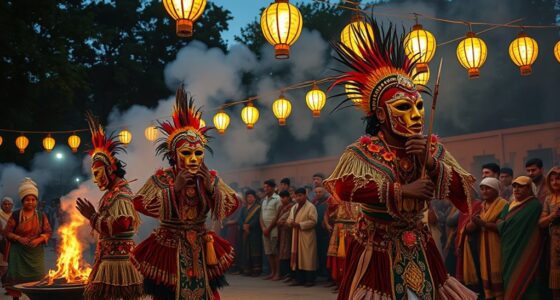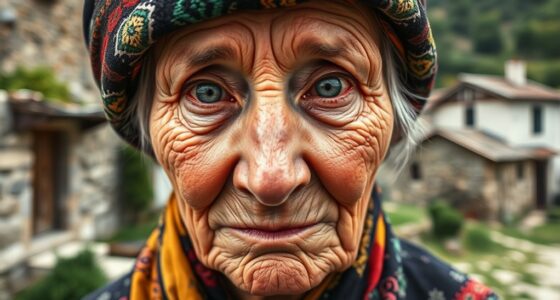
Discover the vibrant traditional music and dance of Sardinia, where ancient melodies and lively rhythms celebrate the island’s rich cultural heritage. You’ll encounter unique instruments like the haunting launeddas alongside energetic folk tunes that evoke Sardinia’s landscape and history. Dances feature colorful costumes, lively movements, and community participation at festivals and gatherings. If you continue exploring, you’ll uncover more about how these traditions symbolize resilience, regional pride, and a deep cultural identity.
Key Takeaways
- Sardinian music features ancient melodies played with traditional instruments like launeddas, guitar, and accordion.
- Dances are lively, synchronized, often performed in circles, emphasizing community and celebration.
- Costumes are vibrant and detailed, symbolizing regional identity and craftsmanship.
- Music and dance serve to reinforce cultural heritage, social bonds, and regional pride.
- The soundscape blends hypnotic melodies with energetic rhythms, reflecting Sardinia’s historical and cultural resilience.
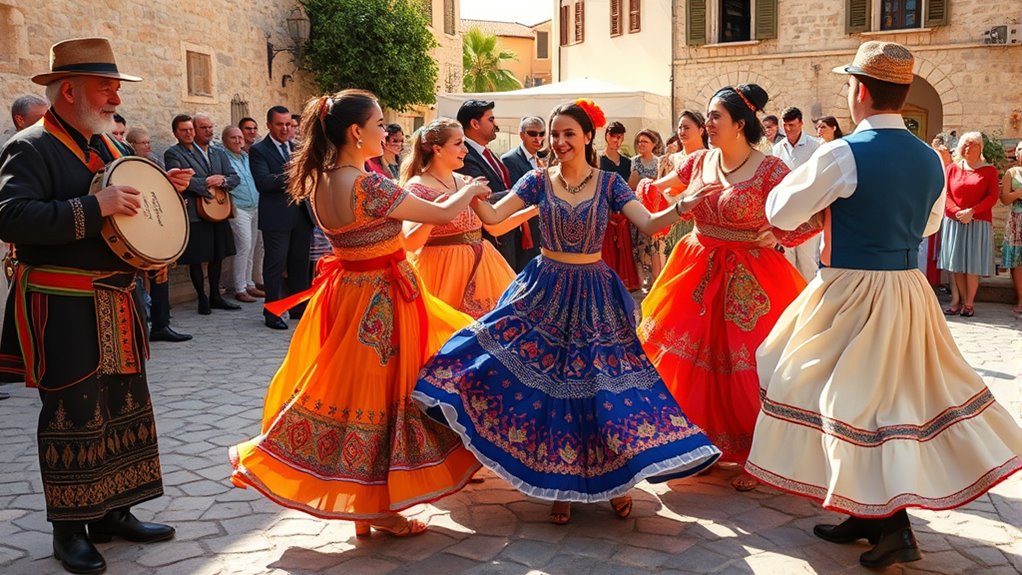
Sardinia’s traditional music and dance vividly reflect the island’s rich cultural heritage, blending ancient rhythms with lively movements that have been passed down through generations. When you experience Sardinian music, you immediately notice the distinctive instrumental styles that define its sound. Instruments like the launeddas—ancient reed pipes—produce haunting melodies that seem to echo the island’s history and landscape. These melodies often feature intricate, repetitive patterns that carry a hypnotic quality, drawing listeners into a deep sense of connection with Sardinian traditions. Alongside the launeddas, you’ll hear the guitar, accordion, and other folk instruments, all contributing to a layered, vibrant soundscape that’s both energetic and soulful. The durability of traditional instruments ensures that these musical practices have been preserved and passed down through generations, maintaining their authenticity and cultural significance.
Sardinian music blends ancient melodies with lively instruments and rhythms, echoing the island’s rich cultural heritage and traditions.
Dance is integral to Sardinian musical expression, and the movements are as lively as the tunes are enthralling. When you join in or watch a Sardinian dance, you’ll notice the importance of dance costumes, which are colorful and meticulously crafted. These costumes are more than just clothing; they’re a celebration of regional identity and craftsmanship. Women’s dresses often feature embroidered details, lace, and bright ribbons, while men’s attire includes traditional vests, trousers, and sometimes hats decorated with feathers or embroidery. Wearing these costumes during dances helps preserve the cultural heritage and creates a visual spectacle that complements the music’s rhythm.
The dance styles themselves are characterized by their lively, synchronized movements. You might find yourself clapping, stamping, or twirling as part of the communal experience. Sardinian dances often involve circle formations, where participants hold hands and move in coordinated steps, emphasizing unity and collective joy. These dances are not just entertainment; they serve as a way to reinforce social bonds and celebrate special occasions like festivals, weddings, or religious events.
The instrumental styles and dance costumes are deeply intertwined, each enhancing the other’s expressive power. When you see dancers in traditional attire moving to the pulsating rhythms of Sardinian folk music, you witness a living tradition that captures the island’s spirit. Every instrument, every stitch in the costumes, and every step in the dance tells a story—one of resilience, community, and pride. As you immerse yourself in Sardinian music and dance, you participate in a centuries-old cultural dialogue that continues to thrive on the island today.

eSplanade – Brass Tibetan Tingsha Manjeera Clash Cymbals or Hand Cymbals – Traditional Instrument for Indian Music & Tibetan Prayer
High-Quality Brass Construction: Crafted from premium brass, this eSplanade Manjeera set ensures durability and a rich, resonant sound.
As an affiliate, we earn on qualifying purchases.
As an affiliate, we earn on qualifying purchases.
Frequently Asked Questions
How Are Sardinian Dances Traditionally Performed?
You perform Sardinian dances by forming lively dance formations, often in circles or lines, that showcase the community spirit. Dancers wear colorful folk costumes, which add to the vibrant atmosphere. You usually hold hands or link arms, moving rhythmically to traditional music. These dances are energetic and expressive, emphasizing social connection. As you dance, you honor Sardinia’s cultural heritage through lively steps and coordinated movements that bring everyone together.
What Regional Variations Exist in Sardinian Music Styles?
You’ll notice regional variations in Sardinian music styles influenced by distinct dialects and local traditions. In the North, folk costumes feature vibrant embroidery, and music often has lively, rhythmic patterns. In the South, melodies tend to be more melodic and slower, with different dialects shaping lyrics and singing styles. These regional differences reflect Sardinia’s diverse cultural heritage, making each area’s music uniquely expressive and rich.
Are There Specific Instruments Unique to Sardinian Music?
You’re in for a treat because Sardinian music has its own set of regional instruments that make it stand out. Instruments like the launeddas—a traditional triple-pipe wind instrument—bring traditional melodies to life in a way no other can match. You’ll also find the cembalo and gadulka adding unique flavors. These instruments play a crucial role in preserving Sardinia’s musical heritage, truly making their sound one of a kind.
How Has Sardinian Music Evolved Over Recent Decades?
You’ve seen Sardinian music evolve over recent decades through musical modernization and global influences. You notice how traditional instruments blend with modern genres, creating a fresh sound. Local artists incorporate international styles, making Sardinian music more accessible worldwide. This fusion helps preserve cultural roots while embracing innovation. As a result, Sardinian music remains vibrant, dynamic, and continually adapting to contemporary tastes, ensuring its rich heritage stays alive in a globalized world.
What Role Does Music Play in Sardinian Cultural Identity?
You see, music plays a essential role in Sardinian cultural identity, uniting communities and preserving traditions. When you attend music festivals, you experience authentic local sounds and dances that strengthen your connection to the island’s heritage. These events promote cultural preservation, ensuring that Sardinian music remains alive for future generations. By participating, you help keep this rich cultural tapestry vibrant and relevant in today’s modern world.

Launeddas: A Sardinian Folk-Music Instrument, Two Volumes
As an affiliate, we earn on qualifying purchases.
As an affiliate, we earn on qualifying purchases.
Conclusion
As you listen to Sardinia’s lively melodies and watch dancers sway beneath the warm Mediterranean sun, you feel the island’s vibrant spirit come alive. The rhythmic beat echoes through your chest, and the colorful costumes swirl like waves on the sea. You realize that these traditions aren’t just performances—they’re a heartbeat, a timeless dance that invites you to become part of Sardinia’s enduring cultural tapestry, where history and happiness beautifully intertwine.

Bharatnatyam Dance Dress Elegant and Traditional Costume for Girls and Women, Suitable for Ages 4 to Adult (Red, 24 (4-6 Years))
Authentic Bharatanatyam Design – Traditional South Indian classical dance costume inspired by temple-style attire, enhancing stage presence and…
As an affiliate, we earn on qualifying purchases.
As an affiliate, we earn on qualifying purchases.
traditional Sardinian dance accessories
As an affiliate, we earn on qualifying purchases.
As an affiliate, we earn on qualifying purchases.