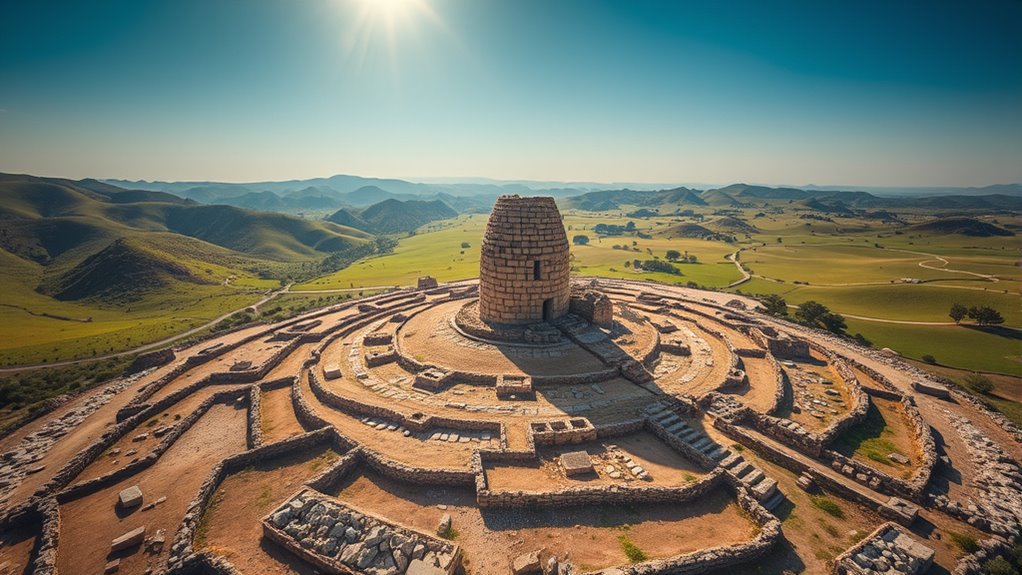

You can explore Sardinia’s archaeological sites, from the iconic Nuraghe towers built between 1500 and 500 BCE to ancient tombs like Domus de Janas. Caves filled with petroglyphs and rock art reveal early spiritual beliefs and daily routines. These sites showcase impressive engineering and showcase how early communities thrived and adapted. If you’re curious about Sardinia’s ancient past, discovering these treasures will offer fascinating insights into its rich history.

Get travel and outdoor gear delivered free with Prime
- Fast, free delivery on millions of items
- Prime Video, Amazon Music and more included
- Member-only deals all year
Key Takeaways
- Sardinia is renowned for its Nuraghe structures, prehistoric stone towers built between 1500-500 BCE, symbolizing ancient engineering and societal organization.
- Archaeological sites include tombs like Domus de Janas and ancient villages, revealing insights into spiritual beliefs and community life.
- Caves with rock art and petroglyphs provide valuable information about early human symbols, rituals, and daily routines.
- Recent excavations have uncovered new details about construction techniques, highlighting Sardinia’s prehistoric craftsmanship and resilience.
- Visiting these sites offers a direct connection to Sardinia’s rich history, showcasing its significance in European prehistoric civilization.

Sardinia’s archaeological sites offer a mesmerizing glimpse into its ancient past, revealing a rich tapestry of civilizations that once thrived on the island. One of the most iconic features you’ll encounter is the Nuraghe, a monument to Sardinia’s unique prehistoric architecture. These megalithic stone structures, built around 1500 to 500 BCE, dominate the landscape with their imposing, yet intricate design. As you explore, you’ll notice how the Nuraghe’s central tower, often surrounded by smaller towers and walls, served both defensive and social purposes. Their construction required impressive engineering skills, and they stand as a symbol of Sardinian resilience and ingenuity. Walking through these ancient ruins, you’ll feel connected to a culture that valued communal effort and strategic strength, reflected in the careful placement and craftsmanship of each Nuraghe. These structures are more than just stone; they’re Sardinian prehistoric relics that hold stories of early societal organization, rituals, and daily life. Additionally, recent archaeological excavations have uncovered new insights into the construction techniques used in building these impressive edifices, further enriching our understanding of Sardinian prehistoric ingenuity.
Nuraghe structures reveal Sardinia’s resilience, ingenuity, and ancient societal stories through their impressive prehistoric architecture.
Beyond the Nuraghe, the island is dotted with other archaeological relics that deepen your understanding of Sardinia’s prehistory. You’ll find tombs, such as the Domus de Janas—small rock-cut chambers carved into cliffs—used for burial practices thousands of years ago. These tombs reveal insights into the spiritual beliefs and social hierarchy of ancient Sardinians. You might also stumble upon ancient villages and nuraghe complexes that demonstrate how communities interacted and thrived in challenging environments. As you walk through these sites, it’s impossible not to marvel at the diversity of Sardinian prehistoric relics, each offering a different piece of the island’s history puzzle.
The island’s archaeological richness extends into its caves and rock art, where petroglyphs and carvings depict symbols and scenes from early human life. These artistic expressions provide a window into the symbolic world of Sardinia’s ancient inhabitants, illustrating their beliefs, hunting practices, and daily routines. With each discovery, you gain a clearer picture of a society that was both innovative and deeply connected to its environment.
Visiting Sardinia’s archaeological sites isn’t just about seeing old stones; it’s about immersing yourself in a story that spans millennia. The Nuraghe and Sardinian prehistoric relics invite you to step back in time and witness the ingenuity and resilience of the island’s early peoples. These sites serve as a lasting legacy, reminding you of Sardinia’s central role in understanding Europe’s ancient history.
As an affiliate, we earn on qualifying purchases.
Frequently Asked Questions
What Materials Were Used to Construct the Nuraghe?
You’ll find that nuraghe structures were built primarily with large, rough-hewn basalt stones, chosen for their material durability. These stones were carefully placed using dry stone construction techniques, which involve fitting them together without mortar. This method guarantees the stability of the nuraghe over centuries. The use of durable materials and skilled construction techniques has helped these ancient towers withstand time and the elements.
Are There Guided Tours Available at Sardinian Archaeological Sites?
Yes, guided tours are available at Sardinian archaeological sites, making it easier for you to explore and learn. These tours often include visitor accessibility features, ensuring everyone can enjoy the experience. You can join organized groups or book private guides, depending on your preference. Guided tours provide insightful commentary about the Nuraghe and other sites, enriching your visit and helping you appreciate Sardinia’s rich history and culture fully.
How Do Nuraghe Structures Vary Across Different Regions?
Imagine uncovering an ancient puzzle—nuraghe structures vary greatly across Sardinia’s regions. You’ll see differences in architectural styles, from massive, intricate towers to simpler, more rounded forms. Regional preservation efforts help keep these marvels intact, highlighting local craftsmanship. Each nuraghe reflects unique cultural influences and historical periods, making Sardinia a fascinating mosaic of ancient engineering. Exploring these variations reveals the island’s rich, diverse heritage in every stone.
What Is the Significance of the Giants’ Grave Sites?
Giants’ grave sites hold mythological significance, reflecting ancient burial customs that honor notable individuals. You’ll find these sites symbolize a connection to legends, embodying the reverence Sardinians held for their ancestors. These tombs reveal how early populations believed in an afterlife, emphasizing respect and remembrance. Their grandeur and unique design serve as a demonstration to the cultural importance of honoring the dead and preserving mythic traditions through burial practices.
Can Visitors Access Underground Chambers in Nuraghe Complexes?
You can definitely explore underground chambers in Nuraghe complexes during your visit. Nuraghe exploration often includes access to these hidden spaces, revealing the intriguing ancient architecture. While some chambers might be a bit tight or require careful navigation, they offer a unique glimpse into Sardinia’s rich history. Be sure to follow guided tours or local advice to safely enjoy the wonder of underground chamber access and uncover the mysteries beneath these ancient structures.
archaeological site guide Sardinia
As an affiliate, we earn on qualifying purchases.
As an affiliate, we earn on qualifying purchases.
Conclusion
As you explore Sardinia’s archaeological treasures, you’ll discover sites like the ancient nuraghe, standing tall like guardians of history. These ruins invite you to step back in time and imagine a world long gone. By visiting these sites, you connect with a culture as rich and layered as the island’s rugged landscape. So, don’t just read about them—dive in and experience Sardinia’s past firsthand, like opening a timeless, mysterious book waiting to be explored.
As an affiliate, we earn on qualifying purchases.
As an affiliate, we earn on qualifying purchases.
Evergreen bestsellers Picks
bestsellers
As an affiliate, we earn on qualifying purchases.