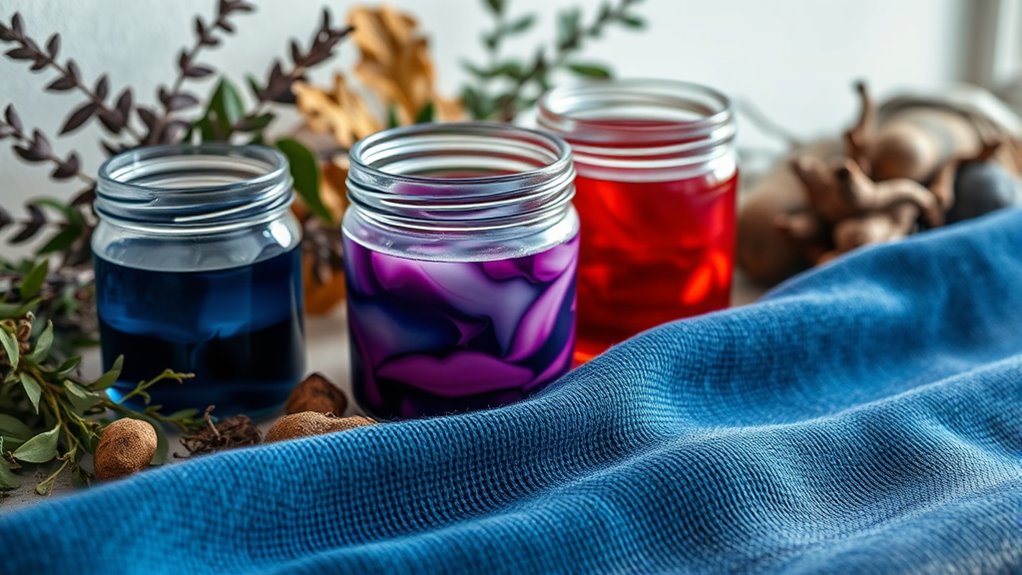

Natural dyes are an eco-friendly way to achieve sustainable coloring by using pigments extracted from plants like indigo and madder. You can produce vibrant hues through simple soaking or boiling methods, which are safe and gentle on fibers. To guarantee durability, prepare your fabrics with mordants such as alum or iron. Exploring these techniques further reveals how you can create beautiful, earthy colors while protecting the environment. Keep exploring to uncover more eco-conscious dyeing secrets.
Key Takeaways
- Natural dyes are extracted from plant materials like roots, leaves, and flowers, offering eco-friendly and safe coloring options.
- Proper extraction methods, including boiling and soaking, maximize pigment yield and color intensity.
- Pre-treating fabrics with mordants such as alum or iron ensures better dye fixation and enhances color fastness.
- Natural dyeing processes promote sustainability by reducing chemical use and leveraging renewable plant resources.
- These techniques produce softer, muted tones that connect textiles to nature and support environmentally conscious practices.
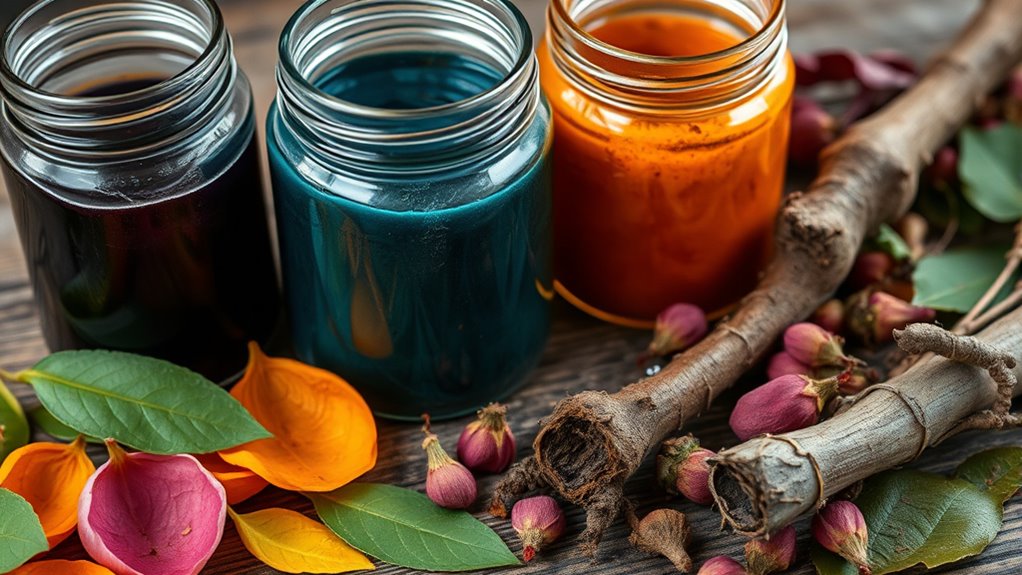
Natural dyes have been used for centuries to color textiles, food, and crafts with eco-friendly and safe ingredients. You can harness the power of plant extraction to obtain vibrant hues straight from nature. This process involves soaking plant materials like roots, leaves, bark, or flowers in water or alcohol to extract their pigments. The key is choosing the right plants, such as indigo for blue or madder for red, which have rich, natural colorants. Once you’ve extracted the dye, you’ll need to prepare your fabric or material to absorb the color effectively.
Natural dyes originate from plant materials like roots, leaves, and flowers for eco-friendly, vibrant coloring.
Dye mordants play a critical role in this process. These are substances that fix the dye onto fibers, ensuring the color is vibrant, long-lasting, and resistant to fading. Common mordants include alum, iron, tannin, and copper. Each mordant interacts differently with plant-based dyes and textiles, so selecting the right one depends on the desired color outcome and the type of fabric you’re working with. For example, alum tends to brighten colors and is gentle on most fibers, while iron can deepen or darken shades. Applying mordants before dyeing helps improve color fastness and enhances the overall appearance of the finished product.
When using plant extraction, it’s essential to contemplate the method of extraction, temperature, and time for soaking to maximize pigment yield. You might boil plant materials to release more dye or soak them over several hours for a more concentrated color. Once you have your dye bath ready, you can submerge your fabric, making sure it’s evenly soaked to achieve consistent coloration. Remember, natural dyes often produce softer, more muted tones compared to synthetic dyes, but they offer a beauty that’s deeply connected to nature.
The process of mordanting is just as important as the dyeing itself. You typically pre-treat your textile with a mordant solution, which helps the dye molecules bond more effectively with the fibers. This step can dramatically influence the final hue and durability of your colors. Some mordants may require heating or prolonged soaking, so follow specific instructions based on the mordant you choose. Experimentation is part of the process—by adjusting mordant types and dyeing times, you can develop a wide palette of earthy, organic shades.
Frequently Asked Questions
How Do Natural Dyes Compare to Synthetic Dyes in Longevity?
Natural dyes generally have a lower colorfastness comparison to synthetic dyes, meaning they may fade faster over time. Factors influencing dye longevity include the mordant used, fiber type, dye extraction process, and washing methods. You’ll find that natural dyes often require careful preparation and maintenance to preserve their vibrancy. While they may not last as long as synthetic dyes, their eco-friendly benefits make them a worthwhile choice for sustainable coloring.
Are Natural Dyes Suitable for All Types of Fabrics?
Natural dyes aren’t suitable for all fabrics because fabric compatibility varies. You’ll find they work best on natural fibers like cotton, wool, and silk, which absorb dye well and show vibrant color intensity. However, synthetic fabrics like polyester may not absorb natural dyes effectively, resulting in duller colors. For best results, test your fabric first to make sure the natural dye provides the desired color intensity and durability.
What Are the Environmental Benefits of Using Natural Dyes?
Using natural dyes offers significant environmental benefits. You’ll find they’re biodegradable, which means they break down naturally and don’t pollute ecosystems. This reduces chemical waste and minimizes water contamination. Plus, natural dyes promote resource conservation because they often come from renewable sources like plants and minerals. By choosing these dyes, you help decrease reliance on synthetic chemicals, lowering your carbon footprint and supporting a more sustainable, eco-friendly approach to coloring fabrics.
How Can I Source Sustainable Materials for Natural Dyeing?
You can source sustainable materials for natural dyeing by choosing plant-based sources from local farms or organic suppliers. Look for products with organic certification to confirm they’re grown sustainably and without harmful chemicals. Support farmers practicing eco-friendly methods, and consider growing your own plants for dyes. This approach helps reduce environmental impact, promotes biodiversity, and guarantees you’re using ethically sourced, sustainable materials in your dyeing process.
What Safety Precautions Should Be Taken During Natural Dyeing?
Prioritize protection and prevention by wearing proper personal protective equipment like gloves, masks, and goggles during natural dyeing. Guarantee proper ventilation to avoid inhaling fumes or particles from dye materials. Handle all dyes carefully, avoid spills, and work in a well-ventilated space to protect your health. Take these precautions seriously, so your sustainable dyeing process stays safe, simple, and sustainable, safeguarding both your wellbeing and the environment.
Conclusion
By choosing natural dyes and sustainable coloring techniques, you’re not just adding beauty to your life—you’re making a difference. Every small step you take helps protect our planet’s future and keeps traditions alive. Remember, it’s the little things that often make the biggest impact. So go ahead, embrace these eco-friendly choices—because when it comes to saving the environment, every drop counts. Together, we can turn the tide and color a brighter tomorrow.