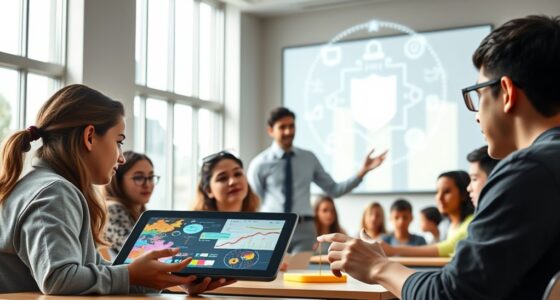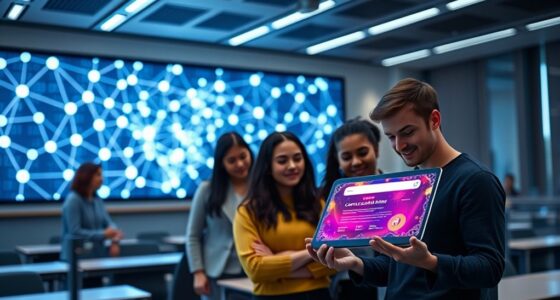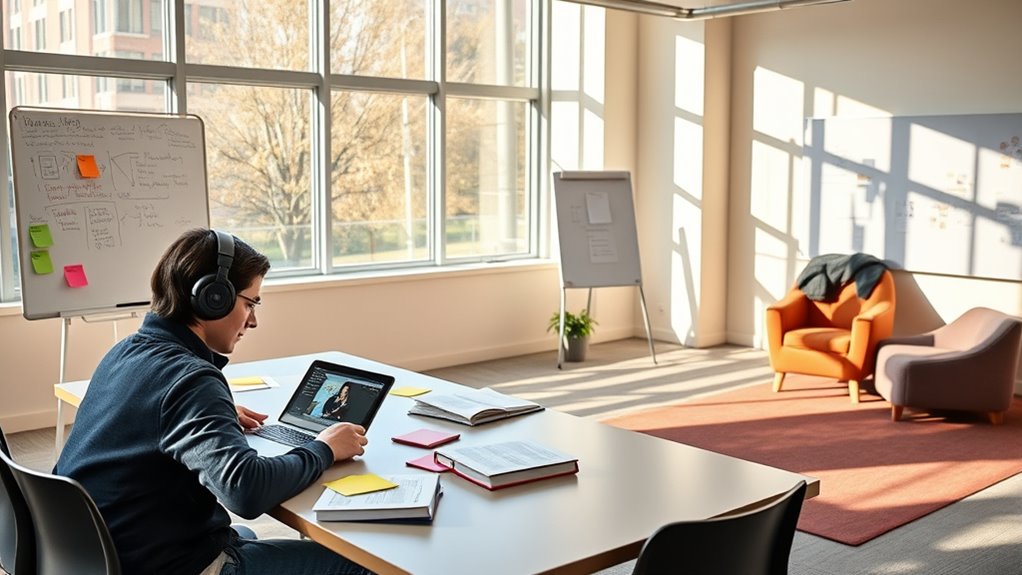

Hybrid and flexible learning models let you customize your education around your busy schedule. You can combine online lessons with in-person sessions, giving you control over when and where you study. Technology makes learning interactive and accessible, helping you stay connected and motivated. These models build skills like time management and independence, preparing you for today’s fast-paced world. Keep exploring to see how these approaches can help you succeed on your own terms.
Key Takeaways
- Hybrid models combine online and in-person classes, offering customizable schedules for busy learners.
- Digital platforms enable flexible access to course materials anytime and anywhere.
- Personalization allows learners to set their pace, focus on relevant topics, and manage their time effectively.
- Technology fosters interactive engagement and real-time feedback, enhancing motivation and understanding.
- These models develop skills like self-discipline and adaptability, preparing learners for modern, fast-paced environments.
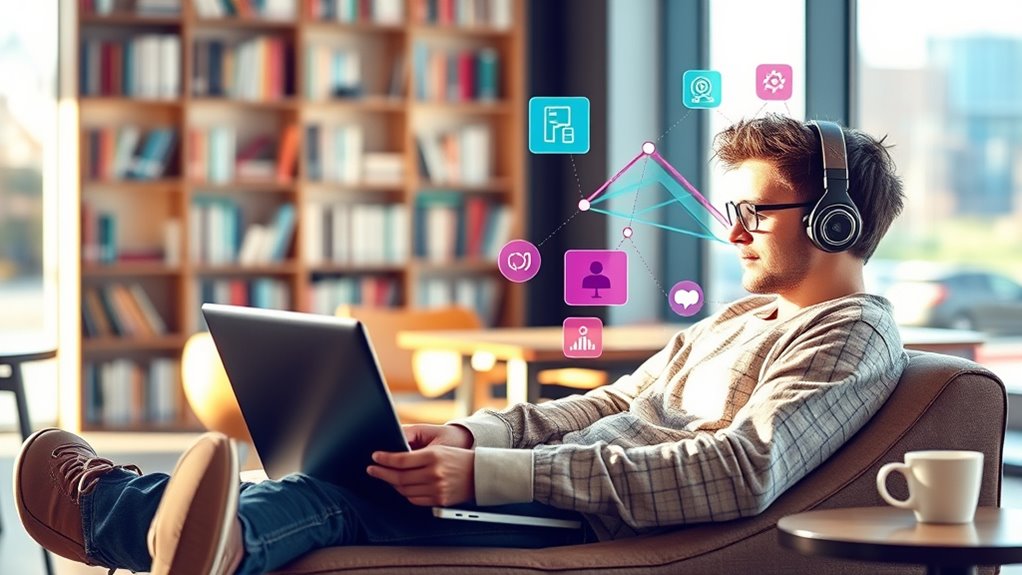
Hybrid and flexible learning models are transforming education by offering students the ability to customize their learning experiences. As a busy learner, you no longer have to choose between rigid schedules or sacrificing your other commitments. Instead, these models allow you to blend online lessons with in-person sessions, giving you the freedom to tailor your education to fit your life. This approach harnesses technology integration to make learning more accessible and adaptable. You can access course materials anytime, anywhere, whether you’re on a commute, at home, or during a lunch break. This seamless access keeps you connected to your coursework and encourages continuous engagement, even outside traditional classroom hours.
Technology plays a key role in making hybrid and flexible learning effective. With various digital tools and platforms, you can interact with instructors and classmates, submit assignments, and participate in discussions without being confined to a specific location. This integration of technology guarantees that your learning experience remains dynamic and interactive. It also helps foster student engagement, which is essential for your success. Interactive multimedia, real-time feedback, and online collaboration platforms keep you actively involved in your coursework. When learning is engaging, you’re more likely to stay motivated and retain information better, despite a busy schedule.
Flexibility is at the core of these models, allowing you to set your own pace and choose when and where to study. If you have a day packed with meetings or family responsibilities, you can catch up on lectures or complete assignments during quieter moments. Conversely, if you find yourself with extra time, you can explore deeper into topics or participate in supplementary activities. This adaptability means you’re not forced into a one-size-fits-all approach, but instead, you create a personalized learning path that aligns with your goals and lifestyle.
Moreover, hybrid and flexible learning models empower you to develop skills beyond just academic knowledge. You’ll learn to manage your time more effectively, become proficient with digital tools, and adapt to different learning environments—valuable skills in today’s fast-paced world. These models also promote independence and self-discipline, as you take responsibility for organizing your studies around your other commitments. Understanding heat pump technology can also serve as an analogy for how integrating innovative solutions can optimize performance and efficiency in various fields. With consistent technology integration, you remain connected and engaged, making your educational journey more meaningful and less stressful.
Frequently Asked Questions
How Do Hybrid Models Affect Student Social Interaction?
Hybrid models can enhance your social interaction by offering flexible opportunities for virtual collaboration and peer engagement. You can connect with classmates through online discussions, group projects, and live sessions, making it easier to build relationships despite busy schedules. While in-person events foster face-to-face bonds, virtual collaboration guarantees you stay engaged and maintain peer connections, creating a balanced social environment that adapts to your needs.
What Technology Is Essential for Effective Flexible Learning?
Think of technology as your modern Athena, guiding your flexible learning journey. To succeed, you need a robust learning management system that organizes your courses and tracks progress. Digital collaboration tools like video conferencing, shared documents, and instant messaging keep you connected and engaged. These technologies enable seamless access to materials and real-time interaction, making flexible learning effective and adaptable to your busy schedule.
Are Hybrid Programs Accredited the Same as Traditional Ones?
Hybrid programs are generally accredited the same as traditional ones, ensuring your credential recognition stays intact. Accreditation bodies evaluate the program’s quality, curriculum, and faculty, whether online, in-person, or hybrid. You should verify that the specific program’s accreditation aligns with industry standards. Doing so guarantees your degree or certificate holds value and is recognized by employers and institutions alike.
How Do Time Management Skills Impact Success in Flexible Learning?
Time management is vital for your success in flexible learning because it helps you stay organized and meet deadlines. When you develop strong skills in planning and prioritizing, you can balance coursework with your busy schedule more effectively. Good time management reduces stress and boosts productivity, making it easier to stay motivated and achieve your learning goals. Focus on honing these skills to maximize your flexibility and overall success in your studies.
What Strategies Support Motivation in Hybrid Learning Environments?
Ironically, the best way to stay motivated is to realize you don’t need constant external push. You support motivation by cultivating intrinsic motivation and setting clear goals. When you focus on why you’re learning and break tasks into achievable steps, you find renewed enthusiasm. Celebrate small wins and remind yourself of your purpose, turning the formidable into doable. This mindset keeps your drive alive, even in the busiest hybrid learning days.
Conclusion
Embracing hybrid and flexible learning models lets you tailor your education to fit your busy schedule. Did you know that 70% of learners report increased satisfaction when given flexible options? By choosing these models, you stay engaged and balance work, life, and study more effectively. So, don’t hesitate to explore these adaptable approaches—they’re designed to put your needs first, helping you succeed on your own terms.