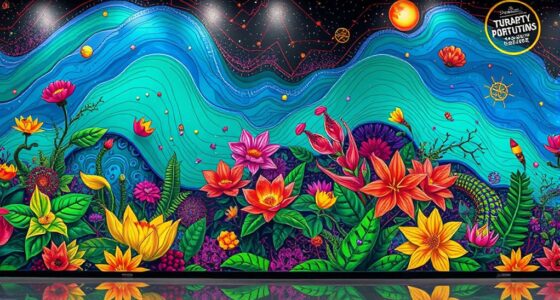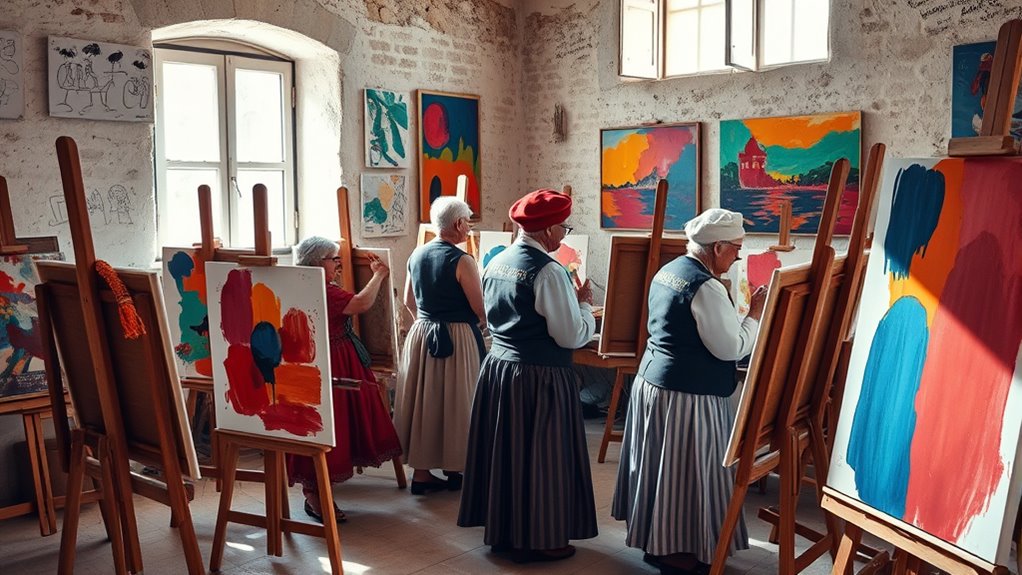

Sardinian painters of the 20th century blend local traditions, archaeological motifs, and modernist styles to create a unique regional identity. Artists like Mario Delitala, Giuseppe Biasi, Edina Altara, and Aligi Sassu drew inspiration from Sardinia’s folklore, landscapes, and mythic symbols, often combining traditional crafts with contemporary techniques. Female artists such as Maria Lai played key roles in preserving and transforming Sardinian culture through innovative and interdisciplinary works. To discover how these influences shaped Sardinian art, keep exploring further.

Get travel and outdoor gear delivered free with Prime
- Fast, free delivery on millions of items
- Prime Video, Amazon Music and more included
- Member-only deals all year
Key Takeaways
- Notable artists include Mario Delitala, Giuseppe Biasi, Edina Altara, Aligi Sassu, and Francesco Menzio, who contributed to regional modernism.
- Sardinian painters often incorporated local archaeological motifs, folklore, and mythological themes into their works.
- Many artists merged Sardinian cultural symbols with modernist styles, creating a unique regional artistic identity.
- Female artists like Maria Lai played a key role in blending traditional crafts with avant-garde art forms.
- Art institutions such as the Nivola Museum and Cagliari’s Municipal Art Gallery promote preservation and innovation in Sardinian painting.
Sardinian landscape watercolor paints
As an affiliate, we earn on qualifying purchases.
As an affiliate, we earn on qualifying purchases.
Pioneers of Sardinian Art in the Early 20th Century
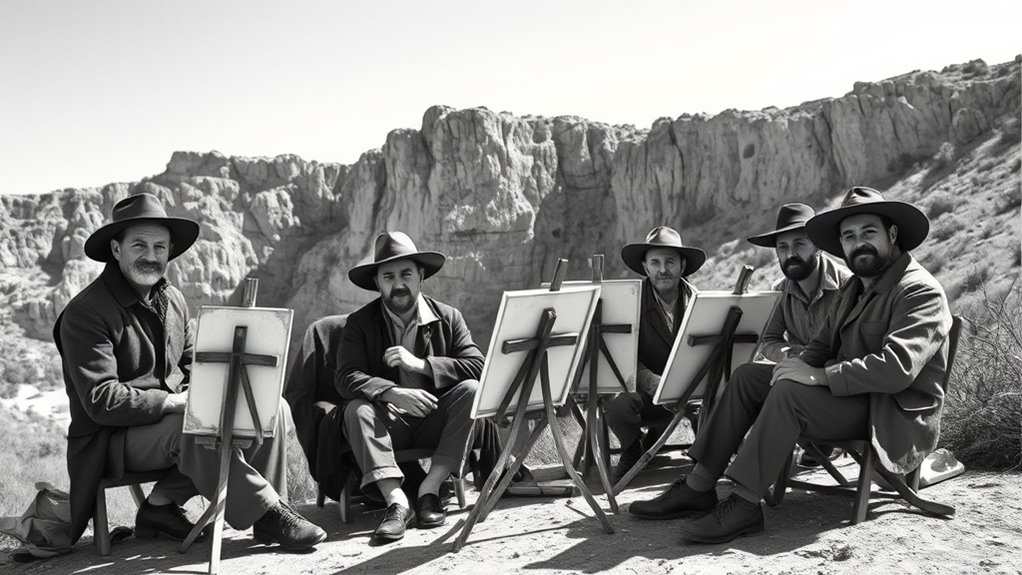
In the early 20th century, Sardinian artists began to forge a distinct regional identity through their work, drawing inspiration from the island’s rich cultural and archaeological heritage. They incorporated motifs from Sardinia’s ancient Nuragic civilization, emphasizing continuity with the past. These pioneers experimented with modernist styles, integrating local symbols and simplified forms to reflect regional pride. Watercolors and stylized depictions of landscapes, artifacts, and symbols became common, blending European art trends with Sardinian themes. Their work often responded to growing nationalist sentiments, emphasizing Sardinia’s uniqueness amidst broader cultural currents. Despite political repression, these artists laid the groundwork for a regional artistic identity rooted in history, archaeology, and cultural pride, setting the stage for subsequent generations to explore and reinterpret Sardinian heritage creatively. Additionally, their use of regional symbols helped preserve and promote Sardinian cultural identity during times of social change.
modernist art supplies for painting
As an affiliate, we earn on qualifying purchases.
As an affiliate, we earn on qualifying purchases.
Notable Regional Painters and Their Contributions
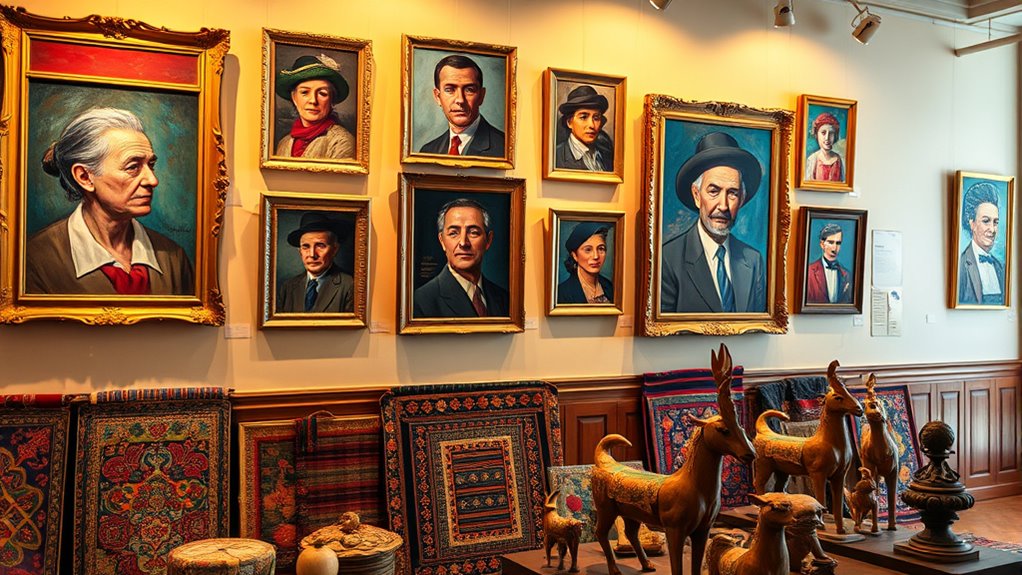
The 20th century saw a diverse group of Sardinian painters shaping the island’s artistic identity through their distinctive contributions. Mario Delitala’s versatile use of oil, pastel, and felt-tip media helped develop Sardinian art, while Giuseppe Biasi blended local traditions with modernist trends, enriching regional expression. Edina Altara’s unique style fused Sardinian elements with broader influences, standing out in visual arts. Aligi Sassu gained national prominence by incorporating Sardinian identity into his paintings and sculptures. Francesco Menzio merged regional subjects with contemporary artistic movements, reflecting Sardinia’s evolving culture. These painters’ innovative techniques and regional influences created a vibrant, layered artistic landscape, emphasizing urban transformations, local traditions, and modern perspectives that continue to define Sardinian art history. Furthermore, the collection at the Palazzo della Magnifica Comunità di Fiemme highlights the regional diversity of Sardinian art, showcasing works that span decades and styles, thus providing a comprehensive view of the island’s artistic evolution and strengthening the connection between Sardinian culture and the broader Italian art scene. Additionally, the incorporation of regional traditions into their work underscores the importance of local cultural identity in shaping their artistic expressions.
As an affiliate, we earn on qualifying purchases.
Artistic Themes and Cultural Narratives in Sardinian Painting
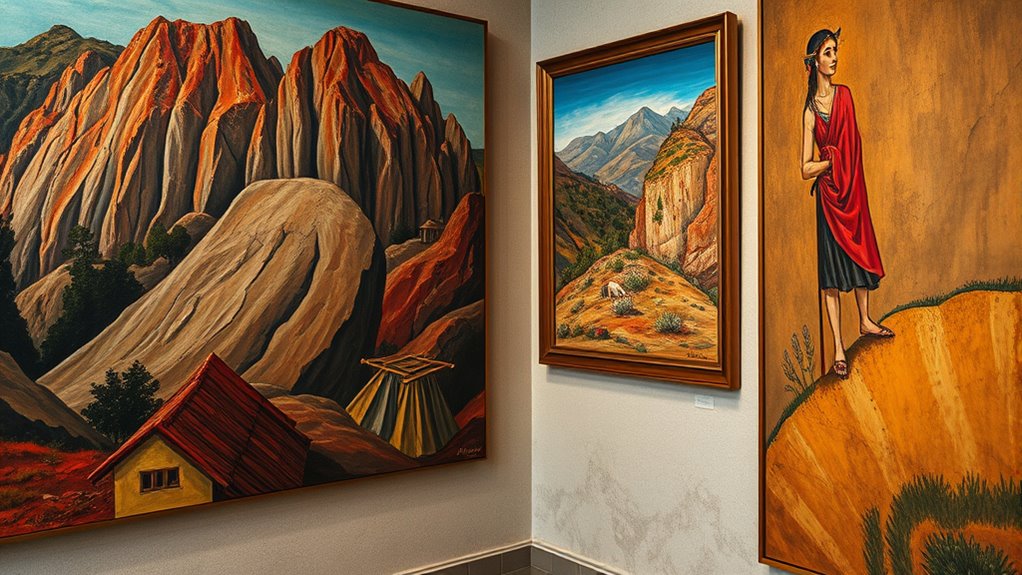
You’ll see how Sardinian painters draw inspiration from folklore and traditions, weaving stories and symbols into their work. Vivid landscape depictions capture the island’s unique scenery, reflecting both natural beauty and cultural roots. These themes come together to express a strong sense of cultural identity that keeps Sardinia’s history and spirit alive.
Folklore and Traditions
Folklore and traditions serve as essential sources of inspiration in Sardinian painting, shaping both the themes and narratives artists explore. You’ll notice how Nuragic civilization motifs became a powerful ideological symbol in the 1950s, evolving into playful reinterpretations by the 1960s, especially around tourism hotspots like Costa Smeralda. Artists also depict folk characters in vibrant costumes, often stylized or combined with modern elements like manga, to modernize cultural stories. Mythological figures, such as giants and fairies, appear as allegories that connect legends with landscape, while ritual scenes like Carnival or the role of the accabadora reveal societal values and customs. These themes offer a vivid glimpse into Sardinia’s collective identity, blending ancient beliefs with contemporary artistic expression. Sardinian painting continues to incorporate motifs from folklore, emphasizing the island’s rich mythic heritage and its influence on visual arts. Additionally, the integration of cultural narratives in their work highlights how Sardinian artists preserve and reinterpret their traditions through diverse artistic styles.
Vivid Landscape Depictions
Vivid landscape depictions in Sardinian painting serve as a powerful reflection of the island’s natural beauty and cultural identity. Early 20th-century artists like Guglielmo Micheli captured tranquil, naturalistic scenes emphasizing rural serenity, while mid-century painters such as Christian Caillard used impressionist techniques to evoke mood through light and color. As artists experimented with media like watercolor and mixed media, they explored texture and abstraction, often employing bold palettes to mirror the Mediterranean’s luminous environment. Landscapes frequently feature Sardinia’s rugged coastlines, rolling hills, vineyards, and olive groves, highlighting seasonal changes and the island’s maritime character. These depictions symbolize resilience and community, blending realistic detail with expressive color, revealing a deep connection between Sardinians and their land. Christian Caillard’s works are part of the collection at the Ferens Art Gallery, illustrating the ongoing appreciation and preservation of Sardinian-inspired landscapes in broader art institutions. The use of artistic techniques such as layering and glazing further enhances the vibrancy and depth of these landscape scenes.
Cultural Identity Expressions
Sardinian painters of the 20th century actively engaged with their island’s rich cultural heritage, using art to articulate a distinct regional identity. They drew inspiration from local symbols, literary figures, and historical motifs to craft powerful narratives. A detailed personality profile of these artists often reveals how their individual traits influenced their interpretive approaches and thematic choices. You can explore:
- How Nuragic civilization motifs fueled a renewed sense of Sardinian pride, blending prehistoric symbols with modern designs.
- The way social and political themes, often with irony or activism, reflected Sardinian realities through neo-expressionist and neo-surrealist styles.
- The dialogue with Sardinian literary figures like Grazia Deledda, linking visual art to cultural stories and collective memory.
This approach helped preserve traditions while fostering contemporary reinterpretations, reinforcing Sardinia’s unique cultural identity.
regional archaeological motifs art books
As an affiliate, we earn on qualifying purchases.
As an affiliate, we earn on qualifying purchases.
Female Artists and Their Roles in Sardinian Artistic Heritage
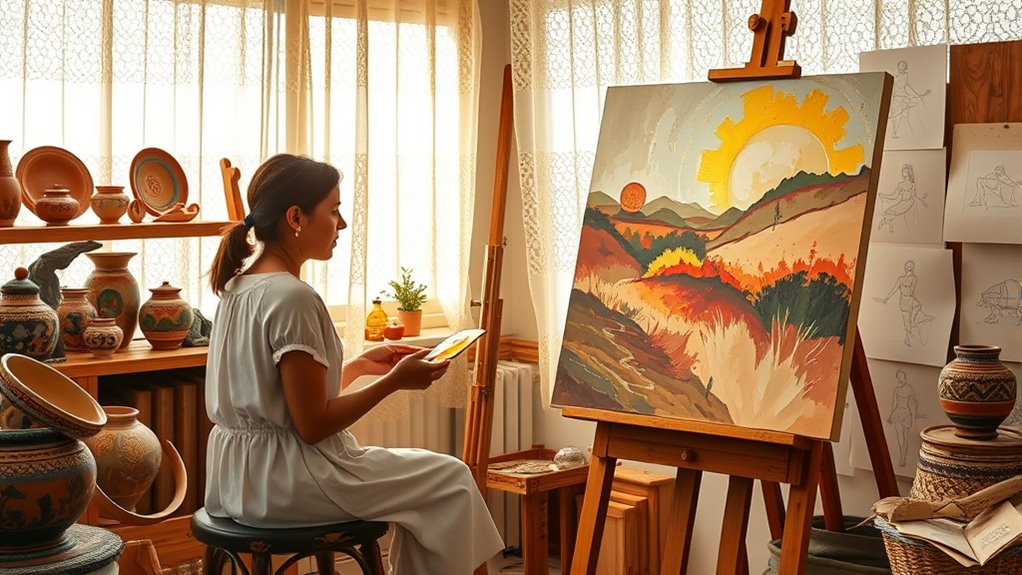
Although often overlooked, female artists have played an essential role in shaping Sardinia’s artistic heritage by blending traditional crafts with modern techniques. Maria Lai exemplifies this, integrating abstraction, Arte Povera, and Sardinian folklore into her work. She transformed textiles and sculpture—traditionally seen as women’s work—into avant-garde art, creating a visual language rooted in her land’s myths and legends. Lai’s influence extends beyond her lifetime, gaining recognition through major retrospectives and archives that preserve her legacy. Sardinian women artists challenge gendered divisions by fusing traditional materials with contemporary aesthetics, emphasizing cultural identity. Their narrative and poetic approaches deepen the island’s artistic landscape, highlighting the ongoing significance of female contributions in Sardinia’s cultural evolution and broadening appreciation for their crucial role in the region’s artistic history. Additionally, their work often incorporates emotional intelligence, allowing them to express complex cultural identities and community stories through their art.
Cross-disciplinary Approaches and Mixed Media Practices
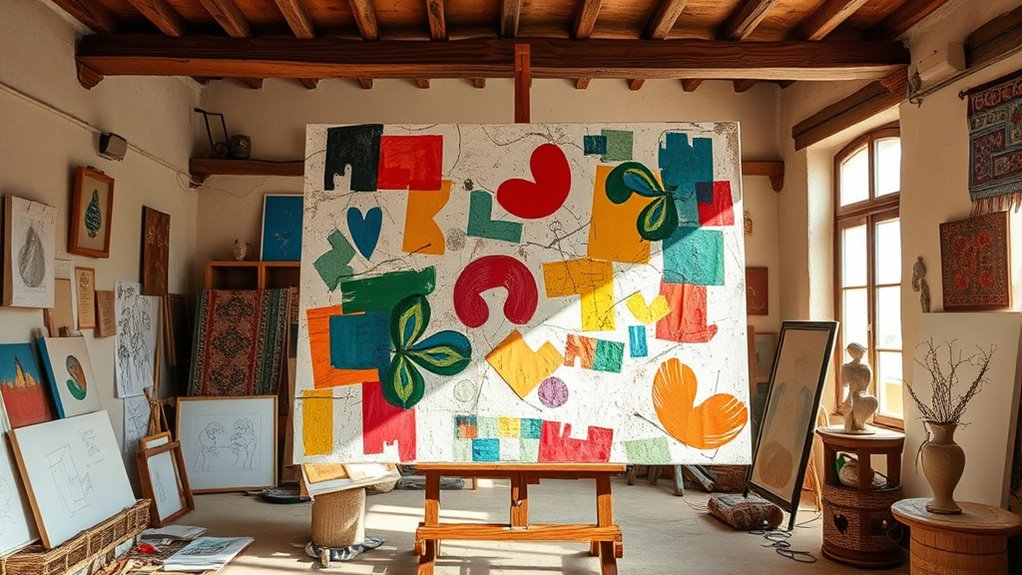
The innovative spirit of Sardinian women artists extends beyond traditional crafts, embracing cross-disciplinary approaches and mixed media practices that challenge conventional boundaries. You’ll notice how Maria Lai blends textiles, paper, and stones into her artworks, elevating craft to fine art. Her use of humble materials crosses painting, sculpture, and poetry, reflecting Sardinian storytelling and symbolism. Contemporary artists incorporate collage, readymades, and acrylics, emphasizing interdisciplinary techniques. Additionally, the influence of Nuragic culture inspires abstract and sculptural works rooted in Sardinian history. Artistic collectives like Nuoro combine engraving, installation, and sculpture, merging visual art with poetry and music. These practices foster a fluid exchange between media, allowing traditional narratives to evolve through innovative, mixed media expressions. mixed media practices exemplify the dynamic and interdisciplinary nature of Sardinian art in the 20th century.
Key Artistic Institutions and Movements Shaping Sardinian Art
Key artistic institutions and movements have played a pivotal role in shaping Sardinian art throughout the 20th century, fostering a dynamic environment for creativity and cultural exchange. The Nivola Museum and Foundation, established in 1994 in Orani, centers on Costantino Nivola’s modernist sculptures and promotes research, exhibitions, and international collaborations. In Cagliari, the Municipal Art Gallery preserves the region’s 20th-century artistic evolution, housing works from the 1960s to 1980s, alongside ethnographic materials. Modernist principles influenced Sardinian art, emphasizing architecture, landscape integration, and interdisciplinary approaches inspired by figures like Le Corbusier and Pollock. Regional support from local governments and artist families underpins these institutions, ensuring the preservation of Sardinian identity while fostering connections to global artistic trends. Additionally, automation in business has contributed to the development of new methods for conserving and promoting Sardinian cultural heritage through digital initiatives.
The Influence of Sardinian Folklore and Traditions
You can see how Sardinian folklore and traditions shape the art scene by inspiring motifs, styles, and themes. Artists incorporate symbols like warriors, witches, and ritual practices, blending ancient stories with modern techniques. These elements create a vivid connection between Sardina’s cultural past and its contemporary visual expressions. Sardinian legends and religious rituals often serve as central motifs, reflecting the deep-rooted beliefs and customs that continue to influence Sardinian artists today. Furthermore, cultural intelligence plays a crucial role in understanding and authentically representing these traditional elements within contemporary art.
Folklore in Visual Art
Sardinian painters of the 20th century drew deeply from local folklore and traditions to shape their visual language. They reinterpreted mythological symbols like the Mediterranean mother, warriors, and archers, blending history with humor and grotesque elements. This influence extended into postmodern and contemporary art, reflecting social changes, tourism, and New Age ideas. Additionally, their works often incorporated regional symbols to emphasize regional identity and mythic origins, creating a vivid tapestry of Sardinian cultural heritage.
Traditional Motifs and Styles
Traditional motifs and styles in 20th-century Sardinian painting reflect a deep connection to local folklore and customs. You’ll notice how Nuragic civilization symbols like warriors, archers, and mother figures become central themes, often simplified to highlight their ancient roots. Artists like Federico Melis and Carmine Piras reinterpret these motifs, blending faithful reproductions with humorous or grotesque touches, extending their influence to ceramics. Sardinian painters also draw from vibrant folk costumes, transforming embroidery and costume shapes into abstract, modern forms, sometimes inspired by manga and anime. Artisan techniques like “pibiones” wool textures and basket-weaving symbols inform surface design, emphasizing Sardinia’s craftsmanship. Archaeological patterns and folk narratives about shepherds and agrarian life further shape the style, creating a visual language that celebrates Sardinia’s cultural continuity.
Preservation and Innovation in Sardinian Artistic Legacies
Preservation efforts play a crucial role in maintaining the rich artistic legacy of Sardinia’s 20th century, balancing respect for historical techniques with modern innovations. You can explore how institutions safeguard works through diverse methods. For example:
Preservation of Sardinian 20th-century art blends tradition with innovative conservation techniques.
- The Pinacoteca Nazionale di Sassari preserves over 400 artworks, guaranteeing the continuity of regional artistry from the 19th and early 20th centuries.
- The Sardegna Paintings Conservation Center employs scientific techniques like X-radiography and infrared reflectography to restore and conserve paintings while respecting original materials.
- Public museums actively promote and exhibit Sardinian art, engaging audiences and supporting scholarly research, all while maintaining the balance between traditional craftsmanship and contemporary conservation methods.
- Technical research and advanced imaging are integral to understanding the materials and conditions of Sardinian artworks, helping conservators develop tailored preservation strategies.
These efforts ensure Sardinian artistic legacies stay vibrant and relevant.
Contemporary Artists Building on 20th Century Foundations
Building on the rich artistic legacy of the 20th century, contemporary Sardinian artists actively engage with urban environments and community themes. In Cagliari, events like Urbanfest showcase artists such as Matteo Campulla, Giulia Casula, Alessandro Lobino, Alberto Marci, and Ericailcane, who create murals and street art that involve local residents. These projects emphasize community ownership and social dialogue, with Ericailcane maintaining anonymity to let his work speak for itself. Online platforms like ArtMajeur list over 700 Sardinian painters, reflecting a vibrant scene rooted in regional identity. Meanwhile, street art maps demonstrate ongoing participation by both established and emerging artists. This active engagement with public spaces continues the tradition of art as a communal, social practice rooted in the ideas and themes of 20th-century Sardinian art, which often explored regional culture and history through diverse artistic expressions.
Frequently Asked Questions
How Did Sardinian Political Changes Influence Its 20th-Century Painters?
You see that political changes in Sardinia deeply shaped its 20th-century painters. As regional autonomy and identity became central issues, you notice artists exploring local landscapes, traditions, and symbols, often subtly reflecting political struggles. Repression and factionalism pushed some to embed coded messages into their work, while modernization clashed with traditional life. These shifts prompted you to view Sardinian art as a visual dialogue with its evolving cultural and political landscape.
What Role Did Sardinian Dialects Play in Local Art and Symbolism?
Imagine stepping into Sardinia’s vibrant art scenes, where dialects whisper stories beneath every brushstroke. You see local idioms carved into ceramics, echoing ancestral tales, and symbols of Nuragic heritage woven into textiles. These dialects don’t just speak; they resist erasure, embodying cultural resilience. By embracing dialects, Sardinian artists forge a powerful, authentic voice—one that preserves traditions, asserts identity, and keeps the island’s soul alive amidst modern change.
Which Sardinian Artists Integrated Indigenous Crafts Into Their Paintings?
You’re curious about which Sardinian artists incorporated indigenous crafts into their paintings. While examples are limited, some artists subtly draw inspiration from traditional motifs, textiles, and ceramic designs. You’ll find that most integration occurs in decorative arts and mixed media rather than direct painting. To explore further, consider examining artists who blend craft techniques with visual art, acknowledging that the crossover is often more symbolic and decorative than fully embedded in their painted works.
How Did Sardinian Modernist Trends Differ From Mainland Italian Movements?
You might think all modernist movements blend seamlessly, but Sardinian trends stand out—like that quirky relative who refuses to follow the crowd. Instead of grand monuments and urban themes, Sardinian artists focus on local stories, mythology, and experimental techniques. They mix traditional crafts with avant-garde styles, creating intimate, culturally rich works. Meanwhile, mainland Italians often chase global trends, making Sardinian modernism a charming, idiosyncratic rebellion against the mainstream.
What Impact Did Sardinian Female Artists Have on Regional Art Education?
You see that Sardinian female artists transformed regional art education by breaking gender barriers and inspiring future generations. Their pioneering exhibitions and integration of traditional crafts with modern art taught students to value local culture and innovation. By promoting women’s contributions and embedding art into communities, they enriched curricula, encouraged diverse perspectives, and fostered a stronger regional identity—shaping a more inclusive and vibrant art education landscape in Sardinia.
Conclusion
As you explore Sardinian painters of the 20th century, you uncover a vibrant tapestry woven with cultural threads and bold innovation. These artists breathe life into the island’s soul, transforming traditions into timeless masterpieces. Their legacy is a fertile ground where past and present entwine, inviting you to witness the island’s artistic heartbeat. Embrace this rich heritage, for it’s a shining beacon guiding future creative journeys across Sardinia’s storied landscape.
Fall Picks
fall essentials
As an affiliate, we earn on qualifying purchases.