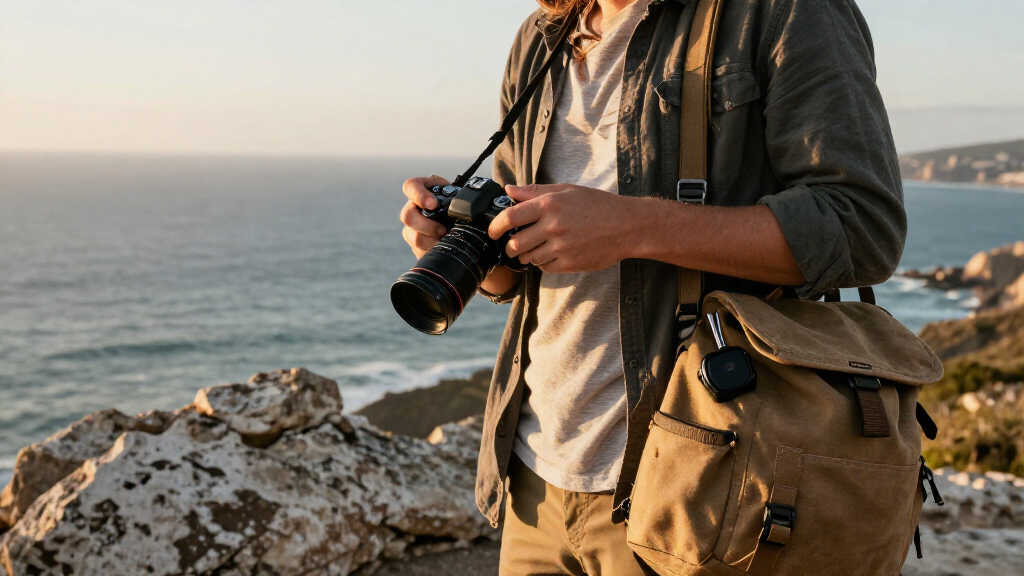

This checklist is for travelers who want to bring a camera kit that supports thoughtful photography without making every outing about gear. It covers the camera, a travel lens, a tripod, a sling bag, a battery charger, and a memory card case. Choose for your trip and the way you like to shoot.

Get travel and outdoor gear delivered free with Prime
- Fast, free delivery on millions of items
- Prime Video, Amazon Music and more included
- Member-only deals all year
The sections follow the path from image-making essentials to the items that help carry, power, and organize them. Each pick has a short verdict, a best-fit use, a tradeoff to consider, and specific features to check. Start with compatibility, especially when pairing lenses and accessories with your camera.
Use the checklist before you buy or pack: compare each item with the gear you already own, check fit and connection details in the manufacturer’s specifications, and decide which pieces match your plans. Treat the listed product names as starting points, then confirm the exact model and included components. Pack what you’ll use on the trip.
Mirrorless Camera
A camera is the foundation of the kit, so consider how it fits the photographs you hope to make and the way you travel. The Sony Alpha 7 IV Full-Frame Mirrorless Camera with FE 24–105mm F4 G OSS is listed as a camera-and-lens combination, which may suit shoppers looking to start with both pieces together. Check the bundle contents and confirm whether the lens range and camera features match your intended subjects.
A common mistake is choosing a camera before checking the rest of the system. Confirm that your existing lenses, batteries, memory cards, and other accessories are compatible with the exact camera version. Think about the complete packed setup, not only the camera body: the included lens affects how much you carry and which framing options are available. Review the specifications for connection, storage, and power details before relying on existing gear.
Consider how the camera will fit into your day bag or sling, and whether you are comfortable carrying it for the length of your outings. If you expect to switch lenses, account for that in your packing plan. Match the kit to your itinerary and leave room for the accessories you actually use.
What to look for:
- Confirm the exact camera and included lens in the package.
- Check compatibility with lenses and accessories you already own.
- Review supported memory card and battery details.
- Consider packed size and weight for your travel routine.
- Compare the included lens range with your typical subjects.
Sony Alpha 7 IV Full-Frame Mirrorless Camera with FE 24–105mm F4 G OSS Zoom Lens

This professional mirrorless camera combines a 33MP full-frame back-illuminated CMOS sensor with Sony’s BIONZ XR processor. It supports 4K 60p 10-bit video recording and comes with a 24–105mm F4 zoom lens featuring optical stabilization and a constant maximum aperture.
Pros:
- High-resolution full-frame sensor
- Supports 4K 60p 10-bit video
- Included lens has a versatile 24–105mm focal range
- Optical image stabilization
Cons:
- Not water resistant
- Maximum aperture is F4
Best for: Travelers seeking a camera and lens combination in one listed pick
Not ideal for: Shoppers who need a different lens range or must keep their kit especially compact
Bottom line: Confirm the bundle contents and compatibility with your planned accessories before choosing this camera kit.
Travel Camera Lens
A travel lens can shape how easily you adapt when a scene changes, so begin by checking its fit with your camera. The listed Sigma 17-40mm F1.8 DC Art Zoom Lens for Sony E names a Sony E mount and a 17–40mm range. Verify mount compatibility with your exact camera, and check the manufacturer’s specifications for sensor-format suitability before purchasing.
One common mistake is assuming that a lens will behave the same way across every camera body simply because the mount name matches. Check the product details for supported camera formats and any limitations relevant to your setup. Consider whether the listed zoom range covers the kinds of scenes you plan to photograph, and whether the lens’s size and weight suit your travel bag. Compare the full specifications with your camera and the subjects you expect to shoot.
If you plan to carry more than one lens, think about how quickly you can change lenses and where the spare will be stored. A bag that fits the camera may not have room for an additional lens or protective cover. Check the packed fit of the lens with your camera and bag before the trip.
What to look for:
- Confirm the Sony E mount matches your camera.
- Check the lens’s supported sensor format and camera compatibility.
- Compare the 17–40mm range with your intended subjects.
- Review lens dimensions and weight for your travel bag.
- Make room for lens protection and any additional lenses.
Sigma 17-40mm F1.8 DC Art Zoom Lens for Sony E

This Sony E-mount zoom lens is designed for APS-C mirrorless cameras and has a constant F1.8 aperture for low-light shooting and shallow depth of field. Its 17–40mm focal range and autofocus make it suitable for portraits, travel, and video.
Pros:
- Constant F1.8 aperture supports low-light shooting
- Versatile 17–40mm zoom range
- Autofocus
Cons:
- No image stabilization
- Not water resistant
Best for: Sony E camera owners whose setup suits the listed lens specifications
Not ideal for: Travelers who need a different mount or lens range
Bottom line: Check mount and sensor-format compatibility before adding this lens to your travel kit.
Camera Tripod
A tripod can help when you want a steady camera position or need to compose without holding the camera. The Manfrotto Element MII 4-Section Aluminum Tripod with Ball Head, Black is listed with four sections and a ball head. Check the working height, folded length, and capacity in the manufacturer’s specifications against your camera and lens combination.
A frequent buying mistake is judging a tripod by its name or section count alone. Confirm that the head and mounting plate work with your camera, and check that the stated capacity covers the complete setup you intend to use. Think about how the tripod will travel: folded dimensions matter for luggage, while the assembled height and adjustment range affect how you can position the camera. Verify every fit detail before relying on it away from home.
Consider where you expect to use it and whether you are willing to carry it for a full day. Check the product information for setup and locking details, then practice assembling and adjusting it before leaving. Test your complete setup at home so the camera, lens, and head work together as expected.
What to look for:
- Confirm the head and mounting plate fit your camera.
- Check the stated load capacity against your complete camera setup.
- Compare folded length with your luggage or bag dimensions.
- Review maximum and minimum working heights.
- Practice adjusting the four sections and ball head before travel.
Manfrotto Element MII 4-Section Aluminum Tripod with Ball Head, Black

The Manfrotto Element MII is a lightweight aluminum tripod designed for hobbyist and aspiring photographers using compact cameras, CSCs, or DSLRs. It extends to 160 cm, folds down to 42.5 cm, weighs 1.55 kg, and supports payloads up to 8 kg, making it suitable for heavier zoom lenses.
Pros:
- Lightweight and compact for easy travel
- High 8 kg payload supports heavier zoom lenses
- Fast setup with quick leg angle switching and twist-locks
- Includes padded carry bag
Cons:
- Aluminum build is heavier than carbon fiber alternatives
Best for: Travelers who want a four-section tripod with a ball head
Not ideal for: Those unwilling to carry a tripod or whose setup exceeds its stated capacity
Bottom line: Check the tripod’s dimensions and capacity against your camera kit and luggage.
Camera Sling Bag
A sling bag can keep camera gear together while making it easier to carry between stops. The listed Spider Holster Leather Camera Travel Sling Bag is described as cross-body or belt style, so consider which carrying method suits your usual layers and travel routine. Check how it attaches and whether the adjustment range fits you comfortably.
A common mistake is focusing on the carry style without checking the interior space. Confirm that the bag fits your camera with its attached lens, plus any extra lens or small accessories you expect to bring. Review the product details for dimensions, compartment layout, closures, and included components; the product name is truncated, so verify the exact listing before ordering. Measure your actual kit and compare it with the bag’s stated capacity.
Try the intended carry position with your normal travel clothing, and make sure you can reach the camera comfortably. If you expect to carry the bag on a belt, check how it works with your clothing and other items; for cross-body use, confirm the strap’s fit and adjustment. Prioritize access and comfort for the length of your outings.
What to look for:
- Verify the complete product name and exact listing.
- Check fit with your camera and attached lens.
- Review interior dimensions and compartment layout.
- Confirm the cross-body strap or belt attachment suits your clothing.
- Check closures and space for the accessories you plan to carry.
Spider Holster Leather Camera Travel Sling Bag, Cross-Body or Belt (Brown)

The Spider Holster Leather Camera Travel Sling Bag is a versatile, genuine leather pouch designed for photographers. It can be worn as a cross-body or attached to a belt, featuring multiple compartments, SD card slots, and removable dividers for organized gear storage.
Pros:
- Versatile wearing options (cross-body or belt)
- Multiple compartments and SD card slots for organization
- Durable genuine leather construction
Cons:
- Not compatible with earlier Spider gear versions
- Limited color options (Brown only)
- Adjustable strap length may not fit all users
Best for: Travelers who want to compare cross-body and belt-style carry
Not ideal for: Those needing a bag with confirmed capacity for a large kit without checking dimensions
Bottom line: Confirm the exact listing and test the bag’s fit with your camera before travel.
Camera Battery Charger
A compatible charger helps you plan for battery power across a trip. The Sony BC-TRW W Series Battery Charger is identified as a W Series charger, so first check whether the batteries you own are part of the supported series. Match the battery model to the charger’s specifications before relying on it.
A common mistake is assuming that a charger will work with every battery from the same camera brand. Check the exact battery model, charging requirements, and included cable or plug details in the product listing. If you are traveling across regions, confirm that the charger’s input and plug arrangement suit your destination and charging setup. Read the compatibility details for the specific charger version you plan to buy.
Think through when and where you will recharge, and whether the charger can be packed with your other essentials. Keep it organized with the batteries it supports so you can find it when needed. Pair charger and battery at home and confirm the connection before departure.
What to look for:
- Confirm your battery model is supported by the BC-TRW.
- Check the charger’s input and charging requirements.
- Verify which cable, plug, or accessories are included.
- Consider plug compatibility for your destination.
- Test the charger with your battery before packing.
Sony BC-TRW W Series Battery Charger

This compact, universal voltage battery charger is designed for traveling, featuring a retractable plug and quick charging for NP-FW50 batteries.
Pros:
- Compact and portable design ideal for travel
- Universal voltage for worldwide use
- Quick charging capability
Cons:
- Limited to NP-FW50 batteries
- No detailed charging time information
Best for: Travelers whose batteries match the charger’s supported W Series models
Not ideal for: Those using batteries outside the charger’s confirmed compatibility
Bottom line: Verify the exact battery model and travel plug requirements before packing this charger.
Memory Card Case
A memory card case gives small storage cards a dedicated place in your kit. The listed Pelican Memory Card Case (Black) is a straightforward option to consider if you want cards kept together while traveling. Check the card types and capacity the case supports in the exact product details.
A common mistake is assuming every memory card case holds the same formats or number of cards. Confirm the interior layout and make sure it suits the cards you use; check the listing for any included cards or accessories rather than inferring them from the product name. Consider how the case closes and how easily you can identify unused cards while on the move. Review the internal fit before you reorganize your existing storage system.
Think about where the case will live in your camera bag and whether you can access it without removing other gear. Keep the card case in a consistent spot and establish a simple routine for separating used and ready-to-use cards. Choose a reliable place for it in your kit before departure.
What to look for:
- Confirm which card formats the case accepts.
- Check how many cards fit in the interior layout.
- Review the closure and access method.
- Verify the exact listing and included components.
- Choose a consistent, accessible spot in your camera bag.
Pelican Memory Card Case (Black)

A rugged, water‑resistant hard case that protects up to 12 memory cards—6 SD, 6 mini‑SD and 6 micro‑SD—in custom cutouts. Made from tough polycarbonate with an IPx4 seal and a shock‑absorbing insert liner.
Pros:
- IPx4 water‑resistant seal protects against splashes
- Durable hard polycarbonate shell
- Organized slots for multiple card formats
- Compact and lightweight for easy transport
Cons:
- Does not include any memory cards or a built‑in reader
Best for: Travelers who want memory cards kept together in a case
Not ideal for: Those whose card formats or quantity do not match the case layout
Bottom line: Check supported card types and interior capacity against your own cards.
Build the kit in order of importance to your photography: first choose the camera and confirm its compatibility with the lens, batteries, and memory cards you plan to use. Then consider the carrying setup and whether a tripod suits your itinerary. Prioritize the essentials you need for the trip, and check exact model details before buying accessories.
A useful checklist is the one that fits your own camera, habits, and plans. Confirm dimensions, mounts, battery models, and card formats, then pack and test the complete setup at home. Keep your kit familiar and enjoy the photographs you set out to make.