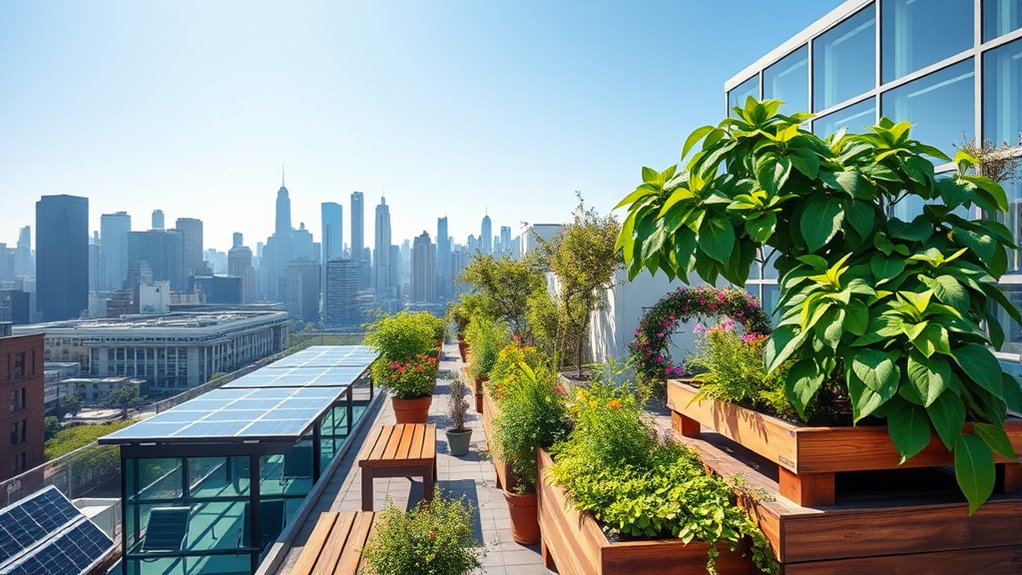

Transforming rooftops into vibrant gardens lets you bring nature right into the heart of the city. You can maximize space with eco-friendly containers, choose drought-tolerant plants suited to your climate, and incorporate sustainable irrigation like rainwater harvesting. Designing thoughtfully with zones for vegetables, flowers, and seating creates a relaxing, eco-friendly oasis. Plus, you can add solar lights and composting to boost sustainability. Keep exploring to discover how to make your rooftop garden a lush urban retreat.
Key Takeaways
- Transform unused rooftops into vibrant green spaces that enhance urban aesthetics and promote biodiversity.
- Incorporate sustainable irrigation systems like rainwater harvesting and drip irrigation to conserve water.
- Carefully plan plant selection based on climate, sunlight, and building capacity to ensure healthy growth and space efficiency.
- Choose lightweight, eco-friendly containers and arrange plants strategically to maximize space and support urban agriculture.
- Add energy-efficient lighting and maintenance features such as composting to create sustainable, relaxing outdoor environments.

Have you ever wondered how city dwellers turn unused rooftops into vibrant green spaces? It’s a clever way to bring nature into urban environments and make the most of limited space. Creating a rooftop garden involves thoughtful rooftop garden design that balances aesthetics, functionality, and sustainability. One of the key aspects to consider is sustainable irrigation. Instead of relying on traditional water sources, many rooftop gardeners incorporate rainwater harvesting systems and drip irrigation to minimize waste. These methods not only conserve water but also reduce utility costs, making rooftop gardens more eco-friendly and economically viable.
Sustainable irrigation with rainwater harvesting and drip systems reduces waste and utility costs in rooftop gardens.
When planning your rooftop garden, start by evaluating the structural integrity of your building to ensure it can support the weight of soil, plants, and irrigation systems. Next, think about the local climate and exposure to sunlight, which influence the choice of plants. Opt for drought-tolerant species and native plants that thrive with minimal watering, further supporting sustainability. Incorporating sustainable irrigation techniques, like moisture sensors, helps you deliver the right amount of water exactly when it’s needed, preventing overwatering and runoff. This targeted approach enhances plant health while conserving resources, aligning with eco-conscious design principles.
Designing your rooftop garden also involves selecting the right containers, soil, and plant arrangements. Lightweight containers made from eco-friendly materials reduce the load on your roof and contribute to sustainability. Using organic soil blends improves plant growth and reduces chemical runoff, supporting cleaner urban waterways. When arranging your garden, consider creating zones for vegetables, herbs, flowers, and seating areas. This not only maximizes space but also encourages biodiversity and local food production, making your rooftop a productive oasis.
Lighting and ventilation are also crucial elements in rooftop garden design. Incorporate solar-powered lights and windbreaks to create a comfortable and inviting atmosphere. Proper placement of plants can provide shade, helping to cool the building and reduce energy consumption. As you develop your rooftop garden, keep in mind that ongoing maintenance, like pruning and composting, plays a role in the sustainability of your green space. Composting organic waste reduces trash and provides natural fertilizer, closing the loop in your garden’s eco-system. Additionally, understanding projector contrast ratio can help you create a better visual setup if you plan to incorporate outdoor screens or media elements into your rooftop retreat.
Ultimately, transforming an unused rooftop into a lush garden is about balancing creativity with sustainability. By paying attention to rooftop garden design principles and sustainable irrigation practices, you create a space that’s beautiful, functional, and environmentally responsible. Your rooftop can become a peaceful retreat in the midst of the city, offering fresh air, beauty, and even fresh produce, all while supporting greener urban living.
Frequently Asked Questions
What Are the Best Plants for Shaded Rooftop Gardens?
You should choose shade tolerant plants like ferns, hostas, and impatiens for your shaded rooftop garden. These plants thrive in low light conditions and are perfect for container gardening. Make sure to use well-draining soil and water regularly to keep them healthy. By selecting the right shade tolerant plants, you’ll create a lush, vibrant space that brings nature to your city rooftop, even in shaded areas.
How Do I Prevent Pests in Rooftop Gardens?
To prevent pests in your rooftop garden, start with composting pests management by removing decaying plant material that attracts pests. Implement integrated pest management by regularly inspecting plants, encouraging beneficial insects like ladybugs, and using natural repellents. You can also introduce companion planting to deter pests naturally. These practices help keep your garden healthy and pest-free, ensuring your rooftop oasis thrives without chemical treatments.
What Is the Average Cost to Start a Rooftop Garden?
Starting your rooftop garden costs around $1,000 to $5,000, depending on size and materials. Think of this investment as planting hope atop your building’s skyline. Consider cost considerations like containers, soil, plants, and irrigation. Funding options such as grants, sponsorships, or community programs can help cover expenses. With patience and planning, you transform an empty space into a lush oasis, turning your vision into a vibrant reality.
How Can I Ensure Rooftop Garden Safety and Structural Integrity?
To guarantee your rooftop garden’s safety and structural integrity, start with a professional load assessment to understand your roof’s capacity. Consider structural reinforcement if needed, such as adding supports or strengthening existing beams. Regularly inspect for cracks, leaks, or signs of stress. Use lightweight soil and plan plant choices carefully to reduce additional weight. These steps help protect your building and create a safe, thriving garden.
Are There Any Legal Restrictions on Rooftop Gardening in Urban Areas?
Like a knight in shining armor, you must navigate city rules carefully. You’ll need building permits and must follow zoning laws, which vary by location. Some areas restrict rooftop gardens due to weight or safety concerns, while others encourage them. Check with your local planning department before planting, ensuring your green oasis complies with all legal restrictions. This way, your rooftop garden stays safe, legal, and thriving amidst the cityscape.
Conclusion
By now, you see how rooftop gardens transform concrete jungles into lush escapes, bringing nature right to your doorstep. You can cultivate your own green oasis, even amid skyscrapers, making city life more vibrant and sustainable. Imagine standing atop your rooftop, a gentle breeze whispering through leaves, like a scene from a Victorian garden party. Embrace the change—your city, your garden, and your future will flourish together, turning the modern city into a timeless haven.