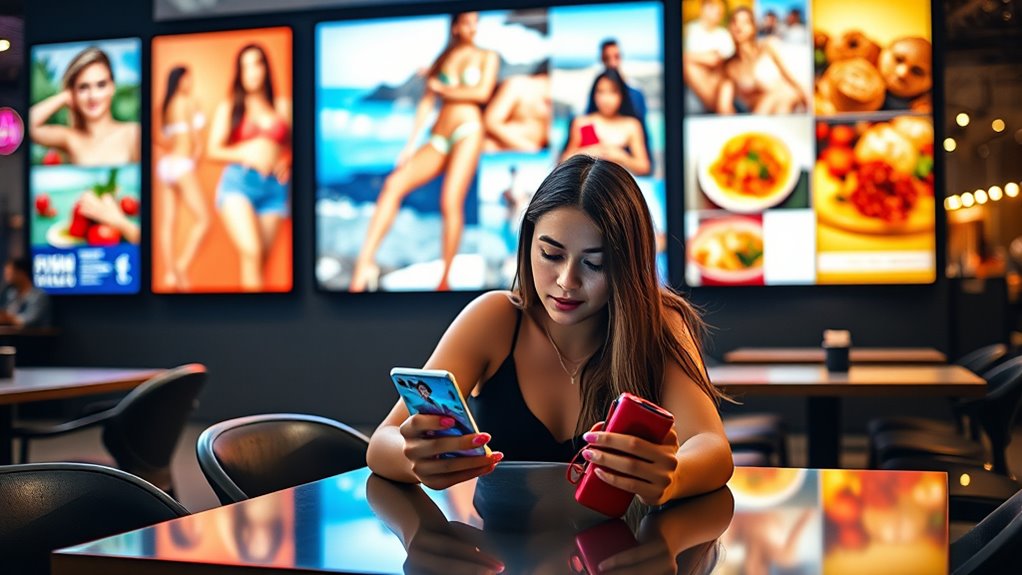

Social media influences your lifestyle choices by shaping your online identity and how you see yourself. It encourages you to follow trends, style your posts to gain peer validation, and emulate the glamorous lives of others. This can impact your clothes, activities, and priorities, often making online approval more important than genuine happiness. If you want to understand how these influences shape your daily decisions and perceptions, there’s a lot more to discover.
Key Takeaways
- Social media trends influence clothing, activities, and brand preferences to gain peer approval.
- Online validation impacts self-esteem, motivating individuals to showcase lifestyles aligned with popular norms.
- Curated lives and comparisons foster emulation, shaping personal goals and perceptions of success.
- The desire for social approval can lead to choices driven more by external validation than authentic happiness.
- Maintaining a certain online image may prioritize social acceptance over genuine self-expression and fulfillment.

Social media has become a powerful force shaping how you make lifestyle choices every day. It influences what you wear, where you go, and even how you see yourself. One of the most important impacts is on your digital identity—the way you present yourself online. Every photo you share, comment you make, or post you publish helps craft this digital persona. It’s not just about showing who you are but also about how you want others to perceive you. This ongoing process of curating your online identity can influence your real-life decisions, from the brands you support to the activities you pursue. As you seek to build a certain image, you might find yourself adopting habits or preferences that align with your online persona, which may or may not reflect your true self. Additionally, engaging with creative activities like crochet or knitting can serve as authentic outlets that reinforce your personal identity beyond social media. Peer validation plays an essential role in this process. On social media, approval from friends, followers, or even strangers can become a powerful motivator. When you post content, the number of likes, comments, or shares you receive can considerably impact your mood and self-esteem. This craving for peer validation pushes you to conform to popular trends, participate in viral challenges, or showcase a lifestyle that garners positive feedback. The desire to be liked and accepted can sometimes lead you to prioritize appearance over authenticity or to chase after fleeting online popularity rather than genuine fulfillment. It’s easy to fall into the trap of comparing yourself to others, especially when their curated lives seem more glamorous or successful. This comparison can influence your choices, prompting you to emulate what appears to bring peer validation, rather than what truly makes you happy. Social media’s ability to shape your digital identity and the need for peer validation creates a cycle that often guides your lifestyle decisions. You may choose certain outfits because they’re trending or post about your activities to garner approval. Over time, these external influences can subtly steer your habits and preferences, making your online life feel just as important as your real one. The pressure to maintain a certain image or stay relevant can lead you to prioritize social approval over personal authenticity. Ultimately, social media’s reach extends beyond just digital interactions; it molds your perceptions, aspirations, and even your sense of self. Recognizing this influence can help you make more mindful choices, ensuring your lifestyle reflects who you genuinely are, not just what others expect or admire online.

The Fashioned Body: Fashion, Dress and Modern Social Theory
As an affiliate, we earn on qualifying purchases.
As an affiliate, we earn on qualifying purchases.
Frequently Asked Questions
How Does Social Media Influence Mental Health?
Social media impacts your mental health by fueling digital validation and online comparison. When you seek likes and comments, you might feel anxious or insecure if you don’t get enough validation. Comparing your life to others’ highlight reels can lower your self-esteem and increase stress. To protect your mental health, set boundaries, limit your screen time, and remember that online images often don’t reflect reality.
What Age Groups Are Most Affected by Social Media Trends?
You’re most affected by social media trends in your teens and early twenties. Peer pressure kicks in, making you want to adopt the latest trends quickly. As you scroll, you feel the pull to fit in, sometimes risking your mental health. The thrill of trend adoption keeps you hooked, but it’s a delicate balance—you might not realize how deeply these platforms influence your choices until it’s too late.
Can Social Media Promote Healthier Lifestyle Habits?
Yes, social media can promote healthier habits by boosting your diet motivation and encouraging participation in fitness challenges. When you see others sharing their progress or tips, you’re inspired to stay committed and try new routines. Engaging with supportive communities online makes it easier to adopt better habits, stay accountable, and celebrate your achievements. Just remember to filter content carefully and focus on reliable sources to truly benefit from these positive influences.
How Do Influencers Impact Consumer Behavior?
When it comes to influencers, they truly have the power to sway your choices. By doing brand endorsements, they make products seem appealing, almost like a must-have. Peers often follow their lead, creating a domino effect that fuels peer pressure. You might find yourself thinking, “If they’re doing it, I should too,” which shows how influencers impact your behavior by shaping perceptions and encouraging you to try new things.
Are There Cultural Differences in Social Media’s Influence?
Yes, there are cultural differences in social media’s influence. You might notice that social norms shape how you engage with content, reflecting your cultural identity. In some cultures, social media encourages collective values, while others emphasize individualism. These differences affect your perceptions and behaviors, making social media’s impact vary across regions. Understanding these cultural nuances helps you see how social media molds lifestyles differently worldwide.

UBeesize 12'' Selfie Ring Light with 62’’ Tripod Stand for Video Recording, Live Streaming(YouTube, Instagram, TIK Tok), Compatible with Phones, Cameras and Webcams
Powerful 12-Inch LED Ring Light- Features a robust 12-inch ring design with 240 high-efficiency LEDs that output 10W…
As an affiliate, we earn on qualifying purchases.
As an affiliate, we earn on qualifying purchases.
Conclusion
As you scroll through social media, remember it’s like a mirror reflecting society’s trends—sometimes clear, sometimes distorted. Your choices are shaped by what you see, but don’t forget, you hold the brush to paint your own life’s masterpiece. Stay aware of its influence, but always trust your inner voice. After all, the most authentic lifestyle is the one only you can create—don’t let the digital world dim your true colors.

Harry Potter Crochet (Crochet Kits)
As an affiliate, we earn on qualifying purchases.
As an affiliate, we earn on qualifying purchases.

Phone Tripod with Light, Portable and Flexible Phone Stand for Video Recording with Wireless Remote, 360° Rotating Tabletop & Travel Tripods for iPhone, Smartphones, Camera
Durable & Steady, Day or Night. The foam design allows you to use it normally even on bike…
As an affiliate, we earn on qualifying purchases.
As an affiliate, we earn on qualifying purchases.