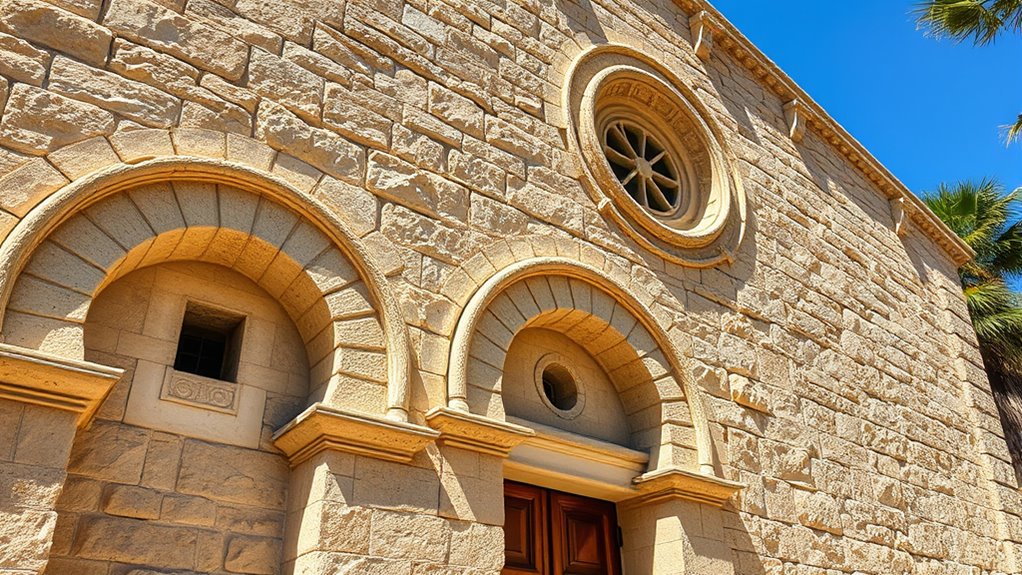

Sardinian Romanesque churches showcase a blend of local traditions and external influences from Pisa, Lombardy, and Provence. You’ll notice their long, simple layouts, thick stone walls, and modest decorations like frescoes and sculptural capitals. Regional materials such as limestone and volcanic stones shape their appearance. Their unique features reflect Sardinia’s history and culture, with many churches spread across rural areas. To discover more about their architectural beauty and regional diversity, keep exploring these remarkable monuments.
Key Takeaways
- Sardinian Romanesque churches date back to the 11th century, blending regional traditions with influences from Pisa, Lombardy, and Provence.
- They feature long, longitudinal plans with thick stone walls, semicircular apses, and simple facades with regional bichrome patterns.
- Construction uses local stones like limestone and basalt, often employing vaults, wooden roofs, and reused ancient columns.
- Decorative elements include regional motifs, geometric sculptures, Lombard bands, and symbolic external façades.
- Most churches are rural, emphasizing natural materials and restrained decoration, reflecting Sardinia’s cultural and geographic landscape.

Desktop Wooden Model Kit Church / YG851
Premium Materials: Crafted from high-quality plywood using precision laser-cutting technology, ensuring perfectly fitting parts and exceptional detail in…
As an affiliate, we earn on qualifying purchases.
As an affiliate, we earn on qualifying purchases.
Origins and Development of Sardinian Romanesque

The origins and development of Sardinian Romanesque architecture emerge from a unique blend of local traditions and external influences, shaped by political and religious changes during the Giudicati era. You can trace its beginnings to the early 11th century, with the construction of the Basilica of San Gavino in Porto Torres around 1015–1038 under Judike Gonario I. While it developed independently, external forces considerably influenced its style. During this period, Sardinia saw the rise of the Giudicati, indigenous kingdoms that fostered church building and supported architectural growth. The arrival of religious orders from Pisa, Lombardy, Provence, and France brought diverse stylistic elements. This interaction of local and foreign traditions created a distinctive, multifaceted Romanesque style that is uniquely Sardinian. Additionally, the incorporation of architectural techniques from different regions contributed to the region’s rich stylistic diversity.

Mid Century Modern Glass Coffee Table, Coffee Table for Living Room, Noguchi Coffee Tables,Suitable for Bedroom Living Room Reception Office Tables (Black/Brown, ML)
MODERN AND STYLISH LOOK:Drawing inspiration from minimalist design, this triangular coffee table sets a modern foundation for your…
As an affiliate, we earn on qualifying purchases.
As an affiliate, we earn on qualifying purchases.
Architectural Characteristics and Design Elements
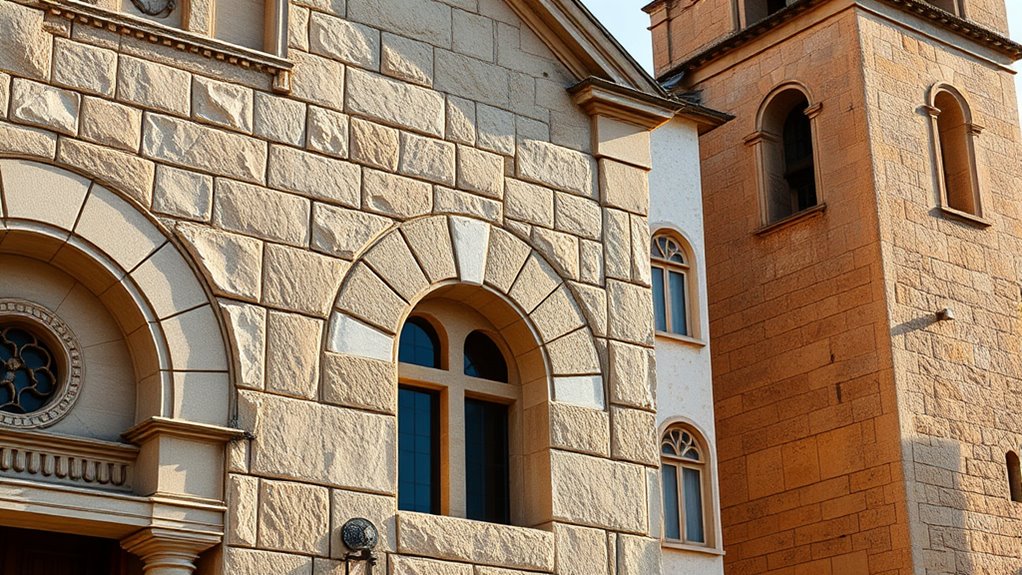
You’ll notice that Sardinian churches typically follow a longitudinal layout with a clear eastward focus, ending in a semicircular apse. Their facades feature distinctive bichrome stone patterns and prominent bell towers that define the skyline. Inside, simple yet harmonious spaces are decorated with sculptural capitals and frescoes, creating a serene atmosphere for worship. Additionally, many churches incorporate traditional materials such as stone and wood, which contribute to their rustic charm and durability.
Building Plans and Layouts
Have you noticed how Sardinian churches often follow a distinct longitudinal plan, with the apse facing east in accordance with liturgical tradition? Many feature a simple, single nave with wooden roofs, emphasizing austerity. Larger churches reveal more complex layouts, with three naves separated by arches supported on columns or pillars, often with barrel vaults that showcase architectural innovation. Some 12th-century structures combine wooden ceilings in the central aisle with vaulted side aisles, creating hybrid roofing. Construction relies on local stones like limestone, sandstone, and volcanic rocks, with walls built thick for stability. Windows are small, narrow lancets, positioned to maximize light on the altar. Internal divisions use reused Roman capitals and columns, reinforcing both structural strength and historical continuity. The overall plan reflects a focus on functionality, symbolism, and durability. Additionally, the use of architectural elements from Roman architecture demonstrates a seamless integration of historical styles and engineering techniques.
Façade and Bell Towers
Sardinian church façades and bell towers reveal a distinctive blend of simplicity and regional materials that emphasize both function and tradition. You’ll notice they’re built with local volcanic stone, limestone, sandstone, or tuff, carefully cut into blocks for durability and precision. The façades are often tripartite, matching the interior layout, with austere ornamentation highlighting Romanesque features like architraves and monolithic door frames. Pilasters and angular supports are common, sometimes topped with hanging arches, adding characteristic Sardinian touches. Bell towers are usually replaced by bell gables—light stone structures directly on the façade—housing bells without elaborate decoration. Narrow lancet windows and small cruciform openings provide light while maintaining the church’s restrained aesthetic, blending functionality with regional simplicity.
Interior Decorative Features
The interior decorative features of Sardinian churches reflect a focus on simplicity and regional tradition, emphasizing structural clarity and symbolic elements. You’ll notice a single, elongated nave with wooden trusses that convey austerity and highlight the building’s structural expression. When present, aisles are separated by arcades on columns, often reused from earlier Roman sites, emphasizing material continuity. Walls remain plain stone, with rare frescoes, mainly in apses, featuring semi-columns with leaf-shaped capitals and Lombard bands. Columns, often spolia, divide the nave and aisles, with capitals showing simple carvings. Interior lighting is subdued, filtered through small mullioned windows, creating a meditative atmosphere. This interplay of dim light and bare surfaces enhances the sacred ambiance and highlights architectural details. The use of spolia in columns and decorative elements underscores a connection to earlier Roman heritage, blending historical layers within the sacred space.

STONE PUZZLE OF ROSSLYN CHAPEL
Used Book in Good Condition
As an affiliate, we earn on qualifying purchases.
As an affiliate, we earn on qualifying purchases.
Building Materials and Construction Techniques
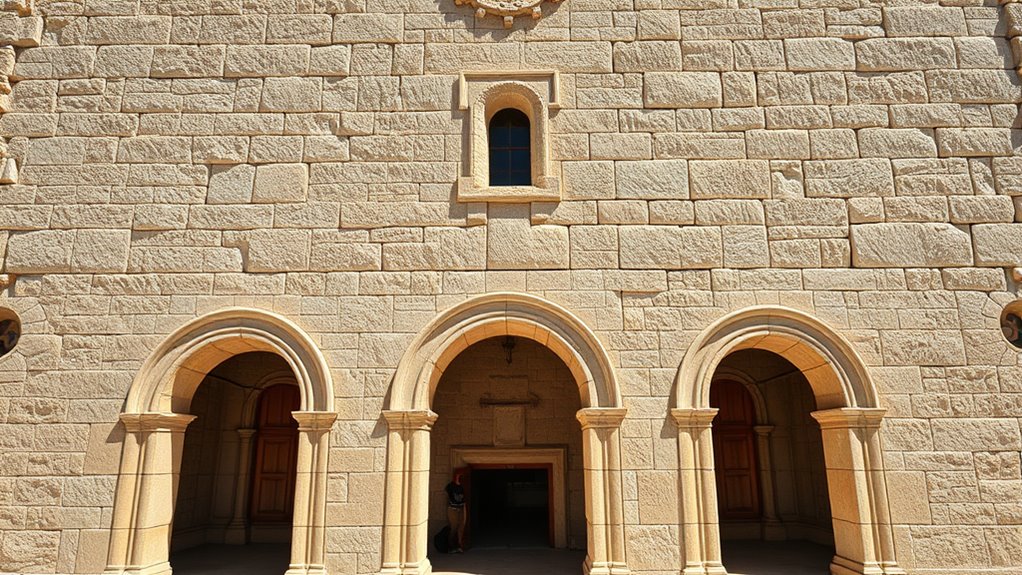
Building materials and construction techniques across Sardinia reflect the island’s diverse geology and rich craftsmanship. You’ll find local stones like limestone, sandstone, and tuff in the south and northwest, while granite dominates Gallura in the northeast. Basalts are common in central-north areas, and white marble appears mainly from reused Roman ruins. To guarantee stability, some original stones have been replaced with granite during restorations. Skilled masons machined stone blocks for precise assembly, often reusing Roman marble elements for columns and capitals. Facades feature detailed bas relief carvings, created by itinerant foreign artisans. Larger structures employ stone barrel or cross vaults, with wooden roofs on smaller churches. The varied stones and construction methods highlight Sardinia’s adaptation to its terrain, climate, and cultural exchanges. Additionally, the use of building techniques such as dry stone walling demonstrates the adaptation of Sardinian builders to local resources and environmental conditions.

Art Nouveau: Paris, Bruxelles, Barcelona (Art Periods & Movements Flexi)
As an affiliate, we earn on qualifying purchases.
As an affiliate, we earn on qualifying purchases.
Key Religious Structures and Monuments
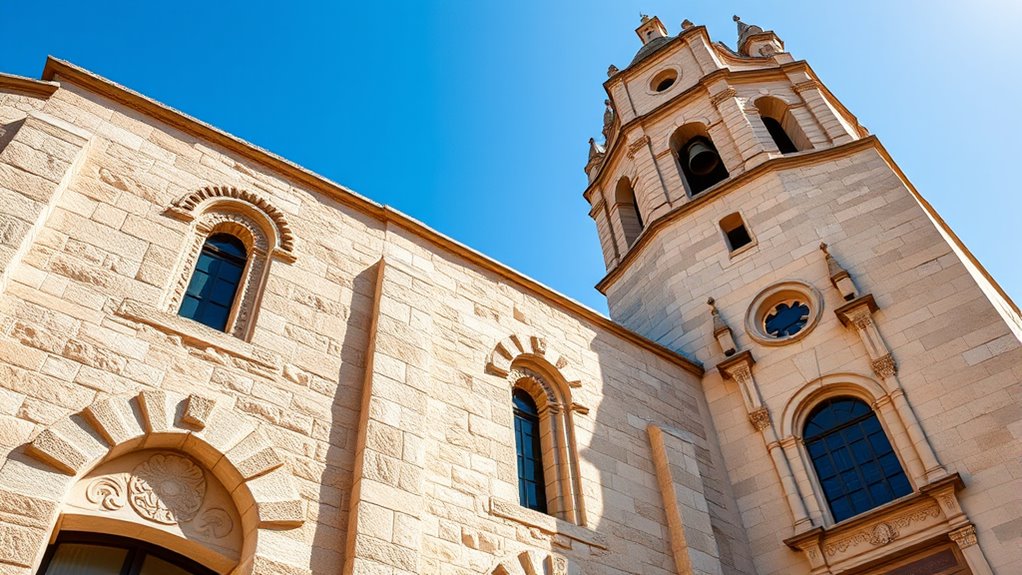
Among the most significant religious structures on the island are the Romanesque churches that showcase a blend of local craftsmanship and Tuscan influence. These buildings often stand on sites of earlier Christian basilicas and necropolises, reused from the 5th to 7th centuries. Some notable examples include the Basilica di Saccargia, known for its narrow Tuscan origins, and the Basilica of San Gavino, with its impressive three-nave design. The Church of Saint Mary of Contra exemplifies a simple, single-nave structure. Bell gables instead of towers are common, and narrow lancet windows provide balanced light. You’ll notice the use of local sedimentary stones, often recycled from Roman structures, enhancing the authenticity and durability of these historic monuments. Regional resources and the use of recycled Roman materials underscore the importance of local resources and tools in preserving these architectural marvels.
Artistic Decorations and Interior Features
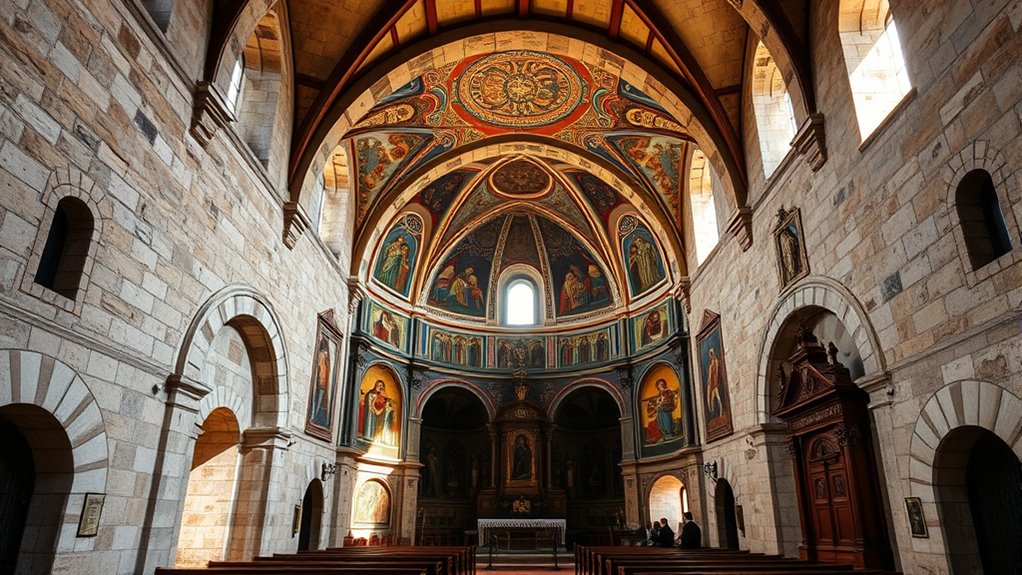
Sardinian religious structures showcase striking artistic decorations that blend local craftsmanship with historical influences. On façades, you’ll notice bold bichrome patterns created by alternating light and dark limestone stones, often complemented by triple mullioned windows that add verticality. Tympana are divided into three sections, featuring lozenges or symbolic motifs, while Lombard bands with blind arches decorate side walls. Inside, the central nave is separated from aisles by columns—some reused from ancient structures—supporting wooden trusses or vaults. Capitals often display intricate vegetal motifs, and sculptures tend to be geometric or abstract, emphasizing a restrained aesthetic. Local sandstone and volcanic stones dominate, creating warm, textured interiors. Minimal painted decoration highlights natural materials, focusing attention on architectural form, materiality, and subtle sculptural accents that reflect Sardinia’s Romanesque elegance. Many of these churches also feature distinctive exterior decorations that enhance their visual impact. Additionally, the artistic decorations often incorporate regional symbolism and motifs, adding cultural significance to their aesthetic appeal.
Regional Variations and Geographic Distribution
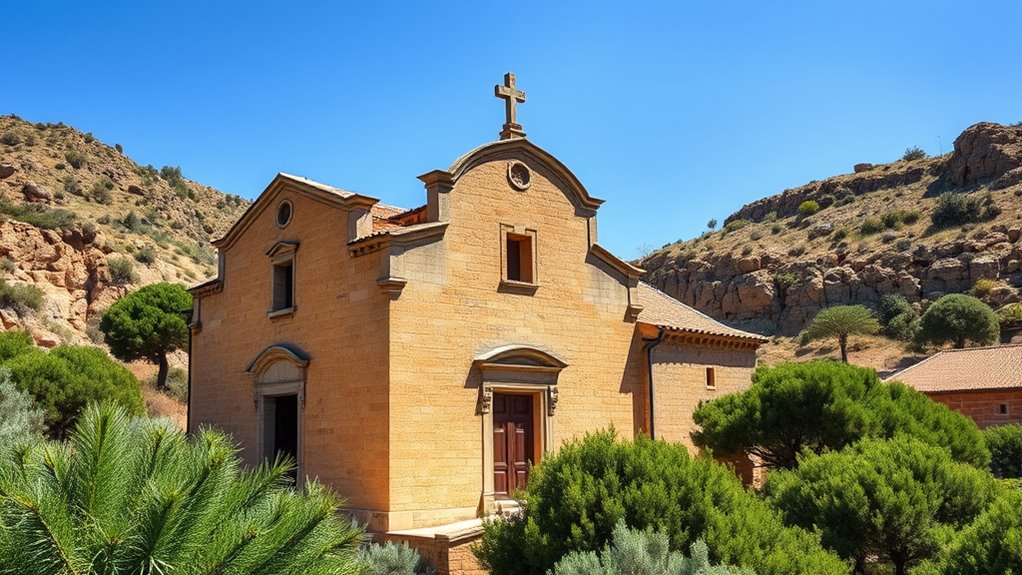
The distribution of Romanesque churches across Sardinia reveals a landscape shaped by historical, cultural, and geographic factors. You’ll find over 150 monuments, mainly in rural areas, with about 70 churches spread across 60 municipalities. Notably, the north—around Sassari and Porto Torres—features prominent Romanesque structures. The strategic locations during the Giudicati era influenced where these churches were built. You’ll see variations in materials, such as local basalt and limestone, often used in alternating patterns. Pisan influences dominate in the north, while Lombard and Provençal styles also appear. The minimal seismic activity and limited restorations have helped preserve many structures. Additionally, Cost and Budgeting considerations, such as maintenance expenses, play a role in the preservation efforts. These geographic and cultural factors create a distinctive Romanesque landscape across Sardinia.
Frequently Asked Questions
How Did Local Sardinian Culture Influence Romanesque Church Designs?
You see that local Sardinian culture shaped Romanesque church designs through the use of regional materials like limestone, sandstone, and volcanic stones, creating distinctive geometric patterns. You notice the simple, functional layouts reflecting rural traditions, with minimal decoration. You also observe the integration of Sardinian motifs, reused Roman elements, and traditional carpentry, all blending continental Romanesque features with local customs, emphasizing both practicality and regional identity.
What Are the Main Differences Between Sardinian and Mainland Romanesque Architecture?
You notice that Sardinian Romanesque architecture differs from mainland styles in several ways. Sardinian churches feature eclectic influences, with unique plans like double naves and apses on both ends, and often have sail bell towers instead of large, multi-story towers. They use locally quarried stones and incorporate decorative elements from Pisan, Provençal, and Islamic traditions, creating a more autonomous and varied style compared to the more uniform mainland Romanesque architecture.
Were There Any Unique Construction Challenges Faced in Sardinian Church Building?
You face unique construction challenges when building churches in Sardinia. Limited local stone types, especially durable metamorphic rocks, force you to adapt with volcanic stones that are fragile and prone to decay. The island’s rough terrain complicates transporting heavy materials, and seismic activity demands precise engineering. Additionally, maintaining structural integrity over time requires ongoing repairs because volcanic stones deteriorate faster, making preservation a constant challenge.
How Did Monastic Orders Impact the Development of Sardinian Romanesque Churches?
Did you know that the arrival of monastic orders in Sardinia around 1063 led to the construction of over 50 churches? They notably shaped Sardinian Romanesque architecture by introducing styles from Italy and France, blending them with local traditions. You’ll notice their influence in the use of contrasting materials, harmonious proportions, and monumental forms, which reflected spiritual ideals and reinforced religious and political power across the island.
Are There Any Preserved Ancient Roman Elements Intentionally Incorporated Into These Churches?
You’ll find that many Sardinian Romanesque churches intentionally incorporate preserved ancient Roman elements. Reused columns, capitals, and marble slabs from Roman and Byzantine sites are common, often integrated into the church’s structure and decoration. These pieces demonstrate a deliberate effort to connect Christian worship spaces with their Roman heritage. As you explore, you’ll notice how these ancient artifacts maintain their original craftsmanship, blending seamlessly into the Romanesque architectural style.
Conclusion
As you explore Sardinian Romanesque churches, you’ll find them like resilient trees rooted deep in history, their branches reaching across diverse regions. Just as a tree’s rings tell stories of seasons past, each stone and carving reveals centuries of devotion and craftsmanship. Standing before these structures, you realize they’re more than stone—they’re living histories that have weathered time, inviting you to discover stories etched in every arch and facade, connecting past and present in a timeless embrace.