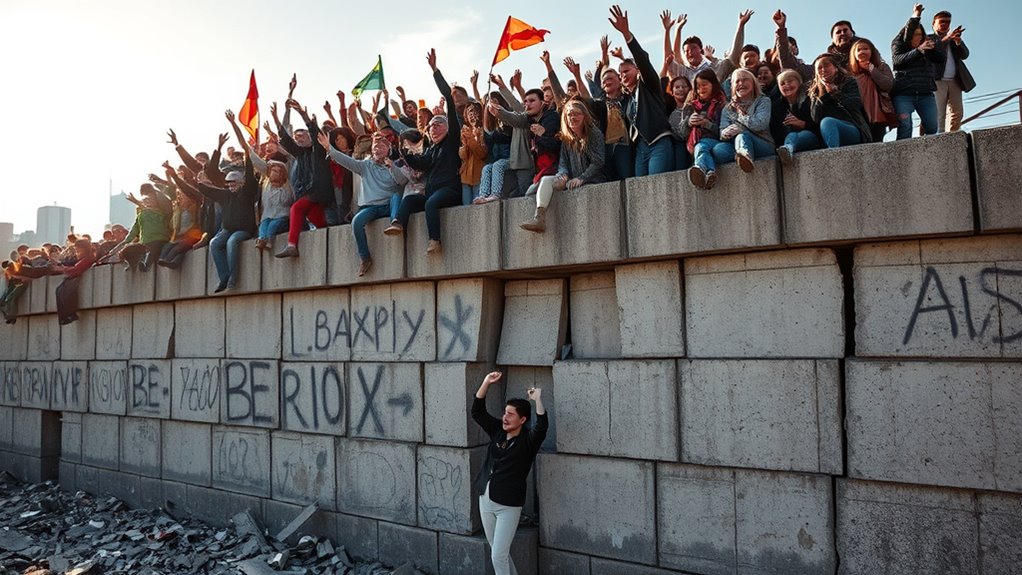

The fall of the Berlin Wall in 1989 is a powerful symbol of freedom, showing how collective citizen action and the desire for democracy can end decades of division. Citizens in East Berlin protested for reform, pressuring the government, while international diplomacy tried to manage the unrest peacefully. When the wall opened unexpectedly, it marked the end of Cold War tensions and united families and nations. Discover more about this historic event and its lasting impact.
Key Takeaways
- The fall of the Berlin Wall in 1989 symbolized the end of Cold War divisions and the triumph of democracy over authoritarianism.
- Mass protests in East Berlin pressured the government to open the border, showcasing citizens’ demand for freedom.
- The event became a global emblem of hope, resilience, and the power of collective action for change.
- The wall’s fall facilitated German reunification and marked a significant shift toward peaceful political transformation in Europe.
- It inspired worldwide movements for democracy, ending decades of division and symbolizing the victory of human rights.
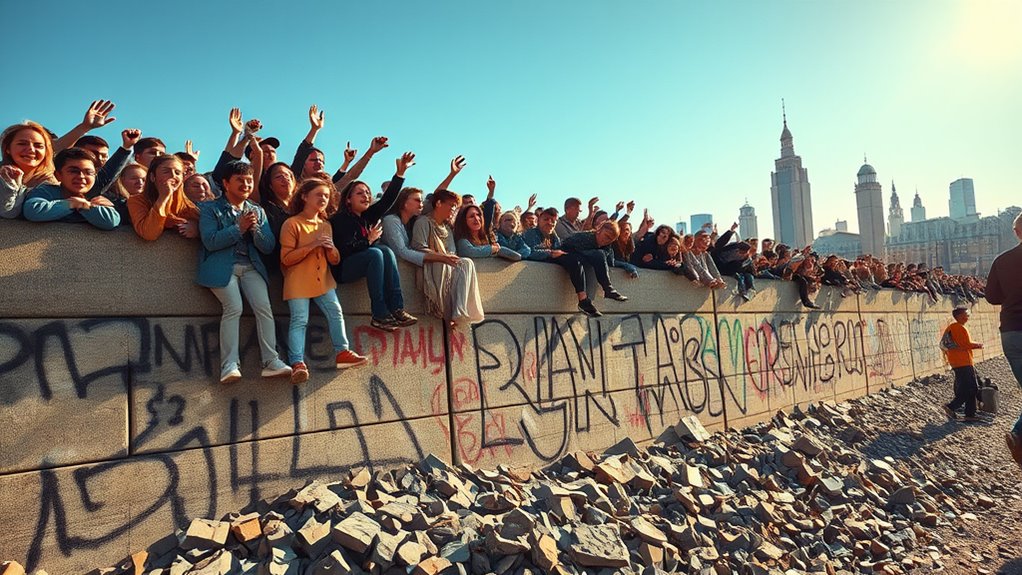
The fall of the Berlin Wall in 1989 marked a pivotal moment in history, symbolizing the end of Cold War divisions and the triumph of democracy over authoritarianism. As you look back, you can see how this event was shaped by the powerful wave of East Berlin protests that swept through East Germany. Citizens, frustrated by decades of oppressive rule and economic hardship, took to the streets demanding greater freedoms and reform. These protests grew in size and intensity, putting immense pressure on the government and highlighting the growing desire for change across Eastern Europe. The East Berlin protests became a catalyst for broader political shifts, pushing the East German government to reconsider its stance and opening the door for negotiations with West Germany and other Western nations.
The 1989 Berlin Wall fall was driven by East Berlin protests demanding freedom and reform.
During this period, Cold War diplomacy played an essential role. Leaders on both sides of the Iron Curtain had long been engaged in tense negotiations, trying to balance their military and ideological interests. Yet, the mounting unrest in East Berlin and elsewhere made it increasingly clear that the status quo was untenable. Western countries, especially the United States and West Germany, supported the protests indirectly, urging reforms and emphasizing the importance of human rights. Meanwhile, East German officials faced mounting pressure to respond without provoking a crackdown, which could have worsened tensions or led to violent conflict.
As the protests intensified, the East German government found itself at a crossroads. They hoped to manage the unrest without ceding too much control, but the demands of the protesters grew louder and more widespread. International diplomacy shifted as well, with Western leaders applying diplomatic pressure and offering support for peaceful change. The situation reached a boiling point when, on November 9, 1989, a miscommunication led to the opening of the border crossings. Thousands flooded through, tearing down sections of the wall, and symbolizing the fall of a division that had separated families and nations for nearly three decades.
This event didn’t happen in isolation; it was the culmination of years of struggle and diplomatic efforts. The East Berlin protests had shown the power of collective action, and Cold War diplomacy, though fraught with tension, played a fundamental role in creating an environment where change could happen peacefully. The wall’s fall became a global symbol of hope, resilience, and the universal desire for freedom. It marked the end of an era and set the stage for Germany’s reunification, transforming the geopolitical landscape and inspiring countless movements for democracy worldwide.
Berlin Wall history book
As an affiliate, we earn on qualifying purchases.
As an affiliate, we earn on qualifying purchases.
Frequently Asked Questions
What Were the Immediate Political Consequences of the Wall’s Fall?
You see, the wall’s fall led to immediate political changes, including rapid reunification negotiations between East and West Germany. Citizens demanded greater political reforms, pushing governments to adopt new policies embracing democracy and openness. As a result, East Germany loosened restrictions, and the two Germanys moved toward unification. This shift also influenced broader Eastern European reforms, reducing Cold War tensions and encouraging nations to pursue democratization and political liberalization.
How Did the Fall Affect East and West German Economies?
You’ll see that the fall led to economic reunification, which brought East and West Germany’s economies closer. Currency integration played a key role, as the East adopted the West’s Deutschmark, stabilizing the economy. This shift boosted growth in the West but also created challenges for the East, including inflation and unemployment. Overall, it marked a significant step toward unifying the economies, though it required ongoing efforts to balance disparities.
Were There Any Lesser-Known Protests Leading up to November 1989?
Like whispers in the dark, hidden protests and underground movements quietly grew before November 1989. You might not have heard about these lesser-known efforts, but they played a pivotal role in challenging the regime. These clandestine gatherings and secret demonstrations sparked hope and resistance, nurturing the courage needed to bring down the wall. Their unseen strength proved that even the quietest voices can ignite a powerful wave of change.
How Did the Fall Influence Global Perceptions of Communism?
You see, the fall of the Berlin Wall triggered an ideological shift worldwide, transforming how people viewed communism. It challenged Cold War dynamics, showing that oppressive regimes could be overcome. This event inspired hope for democracy and freedom, leading many to question communist systems. Countries began re-evaluating their political paths, and the global perception of communism shifted from fear to skepticism, fostering a new era of openness and change.
What Role Did International Leaders Play During the Events?
You see, while the wall was falling, international leaders played vital roles through diplomatic negotiations and leadership influence. They pressured East Germany’s government, encouraged dialogue, and supported reforms. Leaders like Gorbachev and Reagan used their influence to foster change, showing that diplomacy and strong leadership could challenge oppressive regimes. Their actions helped accelerate the collapse, illustrating how strategic diplomacy can shape history and inspire hope worldwide.
Cold War memorabilia
As an affiliate, we earn on qualifying purchases.
As an affiliate, we earn on qualifying purchases.
Conclusion
As you reflect on the fall of the Berlin Wall, you realize it was more than bricks and concrete—it’s a beacon of hope breaking through the darkest night. That moment symbolizes how courage and unity can tear down walls built by fear and oppression. Like dawn dispelling darkness, this event reminds us that freedom is always worth fighting for. You carry the legacy of hope, knowing even the highest walls can fall when people stand together.
German reunification documentary DVD
As an affiliate, we earn on qualifying purchases.
As an affiliate, we earn on qualifying purchases.
Freedom movement history poster
As an affiliate, we earn on qualifying purchases.
As an affiliate, we earn on qualifying purchases.