
In 1965, significant civil rights milestones transformed American society. You see, the Voting Rights Act was signed into law, ending barriers like literacy tests and poll taxes that kept many Black citizens from voting. Activists protested peacefully, challenging segregation laws and fighting for equality. These efforts increased Black voter participation and helped dismantle systemic racial barriers. If you want to understand how these changes reshaped the nation, there’s more to explore about this pivotal year.
Key Takeaways
- The Voting Rights Act of 1965 was signed into law, prohibiting racial discrimination in voting practices.
- It led to a significant increase in Black voter registration and political participation.
- The legislation aimed to dismantle barriers like literacy tests and poll taxes used to disenfranchise Black voters.
- 1965 marked a major step in challenging racial segregation and promoting racial equality.
- The year saw increased activism, including protests like the Selma to Montgomery marches, advocating for civil rights.
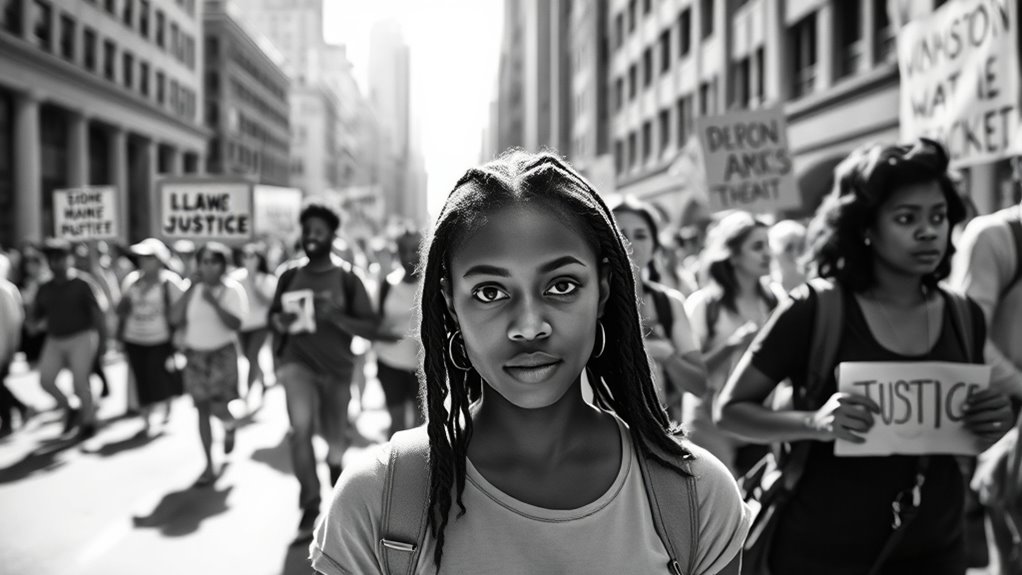
The year 1965 was a pivotal moment in the civil rights movement, marked by landmark legislation and significant social change. You could feel the momentum building, as communities pushed for equality and justice. One of the most critical issues you faced was voting rights. Despite the 15th Amendment, which was supposed to guarantee Black men the right to vote, many states, especially in the South, enforced barriers like literacy tests, poll taxes, and intimidation tactics to suppress Black voting. These tactics effectively disenfranchised large portions of the Black population, denying them a voice in democracy. Recognizing this injustice, activists and leaders pushed for federal action to protect voting rights. Their efforts culminated in the Voting Rights Act of 1965, a landmark law that prohibited racial discrimination in voting practices. When it was signed into law, you saw a dramatic increase in voter registration among Black citizens, empowering communities that had long been silenced. This legislation was a direct response to the widespread suppression caused by segregation laws and voting restrictions rooted in racial discrimination.
Segregation laws, known as Jim Crow laws, had created a separate and unequal society across the South. These laws mandated racial separation in schools, transportation, public facilities, and even neighborhoods. You saw firsthand how these laws reinforced racial divisions, making it impossible for Black Americans to access the same quality of education, healthcare, and public services as white Americans. The fight against segregation was intense, with peaceful protests like the Selma to Montgomery marches shining a spotlight on the brutality and injustice faced by Black citizens. The violence and resistance they encountered underscored the urgent need for change. The passage of the Voting Rights Act was a direct blow to these segregation laws, as it aimed to dismantle barriers that kept Black voters from participating fully in democracy. It also challenged the broader system of racial segregation that upheld inequality.
In 1965, you’re witnessing a turning point — laws that once perpetuated racial discrimination begin to crumble under the weight of activism and federal intervention. The Voting Rights Act not only protected your right to vote but also challenged the remnants of segregation laws that kept Black Americans marginalized and voiceless. These milestones helped set the stage for further progress, inspiring ongoing efforts toward racial equality. The changes of this year demonstrated that persistent activism and bold legislation could confront deeply rooted injustice, shaping a future where democracy and civil rights became accessible to all.

Voting Rights Act of 1965 Art Print. 60 Colours/8 Sizes. American History. Equal Rights. Right to Vote. Voter Suppression. Civil Rights
Your archival quality print is printed on premium smooth matte heavy paper with long-lasting inks.
As an affiliate, we earn on qualifying purchases.
As an affiliate, we earn on qualifying purchases.
Frequently Asked Questions
How Did Public Opinion Influence the Civil Rights Movement in 1965?
You see that public opinion shifts markedly influenced the civil rights movement in 1965, especially as media influence brought racial injustices into people’s homes. When the media highlights brutal incidents or peaceful protests, it sparks empathy and demands for change. Your awareness of these shifts motivates policymakers and activists to push harder, knowing that public support can sway legislation and accelerate progress toward equality.
What Role Did International Pressure Play in Civil Rights Legislation?
You might find it ironic, but international diplomacy actually pushed for civil rights legislation, with global influence shining a spotlight on America’s racial injustices. As countries condemned segregation, pressure mounted on U.S. leaders to act, fearing damage to their reputation. This international pressure, driven by global influence, helped accelerate civil rights reforms. So, while it was about justice at home, the world’s eye played a surprisingly powerful role in shaping history.
Were There Significant Protests or Demonstrations Aside From Legislative Efforts?
You’ll find that marches and protests played a crucial role in advancing civil rights beyond legislation. People organized marches like the Selma to Montgomery march, which drew national attention, and numerous protests advocating for voting rights and equal treatment. These demonstrations energized the movement, pressured lawmakers, and highlighted injustices, making it clear that grassroots activism was essential in pushing for social change alongside legislative efforts.
How Did Civil Rights Milestones of 1965 Impact Subsequent Laws?
You might be surprised to learn that after 1965, voting rights laws increased Black voter registration by over 50%. These milestones directly impacted subsequent laws by strengthening voting rights and accelerating desegregation efforts nationwide. They set a precedent, inspiring new legislation to address racial inequalities. As a result, you see continued progress in civil rights, making it harder to deny access to voting and ensuring schools and public spaces become more integrated.
What Were the Economic Effects on African American Communities Post-1965?
After 1965, you notice economic empowerment growing in African American communities as new laws help reduce discrimination. This leads to increased access to jobs, education, and business opportunities. Community revitalization efforts flourish as neighborhoods improve and local investments rise. You see a gradual closing of economic gaps, fostering a stronger sense of pride and self-sufficiency. These positive changes create a foundation for continued progress toward economic justice and equality.

Civil Rights Movement: A History from Beginning to End
As an affiliate, we earn on qualifying purchases.
As an affiliate, we earn on qualifying purchases.
Conclusion
As you reflect on 1965’s civil rights milestones, it’s striking how history often unfolds in unexpected ways. The passage of the Voting Rights Act didn’t just change laws—it shifted lives and opened doors you might never have imagined. Sometimes, progress happens quietly in the background, only to collide with the moment when society is ready to listen. It’s a reminder that even in coincidence, opportunity waits for those willing to seize it.

American History: Jim Crow Laws – Reconstruction – Civil Rights – Classroom Poster
As an affiliate, we earn on qualifying purchases.
As an affiliate, we earn on qualifying purchases.

Voting Rights Art, Civil Rights Movement Poster, 1963 Black Civil Rights Protest Photo,Protest March Poster Print, March On Washington, Protestors, Equality Justice I Have A Dream 8x10inch Unframed
Celebrate History: This Voting Rights Art Captures The Essence Of The Civil Rights Movement, Showcasing A Powerful 1963…
As an affiliate, we earn on qualifying purchases.
As an affiliate, we earn on qualifying purchases.