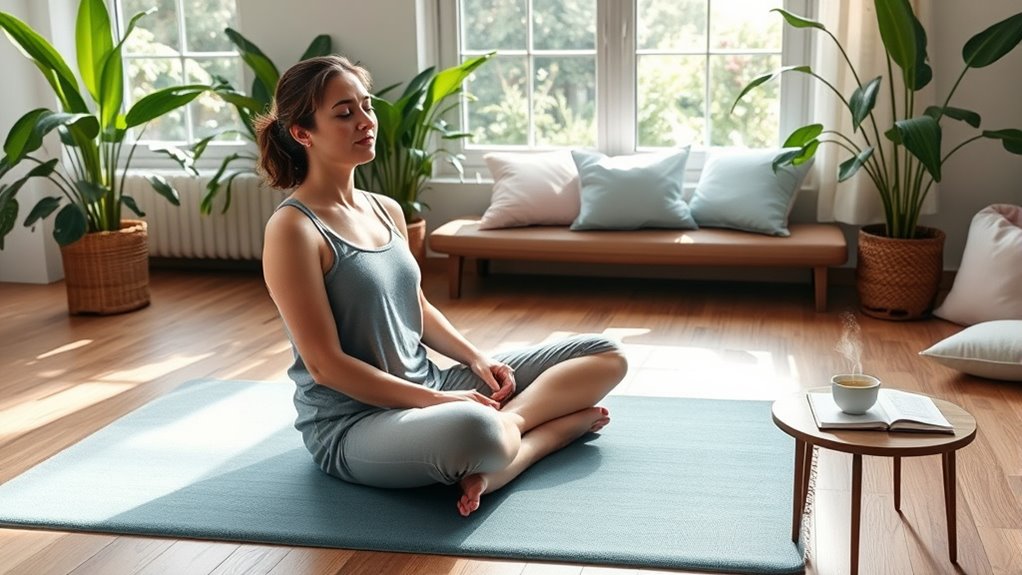

To manage stress effectively, you can try science-backed techniques like mindfulness meditation and physical activity. Mindfulness helps you stay present and reduces negative thought patterns, lowering stress hormones. Regular exercise releases mood-boosting endorphins and improves resilience. Combining both creates a holistic approach that boosts mental clarity and emotional balance. These methods are easy to incorporate into daily life and have proven long-term benefits. Keep exploring to discover how to make these strategies work best for you.
Key Takeaways
- Mindfulness meditation reduces cortisol levels and promotes mental clarity by focusing on the present moment without judgment.
- Physical activities like walking and yoga release endorphins, improving mood and resilience against stress.
- Combining mindfulness and exercise offers a holistic approach supported by science for effective stress reduction.
- Regular, brief practices build long-term stress coping skills and emotional balance.
- Both techniques are validated by research to sustainably lower stress and enhance overall well-being.

Stress is an inevitable part of life, but managing it effectively can profoundly improve your well-being. One highly recommended technique is mindfulness meditation, which has been backed by numerous studies for its ability to reduce stress levels. When you practice mindfulness meditation, you focus your attention on the present moment, observing your thoughts and feelings without judgment. This practice helps break the cycle of negative thought patterns that often amplify stress. Regular mindfulness meditation can lower cortisol levels, the hormone associated with stress, and promote a sense of calm and clarity. It’s a simple yet powerful tool you can incorporate into your daily routine—just a few minutes each day can make a significant difference.
Alongside mindfulness meditation, engaging in physical activity is another scientifically supported way to manage stress. Exercise releases endorphins, your body’s natural mood elevators, which help counteract feelings of anxiety and depression. Whether it’s a brisk walk, a jog, cycling, or yoga, physical activity not only boosts your physical health but also improves your mental resilience against stress. When you move your body regularly, you’re better equipped to handle daily pressures and recover more quickly from stressful events. Exercise also provides a healthy distraction, allowing you to shift focus away from stressors and onto something productive and positive. Over time, consistent physical activity can enhance your overall mood, increase your energy levels, and foster a greater sense of control over your emotions.
Both mindfulness meditation and physical activity are accessible techniques you can practice anywhere and anytime. They complement each other perfectly—mindfulness helps cultivate mental clarity and emotional balance, while physical activity physically alleviates stress and boosts your mood. Together, they create a holistic approach to managing stress that’s grounded in scientific evidence. Incorporating these practices into your daily life doesn’t require extensive time or resources, making them sustainable options for long-term stress management. Remember, the key is consistency, as regular practice enhances the benefits and helps build resilience. Even if you start with just a few minutes of mindfulness meditation or a quick walk each day, over time, these habits will build resilience and help you handle stress more effectively. By actively choosing these techniques, you empower yourself to create a calmer, more balanced life amidst the inevitable challenges you face.

Retrospec Sedona Meditation Cushion, Buckwheat Pillow, Meditation Pillow
- Natural Buckwheat Hull Fill: Supports spine and hips during meditation
- Adjustable Firmness: Unzip to add or remove hulls
- Eco-Friendly Cotton Cover: Machine washable and microplastic-free
As an affiliate, we earn on qualifying purchases.
As an affiliate, we earn on qualifying purchases.
Frequently Asked Questions
Can Diet Impact Stress Levels Significantly?
Yes, your diet can substantially impact your stress levels. Paying attention to nutritional timing helps keep your blood sugar stable, reducing mood swings. Including dietary supplements like magnesium or omega-3 fatty acids may also help manage stress. Eating balanced meals rich in fruits, vegetables, and whole grains supports your body’s resilience. When you prioritize your diet, you’re actively helping your body better handle stress and improve overall mental well-being.
What Role Does Sleep Play in Stress Reduction?
You might think pulling all-nighters boosts productivity, but sleep actually plays a huge role in stress reduction. Prioritizing good sleep improves sleep quality and keeps your circadian rhythms in sync, helping your body manage stress better. Ironically, sacrificing sleep to beat stress often backfires, making you more stressed and less effective. So, get enough rest, stick to regular sleep patterns, and watch your stress levels drop effortlessly.
Are There Specific Exercises Most Effective for Stress Relief?
You should try breathing exercises and progressive muscle relaxation for effective stress relief. Breathing exercises calm your nervous system by slowing your breath and reducing tension, while progressive muscle relaxation helps you release physical stress by tensing and relaxing muscle groups. Incorporating these techniques into your daily routine can markedly lower stress levels, improve your mood, and promote overall well-being. Give them a try and notice the calming effects firsthand.
How Does Mindfulness Compare to Medication for Managing Stress?
Think of your mind as a garden; mindfulness meditation gently weeds out stress, while medication acts as a protective fence. When comparing mindfulness meditation to medication, you find meditation promotes long-term resilience by cultivating awareness and calmness naturally. Medication can offer quick relief but may come with side effects. Ultimately, combining both under professional guidance often provides the most balanced approach to managing stress effectively.
Can Technology-Based Interventions Effectively Reduce Stress?
Technology-based interventions can effectively reduce stress, especially when you incorporate a digital detox to minimize screen time and digital overload. Virtual therapy offers convenient access to professional support, helping you develop coping strategies and relaxation techniques. These tools empower you to manage stress actively, fit into your busy schedule, and foster mental well-being. Combining virtual therapy with regular digital detoxes can greatly enhance your overall stress management approach.

WAUZOBLE Grounding Mat for Yoga, Sleep, Stress Relief – Black
- Health Benefits: Increases energy through grounding contact
- Gift Idea: Perfect for loved ones and health-conscious friends
- Easy to Use: Use as yoga mat indoors or outdoors
As an affiliate, we earn on qualifying purchases.
As an affiliate, we earn on qualifying purchases.
Conclusion
By practicing proven stress management techniques, you can substantially improve your well-being. Did you know that just 10 minutes of mindful breathing can reduce cortisol levels by up to 30%? Incorporating these science-backed methods into your daily routine isn’t just effective—it’s essential for maintaining your mental health. Start small today, and over time, you’ll notice a noticeable decrease in stress and an increase in overall happiness. Take control and make stress management a priority!

Under Armour Men's Charged Assert 9 Running Shoe, Black/White, 9.5XW
- Breathable Mesh Upper: Lightweight with digital print
- Stable Leather Overlays: Locks in midfoot for support
- Comfortable EVA Sockliner: Soft, step-in comfort
As an affiliate, we earn on qualifying purchases.
As an affiliate, we earn on qualifying purchases.

Stress Relief Essential Oil Blend 30 ml – Calming, Relaxing for Diffusers
- Aromatherapy Use: Ideal for diffusers and massage
- Relaxing Scent: Creates a peaceful, soothing aroma
- Calming Effect: Promotes relaxation and tranquility
As an affiliate, we earn on qualifying purchases.
As an affiliate, we earn on qualifying purchases.