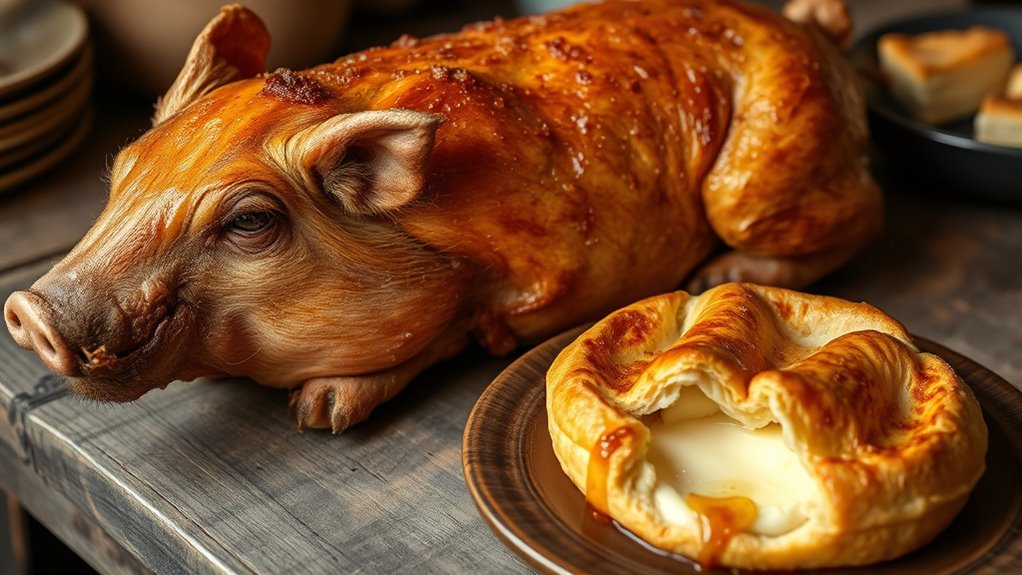
Discover the rich flavors of Sardinian cuisine with iconic dishes like Porceddu and Seadas. Porceddu features tender, slow-roasted suckling pig with crispy skin, crafted with simple herbs and open-flame techniques that highlight Sardinian artistry. Seadas are delicate pastries filled with mild cheese, deep-fried to perfection, and drizzled with local honey—a sweet treat that showcases resourcefulness and craftsmanship. Continue exploring these tradition-filled recipes to truly appreciate Sardinia’s culinary heritage.
Key Takeaways
- Porceddu is a traditional Sardinian roasted suckling pig, seasoned simply and slow-cooked over open flames for crispy skin and tender meat.
- Seadas is a classic Sardinian dessert made of semolina pastry filled with cheese, fried until golden, and drizzled with local honey.
- Both dishes showcase Sardinian craftsmanship, emphasizing minimal ingredients, patience, and traditional cooking techniques passed through generations.
- Food plays a vital cultural role in Sardinia, celebrated through festivals that highlight authentic recipes like Porceddu and Seadas.
- The preparation of these dishes reflects Sardinian resourcefulness, craftsmanship, and the importance of communal culinary traditions.
Sardinia’s rich culinary heritage is best experienced through its traditional recipes, which have been passed down through generations. When you visit the island, you’ll quickly realize that food isn’t just about sustenance — it’s a vibrant part of Sardinian culture, celebrated at countless Sardinian food festivals. These festivals bring locals and visitors together to showcase authentic dishes prepared using local culinary techniques, preserving centuries-old flavors. One of the most iconic recipes you’ll encounter is porceddu, a succulent roasted suckling pig that’s a centerpiece of Sardinian festivities. The process involves seasoning the pig simply with herbs, then roasting it slowly over open flames or embers, allowing the skin to turn crispy while the meat remains tender. This technique highlights the Sardinian skill in transforming humble ingredients into a feast fit for special occasions. As you watch or partake in these festivals, you’ll notice the communal spirit that surrounds food preparation — everyone shares in the tradition, passing recipes and techniques from one generation to the next.
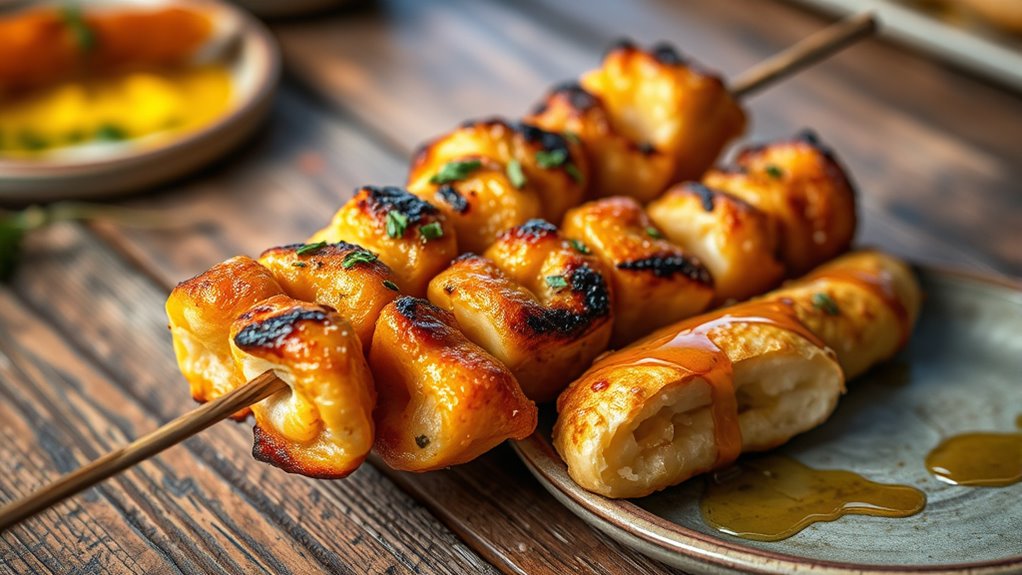
Another staple that captures the essence of Sardinian culinary artistry is seadas, a sweet treat that perfectly balances rich cheese and honey. Making seadas involves a delicate dough, typically prepared with local ingredients like semolina and lemon zest, which is then filled with a soft, mild cheese such as pecorino. The filled pastries are deep-fried until golden and crispy, then drizzled generously with local honey. The process of crafting seadas showcases the skillful use of local culinary techniques, such as folding and frying, that have been refined over centuries. When you experience seadas at a festival or in a traditional trattoria, you’ll appreciate the craftsmanship and cultural significance behind each bite. These desserts aren’t just about sweetness; they embody Sardinia’s resourcefulness, turning simple ingredients into a harmonious symphony of flavors.
Frequently Asked Questions
What Are the Origins of Porceddu?
You should know that porceddu originates from Sardinian pig farming, where local breeds are raised traditionally. This dish reflects Sardinia’s rich history of traditional cooking techniques, like spit-roasting over open flames. The practice dates back centuries, symbolizing communal celebrations and local culinary heritage. By preparing porceddu this way, Sardinians preserve their cultural identity and showcase their skilled craftsmanship in transforming simple, quality ingredients into a delicious, iconic dish.
How Is Seadas Traditionally Served?
Ever imagine a golden, crispy Seada steaming with fragrant honey? You’ll find it traditionally served warm, often on a simple plate that highlights its rustic charm. It’s usually presented with a drizzle of local honey or a dusting of powdered sugar, enhancing its sweet and savory flavors. Typically, it’s enjoyed as a dessert or afternoon treat, perfectly complemented by a cup of Sardinian wine or a glass of fresh milk.
Are There Regional Variations of These Dishes?
Yes, regional flavor profiles influence variations of Porceddu and Seadas across Sardinia. You might find ingredient substitutions, like different herbs or types of pork, reflecting local tastes. For instance, coastal areas may add seafood flavors, while inland regions emphasize hearty, smoky profiles. These variations let you explore diverse tastes, giving each dish a unique regional character that celebrates Sardinia’s rich culinary diversity.
What Wine Pairs Best With Porceddu?
For porceddu, you should choose a robust, full-bodied wine like Cannonau or Carignano. These wines offer the bold tannins and rich flavors that create perfect culinary harmony with the crispy, succulent pork. A good wine pairing enhances the smoky, savory notes of the dish, elevating your dining experience. Trust these selections to complement porceddu’s flavors and bring out the best in every bite.
Can These Recipes Be Adapted for Home Cooking?
Absolutely, you can turn these recipes into epic home cooking adventures! With some handy home cooking tips, you’ll realize making porceddu and seadas is easier than you think. Don’t worry about ingredient substitutions—use chicken or pork shoulder instead of traditional pork, and try different cheeses for seadas. Just embrace the fun, get creative, and soon you’ll be impressing everyone with your Sardinian culinary mastery!
Conclusion
You now know how to prepare iconic Sardinian dishes like porceddu and seadas. These recipes showcase the island’s rich culinary heritage and unique flavors. Did you know that Sardinia has over 1,500 traditional recipes passed down through generations? Embracing these dishes connects you to a vibrant culture and history. So, next time you cook, remember you’re part of a culinary tradition that’s celebrated worldwide—bringing Sardinian warmth and flavor to your table.