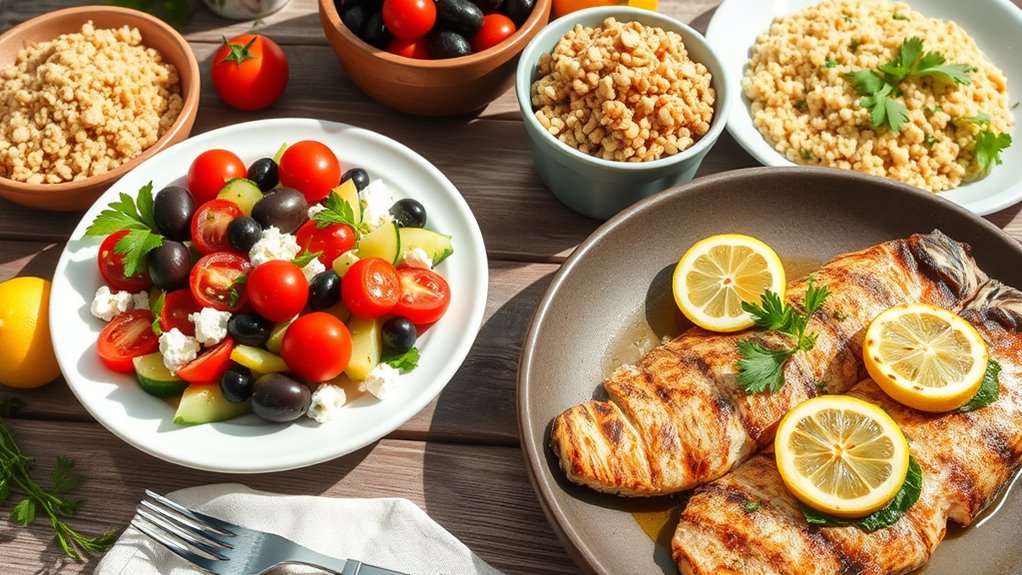

To support heart health with Mediterranean recipes, focus on dishes with extra virgin olive oil, fatty fish like salmon or sardines, and lots of fresh vegetables and fruits. Incorporate whole grains such as quinoa or brown rice, and add nuts like walnuts or almonds for extra nutrients. These colorful, flavorful meals help reduce inflammation and improve cholesterol levels. Keep exploring to discover more delicious ways to nourish your heart through this vibrant diet.
Key Takeaways
- Incorporate olive oil as the main cooking fat for flavor and anti-inflammatory benefits.
- Include omega-3-rich seafood like salmon, sardines, and mackerel to support heart health.
- Use plenty of colorful vegetables and fruits to boost antioxidants and nutrient intake.
- Opt for whole grains such as quinoa, farro, and brown rice to increase fiber and reduce cholesterol.
- Prepare meals with herbs, nuts, and legumes to enhance flavor while promoting cardiovascular wellness.
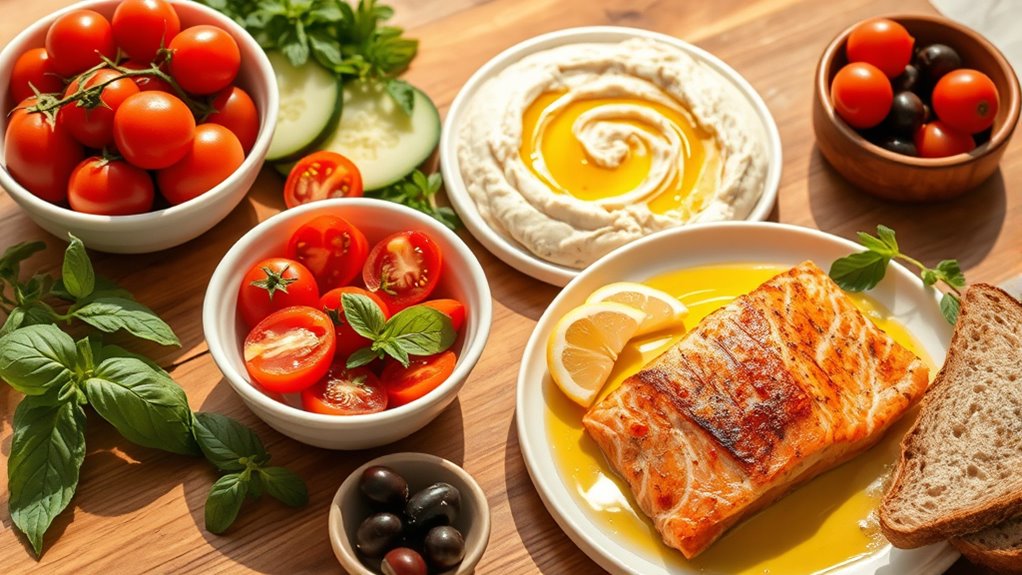
The Mediterranean diet offers a delicious way to improve your health by focusing on fresh, whole foods rich in flavor. If you’re looking to boost your heart health, this diet emphasizes nourishing ingredients like olive oil and seafood options that are both tasty and beneficial. Olive oil is the cornerstone of Mediterranean cooking, acting as a healthy fat that helps reduce inflammation and lower bad cholesterol levels. When preparing your meals, opt for extra virgin olive oil to dress salads, drizzle over roasted vegetables, or sauté lean proteins. Its rich, fruity flavor adds depth to dishes without relying on saturated fats or processed ingredients, making it a heart-friendly choice.
Seafood options are another essential component of Mediterranean recipes aimed at heart health. Fish such as salmon, mackerel, sardines, and tuna are packed with omega-3 fatty acids, known for their ability to reduce blood triglycerides, decrease blood pressure, and prevent arrhythmias. Incorporate these fish into your weekly meals by grilling, baking, or poaching. For a quick, flavorful dinner, try a simple grilled salmon fillet drizzled with lemon and olive oil, served alongside sautéed greens. Seafood isn’t just limited to fish; shellfish like shrimp and mussels also contribute omega-3s and add variety to your diet. Including a variety of seafood ensures you get a broad spectrum of nutrients that support cardiovascular health.
In addition to olive oil and seafood, Mediterranean recipes often feature an abundance of vegetables, fruits, nuts, and whole grains, all of which support a healthy heart. Think colorful salads with tomatoes, cucumbers, and peppers, or hearty vegetable stews flavored with herbs and a splash of olive oil. Whole grains like quinoa, farro, and brown rice provide fiber, which helps lower cholesterol levels and stabilize blood sugar. Nuts such as almonds and walnuts serve as healthy snacks or toppings, offering additional omega-3s and antioxidants that protect your arteries.
Frequently Asked Questions
Can Mediterranean Diet Recipes Be Adapted for Vegetarian Diets?
Yes, you can easily adapt Mediterranean diet recipes for vegetarian diets. Simply incorporate vegetarian substitutions like beans, lentils, tofu, and tempeh to replace meat. Focus on plant-based adaptations by using abundant vegetables, whole grains, nuts, and seeds. These swaps maintain the heart-healthy benefits of the Mediterranean diet while catering to vegetarian preferences, ensuring you enjoy delicious, nourishing meals aligned with your dietary choices.
How Do Portion Sizes Affect Heart Health in Mediterranean Recipes?
Portion sizes really matter for heart health in Mediterranean recipes. When you control your servings, you’re less likely to overconsume saturated fats, salt, and calories, which can harm your heart. By practicing portion control, you keep your meals balanced and nutrient-dense, reducing risks of cardiovascular issues. Smaller, mindful servings not only support weight management but also help you enjoy the health benefits of the Mediterranean diet without excess.
Are There Quick Mediterranean Recipes Suitable for Busy Weekdays?
Yes, you can find quick Mediterranean recipes perfect for busy weekdays. Look for meals with quick prep and easy ingredients, like grilled fish or veggie wraps. Meal prep on weekends can save time, allowing you to enjoy healthy, heart-friendly dishes during hectic days. Focus on simple, flavorful recipes that don’t require extensive cooking, so you stay on track with your heart health goals while managing your busy schedule efficiently.
What Are Common Pitfalls When Starting a Mediterranean Diet?
You might find that overcomplicating meal planning or rushing ingredient sourcing can slow your progress. To avoid common pitfalls, keep things simple and focus on quality ingredients. Don’t overlook the importance of planning ahead, which helps you stay consistent. Be patient with yourself, and remember that sourcing fresh, authentic ingredients makes a big difference. Staying mindful of these aspects ensures you seamlessly shift into a heart-healthy Mediterranean lifestyle.
How Do Mediterranean Recipes Compare to Other Heart-Healthy Diets?
When comparing Mediterranean recipes to other heart-healthy diets, you’ll find they often excel in nutrient analysis, emphasizing healthy fats, fiber, and antioxidants. Unlike low-fat diets, Mediterranean recipes incorporate good fats from olive oil and nuts, promoting better heart health. The diet’s variety makes it easier to stick with long-term. Overall, a diet comparison shows Mediterranean recipes support cardiovascular health with rich, balanced nutrition that’s both enjoyable and sustainable.
Conclusion
By incorporating these delicious Mediterranean diet recipes into your routine, you’ll boost your heart health without sacrificing flavor. Some might think healthy eating is boring, but these vibrant dishes prove otherwise. With simple ingredients and easy steps, you can enjoy tasty, nourishing meals every day. So why not start today? Your heart will thank you as you embrace this flavorful, heart-healthy lifestyle—delicious, doable, and full of life.