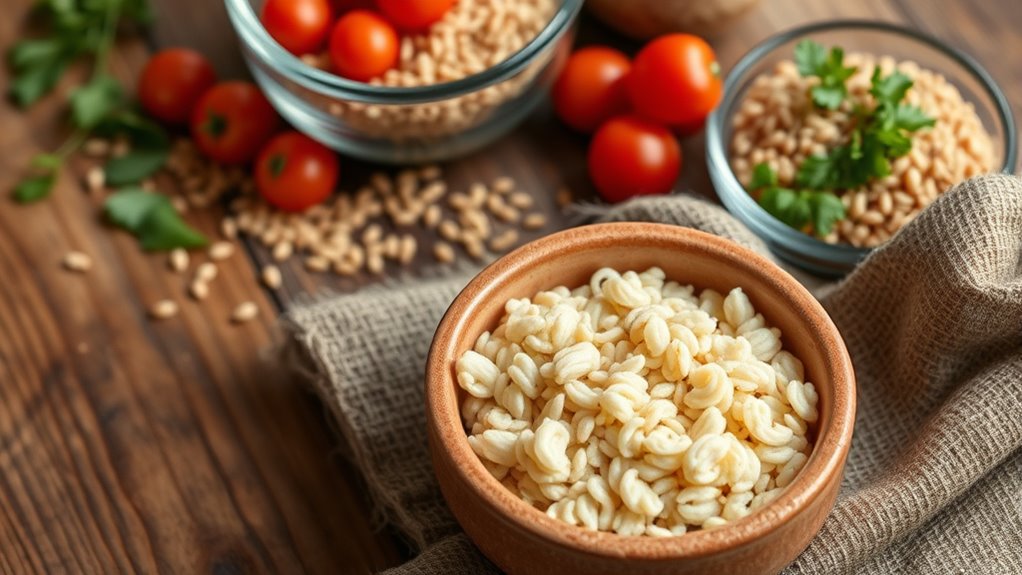

To cook ancient grains like quinoa, farro, and more, start by rinsing them to remove debris, then use a 2:1 liquid-to-grain ratio. Bring them to a boil, then simmer until tender—about 15 minutes for quinoa and 30-40 minutes for farro. Toast grains beforehand for extra flavor, and try using different liquids like broth or coconut milk. Mastering these techniques will help you create nutritious, flavorful dishes—if you keep exploring, you’ll discover even more delicious possibilities.
Key Takeaways
- Rinse grains thoroughly before cooking to remove debris and improve texture.
- Use a 2:1 liquid-to-grain ratio and adjust cooking times based on grain type.
- Toast grains in a dry skillet to enhance flavor before boiling or simmering.
- Cook quinoa until fluffy (about 15 minutes) and farro until tender but chewy (30-40 minutes).
- Incorporate cooked grains into salads, soups, or grain bowls for nutritious, versatile meals.
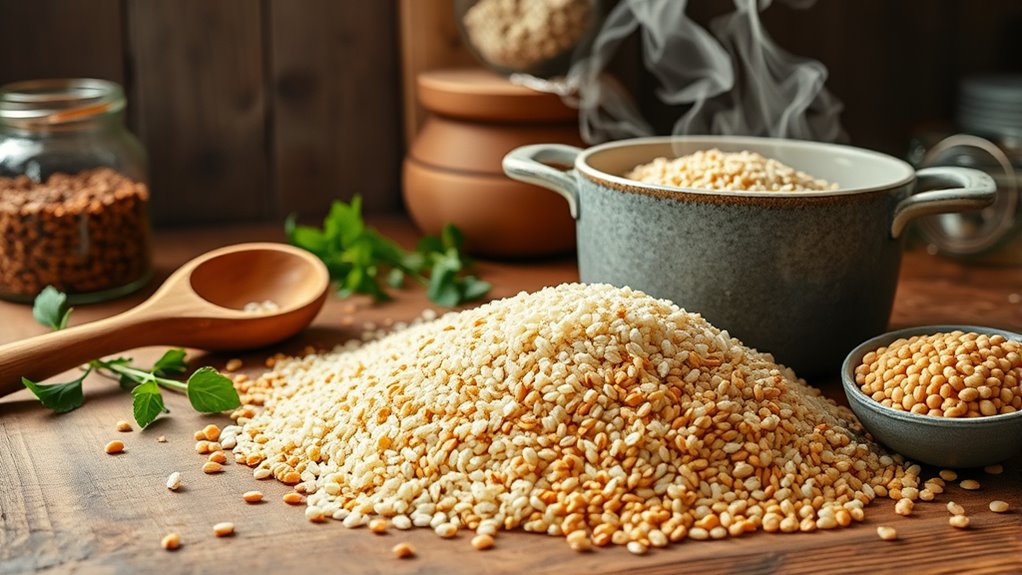
Ancient grains are making a comeback in modern kitchens, offering a nutritious and flavorful alternative to conventional staples. These grains, such as quinoa, farro, teff, and amaranth, are packed with essential nutrients, making them a smart choice for boosting your overall health. Grain nutrition varies across different types, but most ancient grains provide high-quality protein, fiber, vitamins, and minerals. For example, quinoa is a complete protein, containing all nine essential amino acids, while farro offers a good amount of fiber and iron. Incorporating these grains into your meals can improve digestion, support heart health, and help you stay energized throughout the day.
When it comes to cooking techniques, ancient grains often require a bit of attention to bring out their best flavors and textures. Unlike rice or pasta, many of these grains benefit from rinsing before cooking to remove any residual saponins or debris, especially in quinoa. Cooking methods can vary; some grains, like farro and wheat berries, need longer simmering times, while others, such as amaranth and millet, cook more quickly. Using a good ratio of water or broth to grain is essential—typically, a 2:1 liquid-to-grain ratio works well, but always check specific instructions. For more flavor, consider toasting grains in a dry skillet before boiling, which enhances their nutty aroma and adds depth to your dishes.
You’ll find that cooking ancient grains is straightforward once you understand their particular needs. For instance, to get fluffy quinoa, bring it to a boil, then reduce the heat and simmer until the water is absorbed, usually around 15 minutes. For chewy textures like farro, simmer until tender but still slightly firm, which can take 30 to 40 minutes depending on the variety. Once cooked, you can serve these grains as a base for salads, stir-fries, or grain bowls, or incorporate them into soups and stuffing. Using different liquids, such as veggie broth or coconut milk, can also add an extra layer of flavor.
Incorporating ancient grains into your diet doesn’t have to be complicated. With basic cooking techniques and an understanding of their nutrition profiles, you can turn these versatile ingredients into delicious, healthy meals. Experiment with different grains to discover your favorites, and enjoy the unique textures and flavors they bring to your table. Whether you’re making a hearty bowl or a light salad, ancient grains are a nutritious addition that can elevate your cooking and improve your well-being.
Frequently Asked Questions
How Do Ancient Grains Compare Nutritionally to Modern Grains?
Ancient grains generally offer more nutritional benefits than modern grains because of their unique grain composition. You’ll find they contain higher levels of fiber, protein, and essential minerals, which support your overall health. Unlike some modern grains that are heavily processed, ancient grains preserve their natural nutrients, helping you feel fuller longer and providing sustained energy. So, choosing ancient grains can boost your diet with richer nutrients and better grain composition.
Are There Any Common Allergies Associated With Ancient Grains?
Sure, ancient grains are as harmless as grandma’s fruitcake—unless you have ancient grain allergies or gluten sensitivity considerations. While they’re generally safe, some folks might react to quinoa or spelt, experiencing allergic symptoms. Always check labels and listen to your body, because even these “superfoods” can cause trouble. If you have known allergies, consult your doctor before diving into a bowl of ancient grain goodness.
How Should I Store Uncooked Ancient Grains to Maintain Freshness?
You should store uncooked ancient grains in an airtight container in a cool, dark place to keep them fresh. Proper storage helps prevent moisture, pests, and spoilage, ensuring grain preservation. Keep them away from sunlight and heat sources, and consider refrigeration if you live in a humid climate. This way, your grains stay fresh longer, maintaining their flavor and nutritional value for your cooking needs.
Can Ancient Grains Be Incorporated Into Desserts and Sweets?
Yes, you can incorporate ancient grains into desserts and sweets. Try sweet grain pairings like quinoa pudding or farro cookies to add texture and nutrition. Use ancient grain recipes that blend these grains with honey, fruits, or chocolate for delicious treats. Experimenting with these grains in desserts creates unique flavors and boosts their nutritional value, making your sweets both tasty and wholesome.
Are Ancient Grains Suitable for Gluten-Free Diets?
Ancient grains like quinoa are suitable for gluten-free diets if they have gluten-free labeling. However, you should watch out for cross-contamination risks during processing, which can introduce gluten. Always check packaging carefully and buy from trusted sources. Quinoa, in particular, is naturally gluten-free and versatile, making it an excellent choice for those avoiding gluten, as long as you verify it’s labeled gluten-free to stay safe.
Conclusion
Now that you’ve explored the world of ancient grains, you’re armed with ingredients that are as timeless as they are delicious. Think of these grains as hidden gems waiting to transform your meals into nutritious masterpieces. So, don’t be afraid to experiment and add a splash of history to your dishes. With each bite, you’re tasting a piece of the past, making your culinary journey as rich and vibrant as a tapestry woven through time.