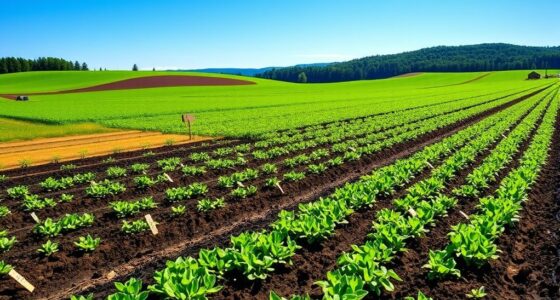
Vertical farming and hydroponics let you grow fresh, nutritious crops upwards in compact, controlled environments within urban spaces. These methods maximize limited space by stacking layers or growing in soilless systems, making them ideal for city settings. They use less water, reduce environmental impact, and protect crops from pests and weather issues. To discover how these innovative techniques can transform urban food production and sustainability, keep exploring the possibilities.
Key Takeaways
- Vertical farming stacks crops in layers to maximize space efficiency in urban environments.
- Hydroponics uses nutrient-rich water solutions to grow plants without soil, enabling vertical growth.
- Both methods reduce land use and transportation emissions, promoting sustainable urban food production.
- Controlled environments protect crops from pests, diseases, and unpredictable weather, ensuring reliable yields.
- These techniques support local food security and community resilience by producing fresh produce close to consumers.
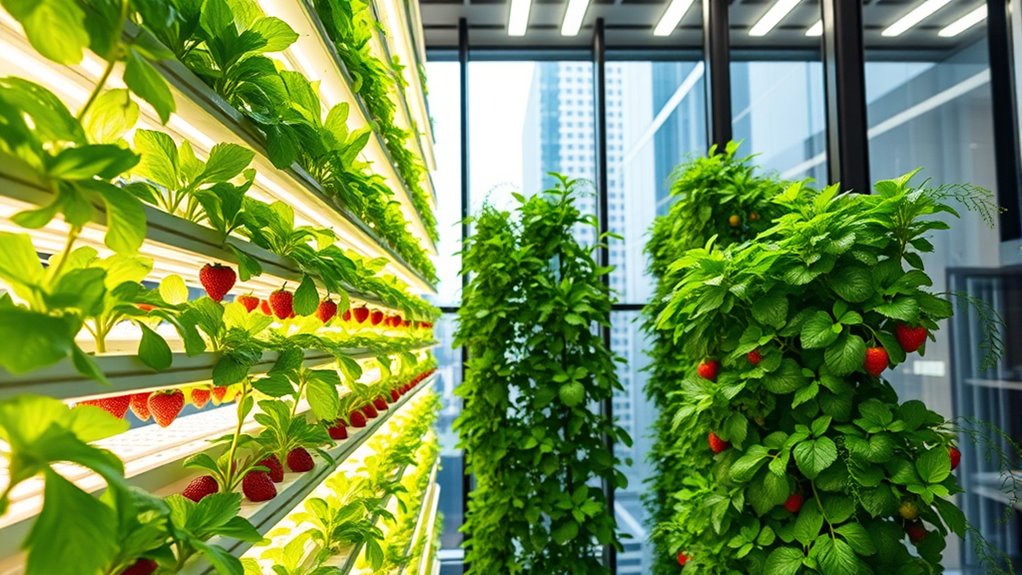
Vertical farming and hydroponics are transforming agriculture by allowing you to grow crops in stacked layers or soilless systems, making efficient use of limited space. This innovative approach directly impacts urban sustainability, offering a practical solution to the growing challenges of food production within city environments. When you adopt vertical farming, you’re helping reduce the agricultural footprint on rural land, preserving natural ecosystems and decreasing transportation emissions. As cities expand, maintaining a stable food supply becomes increasingly complex. Vertical farms can be established on rooftops, in abandoned buildings, or vacant lots, turning underutilized spaces into productive food sources. This not only supports local food security but also minimizes reliance on distant farms, reducing the carbon footprint associated with long-distance food transportation.
Hydroponics, a soilless cultivation method, plays a key role in this transformation. You can cultivate a wide variety of crops using nutrient-rich water solutions, which often results in faster growth rates and higher yields compared to traditional soil farming. Because hydroponic systems use much less water—sometimes up to 90% less—you’re directly contributing to the conservation of essential water resources, a crucial aspect of urban sustainability. These systems are scalable and adaptable, meaning you can set them up in small apartments or large commercial facilities, making fresh produce accessible regardless of your location.
Moreover, vertical farming combined with hydroponics offers resilience against climate change and urban environmental challenges. You can control growing conditions precisely, shielding crops from unpredictable weather, pests, and diseases. This consistency guarantees a reliable food supply, which is necessary for urban populations facing disruptions in traditional agriculture. By integrating these systems into city planning, you support a more resilient local food network, promoting food security in times of crisis.
In addition, these methods promote sustainable practices. You reduce the need for chemical pesticides and fertilizers, which benefit both your health and the environment. The controlled environment also minimizes waste, since you harvest only what you need and recycle nutrients efficiently. As you participate in this shift toward high-tech, sustainable agriculture, you help build more self-sufficient urban communities. You’re part of a movement that reimagines food production, making cities more sustainable and resilient while guaranteeing everyone has access to fresh, nutritious food. Vertical farming and hydroponics aren’t just innovations—they’re necessary tools for creating a more sustainable and food-secure future in urban settings.
Top picks for "vertical farm hydroponic"
As an affiliate, we earn on qualifying purchases.
Frequently Asked Questions
What Are the Initial Costs of Setting up Vertical Farms?
The initial costs of setting up vertical farms can range from thousands to millions, depending on size and technology. You should do a thorough cost analysis to understand equipment, lighting, climate control, and infrastructure expenses. Investment hurdles include high upfront costs and uncertain returns, making it essential to plan carefully. While costly initially, vertical farming can be profitable long-term with efficient resource use and scalability.
How Do Vertical Farms Impact Local Ecosystems?
Imagine vertical farms as skyscrapers for plants, shaping your city’s landscape. They can boost urban biodiversity by providing habitats for beneficial insects and birds, but they also impact local ecosystems. For example, water runoff from farms might carry nutrients into waterways, affecting aquatic life. Overall, these farms can reduce land pressure and promote sustainability, but you need to carefully manage water and biodiversity to protect your environment.
What Crops Are Best Suited for Hydroponic Systems?
You’ll find leafy greens like lettuce, spinach, and kale thrive best in hydroponic systems because they grow quickly and need less space. Culinary herbs such as basil, mint, and cilantro also do well, offering fresh flavor year-round. These crops adapt easily to hydroponic setups, making them ideal choices for efficient, sustainable cultivation with minimal water use and no soil needed.
How Energy-Efficient Are Vertical Farming Methods?
Vertical farming methods are quite energy-efficient, especially when you use energy consumption wisely. By integrating renewable sources like solar or wind power, you reduce reliance on fossil fuels and cut costs. This approach makes your vertical farm more sustainable and eco-friendly. With efficient LED lighting and climate control, you optimize energy use, ensuring your crops grow healthily while minimizing environmental impact.
What Are the Challenges in Scaling up Hydroponic Systems?
Scaling up hydroponic systems feels like trying to tame a wild beast—you face huge scaling challenges and system complexity that can overwhelm you. You struggle with maintaining consistent nutrient delivery, managing energy costs, and ensuring system stability at larger sizes. The bigger the operation, the more intricate everything becomes, making it difficult to keep crops healthy and productive. Overcoming these hurdles requires innovation, patience, and a relentless drive to perfect your system.
Conclusion
As you explore vertical farming and hydroponics, you open a future where space is used wisely and resources are cherished. By embracing these innovations, you help nurture a greener, more efficient world—one step at a time. Growing upwards isn’t just about plants; it’s about cultivating hope and sustainability in every corner of your life. So, keep reaching higher, and watch how your efforts bloom into a brighter, more balanced tomorrow.