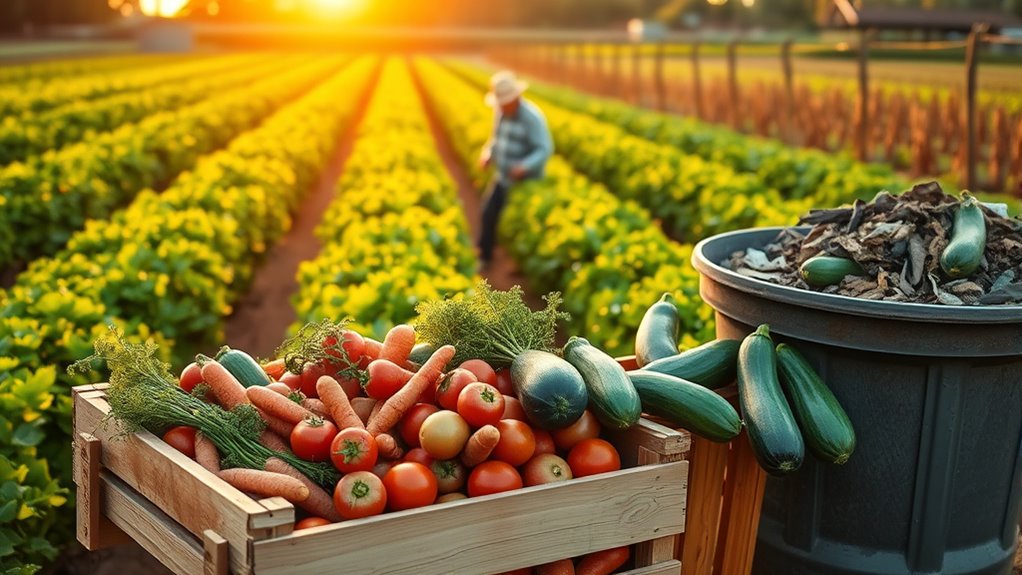

To reduce food waste in farming, focus on precise harvest timing by monitoring crop maturity with technology and weather data. Choose crop varieties suited to your local conditions and market needs to guarantee timely harvests and high-quality produce. Strategic planning and staying updated on innovations help you optimize schedules and crop selection, minimizing losses. Keep refining these practices, and you’ll uncover even more effective ways to cut waste and improve your farm’s efficiency.
Key Takeaways
- Implement sensor technology and crop models for real-time monitoring to optimize harvest timing and reduce premature or overripe produce.
- Select crop varieties suited to local conditions and market demand to ensure uniform maturity and minimize waste.
- Align planting schedules with market windows and use weather forecasts to plan harvests, preventing overproduction and spoilage.
- Use data-driven decision tools to improve planning, scheduling, and adaptive practices that minimize food loss during harvesting.
- Continuously update knowledge with research and technology to enhance crop management, leading to more efficient harvesting and less waste.

Food waste in farming is a significant challenge that affects both the environment and the economy. One of the key ways you can reduce this waste is by paying close attention to harvest timing. When you harvest too early, your crops may not be fully ripe, leading to spoilage or poor quality that makes them unsellable. On the other hand, waiting too long can result in overripe produce that’s prone to rot or pest damage. By carefully monitoring your crops and understanding their ideal harvest window, you can minimize losses. This involves regularly inspecting your fields, considering weather conditions, and using predictive tools to determine the perfect moment for harvesting. Correct timing ensures your crops are gathered at their peak, reducing the chances of waste and increasing your yield’s market value. Additionally, employing sensor technology can provide real-time data on crop maturity, further enhancing your harvest decisions. Crop selection also plays a vital role in waste reduction. Choosing the right varieties suited to your local climate and soil conditions can make a significant difference. When you select crops that are well-adapted, they’re more likely to grow uniformly, mature on time, and resist pests and diseases. This consistency means less crop damage and less waste before harvest. Additionally, focusing on diverse crop selection can help spread risk; if one crop doesn’t perform well, others might succeed, reducing the chance of total loss. It’s also wise to consider market demand when choosing what to grow. Growing crops that are less popular or have a narrow market window might lead to oversupply or spoilage once the season ends. Strategic crop selection aligns your production with market needs, ensuring that what you harvest has a higher chance of being sold and consumed, thereby reducing waste. Beyond timing and crop choice, integrating these practices requires ongoing education and adaptation. Stay informed about new research and technologies that can help you better predict harvest timing or identify high-yield, resilient varieties. Embrace data-driven decision-making, using weather forecasts and crop models to optimize your planting and harvesting schedules. By doing so, you’re not only reducing waste but also boosting your farm’s profitability. Remember, small adjustments in harvest timing and careful crop selection can lead to significant reductions in food loss. These practices help you make the most of your resources, minimize environmental impact, and meet market demands effectively. Overall, being strategic about when and what you grow is essential in your effort to reduce food waste in farming, ensuring a more sustainable and productive future.
crop maturity sensor technology
As an affiliate, we earn on qualifying purchases.
As an affiliate, we earn on qualifying purchases.
Frequently Asked Questions
How Can Technology Improve Crop Yield Forecasting Accuracy?
You can improve crop yield forecasting accuracy through technology by leveraging precision agriculture techniques and data analytics. Precision agriculture uses GPS and sensors to gather real-time data on soil, weather, and crop health, enabling you to make informed decisions. Data analytics processes this information, identifying patterns and predicting yields more precisely. This combination helps optimize resource use, reduce waste, and increase overall crop productivity, ensuring better forecasting outcomes.
What Policies Encourage Farmers to Donate Surplus Produce?
You can encourage farmers to donate surplus produce by advocating for policies that offer tax incentives and simplify donation regulations. These incentives motivate farmers to donate by reducing their tax burdens, while clear, streamlined regulations make the donation process easier and less risky. When governments implement such policies, farmers are more likely to see donating as beneficial, helping reduce food waste and support community nutrition efforts.
How Do Consumer Habits Impact Farm-Level Food Waste?
Your consumer behavior and purchasing patterns directly impact farm-level food waste. When you buy in excess or choose imperfect produce, you contribute to surplus that could go to waste. Conversely, if you prioritize buying only what you need and opt for “wonky” fruits and vegetables, you help reduce waste. Your mindful shopping habits can make a significant difference in how much food is wasted at the farm level.
What Are the Economic Benefits of Reducing Food Waste for Farmers?
Reducing food waste boosts your profit incentives by lowering costs associated with overproduction and spoilage. It also enhances market stability, ensuring steady demand and prices for your produce. When you minimize waste, you can sell more efficiently, improve your farm’s financial health, and build stronger relationships with buyers. Ultimately, embracing waste reduction helps you maximize revenue, remain competitive, and create a more sustainable, profitable farming operation.
How Can Supply Chain Logistics Minimize Post-Harvest Losses?
You can minimize post-harvest losses by optimizing supply chain logistics through effective cold chain management and packaging innovation. Keep products at the right temperatures with reliable refrigerated transport, preventing spoilage. Use innovative packaging to extend freshness and protect produce during transit. These strategies guarantee your crops stay fresh longer, reduce waste, and improve overall efficiency, ultimately saving costs and delivering higher quality to consumers.

The 2026 Old Farmer's Almanac Trade Edition: The Beloved and Bestselling Annual Collection of Weather Forecasts and Useful Information
As an affiliate, we earn on qualifying purchases.
As an affiliate, we earn on qualifying purchases.
Conclusion
By taking small steps to reduce food waste, you might find that you’re not just saving resources but also making a real difference in the farming industry. Sometimes, the tiniest efforts—like better planning or sharing surplus—can unexpectedly lead to bigger changes. You could be part of a movement that transforms waste into opportunity, proving that even in farming, what seems like a coincidence might just be the start of something impactful. Your actions truly matter.

Seeding Square – Patented Seed and Seedling Spacer Tool for Bigger Harvests, Organized Plants & Fewer Weeds – Color-Coded Gardening Template with Dibber, Seed Spoon, Ruler & Planting Guide
HELPING YOU GARDEN BETTER: Get ready for a huge harvest from your vegetable garden! Inspired by the Square…
As an affiliate, we earn on qualifying purchases.
As an affiliate, we earn on qualifying purchases.
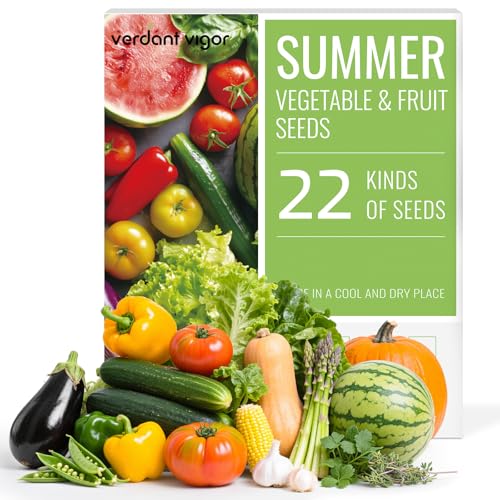
22 Summer Seeds Variety Pack for Planting, Over 10,000 Vegetable Seeds, USA Grown, Heirloom, Non-GMO, for Indoor Outdoor Gardening
Rich Variety & Generous Quantity: This summer seed collection include 22 carefully selected heirloom varieties, totaling over 10,000…
As an affiliate, we earn on qualifying purchases.
As an affiliate, we earn on qualifying purchases.