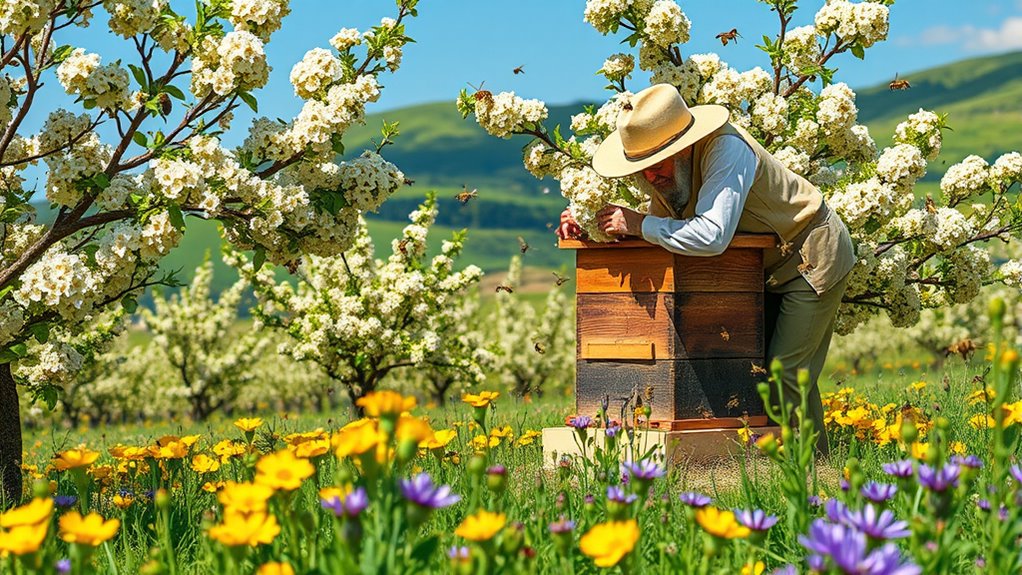
To safeguard bees and pollinators in food systems, you can support habitat restoration by planting native flowers and avoiding pesticides in your yard. Advocating for stricter pesticide regulations and supporting organic farming also makes a difference. Carving out pollinator-friendly spaces and spreading awareness helps communities understand their importance. Taking these steps can boost pollinator health and ensure food security. Keep exploring how small actions contribute to wider ecological and agricultural stability.
Key Takeaways
- Implement stricter pesticide regulations, especially during flowering seasons, to reduce pollinator exposure to harmful chemicals.
- Restore native habitats, wildflower meadows, and flowering hedgerows to provide diverse foraging and nesting sites.
- Promote community-led pollinator gardens and reduce pesticide use in residential and urban areas.
- Support sustainable agriculture practices and organic farming to minimize chemical reliance and habitat destruction.
- Increase education and policy efforts to raise awareness and strengthen protections for pollinators within food systems.
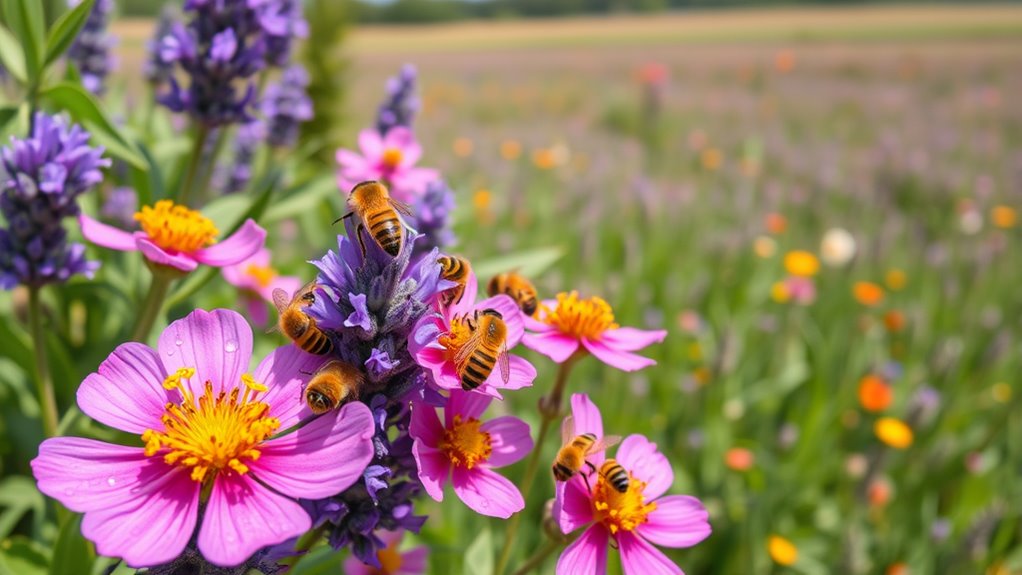
Pollinators like bees play an essential role in sustaining our ecosystems and guaranteeing the growth of many crops we rely on daily. Their health directly impacts food production and biodiversity. To protect these fundamental creatures, you must understand the significance of effective pesticide regulation. Pesticides, especially those containing neonicotinoids and other chemicals harmful to pollinators, threaten their survival when misused or overused. Advocating for stricter pesticide policies helps reduce the risk of poisoning and exposure, giving bees and other pollinators a safer environment to thrive. Supporting regulations that limit the use of hazardous chemicals during blooming seasons or in sensitive habitats can make a considerable difference. Additionally, you should recognize the importance of habitat restoration. Bees and pollinators need diverse, pesticide-free spaces that provide food and shelter. Restoring native plants, wildflower meadows, and flowering hedgerows creates critical foraging habitats, encouraging healthy pollinator populations. You can contribute by planting pollinator-friendly gardens, avoiding pesticides in your yard, and supporting local conservation projects focused on habitat enhancement. Restoring natural habitats also involves removing monocultures and invasive species that displace native plants, which are indispensable for providing pollen and nectar throughout the year. When you prioritize habitat restoration, you’re helping create corridors that connect fragmented ecosystems, allowing pollinators to move safely and access different resources. This interconnected approach strengthens their resilience against environmental stresses. Moreover, integrating the role of education into community efforts can significantly raise awareness and foster collective action to protect pollinators. Protecting bees and pollinators isn’t just about individual actions; it requires extensive policy changes and community engagement. You should push for stronger pesticide regulation at local, national, and international levels, ensuring that environmental and public health are prioritized over profits. Promoting integrated pest management (IPM) strategies can reduce dependency on harmful chemicals, balancing pest control with pollinator safety. Equally important is supporting initiatives that restore degraded habitats, such as planting native species and conserving natural areas. These actions foster biodiversity and help pollinators recover from habitat loss caused by urbanization, agriculture, and climate change. As a consumer, choosing organic produce and supporting farmers who practice sustainable agriculture can reduce your contribution to pesticide overuse. Educating others about the importance of pollinator health and ways to protect their habitats amplifies your impact. Ultimately, safeguarding bees and pollinators in our food systems depends on collaborative efforts—combining policy reform, habitat restoration, and individual responsibility—to guarantee these essential creatures continue to support our ecosystems and food security.
Frequently Asked Questions
How Do Pesticides Specifically Harm Bee Health?
Pesticides harm bee health by causing toxicity that affects their nervous systems, leading to disorientation and reduced foraging. This increases their vulnerability to predators and disease. Pesticide toxicity can also weaken their immune systems, making colonies more prone to collapse. Over time, these effects contribute to colony collapse disorder, severely impacting bee populations and, ultimately, the pollination processes crucial for food production.
Are There Native Pollinators That Need Protection Besides Bees?
Yes, you should safeguard native pollinators like butterflies, beetles, and hummingbirds. They contribute to native pollinator diversity and are essential for healthy ecosystems. To do this, focus on habitat restoration by planting native flowers, reducing pesticide use, and creating safe nesting sites. These actions help guarantee that all native pollinators thrive, which benefits biodiversity and food production, supporting resilient and sustainable food systems for everyone.
What Role Do Urban Gardens Play in Pollinator Conservation?
Urban gardens are like sanctuaries in a bustling city, providing essential space for pollinators to thrive. You play a key role by creating rooftop habitats and engaging in urban foraging, which supports native pollinators beyond bees. These gardens offer diverse flowering plants, offering nectar and pollen, helping pollinators find food and shelter. Your efforts help sustain healthy ecosystems, ensuring pollination continues in your community and beyond.
How Can Consumers Support Pollinator-Friendly Practices?
You can support pollinator-friendly practices by choosing organic produce, which reduces pesticide use that harms bees. Get involved in community education efforts to spread awareness about the importance of pollinators and how to protect them. Support local farmers practicing organic farming, and advocate for policies that promote sustainable agriculture. Your actions directly contribute to healthier ecosystems, helping pollinators thrive and ensuring food security for everyone.
What Are the Economic Impacts of Declining Bee Populations?
If bee populations keep declining, you’ll see the Market valuation of crops plummet faster than you can say catastrophe, costing billions and shaking economies to their core. Bees provide essential Ecosystem services, like pollination, that keep food supplies stable and prices affordable. Without them, you’ll face shortages, higher food bills, and a drastically altered agricultural landscape—making it clear that protecting bees isn’t just good for nature, but crucial for your wallet too.
Conclusion
Remember, a hive in harmony benefits us all. Protecting bees and pollinators isn’t just about saving insects—it’s about safeguarding our food systems and future. By supporting sustainable practices and creating pollinator-friendly environments, you can make a real difference. As the saying goes, “A little goes a long way.” Every action counts, so take steps today to guarantee these essential creatures thrive for generations to come.