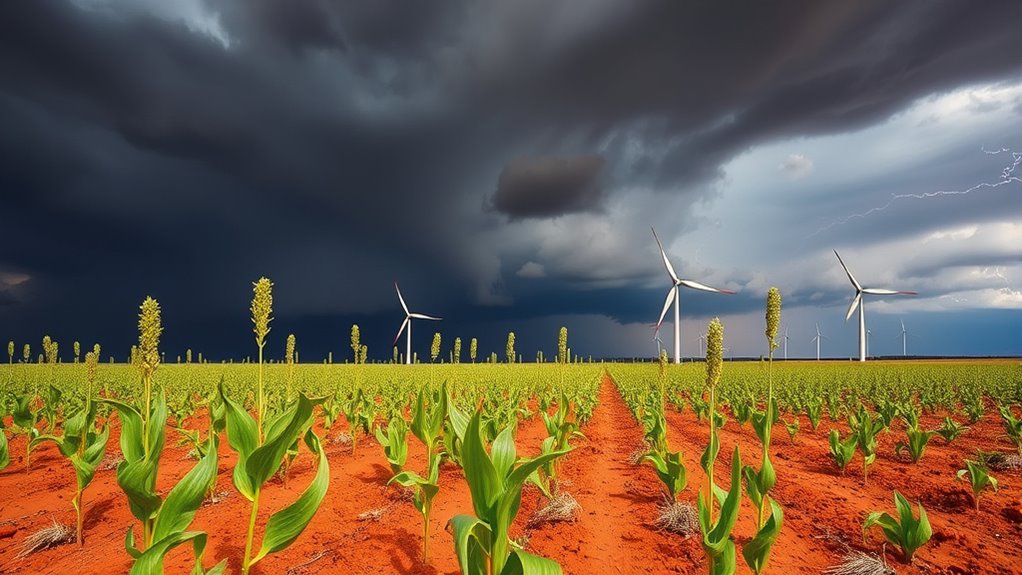

To adapt to extreme weather, developing climate-resilient crops is essential. You can improve crops through genetic modification, making them drought-tolerant, heat-resistant, and resistant to pests and diseases. Combining this with crop diversification helps spread risks and strengthens food security. Such strategies allow farmers to better face unpredictable patterns and environmental stresses. If you’re interested, there’s more to explore about how these approaches come together to support sustainable agriculture in changing climates.
Key Takeaways
- Genetic modification enables the development of crops resistant to drought, heat, floods, and other extreme weather conditions.
- Crop diversification reduces dependency on single crops, minimizing risk from climate-related failures.
- Combining GM technology with diverse cropping systems enhances overall farm resilience to climate variability.
- Selecting or engineering climate-adapted crop traits provides targeted solutions for local environmental challenges.
- Integrated strategies strengthen food security by increasing crop tolerance and reducing vulnerability to unpredictable weather.
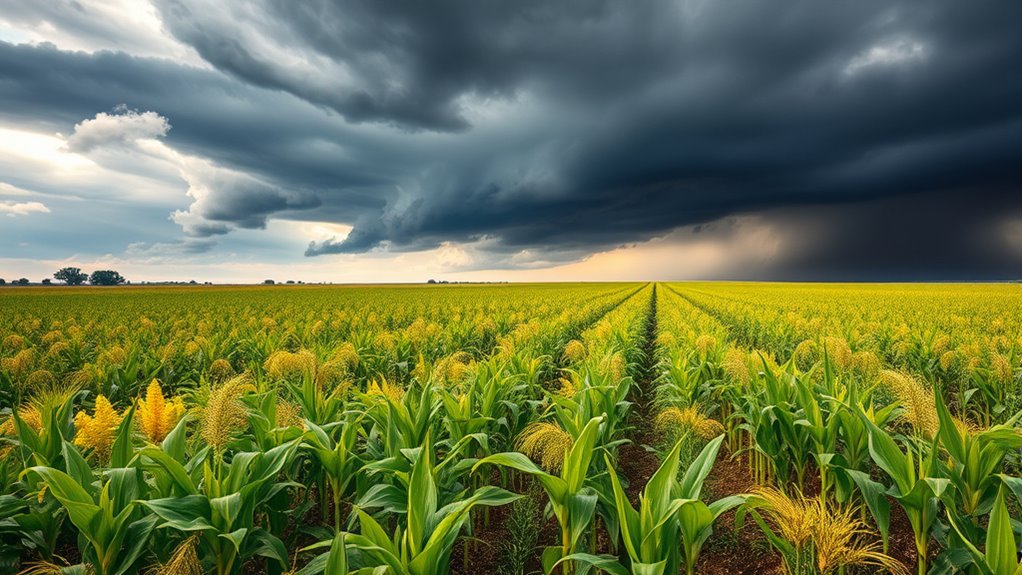
As climate change accelerates, developing crops that can withstand extreme weather conditions has become vital for global food security. You need resilient crops that thrive despite droughts, floods, heatwaves, and unpredictable weather patterns. One promising approach is genetic modification, which allows scientists to enhance specific traits in crops, making them more tolerant to environmental stresses. By altering genes, you can develop plants that resist drought, tolerate high temperatures, or withstand pests and diseases more effectively. This technological advancement offers a faster, more precise way to create climate-resilient varieties compared to traditional breeding methods.
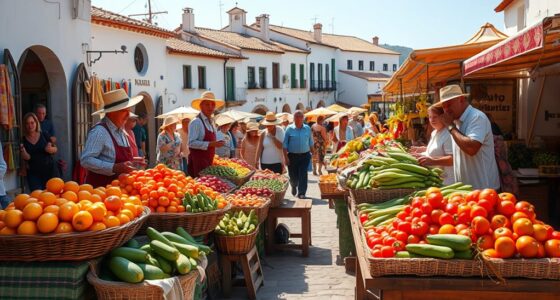
In addition to genetic modification, crop diversification plays an indispensable role in building resilience. Instead of relying on a handful of staple crops, you should promote growing a variety of species and varieties suited to different environmental conditions. Crop diversification minimizes risks because if one crop fails due to extreme weather, others can continue to provide food and income. It also improves soil health and reduces the spread of pests and diseases, creating a more stable and sustainable agricultural system. By integrating diverse crops, you not only adapt better to climate variability but also contribute to ecological balance.
You might find that combining genetic modification with crop diversification offers the most effective strategy. For instance, genetically engineered crops that are drought-tolerant can be integrated into diversified farming systems, reducing vulnerability to water scarcity. Meanwhile, planting different crop species can buffer against unpredictable weather, pests, and diseases. This integrated approach ensures that if one crop fails, others can compensate, maintaining food security and farmer livelihoods.
Furthermore, adopting these strategies can help you manage risks associated with climate change more proactively. You can select or develop crops with specific traits tailored to your local environment, leveraging genetic modification for targeted improvements. Simultaneously, diversifying your crop portfolio spreads out the risk, making your farming system more adaptable to sudden changes. This combination empowers you to respond flexibly to climate challenges, reducing reliance on a narrow set of crops and increasing resilience across the board.
Top picks for "climate resilient crop"
Open Amazon search results for this keyword.
As an affiliate, we earn on qualifying purchases.
Frequently Asked Questions
How Do Climate-Resilient Crops Impact Local Ecosystems?
Climate-resilient crops can positively impact your local ecosystems by improving soil health and supporting biodiversity conservation. These crops often require fewer chemical inputs, reducing pollution and soil degradation. As a result, they help maintain diverse plant and animal life, creating a balanced environment. By choosing resilient varieties, you contribute to healthier soils and broader ecosystem stability, ensuring sustainable agriculture that benefits both your community and the planet.
What Are the Economic Benefits of Adopting Resilient Crop Varieties?
By adopting resilient crop varieties, you can boost market stability, ensuring consistent yields despite extreme weather. This reduces income volatility and helps you plan better financially. Additionally, these crops lower your reliance on crop insurance, potentially decreasing premiums and claims. Overall, investing in resilient varieties strengthens your farm’s economic resilience, secures your livelihood, and supports sustainable farming practices amid climate challenges.
Can Climate-Resilient Crops Be Integrated With Traditional Farming Practices?
Yes, you can integrate climate-resilient crops with traditional farming practices. By promoting crop diversity, you reduce risks associated with extreme weather, making your farm more resilient. Incorporating these crops into existing farming systems enhances sustainability and productivity. You might adjust planting schedules or soil management techniques, but overall, this integration strengthens your farm’s ability to withstand climate challenges while maintaining familiar practices.
What Are the Potential Risks of Genetically Modifying Crops for Resilience?
Gene flow from genetically modified crops can cause ecological imbalance, risking unintended harm to nearby ecosystems. Imagine a gardener accidentally spreading seeds that overrun native plants—that’s what could happen on a larger scale. You might face risks like reduced biodiversity or unforeseen resistance. While resilience is essential, you must carefully weigh these potential risks to avoid disrupting natural balances and guarantee sustainable farming practices.
How Do Resilient Crops Affect Nutritional Quality and Food Security?
Resilient crops can positively impact your food security by improving nutritional enhancement and ensuring better food accessibility, especially in vulnerable regions. These crops help you get more nutrients per harvest, reducing malnutrition risks. Plus, they can withstand extreme weather, making food supplies more stable and accessible year-round. By supporting resilient crops, you help create a more secure, nutritious food system that benefits everyone, including you and your community.
Conclusion
Think of yourself as a gardener tending a delicate but resilient plant. As storms and droughts threaten, you nurture its roots and shield its leaves, ensuring it thrives against all odds. Climate-resilient crops are your steadfast garden—standing tall through extreme weather, adapting and growing stronger. By choosing and supporting these crops, you’re planting hope in the soil, creating a future where your harvest endures, no matter how fierce the storm.