Sardinian folklore and traditions are rich, blending lively music, mythical tales, and vibrant festivals that reflect the island’s unique identity. You’ll encounter haunting melodies played on traditional instruments like the launeddas, along with colorful costumes and masks during Carnival celebrations. Mythical characters like mamuthones embody spirits of the land, reinforcing cultural values. Exploring these stories and celebrations gives you a deeper connection to Sardinia’s history and community spirit—there’s much more to discover beneath the surface.
Key Takeaways
- Sardinian folklore centers on traditional music like the launeddas and lively dance customs.
- Mythical creatures such as mamuthones and issohadores play a vital role in festivals and storytelling.
- Legends and stories reinforce cultural identity, often linked to natural elements and moral lessons.
- Festivals incorporate music, costumes, dance, and storytelling, celebrating Sardinian myth and tradition.
- Cultural preservation occurs through festivals, oral traditions, and community rituals that maintain Sardinia’s heritage.

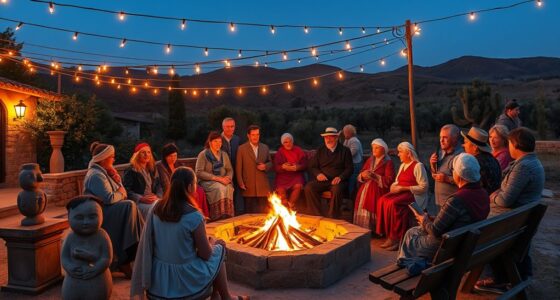
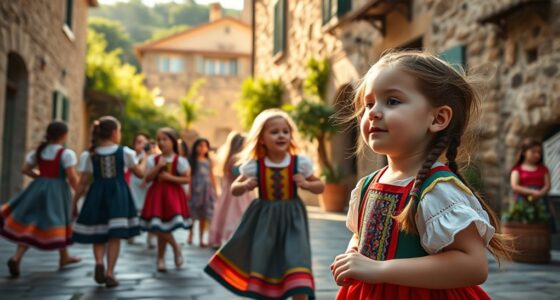
Sardinian folklore and traditions offer a mesmerizing glimpse into the island’s rich cultural heritage, shaped by centuries of history, mythology, and local customs. As you explore this vibrant culture, you’ll quickly discover that traditional music plays a central role in community life. The melodies of the launeddas, a traditional Sardinian wind instrument, echo through villages and festivals, creating a haunting yet lively atmosphere. These ancient sounds are more than mere entertainment—they serve as a link to the past, passing down stories and beliefs from generation to generation. When you listen to the intricate rhythms and melodies, you might feel transported to a time when music was woven into every aspect of daily life, from celebrations to rituals. The rhythms often accompany dance, where locals don traditional costumes and sway to the beat, fully immersing themselves in the customs that define their identity.
Alongside the musical traditions, Sardinian folklore is rich with stories of mythical creatures that have captivated the imagination for centuries. You’ll hear tales of the mamuthones and issohadores, mystical figures dressed in elaborate masks and costumes during the traditional Carnival celebrations. These characters are believed to embody spirits of the land, warding off evil and bringing good fortune. Beyond these characters, legends speak of serpents, witches, and other supernatural beings lurking in the island’s rugged landscapes. Many of these stories are tied to the natural environment and serve as moral lessons or explanations for unexplained phenomena. You might find yourself walking through the countryside at dusk and imagining the mythical creatures that supposedly dwell in the shadows, adding a layer of enchantment to your experience. Recognizing the importance of cultural preservation, many of these stories are actively kept alive through festivals and oral tradition.
The mythology surrounding these creatures isn’t just for storytelling; it’s woven into the very fabric of Sardinian festivals and rituals. During certain times of the year, communities come together to reenact these legends, reinforcing their cultural identity and collective memory. These events are lively, colorful, and deeply symbolic, giving you an authentic taste of Sardinian heritage. As you observe or participate, you’ll notice how tradition and myth are intertwined, creating a tapestry of stories that continue to shape the island’s identity. Whether you’re listening to traditional music or imagining mythical creatures in the landscape, Sardinian folklore invites you into a world where history, myth, and community coexist in a vibrant celebration of the island’s unique cultural soul.
Frequently Asked Questions
How Have Sardinian Folklore Traditions Evolved Over Centuries?
You see, Sardinian folklore has evolved by blending ancient beliefs with modern influences. You’ll notice mythical creatures in stories that have adapted over centuries, reflecting cultural shifts. Ritual dances, once purely ceremonial, now celebrate festivals and community spirit, while still preserving their traditional roots. This evolution keeps the folklore alive, connecting past and present, allowing you to experience Sardinia’s rich cultural tapestry through its mythical creatures and vibrant ritual dances.
What Role Do Legends Play in Sardinian Community Identity?
Legends play a crucial role in shaping your Sardinian community identity by connecting you to ancestral stories and mythical creatures that embody your heritage. These stories foster a sense of pride and unity, reminding you of your roots. As you share these legends, you keep your traditions alive, ensuring that the rich cultural tapestry of Sardinia continues to thrive through generations, strengthening your collective sense of belonging.
Are There Specific Folklore Festivals Unique to Certain Sardinian Regions?
Imagine vibrant threads weaving through Sardinia’s landscape—each region boasts its own folklore festivals, like the colorful Cavalcata Sarda in Sassari or the fiery Mamuthones procession in Mamoiada. You’ll find regional celebrations that showcase unique local customs, from traditional dances to masked rituals. These festivals serve as living tapestries, preserving regional identity and history, inviting you to immerse yourself in Sardinia’s rich cultural mosaic.
How Do Sardinian Oral Traditions Preserve Ancient Beliefs?
You can see how Sardinian oral traditions preserve ancient beliefs through storytelling, where you pass down tales of mythical creatures like the mamuthones and iscrollos. By sharing these stories aloud, you keep the myths alive, ensuring they survive generations. Oral storytelling acts as a living bridge, connecting the past with the present, and helps maintain the cultural identity and spiritual beliefs that define Sardinian heritage.
What Influence Has Sardinian Folklore Had on Modern Local Art?
You see that Sardinian folklore profoundly influences modern local art through cultural symbolism and contemporary adaptations. Artists draw inspiration from traditional motifs, stories, and rituals, transforming them into vibrant paintings, sculptures, and crafts. This blending of old and new helps preserve Sardinian identity while making it relevant today. Your engagement with these artworks reveals how folklore continues to shape and invigorate the island’s artistic landscape.
Conclusion
You’ve now explored Sardinian folklore and traditions, discovering their rich history and vibrant customs. Did you know that over 80% of Sardinians still practice age-old rituals today? This connection to their heritage keeps their culture alive and thriving. So, next time you hear about Sardinia, remember it’s not just a beautiful island but a place where traditions are deeply woven into everyday life, making it truly unique and enthralling.