
Museums and archives act as your guardians of history by meticulously preserving, restoring, and digitizing artifacts. They use careful techniques to keep objects authentic and accessible for future generations. Through physical repairs and digital efforts, they extend the lifespan of cultural treasures, making them available online and in person. By safeguarding this rich history, they guarantee stories are not lost over time. Explore further, and you’ll discover how these efforts continue to protect our shared heritage.
Key Takeaways
- Museums and archives preserve artifacts and documents, maintaining their historical integrity for future generations.
- Restoration techniques stabilize fragile items and repair damages, preventing further deterioration.
- Digitization converts physical collections into accessible digital formats, broadening global access and safeguarding against loss.
- Combining physical and digital preservation supports education, research, and public engagement with history.
- These institutions serve as guardians, ensuring the stories of the past remain relevant, protected, and available for future study.
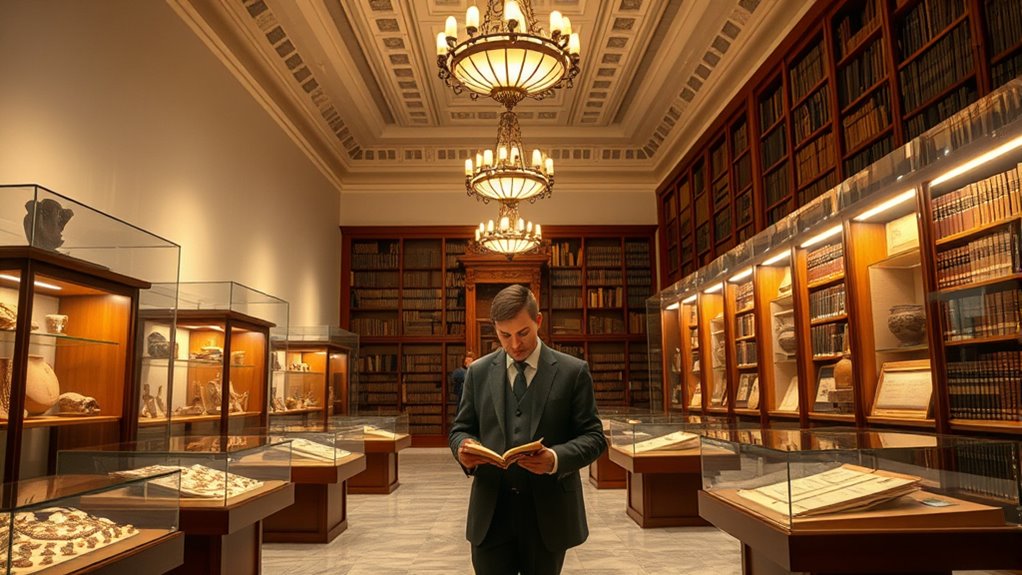
Have you ever wondered how museums and archives preserve the stories of our past? It’s a fascinating process that involves more than just displaying ancient artifacts or fragile documents. Behind the scenes, dedicated professionals employ a variety of restoration techniques to guarantee these treasures remain intact for future generations. Restoration techniques are vital for repairing damaged items, stabilizing fragile materials, and preventing further deterioration. Whether it’s cleaning delicate paintings, mending torn manuscripts, or consolidating crumbling sculptures, experts carefully assess each piece’s condition before choosing the appropriate method. These techniques help restore the original appearance and structural integrity, allowing visitors and researchers to engage with history more authentically.
Restoration techniques repair and preserve artifacts, ensuring history stays intact for future generations to explore and appreciate.
Alongside physical preservation, digitization efforts play a key role in safeguarding our collective memory. Digitization involves converting physical items—such as photographs, manuscripts, and artifacts—into digital formats. This process makes historical resources more accessible, enabling people worldwide to explore collections without risking damage to the originals. As you browse online archives or virtual museum exhibits, you’re experiencing the fruits of extensive digitization efforts. These efforts also serve as an insurance policy; in case of natural disasters or accidents, digital copies guarantee that the knowledge and stories contained within these items aren’t lost forever. The technology used in digitization has advanced rapidly, allowing high-resolution images and detailed 3D scans that preserve even the finest details of artifacts. Additionally, many institutions are adopting standardized preservation practices to ensure consistent quality and longevity of their collections.
Implementing both restoration techniques and digitization efforts requires meticulous planning and expertise. Professionals must balance preserving authenticity with making materials accessible and durable. For example, some artifacts may need gentle cleaning or chemical stabilization, while others require careful digital capturing to highlight intricate features. These efforts often go hand in hand: physical preservation extends the lifespan of objects, while digital preservation broadens access. Museums and archives invest heavily in these processes because they recognize the importance of safeguarding history against the ravages of time and decay. Furthermore, these techniques enable educational programs, research projects, and public engagement, ensuring that history remains alive and relevant.
In essence, the combination of advanced restoration techniques and extensive digitization efforts forms the backbone of modern preservation. They allow you to experience history firsthand, whether through a beautifully restored painting or a high-quality digital replica. Without these careful processes, many stories from our past might fade into obscurity. Instead, they’re preserved, protected, and made accessible—allowing you and others to learn from and appreciate the rich tapestry of human history that museums and archives hold.
Top picks for "museum archiv guardian"
Open Amazon search results for this keyword.
As an affiliate, we earn on qualifying purchases.
Frequently Asked Questions
How Are Artifacts Preserved Against Environmental Damage?
You can protect artifacts against environmental damage through climate control, maintaining stable temperature and humidity levels to prevent deterioration. Preservation techniques like proper packaging, controlled lighting, and avoiding pollutants also help. Regular monitoring and adjustments ensure ideal conditions. By actively managing these factors, you safeguard artifacts, ensuring they remain in good condition for future generations. Implementing these methods is essential for effective preservation against environmental threats.
What Criteria Determine if an Item Is Added to a Collection?
Did you know that only about 10% of artifacts are added to museum collections? When deciding, you consider artifact valuation, which assesses historical significance, rarity, and condition. You also focus on collection curation, ensuring the item fits thematically and enhances the story you’re telling. This careful process helps preserve cultural heritage, making sure each piece adds meaningful value and maintains the collection’s integrity for future generations.
How Do Museums Acquire New Pieces Ethically?
You guarantee museum acquisitions are ethical by prioritizing ethical sourcing and adhering to clear repatriation policies. Always verify the provenance of items, avoiding illegal or questionable sources, and seek transparency in transactions. Respect the rights of original communities by consulting with stakeholders and following legal frameworks. This approach helps prevent cultural harm, preserves integrity, and maintains trust with the public, ensuring collections grow responsibly and ethically.
What Technologies Are Used to Restore Damaged Artifacts?
Imagine giving damaged artifacts a new life—you harness cutting-edge tech like 3D scanning to map every crack and detail, ensuring precise restoration. Microbial treatment then gently removes harmful substances without harming the original material. These advanced methods work together like a symphony, restoring history with accuracy and care, allowing you to preserve cultural treasures for future generations while maintaining their authenticity.
How Do Archives Ensure Long-Term Digital Preservation?
You guarantee long-term digital preservation by focusing on digital sustainability, which involves using durable formats and regular backups. You manage metadata meticulously to keep track of all digital files, making retrieval and understanding easier over time. By implementing consistent practices and staying updated on technological advances, you help archives maintain access to digital content, safeguarding valuable information for future generations.
Conclusion
You hold the key to preserving history’s heartbeat. Museums and archives are the guardians, keeping memories alive like a lighthouse guiding ships through dark waters. By supporting and engaging with these institutions, you guarantee that stories of the past shine brightly for generations to come. Remember, without your help, these treasures risk fading into the shadows. Together, we keep history’s flame burning—bright, steady, and impossible to extinguish.