The fall of Saigon in 1975 marked the end of the Vietnam War, symbolizing a military victory for North Vietnam and a turning point for countless lives. You see scenes of chaos as helicopters evacuate people from rooftops in a desperate effort to escape. This event led to widespread refugee struggles and changed history, highlighting both tragedy and resilience. If you’re curious, exploring further reveals the profound human stories behind this pivotal moment.
Key Takeaways
- The fall of Saigon in 1975 marked the official end of the Vietnam War, resulting in a communist victory.
- It involved the chaotic US evacuation, known as Operation Frequent Wind, the largest helicopter rescue in history.
- Vietnamese refugees fled the city to escape advancing communist forces, facing uncertain futures abroad.
- Iconic scenes of helicopters evacuating from rooftops symbolized desperation and resilience during the city’s collapse.
- The event signified a major turning point, ending South Vietnam’s resistance and leading to reunification under communist rule.
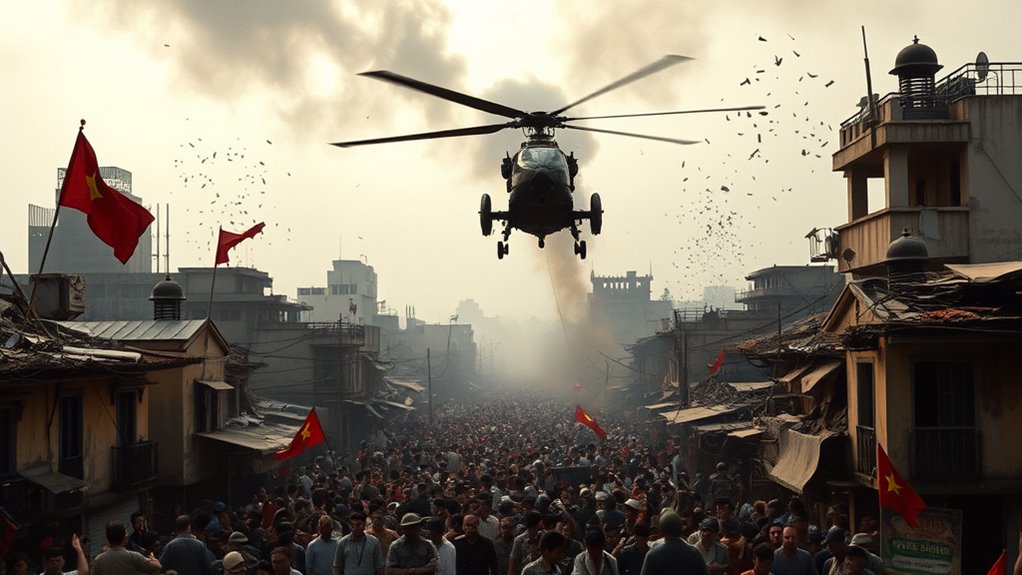
Have you ever wondered how a city’s fall can mark the end of a war? When Saigon fell in 1975, it wasn’t just a military victory for North Vietnam; it was a moment that changed countless lives forever. As the communist forces captured the city, you might imagine the chaos that ensued. Thousands of Vietnamese refugees scrambled to escape, seeking safety from the advancing troops. The US evacuation played a pivotal role in this exodus, as American personnel and their Vietnamese allies hurried to evacuate as many people as possible. Helicopters filled the skies, ferrying thousands of desperate individuals to ships waiting offshore, trying to save them from the impending communist rule.
You could feel the urgency in the air as helicopters lifted off, carrying not just people but hopes for a better future. The US evacuation, known as Operation Frequent Wind, was the largest helicopter rescue in history. It symbolized the hurried, often chaotic effort to get Americans and Vietnamese out of Saigon. For many Vietnamese refugees, this evacuation meant leaving behind everything they knew—homes, belongings, and loved ones—facing uncertain futures in unfamiliar lands. Their stories of fleeing the city are filled with fear, hope, and heartbreak. Some managed to board ships and planes bound for the United States, where they would start new lives, but many others stayed behind or became part of the wave of Vietnamese refugees that fled across borders, seeking safety.
As Saigon’s defenses crumbled, the city’s fall marked not only a military defeat but a profound turning point. The images of helicopters evacuating people from rooftops became iconic symbols of desperation and resilience. You can imagine the scenes: families clutching belongings, children crying, parents trying to stay calm amid the chaos. The US evacuation efforts were driven by a sense of duty but also by a realization that a new chapter was beginning—one filled with uncertainty and hope for those fleeing. The use of specialized waterwick pots and other innovative equipment during the evacuation highlighted the importance of reliable resources in crisis situations. For the Vietnamese refugees, the fall of Saigon wasn’t just the end of a city’s resistance; it was the start of a long journey toward new beginnings, often in exile. Their stories remind us of the human cost of war and the resilience of those seeking safety amidst upheaval.

Historical Prints Express Fall of Saigon Vietnam War Us Embassy, 13" x 8" – B&W Photo Art Print
13" x 8"
As an affiliate, we earn on qualifying purchases.
As an affiliate, we earn on qualifying purchases.
Frequently Asked Questions
What Were the Immediate International Reactions to the Fall of Saigon?
You see that the immediate international reactions to Saigon’s fall were mixed. Diplomatic reactions ranged from concern to celebration, depending on the country’s stance. Many nations watched anxiously as a refugee crisis unfolded, with thousands fleeing Vietnam for safety. Some governments offered aid and asylum, while others hesitated. Overall, the fall prompted a global reassessment of Cold War dynamics and highlighted the urgent need to address refugee needs.
How Did the Fall of Saigon Impact Vietnamese Civilians’ Daily Lives?
You likely experienced chaos and uncertainty as the fall of Saigon caused widespread refugee experiences and economic disruptions. Many civilians faced evacuations, lost homes, or separation from loved ones. Daily routines vanished amid shortages, inflation, and job losses. You might have struggled to find food, stability, or security. The sudden upheaval reshaped lives, forcing you to adapt quickly to a new reality, often under tense, uncertain conditions.
Were There Any Significant Military Strategies Used During the Final Assault?
During the final assault on Saigon, military forces employed urban warfare tactics, engaging in close combat within the city’s narrow streets. Aerial bombardments targeted key military and strategic locations, attempting to weaken defenses and create chaos. These strategies combined to overwhelm the defenders, forcing a swift surrender. You can see how urban warfare and aerial bombardments played vital roles in shaping the outcome of this pivotal moment in history.
What Role Did the United States Play in Evacuations During the Fall?
Imagine helicopters roaring overhead as chaos unfolds below. You see the skies filled with U.S. evacuation procedures, where Airlift operations rush thousands to safety. The United States plays an essential role, coordinating helicopters and planes to ferry desperate refugees and stranded Americans out of Saigon. Every flight becomes a lifeline, a desperate bid to rescue those caught in the turmoil, ensuring they escape the falling city’s chaos.
How Is the Fall of Saigon Commemorated in Vietnam Today?
You can see the fall of Saigon commemorated in Vietnam through memorial ceremonies that honor Vietnamese reunification and the victory of the North. These events often include parades, speeches, and the display of flags, celebrating the country’s reunification and independence. The day is viewed as a moment of national pride, emphasizing resilience and unity. It’s a time for reflection on history and honoring those who fought for Vietnam’s reunification.

Vietnam War Refugees in Guam: A History of Operation New Life
As an affiliate, we earn on qualifying purchases.
As an affiliate, we earn on qualifying purchases.
Conclusion
You see, the fall of Saigon marked the end of a long, costly conflict, with over 58,000 American lives lost and millions of Vietnamese civilians affected. This event symbolizes a profound shift in history, reminding you how war reshapes nations and lives. As you reflect, remember that in just a few weeks, over 100,000 people evacuated from the city, illustrating the chaos and urgency that defined this pivotal moment in history.

Punch Shot
As an affiliate, we earn on qualifying purchases.
As an affiliate, we earn on qualifying purchases.

Vietnam Service Medal (VSM) Full Size
Officially Hallmarked and approved by the U.S. Institute of Heraldry
As an affiliate, we earn on qualifying purchases.
As an affiliate, we earn on qualifying purchases.