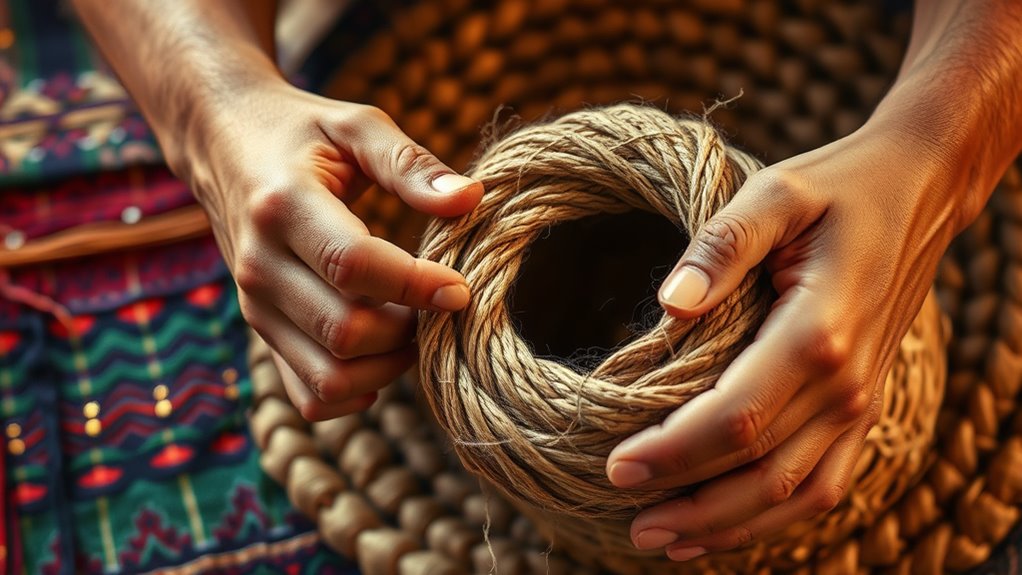

Ancient basket weaving and textile arts showcase your ancestors’ skill in creating durable, beautiful items from natural materials like fibers, reeds, and dyes. You’ll notice intricate patterns and symbolic designs that reflect social and spiritual beliefs. Craftsmanship was passed down through generations, with artisans using simple tools to produce complex weaves and vibrant dyes from plants and minerals. By exploring these techniques, you’ll discover a rich cultural heritage—continue to uncover more fascinating details behind these timeless crafts.
Key Takeaways
- Ancient basket weaving utilized natural materials like reeds, grasses, and bark for durable, functional, and ceremonial containers.
- Textile arts involved complex weaving patterns and techniques reflecting social status, cultural identity, and spiritual beliefs.
- Natural dyes from plants and minerals created vibrant, lasting colors with cultural significance in both basketry and textiles.
- Craftsmanship was passed down through generations, preserving traditional weaving and dyeing methods as vital cultural heritage.
- Modern artisans revive ancient techniques, using traditional materials and natural dyes to honor historical craftsmanship.

Have you ever wondered how ancient civilizations created the intricate tools, jewelry, and pottery that have lasted through centuries? It’s fascinating to think about the skills and knowledge they used to craft everyday objects with such precision and beauty. Central to their artistry were their weaving techniques and the use of natural dyes, which gave their textiles vibrant colors and durability. These methods weren’t just practical; they were deeply rooted in cultural traditions, passed down through generations, and remain influential even today. The cultural significance of these textiles often extended beyond their functional use, embodying social values and spiritual beliefs. When you explore ancient textile arts, you notice that weaving techniques varied widely, reflecting the resources and cultural influences of each society. In many cases, they used simple tools like spindles and looms, but the complexity of their weaving patterns speaks to a high level of craftsmanship. They knew how to create intricate designs by manipulating different types of yarns and fibers, producing textiles that served both functional and ceremonial purposes. Their weaving wasn’t just about making cloth; it was a form of storytelling, with patterns symbolizing social status, beliefs, or historical events. Natural dyes played an essential role in elevating these textiles, adding color and life to their creations. Instead of synthetic dyes, ancient artisans relied on plant-based sources like indigo, madder root, and turmeric, along with mineral pigments and other organic materials. Extracting these dyes required skill and patience, often involving lengthy processes of soaking, boiling, and fermenting. The result was a palette of rich, earthy hues that faded over time but still carried the essence of their natural origins. These dyes weren’t just aesthetic choices—they also had cultural or spiritual significance, symbolizing fertility, protection, or status. As you explore ancient crafts, you see that the combination of weaving techniques and natural dyes created textiles that have withstood the test of time. Their mastery allowed them to produce durable, beautiful fabrics that served as clothing, ceremonial items, or trade goods. The knowledge of these techniques was carefully guarded and passed through generations, forming a fundamental part of their cultural identity. Today, modern artisans and textile enthusiasts draw inspiration from these ancient methods, reviving traditional weaving practices and experimenting with natural dyes to create new works that honor this rich heritage. Understanding how they combined skill, resourcefulness, and artistry offers a deeper appreciation for the craftsmanship behind the artifacts that continue to inspire us centuries later.
Top picks for "ancient craft basket"
Open Amazon search results for this keyword.
As an affiliate, we earn on qualifying purchases.
Frequently Asked Questions
What Materials Were Traditionally Used in Ancient Basket Weaving?
You typically use natural fibers and plant materials for ancient basket weaving. Common materials include reeds, grasses, willow, bamboo, and vines, which are readily available in nature. These plant materials are flexible yet sturdy, making them perfect for creating durable baskets. You might also incorporate bark strips or leaves, depending on the region. Using these natural fibers, you can craft practical, beautiful baskets that have stood the test of time.
How Did Textile Dyes Develop in Early Civilizations?
You’re really diving into the roots of textile history! Early civilizations discovered natural dye sources like plants, minerals, and insects, which sparked the evolution of dyeing technology. Over time, they experimented with different methods, improving colorfastness and variety. This development was a game-changer, turning simple fibers into vibrant textiles. As they say, necessity is the mother of invention, and dyeing advancements let civilizations create striking fabrics that showcased their culture and trade.
Are Ancient Basket Techniques Still Practiced Today?
Yes, ancient basket techniques are still practiced today. You can see modern preservation efforts in communities that keep traditional weaving methods alive, passing skills from generation to generation. These techniques hold cultural significance, connecting people to their history and identity. By practicing these crafts, you help sustain cultural heritage and guarantee that ancient skills remain relevant and appreciated in today’s world.
What Symbols or Patterns Are Common in Ancient Textile Arts?
You might wonder if ancient textile arts used specific symbols or patterns. In fact, geometric motifs and symbolic representations are common, often reflecting cultural beliefs or social status. These patterns include spirals, zigzags, and repeat shapes, which conveyed meanings and stories. By studying these motifs, you gain insight into ancient societies, as they used visual symbolism to communicate ideas, beliefs, and traditions through their textile arts.
How Did Ancient Crafts Influence Modern Design Practices?
Ancient crafts influence modern design practices through the use of cultural symbolism and artistic innovation. You see this in contemporary textiles that incorporate traditional patterns, honoring cultural heritage, while experimenting with new techniques. These practices inspire you to blend historical motifs with modern aesthetics, fostering creativity and depth in your work. By embracing ancient symbols and innovative approaches, you create designs that resonate with cultural significance and push artistic boundaries.
Conclusion
As you explore ancient crafts like basket weaving and textile arts, you realize their timeless beauty. While these skills connect you to centuries of tradition, they also inspire your creativity today. Just like the intricate patterns woven into fabric, your own work can carry the legacy forward. In blending the old with the new, you find that ancient crafts aren’t just history—they’re a living, breathing part of your everyday artistry.