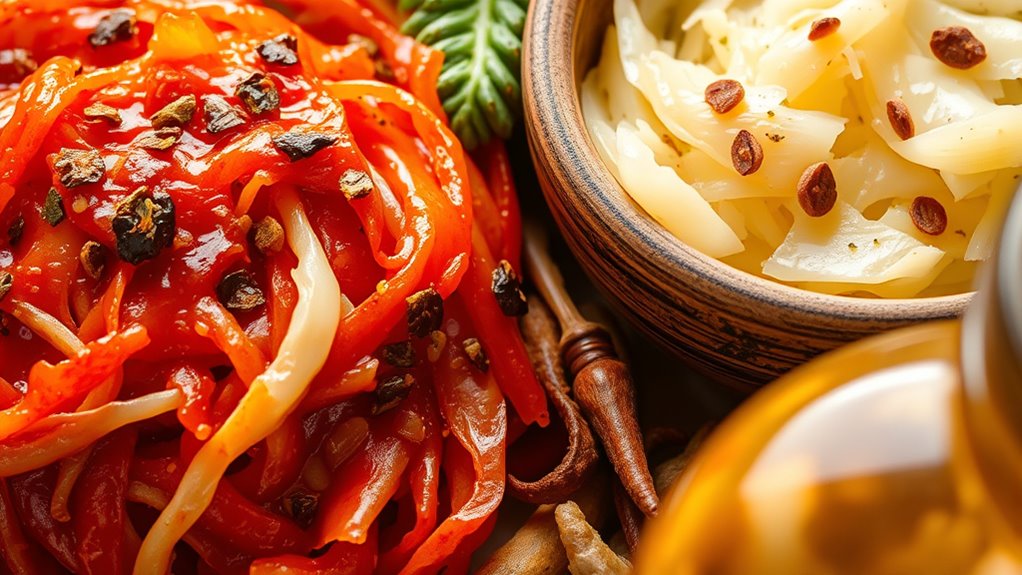

Fermented foods like kimchi, sauerkraut, yogurt, and kombucha are packed with probiotics that support your gut health and boost immunity. These foods undergo natural fermentation, where beneficial bacteria transform sugars into acids, preserving the food and creating unique flavors. Consuming a variety of fermented options helps diversify your microbiome, aid digestion, and reduce inflammation. If you want to discover more about these vibrant foods and their health perks, there’s plenty to explore ahead.
Key Takeaways
- Fermented foods like kimchi and sauerkraut are rich in probiotics that support gut health and digestion.
- The fermentation process involves natural bacteria converting sugars into acids, enhancing flavor and preserving the foods.
- These foods develop distinctive tangy flavors and extend shelf life through natural preservation methods.
- Beyond kimchi and sauerkraut, other fermented options include yogurt, kefir, and kombucha, offering diverse health benefits.
- Incorporating a variety of fermented foods promotes a healthy microbiome, boosting immunity and overall wellness.
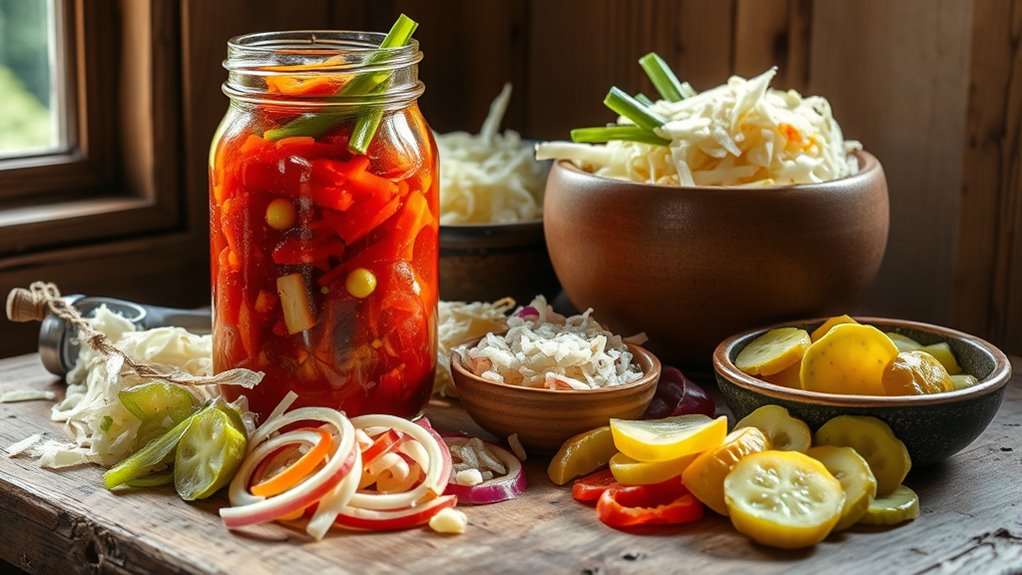
Fermented foods have gained popularity worldwide for their unique flavors and health benefits. When you include foods like kimchi, sauerkraut, or other fermented options in your diet, you’re tapping into a rich tradition that enhances both taste and wellness. One of the most notable advantages is their probiotic benefits. These beneficial bacteria, produced during the fermentation process, help balance the good bacteria in your gut. A healthy gut is vital for digestion, immune function, and even mental health. As you consume fermented foods regularly, you’re supporting your microbiome, which can lead to improved digestion, reduced inflammation, and better nutrient absorption.
The fermentation process itself is fascinating and straightforward. It involves letting natural bacteria and yeasts transform the sugars in vegetables or other ingredients into acids, gases, or alcohol. This transformation not only preserves the food but also creates the distinctive tangy flavor that makes fermented foods so appealing. When you make or buy kimchi or sauerkraut, you’re fundamentally encouraging the growth of friendly bacteria, which outcompete harmful pathogens and extend the shelf life of the food. The process is simple but relies on the right conditions—such as proper salt levels, temperature, and cleanliness—to ensure the development of beneficial probiotics. During fermentation, these bacteria produce lactic acid, which acts as a natural preservative and adds the signature sourness.
Frequently Asked Questions
How Long Does Fermentation Typically Take for Homemade Kimchi?
You can expect the fermentation timeline for homemade kimchi to be about 1 to 2 weeks at room temperature. During this period, flavors develop and the kimchi ferments properly. For a milder taste, you might let it ferment for a shorter time, while a longer fermentation, up to a month, intensifies the flavor. Keep tasting your homemade kimchi to find your perfect balance, and remember to store it in the fridge afterward.
Are There Any Risks Associated With Consuming Homemade Fermented Foods?
Yes, there are risks with home fermentation safety if you don’t follow proper steps. You might accidentally introduce harmful bacteria or mold, which can cause illness. To guarantee probiotic quality assurance, always use clean equipment, monitor fermentation closely, and follow trusted recipes. If you notice unusual odors, colors, or textures, it’s safest to discard the food. Proper care minimizes risks and helps you enjoy healthy, homemade fermented foods safely.
Can Fermented Foods Be Made Vegan or Allergen-Free?
Yes, you can make fermented foods vegan and allergen-free. With vegan fermentation, you avoid animal-derived ingredients like fish sauce or shrimp paste, using plant-based alternatives instead. For allergen-free options, choose ingredients that don’t trigger common allergies, such as gluten or soy. You can customize recipes to suit your dietary needs, ensuring your fermented foods are both safe and delicious without compromising flavor or tradition.
How Do Storage Conditions Affect the Probiotics in Fermented Foods?
You should store fermented foods properly to preserve their probiotics. Keep them at consistent, cool temperatures, as temperature control slows down probiotic loss. Use airtight containers made of glass or food-safe plastics to prevent contamination and oxygen exposure, which can degrade beneficial bacteria. Avoid frequent temperature fluctuations, and refrigerate once fermentation is complete to maintain ideal probiotic levels, ensuring you get the maximum health benefits from your fermented foods.
Are Fermented Foods Suitable for People With Certain Digestive Conditions?
Surprisingly, if you have digestive sensitivities, fermented foods might seem like a blessing or a curse. While they offer probiotic benefits to boost gut health, they can also trigger discomfort for some. You’re better off consulting your healthcare provider before adding them to your diet. Enjoy their benefits without risking your stomach’s peace—because sometimes, what’s good for one person isn’t for another.
Conclusion
Explore the delicious world of fermented foods and discover their dynamic health benefits. By embracing bold, bubbling kimchi, sauerkraut, and beyond, you empower your digestive system and enhance overall wellness. Don’t delay—delve into these delightful, probiotic-packed options today. With simple swaps and savory flavors, you’ll soon see how fermented foods foster a flavorful, fulfilling, and fantastic food journey. So, savor the science and start your fermented food adventure now!