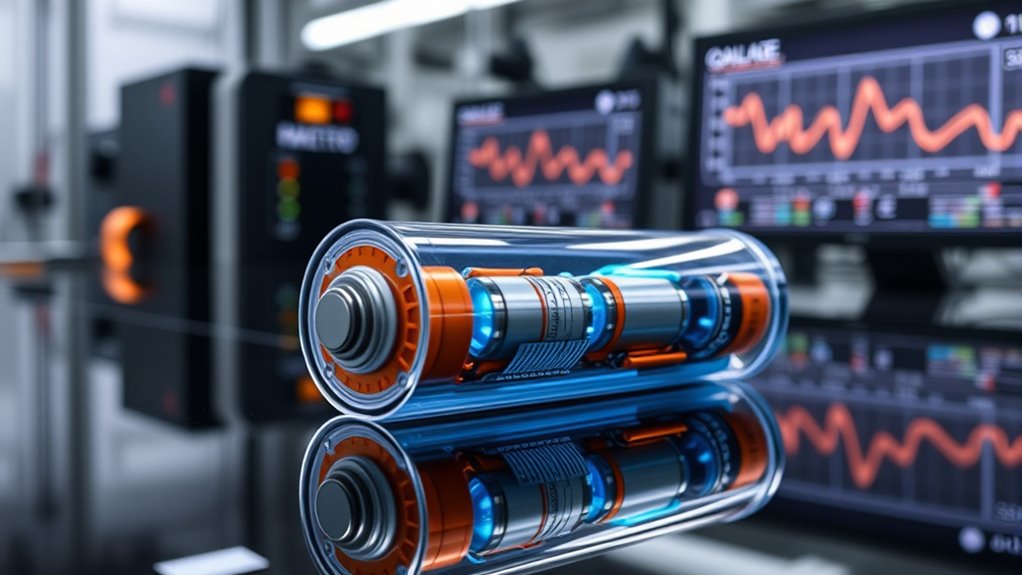

Solid-state batteries are safer because they use solid electrolytes, reducing liquid-related hazards like leaks and fires. They also enable faster charging thanks to improved ion movement and stability. Compared to traditional batteries, they offer higher energy density and longer lifespan, making them ideal for electric vehicles and portable devices. Although there are manufacturing hurdles, ongoing research is overcoming these issues. If you keep exploring, you’ll discover more about how these advancements are shaping the future of energy storage.

Get travel and outdoor gear delivered free with Prime
- Fast, free delivery on millions of items
- Prime Video, Amazon Music and more included
- Member-only deals all year
Key Takeaways
- Solid electrolytes eliminate flammable liquid components, significantly improving battery safety.
- Enhanced ion conductivity in solid electrolytes enables faster charging times.
- Improved interface engineering reduces resistance, boosting overall performance and lifespan.
- Material innovations increase stability across temperature ranges, ensuring safer operation.
- Advances in manufacturing techniques allow scalable production of high-quality, reliable solid-state batteries.
Solid-state batteries are an innovative advancement in energy storage technology that could revolutionize how we power everything from electric vehicles to portable devices. Unlike traditional lithium-ion batteries that rely on liquid electrolytes, solid-state batteries use a solid electrolyte, which offers significant safety and performance benefits. The electrolyte composition is essential, as it must conduct ions efficiently while remaining stable across a wide temperature range. Researchers are exploring various materials—ceramics, sulfides, and polymers—to find the perfect balance of conductivity and durability. The goal is to develop an electrolyte that can facilitate fast charging, high energy density, and long cycle life without compromising safety.
However, creating this ideal electrolyte isn’t straightforward. Manufacturing challenges pose significant hurdles. Producing solid electrolytes involves complex processes that demand precision and advanced techniques. For instance, ceramic electrolytes require sintering at high temperatures, which can lead to material cracking or uneven density, impairing ion conductivity. Sulfide-based electrolytes, while offering high ionic conductivity, are sensitive to moisture, making handling and fabrication more difficult. Polymer electrolytes are easier to process but often lack the necessary stability and conductivity for commercial applications. These manufacturing challenges mean scaling up production while maintaining quality and consistency remains a significant obstacle.
Another challenge lies in ensuring good contact between the solid electrolyte and the electrode materials. Unlike liquid electrolytes, solids don’t naturally flow to fill gaps, so manufacturing must incorporate precise techniques to create intimate interfaces. Imperfect contact can lead to increased resistance, reduced battery performance, or even failure over time. Researchers are experimenting with various fabrication methods, such as thin-film deposition or cold sintering, to improve interface quality. But these techniques can be costly or difficult to implement at large scale, adding to the manufacturing challenges.
Despite these hurdles, progress is steady. Advances in material science are leading to more robust and easier-to-manufacture electrolytes. New processing methods are being developed to overcome issues like cracking and interface resistance. Additionally, interfacial engineering is emerging as a crucial focus area to enhance contact and overall battery performance. As these technical challenges are addressed, solid-state batteries are poised to become safer, faster-charging alternatives to current technologies. You can expect to see more of these batteries in electric vehicles, consumer electronics, and renewable energy systems in the coming years, driven by the promise of higher safety, efficiency, and longevity. The journey from lab to market is complex, but the potential rewards make it an exciting frontier in energy storage innovation.
Products Worth Considering

Apple AirPods Pro 3 Wireless Earbuds with Active Noise Cancellation

Travelpro Maxlite 5 Softside Carry-On Rolling Garment Bag, 22-Inch, Black

Apple AirPods Pro (2nd Generation) Wireless Earbuds with USB-C MagSafe Charging Case
As an affiliate, we earn on qualifying purchases.
Frequently Asked Questions
When Will Solid-State Batteries Be Commercially Available?
Solid-state batteries are expected to be commercially available within the next few years, likely by 2025 or 2026. You should keep an eye on market readiness, as advancements are accelerating, but regulatory hurdles still need to be addressed. Manufacturers are working to overcome these challenges, so while widespread adoption might take a bit longer, the technology is nearing commercial viability. Be prepared for faster, safer batteries soon.
How Do Solid-State Batteries Compare in Cost to Traditional Lithium-Ion Batteries?
You might find it surprising that solid-state batteries could cost about 50% more than traditional lithium-ion ones initially. This cost difference mainly comes from higher manufacturing expenses due to new materials and production methods. However, as technology advances and economies of scale kick in, that gap is expected to narrow. In the long run, the safety and faster charging benefits could outweigh the higher upfront cost for many users.
Are There Any Environmental Concerns With Manufacturing Solid-State Batteries?
You might be concerned about environmental issues with manufacturing solid-state batteries. While they offer benefits like improved safety and faster charging, recycling challenges and material sustainability are hurdles. The complex materials used can make recycling difficult, and sourcing sustainable raw materials remains an issue. However, ongoing research aims to address these concerns, making solid-state batteries more environmentally friendly in the long run.
What Are the Main Technical Challenges in Scaling Solid-State Battery Production?
Think of scaling solid-state batteries like building a skyscraper—each level needs a strong foundation. Your main hurdles are optimizing material interfaces to guarantee stability and performance, and achieving manufacturing scalability without losing quality. Precise control over delicate materials and cost-effective production methods are critical. Overcoming these challenges means developing new techniques and refining processes, so you can mass-produce safe, efficient solid-state batteries that meet growing demand.
How Long Do Solid-State Batteries Typically Last in Real-World Use?
You can expect solid-state batteries to last around 8-15 years in real-world use, depending on factors like battery longevity and degradation factors. Their lifespan typically exceeds that of traditional lithium-ion batteries due to fewer degradation issues. Proper care, avoiding extreme temperatures, and minimizing deep discharges help maintain their performance. While they promise longer-lasting energy storage, ongoing research aims to further improve their durability over time.
Conclusion
So, now that you know the incredible potential of solid-state batteries, imagine what’s next. Safer, faster charging could change how you power your devices and drive your car. But the real question remains: when will these innovations become mainstream? Will they live up to the hype or face unforeseen challenges? One thing’s for sure—you’ll want to stay tuned. Because the future of energy storage might be closer than you think, and it’s more exciting than ever.