TL;DR
Compact travel backpacks usually range from 20 to 40 liters, with 30L often enough for a week or two if you pack light and use packing cubes. Check each airline’s current bag dimensions before booking: a bag that fits overhead may still exceed a budget carrier’s personal-item limit. Prioritize a comfortable harness, useful access, and a manageable empty weight over extra pockets.
A backpack can look compact on your bedroom floor and still get gate-checked when its overstuffed sides bulge. Choosing the right compact travel backpack means balancing capacity, comfort, and the size rules for the flight you actually booked.

Get travel and outdoor gear delivered free with Prime
- Fast, free delivery on millions of items
- Prime Video, Amazon Music and more included
- Member-only deals all year
This guide walks you through 20–40L sizes, useful features, popular bag styles, and a simple way to pack. You’ll also learn why a 30L bag can handle more than a weekend—and when a bigger pack or rolling suitcase makes more sense.
Choose 25–35L for light one-bag travel; consider 35–40L when your clothing or gear takes more room.
Check the exact airline and fare rules: an overhead carry-on limit can be much larger than a budget carrier’s personal-item limit.
A 30L pack can cover one or two weeks when you plan repeatable outfits, use packing cubes, and make room for laundry.
Prioritize a comfortable fit, sensible empty weight, and access that suits your trip over pockets you may never use.
Pack and measure the loaded backpack at home before departure.
Why a smaller backpack can make travel easier
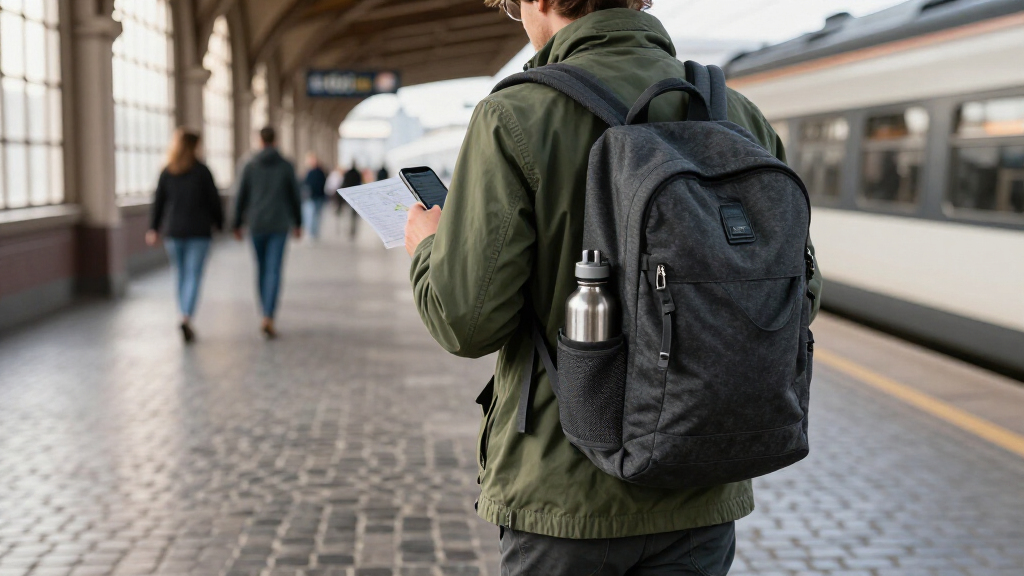
Compact travel backpacks keep your essentials within reach while making crowded trains, staircases, and narrow café aisles easier to manage. Most range from 20 to 40 liters, giving you enough room for a changeable wardrobe and daily gear without hauling a full-size hiking pack. A smaller bag also makes it easier to keep your things together when you switch from airport to bus to hotel.
Think of it like a small kitchen: less counter space encourages you to put only the tools you use every day within reach. For example, a traveler on a seven-day city break could pack three tops, two bottoms, a light jacket, underwear, toiletries, and a laptop in a well-organized 30L bag. Rewearing layers and washing a shirt midweek does the work of extra capacity.
The tradeoff is real: if you need bulky shoes, cold-weather layers, or gear for several activities, squeezing everything into a small pack can make it uncomfortable and slow to unpack. Choose compact for flexibility and easy movement; choose more capacity when your actual kit demands it.
Products Worth Considering

DJI Osmo 360 Road Cycling First-Person Combo Action Camera

Sony WH-1000XM6 Wireless Noise-Canceling Headphones, Black

Bose QuietComfort Wireless Noise-Cancelling Headphones, Cypress Green
As an affiliate, we earn on qualifying purchases.
Choose 30L or 40L by what you carry
Compact travel backpacks in the 25–35L range suit light packers and shorter trips, while 35–40L gives you room for longer stays or bulkier clothing. A 30L pack can cover one or two weeks if you use packing cubes, choose quick-drying layers, and plan to rewear clothes. The right size depends less on trip length than on what you need to bring.
Airline dimensions can matter more than the liter label: many standard carry-on limits are around 22 × 14 × 9 inches (56 × 36 × 23 cm), but carriers set their own rules. Budget airlines such as Ryanair, Spirit, and Frontier may impose smaller personal-item limits, often around 40 × 30 × 20 cm. A soft bag can squish into a measuring frame; an overstuffed one may not.
| Capacity | Often suits | What to watch |
|---|---|---|
| 20–25L | Day trips, minimalist weekends | Limited space for shoes and bulky layers |
| 25–35L | Light packing, city trips, one-bag travel | Needs a repeatable outfit plan |
| 35–40L | Longer trips or extra gear | May exceed a personal-item limit when full |
These ranges describe useful tradeoffs, not fixed trip lengths. A 40L pack provides a buffer for a second pair of shoes or a warm layer, but that spare room can invite extra items, increasing weight and making the bag harder to carry. A 30L limit encourages a tighter kit and can make moving between transit and lodging easier; in return, it asks you to plan laundry and accept fewer outfit choices. If your essentials only fit by forcing the zipper or compressing gear you need to protect, the smaller size is not serving you.
Before you book, check the airline’s current baggage page for your fare and route. For example, a 35L pack may meet one airline’s overhead limit but fail another carrier’s personal-item sizer, even if both flights are on the same trip. This matters especially on connections: the strictest allowance on the itinerary may determine whether the bag travels free or incurs a fee. Measure the packed bag, since volume in liters does not tell you its exterior dimensions or how much it bulges.
Pick features that solve real travel problems
The most useful backpack features make packing, carrying, or getting through security easier. A clamshell opening unzips like a suitcase, so you can see the whole load at once; a top-loader opens from above and can feel simpler on a daily commute. If you often pull out a laptop at security, look for a padded sleeve with quick access.
Imagine arriving at a hostel after a late train: with a clamshell bag, you can find your sleep shirt without lifting every item out. For a day spent walking between museums, however, padded shoulder straps, a sternum strap, and a stable fit may matter more than internal dividers. A hip belt can help with heavier loads, though some travel-focused belts tuck away for city use.
- Check the empty weight: Many bags weigh about 1.3–2 kg. A 4 lb (about 1.8 kg) bag uses a sizable part of a 15 lb comfortable carry.
- Look for durable materials: Ballistic nylon and recycled polyester are common choices; water-resistant coatings can fend off light rain but do not make every bag waterproof.
- Test access and security: Lockable zippers, a hidden pocket, and a trolley sleeve can help, but no pocket or lock guarantees theft prevention.
- Use expansion carefully: Expansion zippers add flexibility, but a fully expanded bag may no longer fit airline dimensions.
For instance, a photographer may value modular dividers and quick camera access, while a commuter-traveler may get more use from a laptop sleeve and luggage pass-through. A USB port or tracker pocket is handy only if you already use that gear.
These features involve choices about weight, access, and protection. A clamshell layout makes it easier to reach items at the bottom, but opening it fully can be awkward in a crowded aisle or when you have little floor space. A top-loader keeps the opening smaller, though reaching something buried underneath may require unpacking. Similarly, more padding can protect a laptop but adds weight and may consume room that could hold clothes. Decide which problem you encounter most often, then favor the feature that solves it without adding bulk you will carry every day.
Comfort deserves a loaded trial because an empty bag hides how its weight sits on your shoulders. Shoulder straps should not dig in, and the pack should stay close to your back rather than sway as you walk. A hip belt can transfer some load to your hips, but it helps only if it fits and you carry enough weight for that transfer to matter. On a short commute, a simple harness may be lighter and less cumbersome.
Compare popular backpack styles before you buy
Popular travel packs differ in how they organize gear, carry weight, and fit daily life. Names such as Osprey Farpoint/Fairview, Peak Design Travel Backpack, Aer Travel Pack, Cotopaxi Allpa, and Tortuga appear often in one-bag discussions, but model versions and prices change. Treat these as starting points for comparing layouts, not a universal ranking.
A camera-focused traveler might prefer Peak Design’s modular approach, while a traveler who wants a familiar harness and travel-ready capacity may look at the Osprey Farpoint or Fairview. The colorful Cotopaxi Allpa line appeals to people who want a suitcase-style layout; Aer’s urban styling may blend more easily into a work commute. Check current product specifications, dimensions, warranty terms, and fit before buying.
Budget options such as Amazon Basics, Hynes Eagle, and Matein can lower the upfront cost, while premium bags may offer stronger materials, thoughtful access, or longer warranty coverage. Prices in the research brief range from about $40–80 for budget, $100–200 mid-range, and $250–350 or more premium. Those figures can change, and a higher price does not guarantee a better fit on your back.
For a practical comparison, load each candidate with the laptop, shoes, and clothes you actually travel with. Walk around a shop or your home for ten minutes. A bag that feels balanced when empty can tug at your shoulders once your water bottle and charger are inside.
Pack a week into 30L without fighting the zipper
You can pack a compact backpack efficiently by limiting outfit choices, placing heavy items near your back, and keeping small essentials easy to reach. Packing cubes group clothes, while rolling or folding them matters less than avoiding dead space and bringing pieces that work together. Try the full load at home before travel day.
- Start with the trip: Write down the activities and weather, then choose clothes that can repeat across outfits.
- Set a clothing limit: For a week, try three tops, two bottoms, one warmer layer, and enough underwear and socks to suit your laundry plan.
- Group soft items: Put clothes in cubes and use a small pouch for toiletries. Keep liquids within your airline’s current cabin rules.
- Load heavy gear close to your back: Place a laptop in its padded compartment and put shoes or chargers low and central, if the design allows.
- Keep travel-day items accessible: Put your passport, headphones, and a light layer in pockets you can reach without unpacking.
For example, on a 10-day spring trip, you might pack a merino top that works for a train ride and a museum day, then wash it in the hotel sink and hang it overnight. That approach can leave room for a small souvenir while keeping the bag easy to lift into an overhead bin.
Check the fit before the airport makes the decision
A compact backpack works well only when it fits your body and the airline’s current baggage rules. Load it with your usual travel gear, tighten the shoulder straps, and walk for a few minutes to see whether it pulls, rubs, or swings. If you plan long city walks, comfort matters as much as the bag’s listed volume.
Before departure, check the carrier’s official baggage page for your ticket type, route, and whether the bag counts as a personal item or carry-on. Measurements can differ between airlines and change over time. A bag marketed as “carry-on compatible” is not a promise that every airline will accept it for free.
Measure the packed bag, not just the product page dimensions. Soft sides bulge when you fill them, and expansion panels can push a compliant pack over the limit.
At home, pack it fully and measure its height, width, and depth at the widest points. If you are flying a budget carrier with a small personal-item allowance, keep the pack unexpanded and leave a little room to compress it into the sizer.
Frequently Asked Questions
Is a 30L or 40L backpack better for travel?
A 30L backpack often suits light packers and can cover a week or two with repeatable clothes and laundry. A 40L bag gives you more room for bulky layers, extra shoes, or gear, but may exceed a personal-item limit when full. Choose based on what you carry and the airline rules for your trip.
Will a 30L backpack fit as an airline carry-on?
It may, but liters alone do not determine compliance. Check the airline’s official dimensions for your fare and measure the bag when packed, since bulging sides can add inches. Personal-item rules on some budget fares are tighter than standard overhead-bin limits.
Can you pack for two weeks in a compact backpack?
Yes, if you pack light and plan to rewear or wash clothes. A 30L bag can work with a few mix-and-match outfits, packing cubes, and quick-drying layers. Bulky winter clothing or activity-specific gear may call for a larger pack.
Are expensive travel backpacks worth the price?
A premium bag can make sense if you travel often and value its materials, harness, organization, or warranty. A less expensive pack can work well for occasional trips if it fits comfortably and has the features you need. Try the loaded bag before deciding whether the extra cost buys a benefit you will use.
How can I carry a laptop safely in a travel backpack?
Use a well-padded laptop sleeve that keeps the device from shifting, and place the laptop close to your back when the design allows. Keep the computer easy to remove for security checks, and avoid storing it loose beside hard items such as chargers. A padded compartment lowers impact risk but cannot prevent every drop or bump.
Conclusion
Choose the smallest backpack that carries your real kit comfortably, then check its packed dimensions against your airline’s current rules. Test the load before you leave; the best travel bag is the one that feels like a capable companion, not a stubborn box on your back.