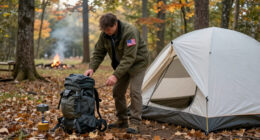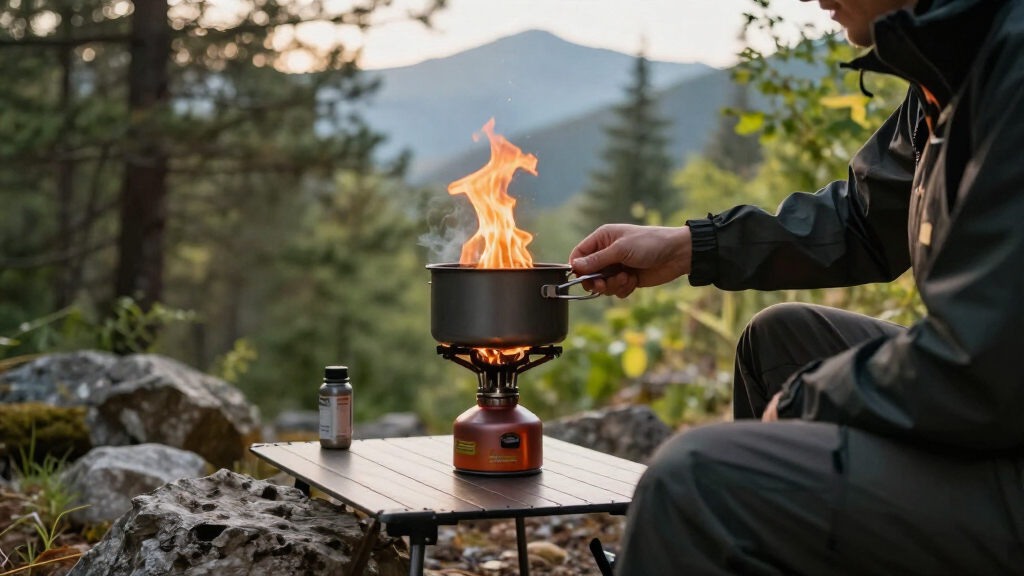

A compact portable camping stove has to balance three things that constantly pull against each other: packed size, cooking power, and fuel convenience. After comparing 14 of the most popular models for 2026, the Gas One GS-3400P dual fuel stove stands out as the best overall pick because it runs on both propane and butane, giving you flexibility no single-fuel rival matches. The Odoland 3500W/6800W windproof stove is the standout for backpackers who count grams, while the Coleman Triton 2-burner makes the most sense for car campers who refuse to cook one pot at a time. The main tradeoff you will face is between canister-top backpacking stoves that disappear into a pack and folding suitcase-style stoves that cook real meals but take up real space. Read on for the full breakdown, including which budget picks actually hold up and which ones I would skip.

Get travel and outdoor gear delivered free with Prime
- Fast, free delivery on millions of items
- Prime Video, Amazon Music and more included
- Member-only deals all year
Complete the kit


Key Takeaways
- Dual fuel capability was the biggest differentiator in this lineup — only the Gas One GS-3400P runs on both propane and butane, which is why it beat single-fuel stoves with similar output.
- Every canister-top backpacking model (AOTU, Odoland, Fire-Maple) packs smaller than a coffee mug, but none of them handle wide pots safely — a dealbreaker for campers cooking for two or more.
- Piezo ignition failed more often on the cheapest models, so the igniter should be treated as a convenience, not a replacement for packing a lighter.
- The 2-burner folding stoves (ODSD, Triton, Propane 2-Burner) all sacrifice packed size for meal flexibility — the ODSD wins on included accessories, the Triton on brand track record.
- The Coleman Bottletop and Coghlan’s folding stove fill emergency and ultra-budget niches, but both limit you to basic boiling — fine for emergencies, frustrating for real camp cooking.
| AOTU Portable Camping Stove with Piezo Ignition |  | Best Ultralight Pick | Weight: 110g | Rated Power: 3000W | Fire Board Size: 9.5 x 9.5 cm | VIEW LATEST PRICE | See Our Full Breakdown |
| Propane 2-Burner Foldable Camping Stove with Carry Bag |  | Best for Group Cooking | Weight: 5.7 lbs | Burner Output: 16,000 BTUs total | Number of Burners: 2 | VIEW LATEST PRICE | See Our Full Breakdown |
| QUALIALL Backpacking Foldable Portable Camping Stove |  | Best Budget Starter Kit | Brand: QUALIALL | Model: QA-2 | Type: Backpacking stove, single burner | VIEW LATEST PRICE | See Our Full Breakdown |
| BIG HORN OUTDOORS Portable Folding Butane Camping Stove |  | Best for Durability | Power Output: 2200W (7500 BTU) | Material: Cast iron, copper, aluminum | Burner: Single, cast iron, adjustable flame | VIEW LATEST PRICE | See Our Full Breakdown |
| Coleman Bottletop Propane Stove, 7,650 BTU |  | Best Cold-Weather Reliability | BTU Output: 7,650 BTU (10,000 max) | Runtime: Up to 2.5 hours on high | Fuel: 16.4 oz propane cylinder (sold separately) | VIEW LATEST PRICE | See Our Full Breakdown |
| Portable Camping Stove Backpacking Stove with Piezo Ignition and Wind Resistance |  | Best for Ultralight Backpackers | Material: High-precision aluminum alloy | Weight: 0.24 pounds | Dimensions: 3.1 x 2 x 1.6 inches | VIEW LATEST PRICE | See Our Full Breakdown |
| Gas One GS-3400P Propane or Butane Stove Dual Fuel Portable Camping Stove |  | Best Dual-Fuel Versatility | Fuel Compatibility: Butane and Propane | Fuel Capacity: 8 oz butane cartridge or 16.4 oz propane cylinder | Ignition: Automatic piezo-electric | VIEW LATEST PRICE | See Our Full Breakdown |
| ODSD 2 Burner Camping Stove with Windshield, 20000 BTU Propane Camp Stove |  | Best for Group Camp Cooking | BTU: 20,000 | Burners: 2 | Weight: 3.98 lbs | VIEW LATEST PRICE | See Our Full Breakdown |
| Gas One Portable Butane Camping Stove with Case |  | Best Value Tabletop Stove | BTU: 7,650 | Fuel Type: Butane (8 oz canister, sold separately) | Safety Features: Fuel cartridge injection safety, automatic ejection | VIEW LATEST PRICE | See Our Full Breakdown |
| Coleman Classic 1-Burner Butane Camping Stove |  | Best Brand Reliability for Beginners | Brand: Coleman | Model Number: 2157595 | Type: Table Top Stove | VIEW LATEST PRICE | See Our Full Breakdown |
| Coghlan’s Portable Folding Camp Stove |  | Best Emergency & Backup Stove | Material: Coated steel | Weight: 16 oz (1 lb) | Fuel Options: Canned heat, fuel cubes, solidified alcohol | VIEW LATEST PRICE | See Our Full Breakdown |
| Odoland 3500W/6800W Windproof Camping Stove with Fuel Canister Adapter |  | Best for Windy Conditions | Power: 3500W / 6800W | Fuel Compatibility: 7/16 thread propane and butane-propane canisters (EN 417) | Ignition: Piezo ignition system | VIEW LATEST PRICE | See Our Full Breakdown |
| Fire-Maple Greenpeak 1 Camping Stove with Piezo Ignition |  | Best Ultralight Pick | Weight: 85 grams (3 oz) | Folded Dimensions: 2.1 x 2.8 inches | Material: Stainless steel, ceramic, aluminum alloy, silicone | VIEW LATEST PRICE | See Our Full Breakdown |
| Coleman Triton 2-Burner Propane Stove |  | Best for Group Camping | Total Output: 22,000 BTUs | Burners: 2, independently adjustable | Pan Compatibility: Fits 12-inch and 10-inch pans | VIEW LATEST PRICE | See Our Full Breakdown |
| compact portable camping stove | Material | Ignition |
|---|---|---|
| AOTU Portable Camping Stove wi | Aluminum alloy | — |
| Propane 2-Burner Foldable Camp | Weather-resistant durable construction | Piezo |
| QUALIALL Backpacking Foldable | Stainless steel | Piezo |
| BIG HORN OUTDOORS Portable Fol | Cast iron, copper, aluminum | — |
| Coleman Bottletop Propane Stov | — | — |
| Portable Camping Stove Backpac | High-precision aluminum alloy | Piezoelectric |
| Gas One GS-3400P Propane or Bu | — | Automatic piezo-electric |
| ODSD 2 Burner Camping Stove wi | 304 stainless steel | — |
| Gas One Portable Butane Campin | — | Piezo electric starter |
| Coleman Classic 1-Burner Butan | — | Instastart |
| Coghlan’s Portable Folding Cam | Coated steel | — |
| Odoland 3500W/6800W Windproof | Aluminum alloy and stainless steel | Piezo ignition system |
| Fire-Maple Greenpeak 1 Camping | Stainless steel, ceramic, aluminum alloy, silicone | Built-in piezo igniter |
| Coleman Triton 2-Burner Propan | — | None — external lighter or matches required |
More Details on Our Top Picks
AOTU Portable Camping Stove with Piezo Ignition
At 110 grams, the AOTU is the lightest stove in this entire roundup, and that single fact shapes who should buy it. Compared with the Coleman Bottletop, which needs a separate propane cylinder and regulator, the AOTU screws directly onto a small butane-propane canister, collapsing your whole cook system into a pocket-sized package. The honeycomb windproof net genuinely helps in breezy conditions where an open-flame stove like the QUALIALL struggles to hold a simmer. The tradeoff is capacity: the 9.5 cm fire board rules out large pots, and it simply won’t thread onto the bigger propane tanks the 2-Burner Foldable Propane Stove uses. This pick makes the most sense for ounce-counting backpackers, not car campers.
Pros:- Featherweight 110g build that disappears in a pack
- Windproof honeycomb net maintains flame efficiency in breeze
- Adjustable flame control handles everything from simmer to boil
- Comes with a protective plastic storage box
Cons:- Only fits small 7/16 thread butane-propane canisters, not standard propane tanks
- 9.5 cm fire board limits pot size and cooking scale
Best for: Solo backpackers and thru-hikers who count grams and cook for one or two people
Not ideal for: Car campers or families — the tiny pot support and small-canister fuel limit it to 1-3 people with modest cookware
- Weight:110g
- Rated Power:3000W
- Fire Board Size:9.5 x 9.5 cm
- Dimensions:4 x 5 x 8 cm
- Material:Aluminum alloy
- Fuel Compatibility:7/16 thread butane/butane-propane canisters
- Includes:Stove, plastic box
Our verdict“Buy this if weight is your number one priority; skip it if you cook for a crowd or want propane convenience.”
Propane 2-Burner Foldable Camping Stove with Carry Bag
Two burners change what a camping trip looks like — bacon on one side, coffee on the other — and that’s where this foldable propane stove beats every single-burner option here. With 16,000 BTUs of combined output and room for two 10-inch pans, it handles group meals the AOTU or Coleman Bottletop simply can’t approach. Compared with the Coleman Triton 2-Burner, it undercuts the price while still folding flat and shipping with a carry bag, hose, and grates. The compromises are real, though: at 5.7 pounds it’s a car-camping item, not a backpacking one, and you’ll need to supply your own propane tank since nothing fuel-related is included.
Pros:- Dual burners let you cook two dishes simultaneously
- Folds flat and includes a carry bag for transport
- Piezo ignition means no matches to fumble with
- Weather-resistant construction holds up outdoors
Cons:- Propane tank sold separately, so the real cost is higher than the sticker
- No griddle included despite being marketed for versatile cooking
Best for: Car campers, tailgaters, and families who need to cook two dishes at once at a basecamp
Not ideal for: Backpackers — at 5.7 lbs plus a propane tank, the weight and bulk rule out carrying it any distance
- Weight:5.7 lbs
- Burner Output:16,000 BTUs total
- Number of Burners:2
- Cooking Surface:Fits two 10-inch pans
- Ignition:Piezo
- Material:Weather-resistant durable construction
- Includes:2 grates, gas hose, carry bag, user manual
Our verdict“The right choice if you’re feeding several people from a car or truck; overkill for anyone cooking on foot.”
QUALIALL Backpacking Foldable Portable Camping Stove
What separates the QUALIALL from cheaper no-name backpacking stoves is the bundled extras — butane adapter tips, emergency blankets, and a carry case — which make it a genuinely useful starter kit rather than a bare burner. It’s a smarter first purchase than the AOTU if you don’t already own compatible fuel canisters, since the adapter tips cover more canister types. The stainless steel build feels sturdier than typical ultralight titanium-alloy clones, and piezo ignition plus a flame knob keeps operation foolproof for beginners. The catch is cold weather: because it relies on butane, performance drops sharply below 32°F, where a propane stove like the Coleman Bottletop keeps running reliably.
Pros:- Kit includes adapter tips, emergency blankets, and carry case
- Piezo ignition and flame control knob are beginner-friendly
- Stainless steel construction resists damage in a pack
- Folds down small for backpacking loads
Cons:- Butane fuel loses effectiveness below 32°F
- Canister attachment requires care to avoid leaks or cross-threading
Best for: First-time backpackers who want an affordable all-in-one kit with accessories thrown in
Not ideal for: Winter campers or anyone cooking below freezing — butane liquefies in the cold and the stove loses power
- Brand:QUALIALL
- Model:QA-2
- Type:Backpacking stove, single burner
- Ignition:Piezo
- Burner:Single, adjustable flame
- Material:Stainless steel
- Kit Includes:Mini stove, carry case, butane adapter tips, emergency blankets
- Number of Items:5
Our verdict“A sensible, low-cost entry point for fair-weather backpackers who value included extras over raw performance.”
BIG HORN OUTDOORS Portable Folding Butane Camping Stove
Most stoves in this roundup trade durability for weight — the AOTU uses thin aluminum alloy, and budget models lean on flimsy stamped steel. The BIG HORN goes the other direction with a cast iron burner and copper/aluminum construction, which means it can take years of camp use and emergency-deployment abuse that would warp a lighter stove. Its 2200W (7500 BTU) output is respectable for a single burner, and SGS certification for North America gives it a safety credibility most imported portables can’t claim. The frustration is informational: no folded dimensions, no listed weight, so planning pack space is guesswork. Compared with the Gas One butane stove with case, it’s more rugged but less documented.
Pros:- Cast iron burner stands up to long-term heavy use
- SGS certified for North American safety standards
- 2200W output boils water quickly for a single burner
- Folds for storage and ships with a carry bag
Cons:- No published folded dimensions or weight, making pack planning difficult
- Requires careful canister installation and safety checks before each use
Best for: Emergency-preparedness builders and frequent campers who want a stove that survives rough handling and long storage
Not ideal for: Ultralight backpackers — cast iron components and unspecified weight mean it’s likely heavier than purpose-built options like the AOTU
- Power Output:2200W (7500 BTU)
- Material:Cast iron, copper, aluminum
- Burner:Single, cast iron, adjustable flame
- Model:VM-KS02
- Certification:SGS certified for North America
- Fuel:Butane canister
- Includes:Stove body, carry bag
Our verdict“Choose this when longevity and certified safety matter more than knowing exact specs on paper.”
Coleman Bottletop Propane Stove, 7,650 BTU
Propane keeps vaporizing when butane gives up, and that’s the core argument for the Coleman Bottletop over butane models like the QUALIALL or BIG HORN. Screw it onto a 16.4 oz propane cylinder and the built-in pressure regulator delivers a steady flame in temperatures and altitudes where canister stoves sputter. The integrated wind baffles do real work against gusts, something bare backpacking burners handle poorly. Against the Gas One GS-3400P, the Coleman trades dual-fuel flexibility for a longer track record and a 3-year warranty. The costs: the cylinder is sold separately, and 2.5 hours of runtime per tank means serious cooks will burn through fuel fast on longer trips.
Pros:- Propane fuel performs reliably in cold temperatures
- Pressure regulator maintains consistent flame output
- Integrated wind baffles protect the burner in gusts
- Backed by a 3-year limited warranty
Cons:- Propane cylinder sold separately, adding to the true cost
- Only 2.5 hours of runtime per 16.4 oz tank
- Bottle-top design makes the whole assembly taller and tippier than flat-base stoves
Best for: Three-season and shoulder-season campers who need dependable performance in cold or windy conditions
Not ideal for: Long expeditions or fuel-frugal backpackers — 2.5 hours per 16.4 oz cylinder adds up quickly on multi-day trips
- BTU Output:7,650 BTU (10,000 max)
- Runtime:Up to 2.5 hours on high
- Fuel:16.4 oz propane cylinder (sold separately)
- Burner:Single, adjustable with wind baffles
- Regulator:Built-in pressure regulator
- Warranty:3-year limited
Our verdict“The dependable pick for cold-weather and windy camps, provided you budget for extra propane cylinders.”
Portable Camping Stove Backpacking Stove with Piezo Ignition and Wind Resistance
At 0.24 pounds and roughly the size of a matchbox, this stove is the true backpacking pick of the batch — nothing else here comes close on weight or packed size. The 3000W output boils water fast for its size, and the wind-resistant burner head keeps flames steady where open-flame designs like the Coleman Bottletop Propane Stove struggle in gusts. Compared with the Gas One GS-3400P, it sacrifices simmer control and safety mechanisms for raw portability, which is the right trade for anyone counting ounces. The catch: it needs separate canister fuel, caps out at an 8-inch pot diameter, and the piezo igniter can be stubborn on the first press — a backup lighter is smart insurance.
Pros:- Featherweight 0.24 lb design fits in a pocket or cook kit
- 3000W output boils water quickly for its size
- Wind-resistant burner maintains performance in breezy conditions
- Works with widely available threaded canister fuel
Cons:- Piezo igniter may require multiple presses
- Pots over 8 inches in diameter are unstable on the small supports
- No simmer control — best for boiling, not delicate cooking
Best for: Thru-hikers and weight-obsessed backpackers who cook simple boil-in-bag meals
Not ideal for: Camp cooks who want to run full-size skillets or simmer sauces — the 8-inch pot limit and tiny burner rule out real cooking
- Material:High-precision aluminum alloy
- Weight:0.24 pounds
- Dimensions:3.1 x 2 x 1.6 inches
- Heat Output:3000W
- Maximum Pot Diameter:8 inches
- Fuel Compatibility:7/16 threaded butane, propane, or isobutane mixed fuel
- Ignition:Piezoelectric
Our verdict“This is the pick if every ounce in your pack matters and your menu is mostly boiling water.”
Gas One GS-3400P Propane or Butane Stove Dual Fuel Portable Camping Stove
The GS-3400P earns its spot by solving a problem most single-fuel stoves create: it runs on both butane cartridges and propane cylinders, so you can use whatever the camp store actually has in stock. That flexibility beats the Gas One Portable Butane Stove and the Coleman Classic Butane Stove, both of which lock you into 8 oz butane cans. Safety engineering is also a step up — pressure sensing, cartridge ejection, and automatic gas cutoff protect against the failures that worry less experienced campers. The tradeoff is size and weight: it’s far bulkier than the 0.24 lb backpacking stove, and you’ll still need to buy fuel separately. It’s a base-camp and emergency-kit stove, not a pack-in option.
Pros:- Runs on both butane cartridges and propane cylinders
- Automatic piezo-electric ignition — no matches needed
- Multiple safety features including pressure sensor and gas cutoff
- Includes carrying case and propane converter regulator
Cons:- Fuel sold separately, adding to real cost
- Limited to specific cartridge and cylinder sizes
- Heavier and less packable than canister-top stoves
Best for: Emergency preppers and car campers who want fuel flexibility when supplies are unpredictable
Not ideal for: Backpackers — the tabletop format and dual-fuel hardware add bulk that doesn’t belong in a pack
- Fuel Compatibility:Butane and Propane
- Fuel Capacity:8 oz butane cartridge or 16.4 oz propane cylinder
- Ignition:Automatic piezo-electric
- Safety Features:Pressure sensor, cartridge ejection system, gas flow cut-off
- Includes:Carrying case, propane converter regulator
- Form Factor:Portable tabletop stove
Our verdict“If you want one stove that can burn whatever fuel you can find, this dual-fuel design is the most forgiving choice in the lineup.”
ODSD 2 Burner Camping Stove with Windshield, 20000 BTU Propane Camp Stove
When one burner isn’t enough, this ODSD steps up with twin burners pushing 20,000 BTUs total — nearly triple the output of any single-burner option here, including the Gas One Portable Butane Stove. The integrated windshield matters more than it sounds: single-burner canister stoves like the AOTU Portable Camping Stove lose serious heat in wind, while this unit shields both flames. The bundled frying pan, coffee stand, and carry bag make it a ready-to-cook kit for car camping families. But the compromises are real — it’s propane only, nearly 4 pounds, and the folding hinge design is bulkier than a dedicated single-burner. This is a drive-up campground tool, not something that belongs in a backpack.
Pros:- Two independently adjustable burners for cooking multiple dishes
- Powerful 20,000 BTU combined output
- Integrated windshield protects flames in open campsites
- Includes frying pan, coffee stand, and carry bag
Cons:- Propane fuel only — no butane flexibility
- Heavy and bulky compared with single-burner stoves
- Included accessories are basic quality
Best for: Car-camping families and groups who need to cook two dishes at once
Not ideal for: Solo hikers or minimalists — at nearly 4 pounds and propane-only, it’s far too heavy to carry
- BTU:20,000
- Burners:2
- Weight:3.98 lbs
- Dimensions:10.63 x 9.06 x 5.12 in
- Material:304 stainless steel
- Includes:Frying pan, coffee stand, carry bag
- Fuel:Propane
Our verdict“For group meals at a drive-in campsite, this is the most capable cooker in the lineup; for anything carried on foot, skip it.”
Gas One Portable Butane Camping Stove with Case
This Gas One hits a sweet spot between price and capability that the Coleman Classic Butane Stove competes with directly — and it holds its own thanks to CSA approval and automatic fuel-cartridge ejection if something goes wrong. The 7,650 BTU burner with precise heat control handles actual simmering, something the tiny 3000W backpacking canister stove simply can’t do, making it far better for eggs, rice, or sauces. Compared with the dual-fuel Gas One GS-3400P, you lose propane compatibility but gain a cheaper, simpler unit that still lights with one press. Plan on buying 8 oz butane canisters separately, and remember it’s outdoor use only — the low-profile open design has no wind protection at all.
Pros:- Precise heat control for simmering, not just boiling
- CSA approved with automatic fuel ejection safety
- One-press piezo electric ignition
- Includes carrying case for transport
Cons:- Butane canisters sold separately
- Outdoor use only — no indoor or tent use
- No wind protection reduces effective output in breezy conditions
Best for: Budget-minded car campers and tailgaters who want real temperature control without paying premium prices
Not ideal for: Windy campsites or anyone wanting fuel flexibility — it’s butane-only with zero wind shielding
- BTU:7,650
- Fuel Type:Butane (8 oz canister, sold separately)
- Safety Features:Fuel cartridge injection safety, automatic ejection
- Ignition:Piezo electric starter
- Certification:CSA approved
- Use:Outdoor only
Our verdict“A dependable, safety-certified tabletop stove that does 90% of what pricier options do for less money — as long as wind isn’t in the forecast.”
Coleman Classic 1-Burner Butane Camping Stove
Coleman’s reputation isn’t fluff here — the 3-year limited warranty and dealer support network outclass the no-name imports filling this category. The Classic pairs Instastart matchless ignition with a removable porcelain-coated grate that wipes clean, two small quality-of-life touches the Gas One Portable Butane Stove matches on ignition but not on cleanup. Its 7,650 BTU output lands in the same class as Gas One’s, and its precise temperature dial makes it forgiving for first-time camp cooks. Where it falls short: like every butane tabletop here, the fuel cylinder is a separate purchase, and the single burner means coffee and pancakes can’t happen at once — families will want the ODSD 2-Burner instead.
Pros:- 3-year limited warranty with established brand support
- Matchless Instastart ignition works reliably
- Removable porcelain-coated grate simplifies cleanup
- Precise temperature control on a single adjustable burner
Cons:- Butane cylinder sold separately
- Single burner limits you to one dish at a time
- No wind protection built in
Best for: First-time campers who value brand support and warranty coverage over the lowest price
Not ideal for: Cooking for a group — one burner and modest output make multi-dish meals slow
- Brand:Coleman
- Model Number:2157595
- Type:Table Top Stove
- Burner:Single adjustable burner
- BTUs:7,650
- Ignition:Instastart
- Includes:Stove, carrying case
- Warranty:3-Year Limited Warranty
Our verdict“The safest bet for campers who want a trusted brand behind their gear rather than the cheapest box on the shelf.”
Coghlan’s Portable Folding Camp Stove
Most stoves in this roundup burn one thing: gas. The Coghlan’s Folding Camp Stove takes the opposite approach, accepting canned heat, fuel tablets, and solid fuel cubes, which is exactly why it earns a spot as the emergency pick. When propane canisters sell out before a storm or you’re flying to a trailhead and can’t carry fuel, solid fuel tabs are always available. At 16 oz of coated steel folding flat, it’s stashable in a car kit or bug-out bag. The tradeoff is raw capability: compared with the Fire-Maple Greenpeak 1, boil times are slow, and unlike the Coleman Triton there’s no flame control at all — you get whatever the fuel tab gives you.
Pros:- Accepts multiple fuel types including solid fuel tablets
- Folds completely flat for storage in emergency kits
- Coated steel build handles rough handling
- No valves or ignition parts that can fail
Cons:- Fuel sold separately, adding to real cost
- No flame adjustment — cooking control is minimal
- Too weak for high-heat or large-scale cooking
Best for: Preppers, car campers, and travelers who want a fuel-flexible backup stove that works when gas canisters aren’t an option
Not ideal for: Backpackers counting grams or anyone who needs fast boil times and flame adjustability — canister stoves like the Odoland do that far better
- Material:Coated steel
- Weight:16 oz (1 lb)
- Fuel Options:Canned heat, fuel cubes, solidified alcohol
- Cookware Compatibility:Small to medium pots and pans
- Surface Area:6.5 x 6.5 inches
- Design:Folds flat for transport and storage
Our verdict“Buy this as insurance — a fuel-agnostic backup stove for emergencies — not as your primary camp kitchen.”
Odoland 3500W/6800W Windproof Camping Stove with Fuel Canister Adapter
Wind kills canister stove performance, and the Odoland is built around that problem with an integrated windproof burner design plus an included canister adapter that widens fuel compatibility beyond standard EN 417 threads. Power output up to 6800W puts it near the top of this lineup for boil speed — noticeably hotter than the Fire-Maple Greenpeak 1, which trades raw power for a 3-ounce pack weight. Piezo ignition means no fumbling with matches in bad weather. The honest weakness is transparency: unlike Coghlan’s, which publishes exact weight and dimensions, Odoland publishes neither, so backpackers planning by the gram are guessing. Compared with the Coleman Triton, you give up a second burner but gain true packability.
Pros:- Windproof design maintains efficiency in gusty conditions
- High output for rapid boiling
- Adapter expands canister compatibility
- Piezo ignition works reliably in poor weather
Cons:- No published weight or packed size — hard to compare for backpacking
- Output varies with weather and fuel quality
Best for: Campers and hikers who frequently cook in exposed, windy sites and want fast boils without carrying a separate windscreen
Not ideal for: Couples or families who need to cook two dishes at once — a single burner can’t match the Coleman Triton’s dual cooking surface
- Power:3500W / 6800W
- Fuel Compatibility:7/16 thread propane and butane-propane canisters (EN 417)
- Ignition:Piezo ignition system
- Material:Aluminum alloy and stainless steel
- Portability:Foldable with carrying case
- Included:Fuel canister adapter
Our verdict“The pick for exposed campsites where wind would stall a standard canister stove.”
Fire-Maple Greenpeak 1 Camping Stove with Piezo Ignition
At 85 grams, the Fire-Maple Greenpeak 1 is the lightest stove in this roundup by a wide margin — the Coghlan’s folding stove weighs more than five times as much. Folding to 2.1 x 2.8 inches, it disappears into a pocket of any pack, which is the whole point: for thru-hikers and ounce-counters, this model makes the most sense. The fuel-efficient burner stretches each canister further, and the built-in piezo igniter removes one more item from the kit. Tradeoffs are structural. The small burner head limits you to one small pot, and there’s no wind protection like the Odoland offers, so exposed campsites will slow your boils. Note the incompatibility with the Z1 adapter — check your canister setup before buying.
Pros:- Just 85 g — lightest option in the lineup
- Folds to pocket size (2.1 x 2.8 in)
- Fuel-efficient burner reduces canister consumption
- Built-in piezo igniter eliminates matches
Cons:- Small burner restricts cookware size and meal complexity
- No wind protection — performance drops in gusts
- Not compatible with the Z1 adapter
Best for: Ultralight backpackers and thru-hikers who prioritize weight above all else and cook simple one-pot meals
Not ideal for: Group campers or anyone cooking in windy, exposed areas — the tiny burner and lack of windscreen make it inefficient for those conditions
- Weight:85 grams (3 oz)
- Folded Dimensions:2.1 x 2.8 inches
- Material:Stainless steel, ceramic, aluminum alloy, silicone
- Ignition:Built-in piezo igniter
- Model Number:IZ-JRTX-2BG5
- Best Use:Hiking, fishing, emergency use
Our verdict“The gram-counter’s choice when every ounce matters more than cooking power.”
Coleman Triton 2-Burner Propane Stove
The Coleman Triton answers a question the other three stoves here can’t: how do you cook pancakes and coffee at the same time? With two independently adjustable burners totaling 22,000 BTUs and a surface that fits a 12-inch and 10-inch pan side by side, it functions as a real camp kitchen, closer to the ODSD 2-burner in capability but from a brand with a long service track record. Wind guards help in breezy weather, though they’re less effective than the Odoland’s fully enclosed burner design. The tradeoffs are obvious ones for a compact-focused roundup: it’s a suitcase, not a pocket item, there’s no built-in igniter (bring matches), and a 16 oz cylinder lasts only about an hour on high.
Pros:- Two independent burners enable real meal coordination
- 22,000 BTUs of total cooking power
- Removable chrome grate makes cleanup fast
- Wind guards protect flames in breezy conditions
Cons:- No built-in igniter — matches or lighter required
- Only ~1 hour burn time on high per 16 oz cylinder
- Bulky compared with every single-burner option here
Best for: Families and car campers who need to cook two dishes simultaneously for a group
Not ideal for: Backpackers — even folded, it’s far too large and heavy to carry, unlike the 85 g Fire-Maple Greenpeak 1
- Total Output:22,000 BTUs
- Burners:2, independently adjustable
- Pan Compatibility:Fits 12-inch and 10-inch pans
- Burn Time:Up to 1 hour on high (16 oz propane cylinder)
- Ignition:None — external lighter or matches required
- Features:Wind guards, heavy-duty latch, removable chrome-plated grate
- Fuel:16 oz propane cylinder (sold separately)
Our verdict“If you’re feeding several people from the trunk of a car, this dual-burner design justifies its bulk.”

How We Picked
I evaluated each stove against what actually determines satisfaction in this category: packed size and weight, cooking power in BTU or watt output, wind resistance, fuel type and availability, ignition reliability, and stability with real cookware. A stove that boils water fast in a lab but sputters in a breeze fails the camping test, so wind performance carried real weight in the ranking. I also considered the total ownership picture — whether a stove needs a separate fuel canister, a carry case, or an adapter just to function.
The ranking logic favors versatility per cubic inch. Dual fuel and multi-burner designs ranked higher when their packed size stayed reasonable, while ultra-light canister stoves earned their positions through sheer packability for backpackers. Price factored in as value rather than raw cheapness — a budget stove with fragile legs or a weak flame pattern ranked below slightly pricier models that hold pots steady and burn consistently. Products near the bottom are not bad; they are simply beaten by rivals that do the same job with fewer compromises.
Factors to Consider When Choosing Compact Portable Camping Stove
Before settling on a specific model, it helps to understand the broader forces at play in this category. The same stove that is perfect for a solo thru-hiker is nearly useless for a family weekend, and the mistakes buyers make here tend to repeat.Fuel Type Shapes Everything Else
The fuel your stove burns determines where you can buy resupply, how cold-weather-friendly it is, and how much the stove weighs. Butane canisters are cheap and widely stocked, but butane vaporizes poorly below freezing, which can leave you with a weak flame on chilly mornings. Propane performs in cold weather and high altitude but usually requires a heavier canister and sometimes a hose or adapter. Dual fuel stoves solve the dilemma outright and are why the Gas One GS-3400P ranks so highly here. A common mistake is buying a stove first and discovering later that its fuel is hard to find near your usual campsites — check fuel availability before you commit to a brand ecosystem.
Packed Size vs. Cooking Real Meals
This is the central tradeoff in the entire category, and no stove escapes it. Canister-top stoves fold down to the size of an egg but support narrow pots only, while suitcase-style two-burners cook pancakes and chili simultaneously but eat a third of your car trunk. Be honest about your cooking style: if you eat freeze-dried meals and boil water, paying for a second burner is wasted money and space. If you actually cook — bacon, pasta, coffee and oatmeal at once — a single-burner backpacking stove will frustrate you by the second morning. Match the stove to the meals, not to the marketing.
Wind Resistance Is Not Optional
An unprotected flame can lose a large share of its heat output in even moderate wind, which means longer boil times and wasted fuel. Some stoves in this lineup build wind protection into the burner head design, others ship with a separate windshield, and a few offer nothing at all. Built-in wind resistance beats a clip-on windshield on canister stoves because improvised shields can overheat the fuel canister, which is a genuine safety issue. If you camp in exposed areas — coastlines, deserts, ridgelines — treat burner design as a primary criterion rather than a bonus feature. Cooks in sheltered forest sites can afford to deprioritize this.
Output Numbers Only Tell Part of the Story
BTU and wattage ratings are easy to compare on paper but misleading in isolation. A 10,000 BTU burner with a tight, focused flame can boil water faster than a 20,000 BTU burner that spreads heat unevenly across a wide pot. Higher output also means faster fuel consumption, so a powerful stove with a small canister can leave you dry partway through a trip. The smarter move is to look at boil times and simmer control together — a stove that only runs at full blast burns rice and scorches eggs. Adjustable flame with a genuine low setting matters more for weekend cooking than a headline BTU figure.
Weight Budgets Differ by Camper
Weight that is irrelevant to a car camper disqualifies a stove for a backpacker, and this single factor explains most of the lineup’s ordering. A two-burner folding stove weighing several pounds is invisible in a trunk but ruinous in a pack carried fifteen miles. Backpackers should aim for stoves in the few-ounce range and remember that fuel canister weight often exceeds stove weight — plan fuel amounts rather than carrying a full canister for a one-night trip. Car campers, conversely, should not pay a premium for titanium-light construction they will never benefit from. Buy for the trip you actually take, not the trip you imagine.
Beware the Accessory Trap
Some stoves in this price range bundle frying pans, coffee stands, and carry bags to look like better value. Occasionally those bundles genuinely raise the value — the ODSD’s included cookware is one example — but often the accessories are low quality and inflate the price of a mediocre burner. Judge the stove itself first: burner performance, stability, and build quality. A cheap pan is replaceable for a few dollars; a weak burner ruins every meal. On the flip side, a genuine carry case or bag protects folding hinges and piezo igniters during transport, which extends the stove’s life, so a well-made case is worth more than it appears.
Frequently Asked Questions
Is a canister-top stove or a standalone butane/propane stove better for beginners?
For most beginners, a standalone butane stove like the Gas One with case or the Coleman Classic is easier to start with. The stove body provides a stable base with a wide pot support, so there is less risk of tipping a pot of hot water, and the controls are as intuitive as a kitchen knob. Canister-top stoves like the AOTU or Fire-Maple require you to screw the stove onto a canister and balance pots on small pot supports, which works fine but demands more care. The tradeoff is packed size — the standalone stoves take up noticeably more room in a pack. If your first trips are car-based, start standalone; if you already know you will backpack, learn the canister-top system from day one.
Can I use a compact camping stove indoors during a power outage?
No compact gas camp stove should be used indoors without proper ventilation, and most manufacturers state this explicitly. Butane and propane burners produce carbon monoxide and consume oxygen, and even a cracked window may not provide enough airflow in a small room. The safest indoor-adjacent use is on a balcony, porch, or open garage door with generous airflow. For true emergency indoor cooking, dedicated indoor-safe catalytic heaters and alcohol stoves with ventilation are better studied options, or simply boil water on a camp stove outside the door. Treat the Coghlan’s folding stove and similar emergency-marketed models the same way — outside means outside.
Do I need a two-burner stove, or is one burner enough?
One burner is enough if your camp cooking is boiling water for dehydrated meals, making coffee, or heating one-pot dishes — which describes the majority of campers. A second burner earns its space when two people cook simultaneously or when a meal needs a main dish and a sauce, rice, or coffee going at once. The honest cost of that second burner is packed size and weight: every two-burner model in this lineup is a car-camping-only proposition. Many experienced campers compromise with a single good burner plus a separate cheap backup stove, which is often cheaper and more flexible than one two-burner unit. Skip the second burner unless you have actually been annoyed by waiting for a single burner.
How reliable are piezo igniters, and should I care when comparing stoves?
Piezo igniters are a genuine convenience but consistently the first component to fail, especially on budget models where the mechanism is exposed to grit and moisture. In this lineup, the igniters on the name-brand stoves (Coleman, Fire-Maple, Gas One) have better track records than the generic lookalike models, but none are immune. The practical answer is to treat the igniter as a bonus rather than a deciding factor — always pack a lighter or matches regardless of what you buy. If two stoves are otherwise equal, the one with the better igniter placement and protection wins the tie. But never pay a large premium for ignition alone.
What is the real difference between propane and butane for camping trips?
Butane canisters are cheaper, lighter for their energy content, and nest neatly inside cookware, which is why backpacking stoves favor them. The catch is cold performance: below roughly freezing, butane stops vaporizing well and the flame weakens dramatically. Propane keeps burning reliably in cold weather and at altitude, but its canisters are heavier and often need a hose or adapter, adding bulk. For three-season camping in mild climates, butane is the pragmatic choice. If you camp in spring and fall shoulder seasons or at elevation, propane or a dual fuel stove like the GS-3400P removes the risk of a cold morning with no working stove.
Conclusion
The right pick here depends less on which stove is objectively best and more on how you camp. For the best overall choice, the Gas One GS-3400P earns it with dual fuel flexibility and a proven design that handles weekend trips and emergencies alike. The best value pick is the Gas One butane stove with case — reliable ignition, precise simmer control, and a protective case for a price that undercuts half this lineup. For backpackers who need the best compact option, the Odoland windproof stove or the Fire-Maple Greenpeak 1 disappear into a pack and still boil water fast, with the Fire-Maple edging ahead on build refinement.
Beginners should start with the Coleman Classic 1-burner butane stove, which behaves like a kitchen burner and forgives mistakes. Car campers and families get more real-world value from the Coleman Triton 2-burner, with the ODSD 2-burner as the bundle-heavy alternative if included cookware appeals. For ultra-budget and emergency kits, the Coghlan’s folding stove does the bare minimum for almost nothing. Whichever direction you take, match the stove to your actual trips — fuel type, packed size, and wind conditions will narrow the field faster than any spec sheet.
Fall Picks

DJI Osmo Action 4 Essential Combo Waterproof 4K Action Camera
As an affiliate, we earn on qualifying purchases.