
When you shop responsibly for souvenirs, you support local artisans and help preserve their cultural heritage. Look for shops that tell the stories behind their crafts and buy directly from artisans or cooperatives. Avoid mass-produced items and products made from endangered materials. By choosing authentic, locally-made products, you empower small communities and contribute to sustainable tourism. If you want to learn how to make your souvenir shopping even more ethical, keep exploring these helpful tips.
Key Takeaways
- Purchase directly from local artisans or cooperatives to ensure fair compensation and authentic craftsmanship.
- Research and verify the origins and stories behind souvenirs to support genuine cultural heritage.
- Choose sustainably sourced or eco-friendly products that minimize environmental impact.
- Avoid items made from endangered species or harmful materials to promote ethical consumption.
- Support shops that emphasize artisans’ stories and transparent sourcing to encourage responsible tourism.
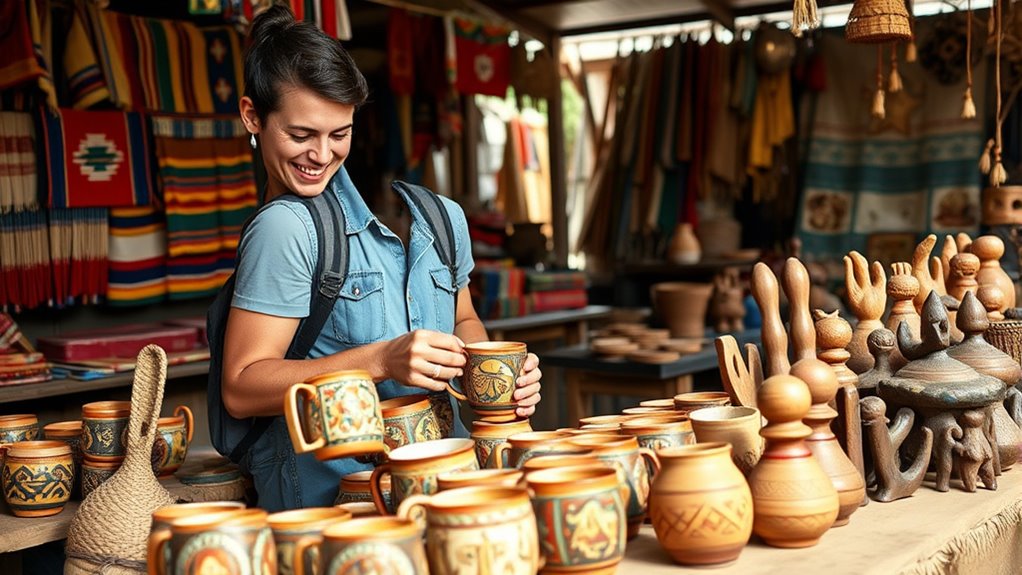
When you travel to a new destination, souvenir shopping offers a perfect way to capture memories and bring a piece of the experience home. But it’s more than just picking up trinkets; it’s an opportunity to connect with the local culture and support the artisans who keep traditions alive. Choosing souvenirs with cultural significance shows respect for the community’s heritage and helps preserve unique crafts that might otherwise fade away. Instead of generic souvenirs, seek items that tell a story—handwoven textiles, pottery, or jewelry crafted with traditional techniques. These pieces reflect the history and identity of the place you’re visiting, making your souvenir more meaningful.
At the same time, you need to contemplate ethical considerations when shopping for souvenirs. It’s easy to fall into the trap of supporting exploitative practices or buying items that harm the environment. Responsible souvenir shopping means being mindful of where your money goes and ensuring that artisans receive fair compensation for their work. Many local craftsmen rely on tourism for their livelihood, so choosing authentic, ethically produced items can make a real difference in their lives. Avoid purchasing products made from endangered species or materials that contribute to environmental degradation. Instead, opt for sustainably sourced or locally made products that promote conservation and respect for the natural resources.
Supporting local artisans isn’t just about buying unique items; it’s about fostering economic development in the community. When you buy directly from artisans or cooperatives, you help sustain traditional crafts and empower small-scale producers. This kind of support encourages the continuation of cultural practices and discourages mass-produced, low-quality souvenirs. Be sure to ask questions about the origins of the items and the artisans behind them. Many markets and shops now highlight stories of their creators, making your purchase more transparent and meaningful. Additionally, understanding product authenticity can help ensure your purchases are truly supporting local craftsmanship.
Frequently Asked Questions
How Can I Identify Authentic Handmade Souvenirs?
To identify authentic handmade souvenirs, look for craft fair tips that highlight craftsmanship details and ask artisans about their process. Check for irregularities, unique features, and signs of handwork, which indicate handmade authenticity. Trust your instincts and engage with sellers to learn about their craft. Avoid mass-produced items, and support local artisans who take pride in their work, ensuring your souvenir is genuine and meaningful.
Are There Any Certifications for Ethically Produced Crafts?
Think of certifications as a lighthouse guiding you through ethical waters. You’ll find Fair Trade labels and Artisan Certification as clear signs of responsibly produced crafts. These certifications guarantee artisans receive fair wages and work under safe conditions. Look for official tags or seals on the product or packaging, and research the certifying organization. Trust these symbols to help you choose souvenirs that support genuine, ethical craftsmanship and empower local communities.
What Are the Best Ways to Negotiate Prices Respectfully?
When bargaining, you should always start with a friendly attitude and a smile, showing respect for the artisan. Use bargaining tips like asking if there’s a discount for cash or buying multiple items. Remember tipping etiquette varies, but a small tip can show appreciation. Be polite, listen carefully, and don’t push too hard—if the price isn’t right, graciously decline. Respectful negotiation fosters goodwill and supports responsible shopping.
How Can I Ensure My Purchase Supports the Community?
To guarantee your purchase supports the community, look for items that promote fair trade practices and have clear origin stories. You can ask vendors about their community impact and whether they collaborate with local artisans. By choosing authentic, ethically sourced souvenirs, you help sustain local economies and preserve cultural traditions. Your mindful shopping encourages responsible commerce, ensuring your purchase benefits the community and fosters sustainable development.
What Are Eco-Friendly Alternatives to Traditional Souvenirs?
Imagine holding a souvenir crafted from sustainable materials, its eco-conscious packaging hinting at a greener future. Instead of mass-produced trinkets, choose handcrafted items made from recycled wood, bamboo, or organic fibers. These eco-friendly alternatives reduce waste and support local artisans. By selecting such souvenirs, you not only preserve beautiful traditions but also contribute to a healthier planet, ensuring your memories leave a positive impact long after your trip ends.
Conclusion
When you choose to buy from local artisans, you breathe life into vibrant markets filled with colorful textiles and handcrafted treasures. Imagine your purchase as a tiny piece of the community’s heartbeat, wrapped in stories and skill. By supporting these talented creators, you help their crafts flourish, ensuring their traditions continue to shine like a bright, unwavering flame. So, next time you shop, let your choices be a beacon of hope and respect for the artisans’ passion and heritage.