This guide walks you through the complete process of preparing a compact travel backpack for a trip: choosing the right bag, organizing your gear, and packing it so that everything fits, stays accessible, and complies with carry-on rules. Done correctly, you will end up with a single backpack that carries 3-7 days of clothing and essentials, opens easily at security, and weighs no more than you can comfortably carry for an hour.

Get travel and outdoor gear delivered free — and shop member deals
- Fast, free delivery on millions of items
- Access to Prime Big Deal Days deals on October 6–7
- Prime Video, Amazon Music and more included
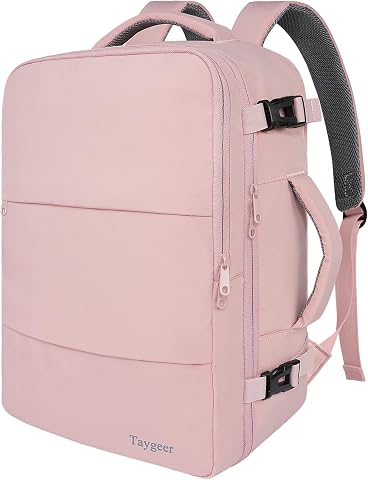
Taygeer Travel Backpack for Women, TSA Flight Approved Carry On
- ✔ Dimensions: 16.8 x 11 x 7 inches
- ✔ Capacity: 40L
- ✔ Weight: 1.74 lbs (0.79 kg)
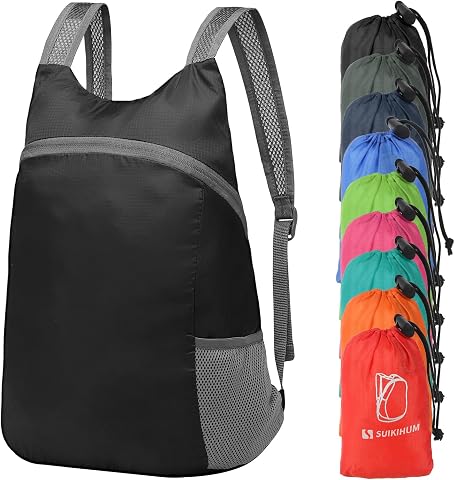
Ultra Lightweight Foldable Packable Hiking Daypack
- ✔ Capacity: 20L
- ✔ Weight: 2.3 ounces
- ✔ Material: Polyester with water-repellent coating
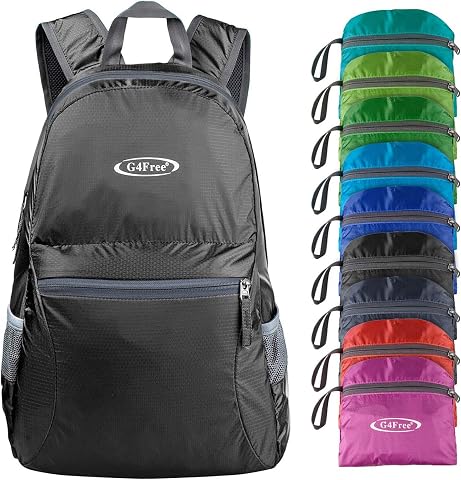
G4Free 20L Packable Travel Hiking Backpack
- ✔ Capacity: 20L
- ✔ Unfolded Dimensions: 16.5 x 11.8 x 6.3 inches
- ✔ Material: Water-resistant coated polyamide
This guide is written for beginners and occasional travelers who want to travel with just one bag instead of checking luggage or dragging a rolling suitcase. No special skills are needed. Expect the full process — choosing, gathering, and packing — to take 1-2 hours once you have your gear in front of you. If you already own a suitable backpack, you can skip directly to the packing steps and finish in about 30-45 minutes.
Success looks like this: a zipped, comfortably loaded backpack that fits your airline’s personal item or carry-on dimensions, with documents and electronics reachable in seconds without unpacking anything else.
Difficulty: Beginner | Time: 1-2 hours for selection and packing (plus shopping time if buying a new backpack)
What You’ll Need
Tools & Materials:
- A compact travel backpack (28-40 liters is typical for carry-on travel)
- Packing cubes or large zip-lock bags (2-4)
- A luggage scale or bathroom scale
- A tape measure
- Your packed gear list: clothing, toiletries under 100ml, chargers, documents, electronics
Knowledge:
- Your airline’s carry-on and personal item size limits (check the airline website before packing)
- Basic idea of your trip length, destination weather, and planned activities
Look up your airline’s exact carry-on dimensions before you start — limits vary between carriers, and budget airlines are often stricter than major ones. Write the numbers down. If you are connecting between airlines, pack to the strictest limit. Also confirm liquid rules: containers must generally be 100ml or smaller and fit in one clear resealable bag for flights through security.
Taygeer Travel Backpack for Women, TSA Flight Approved Carry On
The Taygeer Travel Backpack is the most complete package in this lineup, and it earns the top spot because it solves the problems the other two simply cannot: carrying a real trip’s worth of gear and getting through airport security without unpacking. The 180-degree zipper closure is the headline feature — the bag opens flat like a clamshell, so TSA agents can see everything without you digging through layers. Compared with the two 20L packables, this is the difference between a bag you live out of and a bag you merely carry.Organization is where the Taygeer pulls further ahead. Three main compartments and nine pockets mean your 15.6-inch laptop, 12.9-inch iPad, packing cube, and toiletries each get a dedicated home, and the included shoe bag and wet pocket handle the dirty-laundry problem that plagues one-bag travel. The hybrid design — backpack straps plus dual grab handles — also lets you convert it to a handbag when a backpack feels out of place, something neither packable option attempts.The tradeoffs are real, though. At 16.8 x 11 x 7 inches and 1.74 pounds empty, it is a dedicated piece of luggage, not something you fold into a suitcase. It is also water resistant rather than waterproof, so a serious downpour will eventually soak through. And while the pink colorway is distinctive, travelers wanting a neutral look may find the palette limiting. Still, if your trip revolves around one bag, this is the strongest choice here.
Pros:
- TSA-friendly 180-degree opening makes security checks dramatically faster
- Fits both overhead bins and under-seat limits on major airlines including United, JetBlue, and Spirit
- Dedicated laptop and tablet sleeves plus a shoe bag and wet pocket for genuine one-bag travel
- Convertible design works as a backpack, handbag, or duffle depending on the situation
Cons:
- Water resistant but not fully waterproof in sustained rain
- Too large to pack inside other luggage as a backup bag
- Pink color option may not suit every traveler’s style
Best for: Weekend-to-week-long travelers who want a single airline-compliant bag that doubles as a laptop bag and personal item
Not ideal for: Travelers who already carry a suitcase and only need a collapsible daypack for excursions
Bottom line: If you are committed to traveling with one bag, the Taygeer’s TSA-flat opening, airline-friendly size, and deep organization make it the most capable all-around pick here.
“If you are committed to traveling with one bag, the Taygeer’s TSA-flat opening, airline-friendly size, and deep organization make it the most capable all-around pick here.”
Ultra Lightweight Foldable Packable Hiking Daypack
Where the Taygeer is built to be your main bag, the Ultra Lightweight Foldable Daypack is built to be forgotten until you need it. At 2.3 ounces, it is the lightest option in this comparison by a wide margin — the G4Free packs more organization into a similar capacity, but this one wins outright on minimalism. Folded down to 8.6 x 3.1 x 1.06 inches, it slips into a jacket pocket, a purse, or the corner of a suitcase without you ever noticing the weight.The water-repellent polyester construction is tougher than the featherweight rating suggests, with scratch- and wear-resistance that handles trail scrub and city commutes alike. Breathable mesh shoulder straps with adjustable buckles keep it comfortable on day hikes, which is a use case the laptop-focused Taygeer does not really address. Think of this as the bag for the activity days of your trip — hiking, cycling, wandering markets — rather than the travel days.Be honest about the limits, though. Twenty liters holds a layer, a water bottle, snacks, and a camera, but not much more, and the ultralight fabric will not survive the abuse a full-size travel bag shrugs off. There is no laptop padding, no security pocket, and no internal organization to speak of compared with the G4Free’s three-compartment layout. This pick makes the most sense for travelers who value packed size above all else; anyone needing structure should step up to the G4Free or the Taygeer.
Pros:
- Weighs just 2.3 ounces — the lightest option in this comparison
- Folds down to pocket size for storage in a purse, glovebox, or suitcase corner
- Water-repellent, scratch- and wear-resistant polyester handles trail and city use
- Breathable mesh shoulder straps with adjustable buckles stay comfortable on active days
Cons:
- 20L capacity limits it to day trips and short excursions
- Ultralight materials are less durable than standard backpack construction
- Minimal internal organization compared with the G4Free
Best for: Day hikers, cyclists, and minimalist travelers who want an emergency daypack that takes up almost no space
Not ideal for: Anyone carrying a laptop, electronics, or more than a day’s worth of essentials
Bottom line: This is the pick when packed size matters more than anything else — a barely-there daypack for hikes and excursions that vanishes when you don’t need it.
“This is the pick when packed size matters more than anything else — a barely-there daypack for hikes and excursions that vanishes when you don’t need it.”
G4Free 20L Packable Travel Hiking Backpack
The G4Free 20L Packable Backpack occupies the smart middle ground in this lineup. It matches the Ultra Lightweight’s 20L capacity but adds the structure and security that bag lacks: three zippered compartments, a padded main pocket sized for an iPad and clothes, quick-access outer pockets, and a hidden security pocket for passports and cash. For travelers, that security pocket alone is a meaningful differentiator — it is the kind of feature you appreciate in crowded terminals and markets.Build quality is where the G4Free justifies its place over cheaper packables. The water-resistant coated polyamide is paired with SBS zippers and reinforced bar-tack stitching at 14+ points, which are the stress areas where budget daypacks typically fail first. Compared with the Ultra Lightweight, you give up a little packed compactness and a few ounces, but you gain a bag that can handle being your daily driver for an entire trip, not just an occasional excursion. Against the Taygeer, it obviously cannot compete on capacity, but its airline-friendly personal-item dimensions make it a strong companion bag to a rolling suitcase.The compromises are predictable for the category. Twenty liters will not carry a serious laptop setup or a week of clothes, and there is no separate carrying pouch included — you fold it into its own built-in pocket, which works fine but is slightly less tidy than a dedicated stuff sack. Still, for the traveler who wants a dependable, organized daypack that disappears into luggage between uses, this model hits the sweet spot.
Pros:
- Folds into its own built-in pouch at roughly sandwich size
- Three zippered compartments plus a hidden security pocket for valuables
- Reinforced bar-tack stitching at 14+ points and durable SBS zippers
- Airline-friendly dimensions work as a personal item alongside carry-on luggage
Cons:
- 20L capacity is too small for longer trips or heavy loads
- No extra carrying pouch included beyond the built-in pocket
- Less minimal packed size than the Ultra Lightweight option
Best for: Travelers who need a structured, secure daypack to pair with a main suitcase on multi-day trips
Not ideal for: One-bag travelers or anyone needing to carry a full laptop workstation
Bottom line: The G4Free is the best balance of durability, organization, and packability here — a daypack that behaves like a full-size bag until you fold it away.
“The G4Free is the best balance of durability, organization, and packability here — a daypack that behaves like a full-size bag until you fold it away.”
As an Amazon Associate we earn from qualifying purchases.
Before You Start
If you still need to buy a backpack, choose one in the 28-40 liter range with a clamshell or suitcase-style opening rather than a top-loading-only design. Clamshell openings let you pack flat and find items without digging. Check that the published dimensions are at or under your airline’s limits, and prefer a bag with a padded laptop sleeve, lockable zippers, and stowable shoulder straps if you plan to place it in an overhead bin.
Lay out everything you think you need on a bed or table before packing anything. This single habit prevents the most common packing failure: overstuffing. If the pile looks like more than will fit, it is — the next steps will tell you exactly what to cut.
Step-by-Step Instructions
Step 1: Check your backpack against airline dimensions
Measure your empty backpack’s height, width, and depth with a tape measure, including external pockets and wheels if it has them. Compare these numbers to the carry-on or personal item limits you wrote down earlier. If your bag exceeds the limit when packed, plan to gate-check it or switch to a compliant bag now, before you pack.
Tip: Remember that a backpack’s listed dimensions usually exclude outer pockets and expanded zippers. A bag that ‘expands to 45L’ may exceed limits when expanded — pack it in the unexpanded configuration.
Check: Your measured dimensions are at or under your airline’s limit, with roughly 2-3 cm of slack in each direction for soft sides that bulge when packed.
Step 2: Build a packing list and cut it by a third
Write down everything you laid out, then remove items until you have no more than 3-4 tops and 2-3 bottoms for a week-long trip, plus one outfit for a special activity if needed. Choose clothing in a single color family so every top matches every bottom. Keep underwear and socks for each day, but cut everything duplicated ‘just in case’ items unless they are medication or documents.
Tip: Follow the rule of three: one to wear, one packed, one being washed. Almost any destination has laundry or a sink.
Check: Your final list fits on one page and contains nothing you cannot name a specific planned use for.
Step 3: Roll or fold clothing into packing cubes
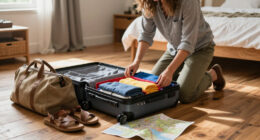
Roll soft items like t-shirts, underwear, and knitwear tightly into cylinders, and fold stiffer items like button-down shirts flat. Group rolled items by type into packing cubes: one cube for tops, one for bottoms, and a small one or zip-lock bag for underwear and socks. Press each cube flat as you close it to squeeze out air.
Tip: Rolling saves roughly 20-30% of space versus casual folding and makes items easier to see and pull out without disturbing the rest. Reserve one flat fold for any shirt that must look presentable on arrival.
Check: Each cube closes without straining the zipper, and you can identify its contents at a glance.
Step 4: Pack the backpack in layers, heaviest against the back panel
Open the backpack fully in clamshell mode. Place the densest items — packing cubes with jeans and heavy clothing, shoes, toiletry kit — directly against the back panel, centered between your shoulder blades. Fill shoes with socks or small items to use the dead space. Put lighter cubes and softer items toward the front of the bag, away from your back.
Tip: Weight against the back panel and high in the pack keeps the load from pulling you backward. Shoes along the sides, soles against the side walls, protect the fabric and stabilize the load.
Check: When you lift the backpack onto one shoulder, it sits upright and balanced rather than sagging forward or tipping sideways.
Step 5: Create a quick-access zone for documents and electronics
Place your passport, boarding pass, wallet, phone, and any medications in the backpack’s top pocket or front organizer pocket — the one reachable without opening the main compartment. Put your laptop and liquids bag in the dedicated sleeve or an outer pocket you can open while the bag is standing up. Note where each item is; you will need them at security within seconds.
Tip: Security screening goes fastest when the liquids bag and laptop come out without unpacking. If your bag lacks a laptop sleeve, put the laptop in the outermost layer of the main compartment, screen-side down.
Check: While wearing the backpack, you can retrieve your passport and liquids bag in under 10 seconds without setting the bag down or opening the main compartment.
Step 6: Compress, close, and weigh the packed backpack
Close all zippers, clip any external compression straps, and tighten them until the bag holds a firm, rectangular shape. Weigh the packed backpack on a luggage or bathroom scale. If your airline has a carry-on weight limit (commonly 7-10 kg), confirm you are under it. If you are over, remove the heaviest non-essential items or wear your bulkiest shoes and jacket on the plane.
Tip: Weigh yourself on a bathroom scale, then weigh yourself holding the backpack, and subtract — this works when the scale cannot fit the whole bag.
Check: The zippers close without force, the scale reads under your airline’s weight limit, and the bag measures within limits even when bulging.
Step 7: Do a carry test and a security rehearsal
Put the backpack on and walk around your home for five minutes, including up and down stairs. Adjust the shoulder straps until the weight sits on your hips rather than pulling on your shoulders, and fasten the sternum strap if there is one. Then rehearse security: open the laptop and liquids pockets, remove the items, and return them, all while the bag is on a table at standing height.
Tip: If the bag hurts after five minutes at home, it will be painful after an hour in an airport. Reposition the heaviest cube higher and closer to your back, or cut weight.
Check: You can carry the loaded bag comfortably for five minutes, and you can unpack and repack the security items in under a minute without confusion.
Common Mistakes to Avoid
- Packing to the bag’s capacity instead of the airline’s limit — A 40-liter backpack stuffed full will often exceed a personal item size limit even if the bag’s label says ‘carry-on compliant’. Measure the packed bag, not the empty one, and leave slack in the dimensions.
- Distributing weight away from the back panel — Always place the heaviest items against the back panel and near your shoulders. Weight packed at the front of the bag or in dangling outer pockets pulls you off balance and strains your shoulders.
- Burying documents and liquids in the main compartment — Assign a dedicated quick-access pocket before packing anything else, and physically rehearse pulling out your passport, laptop, and liquids bag. If any item takes more than a few seconds to reach, move it.
- Packing full-size toiletries and ‘just in case’ duplicates — Transfer toiletries into travel containers of 100ml or less, and cut your laid-out pile by about a third before it goes in the bag. If you cannot name when you will use an item during the trip, leave it home.
Troubleshooting
Problem: The zippers will not close without force
Solution: The bag is overpacked. Remove everything and re-roll the clothing tighter, redistribute soft items into gaps around shoes and cubes, and check for air trapped in cubes — press them flat while sealing. If it still will not close, remove the least essential 2-3 items rather than forcing the zipper, which can split the teeth or tear the fabric.
Problem: The backpack exceeds your airline’s weight limit
Solution: Wear your heaviest items on the plane — boots, jacket, even a book in your pocket. Move small heavy items like chargers and cables to a jacket pocket or personal item if allowed. Swap heavy denim for lighter travel fabric on future trips.
Problem: The bag feels painful or unbalanced after a few minutes of carrying
Solution: Repack with the heaviest cube higher on the back panel, tighten the shoulder straps so the bag sits close to your body, and fasten the sternum and hip straps if present. Sagging straps and a swinging load are usually a strap adjustment problem, not a weight problem.
Problem: Security asked you to remove more items than expected
Solution: On the return trip, pack so that every electronic item larger than a phone and all liquids sit in one outer pocket. Keep chargers and cables in a single small pouch so they can be pulled out and scanned together instead of scattered through the bag.
What Success Looks Like
Your compact travel backpack is correctly packed when all of the following are true: the zippers close without force and the bag holds a firm rectangular shape; the measured dimensions and weight are within your airline’s published limits; the heaviest items sit against the back panel and the bag feels balanced after five minutes of walking; your passport, wallet, phone, laptop, and liquids bag are reachable in under 10 seconds without opening the main compartment; and every item inside has a known location and a planned use. If you can lift the bag, sling it on, and walk out the door without second-guessing anything, you are done.
Next Steps
Take a photo of the fully packed, open backpack before you leave. If an item went unused on the trip, note it — your packing list gets sharper each time. When you return, unpack and air out the bag the same day, and wipe the interior with a damp cloth if anything spilled. Repeat this full process before each trip, but reuse your refined packing list as the starting point. If you travel more than a few times a year, consider upgrading to packing cubes sized specifically for your bag, and if you regularly fly budget airlines with strict personal item limits, test your bag against the smallest limit you expect to encounter rather than the largest.
Frequently Asked Questions
What size backpack counts as carry-on luggage?
Most airlines accept a backpack up to roughly 40-45 liters as a carry-on, provided its dimensions fall within the airline’s published limits — commonly around 55 x 40 x 23 cm including handles and pockets. As a personal item (the smaller bag placed under the seat), limits are usually near 40 x 30 x 20 cm, which suits bags of 25-30 liters. Always check your specific airline, since budget carriers often have smaller limits and stricter enforcement.
Is a 30-liter backpack big enough for a week-long trip?
Yes, for most travelers, if you pack a single color-coordinated wardrobe of 3-4 tops and 2-3 bottoms, wear your bulkiest shoes and jacket in transit, and plan to do laundry once mid-trip. A 30-liter bag is actually easier to carry, easier to fit in overhead bins, and less likely to exceed weight limits than a larger one. Travelers with camera gear, formal clothing, or cold-weather equipment will need more space.
Should I roll or fold my clothes in a backpack?
Roll soft, stretchy items like t-shirts, underwear, and knitwear — rolling saves space and prevents creases in these fabrics. Fold stiff items like dress shirts and blazers flat, or lay them on top of the packed contents to minimize wrinkles. A hybrid approach inside packing cubes gives the best result: rolled items filling the cube, with one flat-folded presentable item on top.
How do I keep liquids from leaking onto my clothes?
Use containers of 100ml or less inside a sealed zip-lock bag, and screw each cap down tightly. For extra protection, place a small square of plastic wrap under each cap before screwing it closed, or store the whole liquids bag in its own pocket away from clothing. Packing the liquids bag in a quick-access outer pocket also means it comes out at security without disturbing the main compartment.
Can I bring a laptop in a compact travel backpack through security?
Yes. Pack the laptop in a dedicated padded sleeve or the outermost layer of the bag so you can remove it quickly — most security checkpoints require laptops to come out and go through the scanner in their own bin. If your backpack is checkpoint-friendly (a sleeve that lays flat), you may be able to leave the laptop in the sleeve, but keep it accessible either way in case you are asked to remove it.
Fall Picks
fall essentials
As an affiliate, we earn on qualifying purchases.