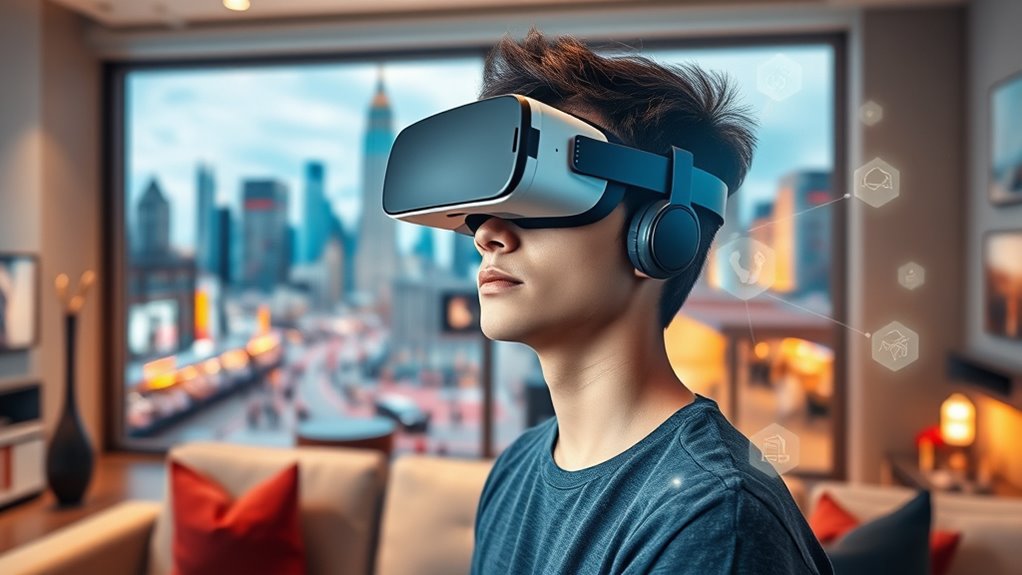

The future of travel tech with VR and AR means you’ll soon be able to explore destinations virtually before booking. You’ll walk through virtual hotel lobbies, see detailed room layouts, and even preview nearby attractions remotely. AR will help you discover landmarks and local spots through your smartphone or glasses with real-time info. These innovations will make planning easier, more personalized, and eco-friendly. Keep exploring to find out how these tech advances are shaping your travel experiences.
Key Takeaways
- VR enables immersive previews of hotels, landmarks, and neighborhoods, enhancing trip planning and decision-making.
- AR overlays provide real-time, interactive information about sights, directions, and local attractions during travel.
- Future advancements will create more realistic, personalized, and educational virtual and augmented travel experiences.
- Integration of biodiversity and conservation features promotes eco-conscious tourism through immersive technology.
- These innovations will make travel more engaging, tailored, and sustainable, transforming the overall travel experience.

As travel technology continues to evolve at a rapid pace, it’s transforming how you plan, experience, and navigate your journeys. One of the most exciting developments is the rise of virtual previews and augmented experiences, which are changing the way you explore destinations before even stepping foot outside. Instead of relying solely on photos or written descriptions, you can now immerse yourself in a digital simulation of your intended location. Virtual previews offer a realistic preview of hotels, landmarks, and neighborhoods, giving you a clearer idea of what to expect. You can walk through a virtual lobby, view room layouts from different angles, or explore nearby attractions—all from your device. This technology helps you make more informed decisions, reducing surprises and increasing confidence in your travel plans. Incorporating biodiversity awareness into these virtual experiences can also promote sustainable tourism by highlighting local ecosystems and conservation efforts at your destination.
Augmented experiences take this concept further by blending digital information with the real world. Using your smartphone or AR glasses, you can point your device at a monument or city street and instantly receive contextual information, directions, or historical insights. Imagine standing in front of a famous landmark and seeing an overlay of its history, architectural details, or reviews without having to search separately. This seamless integration enriches your experience, making sightseeing more interactive and educational. As you navigate through unfamiliar areas, augmented reality can also guide you with real-time directions overlaid onto your surroundings, eliminating the need for paper maps or static GPS instructions. These augmented experiences make travel more intuitive, engaging, and personalized.
The benefits of virtual previews and augmented experiences extend beyond convenience. They allow you to customize your trip in ways never before possible. Before booking, you can virtually “try out” different accommodation options to see which feels most comfortable or matches your style. During your trip, augmented reality can help you discover hidden gems, local eateries, or cultural sites that aren’t heavily advertised. This technology also helps you avoid tourist traps by providing authentic insights directly through your device. As a result, your journey becomes richer, more immersive, and better tailored to your interests.
Frequently Asked Questions
How Accurate ARe VR and AR Trip Previews Compared to Real Experiences?
VR and AR trip previews offer impressive virtual accuracy and immersive realism, but they still can’t fully replicate real experiences. You might feel almost there, but subtle details and sensory inputs can be missing. While these previews give a strong sense of the destination, they may not capture every nuance. So, expect some differences, but overall, they serve as helpful tools to visualize your trip before you go.
What ARe the Costs Associated With Implementing VR and AR Travel Previews?
Sure, you’ll need hefty hardware costs for premium VR headsets and AR devices, and don’t forget the price of content development—creating convincing, immersive previews isn’t cheap. Expect to shell out for high-end equipment and skilled designers. But hey, who needs a vacation when you can spend that on tech? It’s a small price for pretending you’ve traveled the world from your couch, right?
How Do VR and AR Travel Previews Impact Traveler Decision-Making?
VR and AR travel previews profoundly influence your decision-making by offering virtual exploration and immersive planning experiences. They allow you to visualize destinations, accommodations, and activities beforehand, making choices easier and more confident. By engaging your senses and providing detailed previews, these technologies help you better understand what to expect, reducing uncertainty and increasing satisfaction with your travel plans. This immersive planning transforms how you select trips, making the process more interactive and informed.
ARe There Privacy Concerns With Data Used in VR and AR Travel Tech?
Your privacy can be at risk with VR and AR travel tech, and it’s not an exaggeration to say it’s a concern of epic proportions. You should be aware of data security issues and always give informed user consent before sharing personal info. Companies must prioritize protecting your data, ensuring transparency about how it’s used. Stay vigilant, ask questions, and demand strong privacy policies to keep your travel experiences safe and secure.
When Will VR and AR Trip Previews Become Mainstream in Travel Agencies?
You’ll likely see VR and AR trip previews become mainstream in travel agencies within the next few years, as virtual tourism grows in popularity. Travel agencies are increasingly adopting immersive previews to give you a realistic sense of destinations before booking. As technology becomes more affordable and user-friendly, expect more agencies to incorporate these virtual tools, making your planning process more exciting and personalized.
Conclusion
As you explore the future of travel tech with VR and AR, you’re on the cusp of changing how you experience new places. These tools will help you see the world without leaving your home, making travel planning easier and more immersive. Just remember, while technology opens doors, it’s still up to you to take the leap and turn these virtual previews into real adventures. Sometimes, you have to bite the bullet to truly discover what’s out there.