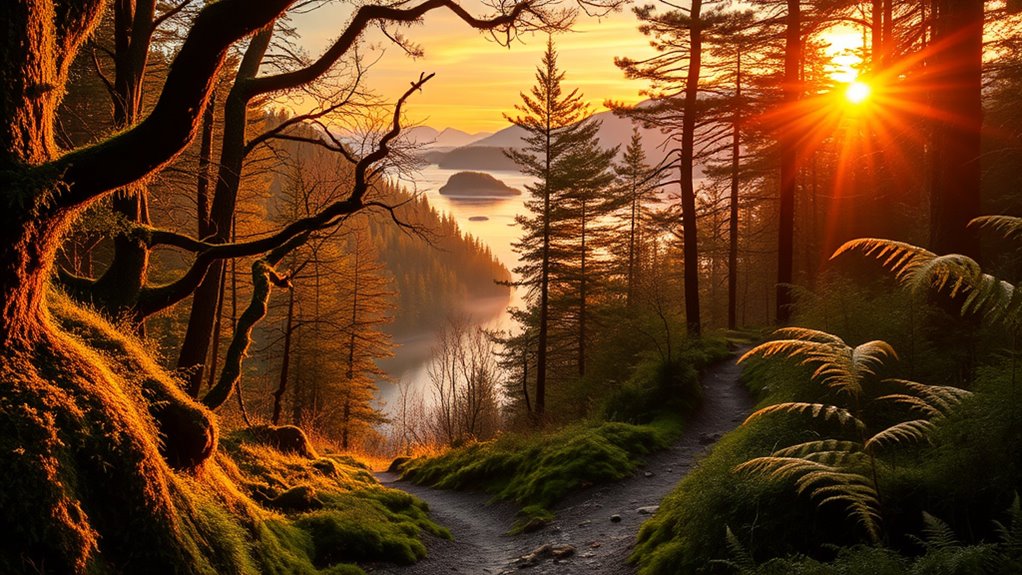
To capture nature’s beauty outdoors, focus on natural light by shooting during golden hours for warm, soft illumination, and avoid midday sun to prevent harsh shadows. Use equipment like polarizing filters to reduce glare and enhance colors, and employ reflectors or diffusers to manage lighting conditions. Pay attention to your surroundings, framing ecological elements to tell a compelling story. Mastering these techniques will help you create stunning images, and exploring further will uncover even more tips to elevate your shots.
Key Takeaways
- Capture during golden hours for warm, soft light that enhances natural scenery and creates beautiful shadows.
- Use polarizing filters to reduce glare and reflections, boosting color saturation in outdoor scenes.
- Incorporate environmental elements and biodiversity to tell a compelling story of nature’s richness.
- Utilize diffusers and reflectors to manage harsh sunlight and achieve balanced, well-lit images.
- Adjust camera settings dynamically to match changing light conditions for optimal exposure and detail.
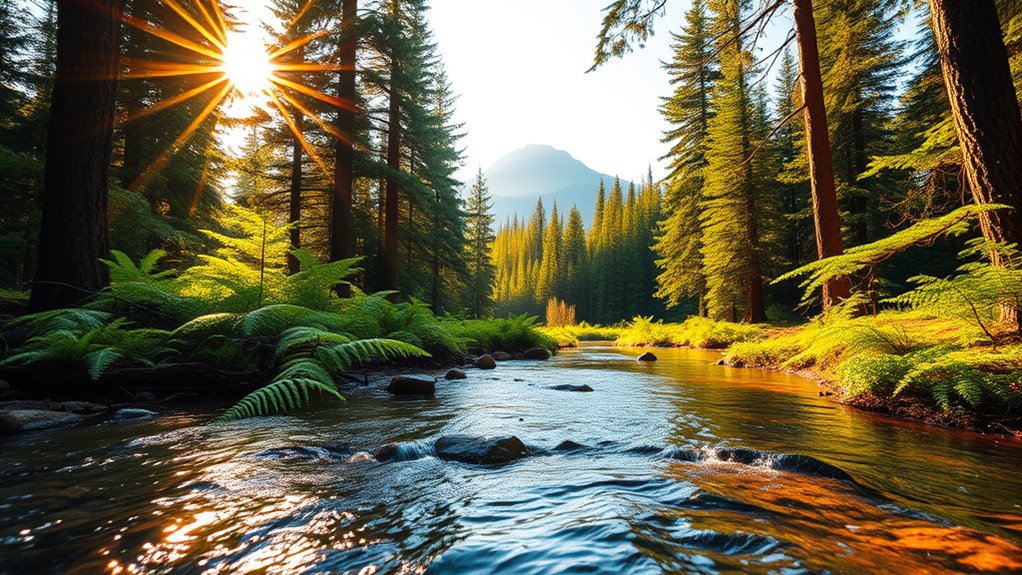
Capturing stunning outdoor photos requires more than just pointing and shooting; it’s about understanding the environment and making the most of natural light. To do this effectively, you need to master lighting techniques that highlight your subject and convey the mood you want to capture. Early morning and late afternoon, known as the golden hours, provide soft, warm light that can transform ordinary scenes into extraordinary images. During these times, the sun’s angle creates gentle shadows and vibrant colors, adding depth and dimension to your photos. On the other hand, midday sun can be harsh, producing stark shadows and washed-out colors, so use it to your advantage by seeking shaded areas or diffusing the light with natural elements like trees or clouds.
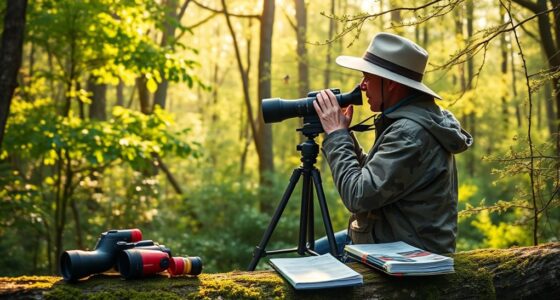
Having the right equipment essentials also plays a vital role in making the most of natural light. A good polarizing filter is invaluable because it reduces glare and reflections, enhances color saturation, and improves contrast. A tripod becomes indispensable when shooting in low light conditions or aiming for precise compositions, as it stabilizes your camera and prevents blur. Additionally, a lens with a versatile zoom range allows you to capture wide landscapes or tight details without constantly changing your gear. Remember, a spare battery and extra memory cards make sure you don’t miss a perfect shot due to technical issues.
Having essential gear like polarizers, tripods, and extra batteries boosts outdoor photo success.
Understanding how different lighting conditions affect your photos helps you plan and adapt quickly. For instance, if you’re photographing a landscape during the early morning, position yourself to include the rising sun for dramatic backlighting or silhouettes. During overcast days, use the diffuse light to shoot softer, more evenly lit images, perfect for capturing intricate details in flora and fauna. When dealing with bright sunlight, consider using your equipment essentials like a reflector to bounce light onto shaded areas or a diffuser to soften direct sunlight, creating a balanced exposure. Recognizing the importance of biodiversity in natural environments can inspire you to include diverse plant and animal life in your compositions, enriching your images and emphasizing ecological harmony.
Ultimately, mastering lighting techniques and having the right equipment essentials at your disposal will elevate your outdoor photography. Pay attention to how natural light changes throughout the day and adjust your settings accordingly. With patience, practice, and a good understanding of your gear, you’ll be able to capture nature’s beauty in ways that truly stand out. Remember, every lighting condition offers unique opportunities—your skill lies in recognizing and utilizing them to craft compelling images.
Top picks for "outdoor photography tips"
Open Amazon search results for this keyword.
As an affiliate, we earn on qualifying purchases.
Frequently Asked Questions
How Do I Protect My Camera From Weather Conditions During Outdoor Shoots?
To safeguard your camera from weather conditions during outdoor shoots, start with camera weatherproofing options like rain covers or waterproof bags. Always bring protective gear such as lens hoods and filters, and consider using a weather-resistant camera housing if needed. Keep a microfiber cloth handy to wipe off moisture, and avoid exposing your gear to extreme elements for extended periods. These steps ensure your camera stays safe and functional in unpredictable weather.
What Are the Best Times of Day for Outdoor Photography?
You should aim to shoot during the golden hours—early mornings and late afternoons—when the sunlight is soft and warm, creating stunning, natural effects. Avoid midday sunlight, as it produces harsh shadows and overexposure. During these times, your photos will have better color, contrast, and mood. Planning your outdoor shoots around these periods guarantees you capture beautiful, well-lit images that truly showcase nature’s beauty.
How Can I Effectively Photograph Moving Wildlife?
To effectively photograph moving wildlife, you need to understand wildlife behavior and anticipate their actions. Use fast shutter speed techniques, like 1/1000 second or higher, to freeze motion sharply. Keep your camera ready and focus on the animal’s eye to capture its essence. Practice panning to follow swift movements smoothly, and stay patient to wait for the perfect moment when the wildlife behaves naturally.
What Lens Should I Use for Capturing Distant Landscapes?
Imagine you’re a modern-day explorer like Indiana Jones, ready to capture vast landscapes. For distant landscapes, use a telephoto zoom lens to bring faraway details closer and a wide-angle lens for sweeping vistas. The telephoto zoom helps you isolate focal points, while the wide-angle lens captures expansive scenes. Combining both allows you to create compelling images that showcase the grandeur of nature, even from a great distance.
How Do I Prevent Lens Flare in Bright Outdoor Settings?
To prevent lens flare in bright outdoor settings, always use a lens hood or sunshade. These accessories block stray light from hitting your lens, reducing flare and glare. Position yourself so the sun is at an angle rather than directly in front of your camera. Additionally, avoid pointing your lens toward bright light sources directly, and consider adjusting your composition to minimize flare while capturing the scene’s beauty.
Conclusion
Now that you’ve explored these outdoor photography tips, you’re ready to capture nature’s beauty with confidence. Remember, while the lens reveals vibrant colors and stunning landscapes, it’s your patience and eye for detail that truly bring your shots to life. Nature’s serenity and chaos coexist—your camera can frame both. Embrace the unpredictable, and let each photo tell a story of wild wonder and quiet moments, reminding you that beauty often lies in contrast.