Fish finders use sonar to help you spot fish and underwater features, but they work differently. CHIRP sends varied-frequency signals for clearer images and better range, making it ideal for precise targeting. Down Imaging shows detailed images right beneath your boat, great for structure scouting. Side Imaging provides wide, panoramic views of the surrounding water, helping you find baitfish and hiding spots. Keep exploring to discover how these technologies can improve your fishing success.

Get travel and outdoor gear delivered free with Prime
- Fast, free delivery on millions of items
- Prime Video, Amazon Music and more included
- Member-only deals all year
Key Takeaways
- CHIRP uses continuous, varied frequencies for clearer, longer-range detection and better target differentiation.
- Down Imaging provides detailed, focused images directly beneath the boat, ideal for structure viewing.
- Side Imaging scans broad horizontal areas around the boat, revealing underwater topography and baitfish schools.
- CHIRP offers superior image clarity and range but is more complex and power-intensive.
- Combining imaging technologies can enhance fish detection, habitat understanding, and overall fishing success.
Products Worth Considering

Kindle Paperwhite 16GB (2024 model) – 7 Glare-Free Display – Jade

Apple AirPods Pro (2nd Generation) Wireless Earbuds with USB‑C Charging, Up to 2X More Active Noise Cancelling, Transparency Mode, Adaptive

GoPro LIT HERO Waterproof Action Camera with Built-In Light
As an affiliate, we earn on qualifying purchases.
What Are Fish Finders and How Do They Work?

Have you ever wondered how anglers locate fish beneath the water’s surface? Fish finders are your answer, using sonar technology to detect underwater objects. They emit sound waves that bounce off fish, structures, and the seabed, then interpret the returning signals. Think of it as a form of oceanic exploration, revealing what’s hidden beneath. These devices are essential for underwater photography, helping you spot fish and underwater features clearly. Modern fish finders display detailed images, so you can see schools of fish or structures on your screen. They work in various water conditions, providing real-time data to improve your chances of a successful catch. Whether you’re a casual angler or a seasoned pro, understanding how fish finders operate enhances your fishing experience. Additionally, digital content exploration can help you discover new ways to utilize these devices effectively.
How to Choose the Best Fish Finder for Your Fishing Style

To pick the right fish finder, consider where you’ll be fishing and what species you’re targeting. Think about your budget and which features will give you the most benefit without overspending. Matching your environment, goals, and wallet guarantees you get the best tool for your fishing style. Additionally, understanding color accuracy can significantly enhance your overall experience by ensuring you see fish and structures clearly on the screen.
Fishing Environment Compatibility
- Water temperature variations and their impact on fish movement. Mammography guidelines can provide insights into how environmental factors influence fish behavior.
- Tidal influence affecting fish location and behavior.
- Depth and clarity of water for selecting imaging technologies.
- Structure and cover types for suitable target detection.
Matching your environment guarantees you get accurate readings and increases your chances of a successful catch. Additionally, understanding antibacterial properties can enhance your overall fishing experience by ensuring you navigate to your preferred spots safely and efficiently.
Target Species Preferences
Your target species greatly influence which fish finder will work best for your fishing style, as different fish respond to various sonar technologies. For example, species with seasonal migration patterns, like salmon or striped bass, may require a fish finder with excellent depth and target separation to locate schools during specific times of the year. If you’re targeting bottom-dwelling species like halibut or flounder, down imaging can help you identify structures and precise locations. Conversely, for surface or pelagic fish like tuna or mackerel, side imaging provides a broader view of open water. Understanding your target species’ preferences and seasonal behaviors helps you choose the right sonar technology, increasing your chances of a successful catch.
Budget and Feature Balance
Finding the right fish finder involves balancing your desired features with your budget, assuring you get the most value for your money. To make the best choice, consider these factors:
- Marine electronics quality – Higher-end models offer better imaging, but if your fishing style is casual, mid-range options work well.
- Feature needs – Determine if you want Down Imaging, Side Imaging, or CHIRP, and match these features to your fishing environment.
- Budget constraints – Set a realistic budget and explore options that fit within it, avoiding overspending on features you won’t use.
- Compatibility with fishing gear – Ensure the fish finder integrates smoothly with your existing gear for seamless operation.
Additionally, understanding upfitting fundamentals can help you customize your setup for optimal performance. Balancing these elements helps you select a fish finder that enhances your fishing experience without breaking the bank.
Understanding the Differences Between CHIRP, Down Imaging, and Side Imaging Fish Finders

Understanding the differences between CHIRP, Down Imaging, and Side Imaging fish finders is essential for making an informed choice. CHIRP technology sends continuous, varied-frequency signals, offering depth and target clarity, often with longer battery life due to efficient transmission. Down Imaging provides detailed images directly beneath your boat, making it easier to spot structure and fish hiding below. Side Imaging creates a broad, panoramic view of the water around you, ideal for locating schools and underwater features at a distance. Your user interface varies: some find CHIRP units more intuitive, while others prefer the detailed visuals of Imaging units. Consider how each technology’s display and controls align with your skill level and fishing style to choose the best fit for your needs.
Pros and Cons of CHIRP Fish Finders
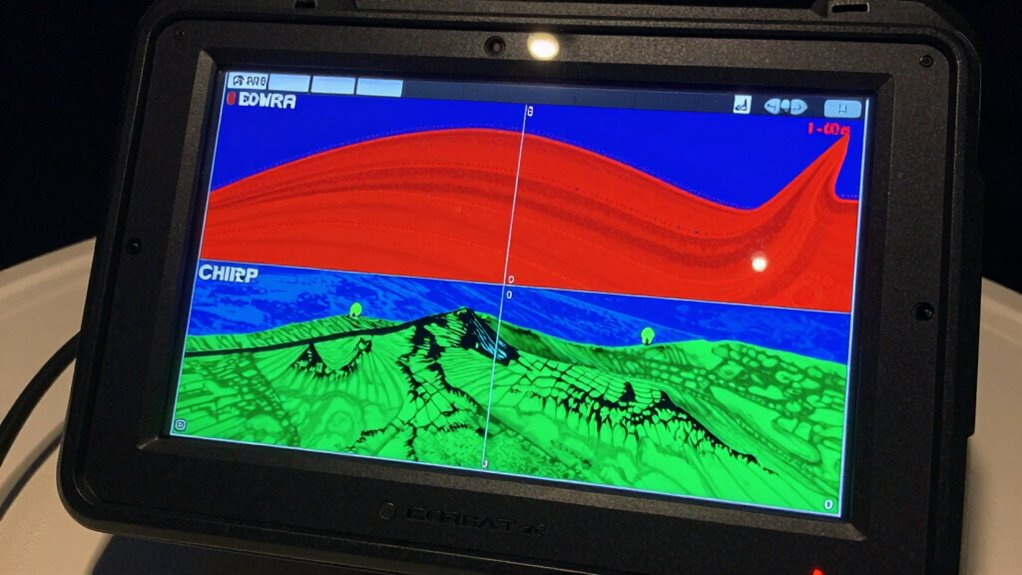
CHIRP fish finders offer enhanced target clarity, making it easier to distinguish fish from clutter. They also provide a greater detection range, so you can cover more water effectively. Additionally, these devices are increasingly being used in high-end outdoor events, showcasing their growing importance in modern fishing practices. Furthermore, the ability to analyze underwater structures can significantly improve your fishing success, making it similar to how electric dirt bikes enhance off-road performance. Incorporating features like natural filtration systems can further optimize your fishing experience by ensuring a healthier aquatic environment. However, weighing these benefits against potential drawbacks helps you decide if they suit your fishing style. Understanding the concept of dark psychology tactics can enhance your decision-making when selecting equipment that best fits your needs. Additionally, employing positive reinforcement in training your fishing techniques can lead to better results over time.
Enhanced Target Clarity
Enhanced Target Clarity (Pros and Cons of CHIRP Fish Finders)
Enhanced target clarity is one of the key advantages of CHIRP fish finders, as they deliver more precise and detailed images of fish and underwater structures. This clarity helps you better understand the underwater habitat and fish behavior, making your fishing experience more effective. With CHIRP technology, you can distinguish between fish and debris more easily and identify specific structures that attract fish. Here are four benefits:
- Clearer images of fish schools and individual targets
- Better separation of overlapping objects
- Improved identification of underwater structures
- Enhanced understanding of fish behavior and habitat preferences
This detailed imaging allows you to make smarter decisions, increasing your chances of success by understanding what’s happening beneath the surface. Additionally, being informed about ethical consumer choices can enhance your overall experience and responsibility as a fisherman. Moreover, utilitarian thinkers’ insights into moral implications can help shape your approach to sustainable fishing practices.
Greater Fish Detection Range
One of the main advantages of CHIRP fish finders is their ability to detect fish at greater distances compared to traditional sonar devices. This extended range helps you locate fish even when they’re deep or far from your boat. Water temperature influences fish behavior, making them move to different depths and locations. CHIRP’s broader frequency spectrum enhances your chances of spotting fish hiding in these varying conditions. By providing clearer signals over longer distances, it allows you to adjust your strategy more effectively. You can identify schools or individual fish from afar, saving time and increasing your catch rate. Additionally, using high-accuracy measurement tools can complement your fishing strategy by providing real-time data on water conditions. Moreover, many modern fish finders now incorporate smart lock technology, which enhances security while you’re fishing in remote locations. However, keep in mind that environmental factors like water temperature changes can still affect detection, but overall, CHIRP’s range gives you a significant advantage in finding fish over larger areas. Additionally, understanding infection risks associated with improper gear maintenance can further enhance your fishing experience.
Advantages and Limitations of Down Imaging

Have you ever wondered how down imaging technology provides detailed views of underwater structures? It’s excellent for pinpointing specific features like submerged logs or rock formations, helping you understand fish behavior better. However, it has limitations.
- Limited Range: Down imaging works best at closer distances, so you might miss fish or structures farther away. Its effectiveness often relies on consistent storytelling to help users understand the nuances of underwater navigation. Additionally, understanding the early detection of fish habitats can significantly enhance your fishing strategy. Effective home soundproofing techniques can also enhance your fishing experience by reducing noise disturbances from the environment. Moreover, fostering a growth mindset can encourage a more adaptive approach to learning about fishing techniques.
- Narrow Cone: It covers a smaller area, requiring precise positioning to scan specific spots.
- Cluttered Images: Underwater structures can create confusing backgrounds, making it harder to identify fish.
- Power Dependency: It demands higher power, which can drain your battery faster.
Despite these limitations, down imaging excels at revealing detailed underwater structures, improving your ability to interpret fish behavior closely beneath your boat. Additionally, using high-quality car protection accessories can enhance your overall experience on the water by ensuring your equipment remains safe from harsh conditions.
When Should You Use Side Imaging to Find Fish?
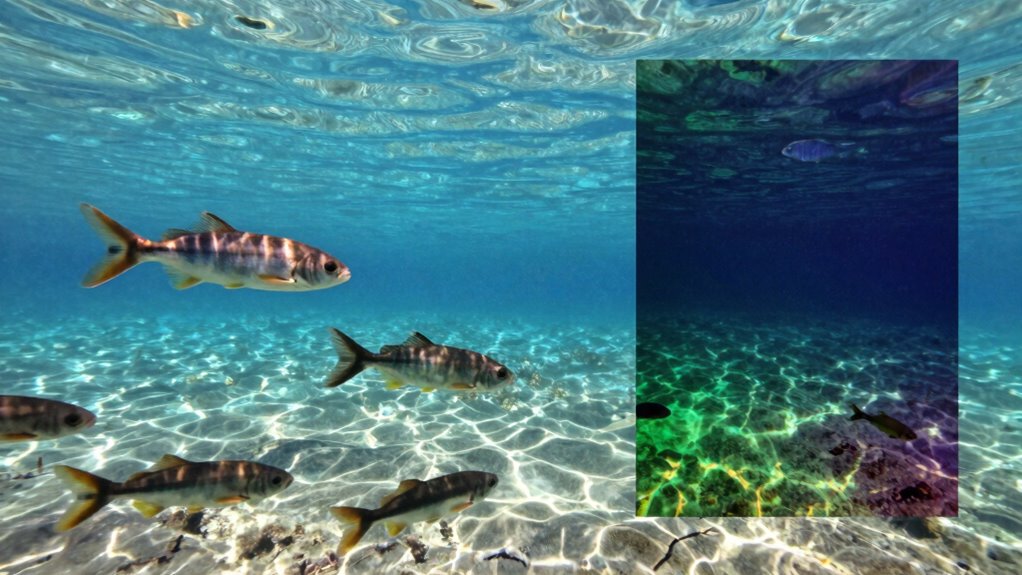
Wondering when side imaging is your best tool for locating fish? Use it when you need a clear view of underwater topography, especially in shallow or complex structures like reefs, wrecks, or submerged vegetation. Side imaging excels at scanning large areas horizontally, revealing the shape of the lakebed and hidden features that attract fish. It’s particularly useful when monitoring baitfish behavior, as you can spot baitfish schools moving along undercut banks or around structures. If you suspect fish are hiding in tight spots or along drop-offs, side imaging provides detailed visuals that help you target these areas precisely. Use side imaging when you want a broad, detailed snapshot of the environment to locate fish based on their natural habitat and baitfish activity.
Tips for Getting the Most Out of Your Fish Finder
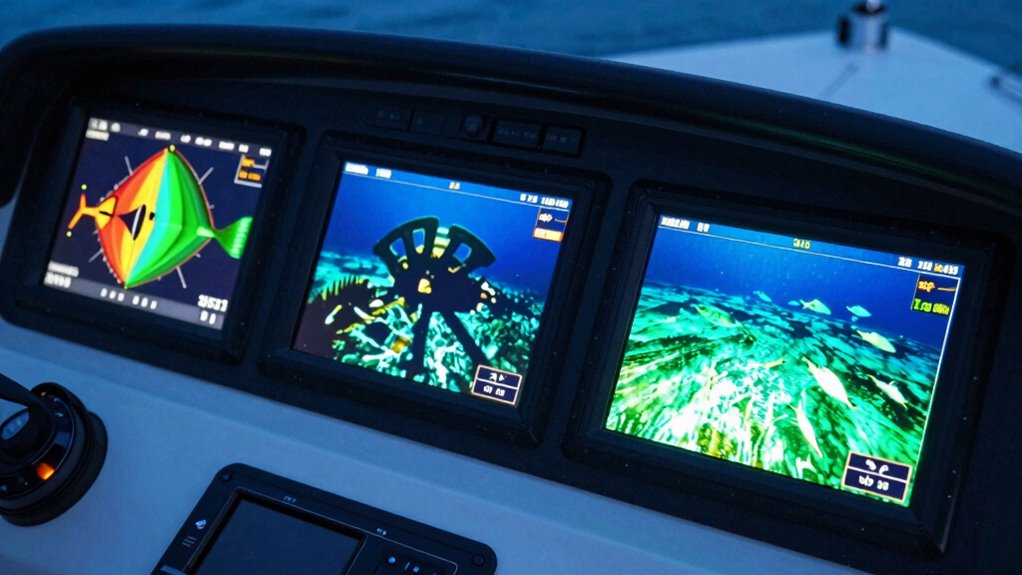
To get the most out of your fish finder, start by properly setting up and understanding its features. Familiarize yourself with marine electronics like CHIRP, Down Imaging, and Side Imaging to optimize their use. Here are some tips:
- Adjust sensitivity to avoid clutter and find the right balance for clear images.
- Learn the sonar’s display settings to distinguish fish from debris or vegetation.
- Practice tying fishing knots that reduce line noise, improving sonar readings.
- Regularly update your device’s firmware for the latest features and performance enhancements.
Mastering these steps ensures you maximize your fish finder’s capabilities, making your fishing trips more productive and enjoyable.
Common Questions About Fish Finders

Understanding the common questions about fish finders can help you troubleshoot issues and make better use of your device. Over the years, the technological advancements in fish finders have transformed how anglers locate fish, reflecting a rich historical evolution. You might wonder what the best settings are or how different imaging technologies compare. Many ask if higher frequency means better clarity or if certain features are necessary for their fishing style. Others want to know how to interpret sonar images accurately or why their device isn’t showing fish at certain depths. Knowing the background of these innovations can help you optimize your equipment. By understanding the basics and the evolution of these technologies, you’ll be better equipped to resolve common concerns and improve your fishing success. Additionally, exploring AI trends in imaging technologies can further enhance your understanding of these devices.
Frequently Asked Questions
Which Fish Finder Is Best for Shallow Water Fishing?
For shallow water fishing, a CHIRP fish finder is your best choice. It offers better depth accuracy, helping you identify fish in shallow areas precisely. Make sure the transducer is compatible with shallow depths and provides high-frequency options for clearer images. CHIRP’s ability to differentiate between fish and clutter makes it ideal for shallow waters, ensuring you get accurate readings and improve your chances of a successful catch.
How Often Should I Update My Fish Finder’s Firmware?
Ever wonder how often you should update your fish finder’s firmware? Usually, it’s best to do so whenever new firmware becomes available—monthly or quarterly updates help improve performance and fix bugs. Check compatibility considerations first to confirm the updates work with your device. Regular updates keep your fish finder running smoothly, giving you the latest features and improving its accuracy, so you can fish confidently every time.
Can I Use Multiple Fish Finder Types Simultaneously?
Yes, you can use multiple fish finder types simultaneously, but be aware of potential installation challenges and increased power consumption. Mounting different units may require extra space and wiring, and running several devices can drain your boat’s power supply faster. To avoid issues, make sure your system can handle the combined power load and plan your installation carefully, so each unit operates effectively without interfering with the others.
What Is the Cost Difference Between CHIRP and Imaging Fish Finders?
Sure, splurging on the latest fish finder might make your wallet cry, but here’s the scoop: CHIRP fish finders usually cost less, fitting snugly into tight budgets, while imaging units—down and side—are the shiny toys, often costing double or more. Your price comparison depends heavily on features and brand. So, if you’re counting pennies, go for CHIRP; if you want high-tech, be prepared to spend more.
Do Fish Finders Work Well in Freshwater and Saltwater?
Yes, fish finders work well in both freshwater and saltwater. You’ll want to choose a model with saltwater durability for harsh environments and good freshwater sensitivity for clear, shallow waters. Saltwater models resist corrosion and handle rough conditions, while freshwater units excel in detecting fish in clearer waters. By selecting the right fish finder for your environment, you guarantee accurate readings and long-lasting performance, no matter where you fish.
Conclusion
So, now you’re basically a fish-finding wizard, right? Just remember, no gadget turns you into a fishing legend overnight—unless it’s a magic wand, and even then, you’d probably still need some luck. CHIRP, down, or side imaging—pick what suits your style, but don’t forget, the real secret’s patience (and maybe a splash of good old-fashioned luck). Happy fishing, and may your catches be abundant—unless you’re just there for the scenery.