TL;DR
Compact camping cookware sets are nesting pots, pans, lids, and sometimes cups or utensils made to pack into a small space. For backpacking, compare the complete packed weight and volume; for car camping, prioritize useful capacity, stability, and easy cleanup. Match the material and pot shape to your meals, and check stove compatibility before you buy.
A cookware set can save space in your pack and still leave you stirring dinner with a spoon that barely fits the pot. Compact camping cookware sets nest their pieces together, but a tidy bundle does not guarantee that the set suits your stove, meals, or group size.

Get travel and outdoor gear delivered free with Prime
- Fast, free delivery on millions of items
- Prime Video, Amazon Music and more included
- Member-only deals all year
This guide explains what they are, how aluminum, stainless steel, and titanium behave, and how to compare capacity and packed weight. You’ll also get a simple way to decide between a complete set and a few individual pieces, plus practical advice for cooking and cleaning outdoors.
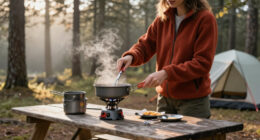
Imagine a rainy evening on a narrow campsite: one camper needs to boil water for a dehydrated meal, while another wants to fry onions and stir a sauce. Those jobs call for different cookware. Think of choosing a set like packing shoes: the lightest pair is not much help if it pinches every step.
Compare the packed weight of the full set, including lids, handles, and accessories.
Choose titanium mainly for low-weight boiling; consider wider aluminum cookware for meals that need stirring.
Match pot capacity and shape to your portions and planned meals.
Confirm the cookware fits your stove and fuel setup, and check that handles lock securely.
Skip set pieces you will not use; keep nonstick cookware away from metal utensils and high heat.
Know what a nesting cookware set actually includes
Compact camping cookware sets are nesting collections of pots, pans, lids, and sometimes cups or utensils that fit together to save space. A typical backpacking set might hold one pot, a lid that doubles as a small pan, a folding handle, and a storage sack. The word “set” describes a bundle; it does not tell you whether every piece will earn its place on your trip.
Some collections of pots are built around a particular stove system, with the burner or fuel canister fitting inside the main pot. Others are simple cookware that you pair with your own stove. If you’re comparing options, check whether the listed packed size includes the handle, lid, sack, and any cup tucked inside. Those small details decide whether the bundle really fits in your pack.
For example, a solo hiker who boils water for oatmeal and a freeze-dried dinner may use one pot and a mug each day. A pair of friends cooking rice and vegetables may appreciate a second pot or a wider pan. A set with six pieces sounds generous, but it may just add cups and utensils you already own.
Count meals, not pieces. The useful set is the one that supports the way you cook and packs into the space you have.
Products Worth Considering

GoPro Fluid Pro AI 3-Axis Gimbal Stabilizer with AI Tracking and Fill Light

Apple AirPods Pro 3 Wireless Earbuds with Active Noise Cancellation

Travelpro Maxlite 5 Softside Carry-On Rolling Garment Bag, 22-Inch, Black
As an affiliate, we earn on qualifying purchases.
Match the set to your trip before comparing materials
Compact camping cookware sets need to balance weight, packed size, and cooking comfort, and the balance changes with your trip. A backpacker carrying every gram may prefer a small pot for boiling water, while a car camper can bring a sturdier, wider pan for eggs and vegetables. First decide where you’ll carry the cookware and what you plan to eat; then compare materials and features.
A useful check is to compare the complete packed weight and the usable capacity, not just the empty pot or the number of included items. A listing might show a lightweight pot but leave the lid and storage bag out of its headline weight. If your stove or fuel canister is meant to nest inside, check the actual dimensions too. A few millimeters can be the difference between a neat fit and a rattling mess.
Say you’re planning a two-night hike with one friend. If you’ll only boil water for noodles and coffee, a single pot can do the work. If you want to fry tortillas while heating beans, a wider pan or second pot could make dinner much easier. That extra piece may be worth carrying—or it may be a reason to simplify the menu.
Use this quick sequence before buying:
- List your meals and note which need boiling, simmering, or frying.
- Count your cooks and choose capacity for the servings you’ll make at once.
- Check stove fit, pot stability, and the full packed dimensions.
- Weigh the complete bundle and remove pieces you already own or won’t use.
Choose a material that suits how you cook
Aluminum heats quickly and keeps weight down, while stainless steel favors durability and titanium prioritizes low weight and corrosion resistance. Each material comes with a cooking tradeoff: light metal can be less forgiving with heat, and a tough pot may weigh more. Your best pick depends on whether you mostly boil water or cook meals that need steady stirring.
Aluminum is a practical all-rounder for many campers, and hard-anodized finishes have a tougher surface than basic aluminum. Stainless steel can handle regular use, though it tends to weigh more and may heat unevenly. Titanium is very light and resists corrosion, but its quick, uneven heating can scorch food if you try to simmer a thick sauce over a strong flame. It often shines when you mainly boil water.
Consider a solo backpacker who heats water for coffee and a pouch meal: titanium may save weight without complicating dinner. For a weekend at a drive-in campsite, aluminum can make it easier to sauté vegetables in a wide pan. If your favorite camp breakfast is oatmeal, stir frequently with a gentle flame so it doesn’t stick to hot spots.
Nonstick coatings make cleanup easier when you have little water, but abrasion, metal utensils, and high heat can damage them. Use the manufacturer’s care instructions and a non-scratching utensil. For instance, a wooden or heat-safe spoon is a better partner for a coated pan than a metal fork scraping its surface.
Size the pot for real meals and a real stove
A pot’s capacity and shape affect what you can cook and how well it works on your stove. Tall, narrow pots are efficient for boiling water, while wider pots and pans give you room to stir and spread ingredients. Choose enough usable capacity for your normal servings, with space left to stir without sloshing dinner over the rim.
Think about a two-person meal of rice, beans, and chopped peppers. A narrow pot can boil water neatly, but stirring a full recipe in it may feel like trying to mix salad in a travel mug. A wider pot is friendlier for one-pot meals, though it may take up more pack space and expose more surface area to wind. The right shape depends on your menu and stove setup.
Before buying, compare the cookware’s diameter, base shape, and stability with your planned stove. A pot that overhangs a small burner or rocks on its supports can be awkward and unsafe. Sets made for integrated stove systems may not suit a different burner or fuel setup. Confirm compatibility in the manufacturer’s current specifications rather than assuming all camp stoves use the same fit.
A well-fitting lid helps water come to a boil faster and can reduce fuel use. Folding or removable handles save space, but check that they lock securely and remain manageable near heat. If a handle feels loose at home, imagine lifting a pot of hot soup at dusk: give it a close inspection before you cook.
Keep cooking simple when water and cleanup space run low
For outdoor cooking, easy-to-clean surfaces and simple designs matter because food residue gets stubborn when you have little water. Smooth pots with few crevices are easier to wipe out, and meals with less stuck-on grease make cleanup quicker. A small change in what you cook can save more effort than an extra gadget in the set.
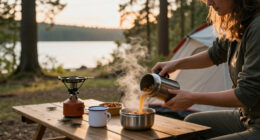
Picture finishing cheesy pasta beside a creek after sunset. A pot with dried cheese at the bottom may need several rinses, while a simple broth or one-pot meal can often be wiped clean with a small amount of water and a cloth. Scrape leftovers into your food waste, follow local rules for disposing of wash water, and use the smallest amount of soap needed. Avoid washing dishes directly in natural water.
Set pieces can rattle as you walk if they nest loosely. A storage sack or a clean cloth tucked between pots can quiet the clink and help protect coated surfaces. It can also keep a spoon or mug from scratching a nonstick pan. Before a trip, pack the whole bundle as you intend to carry it and shake your pack gently; that quick trial reveals loose pieces and awkward shapes.
For a short trip with limited water, choose meals that use one pot and need little scrubbing. If you’re bringing children, keep hot cookware and stove areas out of reach, and supervise them closely around both cooking equipment and water. Cookware handles can become hot, and loose hardware can make a full pot harder to lift.
Buy a complete set only when the pieces earn their space
A complete cookware set can pack neatly and simplify shopping, but it may include pieces that add weight without improving your meals. Buying individual pieces lets you choose exactly what you need, though it takes more thought and may not nest as tightly. The better value is the setup you will use repeatedly, not the box with the largest piece count.
For example, a new backpacker might find a two-pot set with a lid, cups, and utensils convenient for a first trip. After a few weekends, they may discover they always use one pot, carry a separate mug, and never touch the extra bowl. On the other hand, a family car-camping crew that cooks separate dishes may appreciate a larger set with room for several portions.
Ask yourself whether each item solves a real problem: does the pan let you cook a meal you actually want, or is it just another lid? Can the cups replace mugs you already carry? Does the whole set fit around your stove and fuel, as the manufacturer says it should? Current product claims and availability can change, so check the latest manufacturer specifications and independent hands-on reviews, especially for listed weight, coating durability, and stove compatibility.
Whatever you choose, follow the cookware and stove instructions. Keep handles secure and pointed away from where someone could bump them. Don’t overheat nonstick pans, and don’t cook directly over an open fire unless the cookware is explicitly made for it. A light set is useful only when it stays steady and works safely with your setup.
Frequently Asked Questions
What cookware material works best for backpacking?
It depends on your meals and priorities. Titanium is very light and suits boiling water, while aluminum is a useful lighter all-rounder for more varied cooking. Stainless steel is durable but usually heavier.
Is titanium camping cookware worth the extra cost?
Titanium can be worth the price if you want to reduce pack weight and mostly boil water. Its uneven heating makes delicate cooking less forgiving, so it may not be the best match for regular frying or simmering.
Can I use camping cookware on any camp stove?
No. Check the stove and cookware manufacturers’ specifications for diameter, base shape, and stability. A pot that wobbles or does not suit the burner can be difficult and unsafe to use.
Is nonstick camping cookware durable?
Nonstick cookware makes cleanup easier, but its coating can be damaged by metal utensils, abrasion, and high heat. Follow the manufacturer’s care instructions, use a non-scratching utensil, and avoid overheating the pan.
Can I cook directly over a campfire with a compact set?
Only if the cookware is explicitly designed for open-fire use. Follow its manufacturer’s instructions and keep the setup stable; many compact sets are intended for camp stoves rather than direct flames.
Should I buy a complete set or individual pots?
Choose a set if the pieces you need nest together and you’ll use them. If you only need one pot or already own cups and utensils, individual pieces can save weight, cost, and unused gear.
Conclusion
Choose cookware by the meals you’ll actually make, then confirm the full bundle fits your pack and works with your stove. A well-chosen pot should feel like a small kitchen that disappears into your bag, not a pile of accessories rattling down the trail.
Before you buy, ask one simple question: Will I use every piece on this trip? If the answer is no, keep dinner simple and carry less.