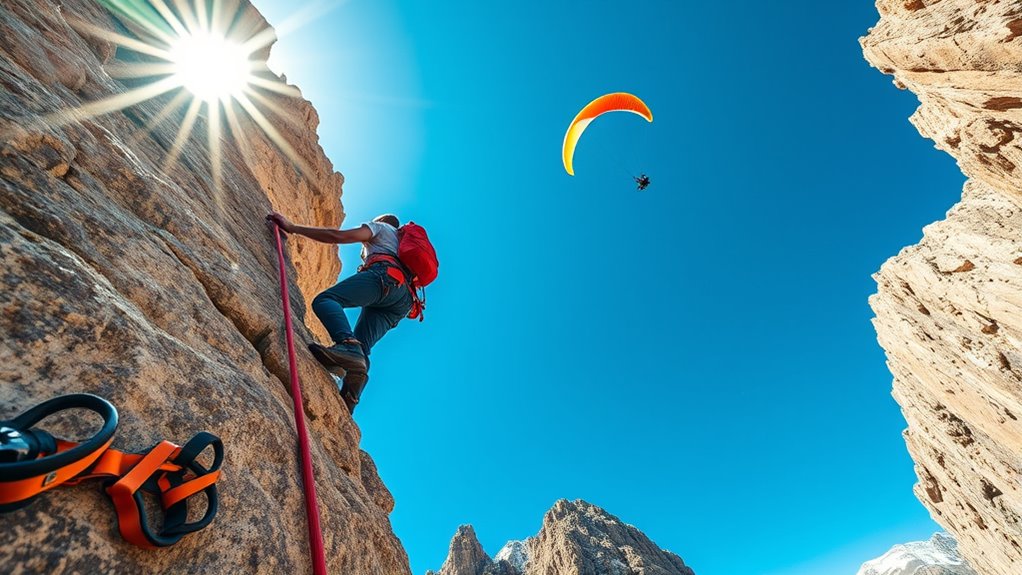

To stay safe while enjoying adventure sports, always conduct thorough gear inspections before each session, checking harnesses, helmets, ropes, and carabiners for any damage. Be prepared for emergencies by knowing safety procedures, carrying a first aid kit, and having a communication plan. Respect your limits and the environment, and maintain your equipment regularly. Following these tips will help you enjoy the thrill responsibly—stick around to discover even more ways to stay safe during your adventures.
Key Takeaways
- Conduct thorough equipment inspections before each session to ensure gear integrity and prevent failures.
- Familiarize yourself with emergency procedures and carry essential safety and first aid supplies.
- Respect personal limits and environmental hazards, avoiding risky behaviors beyond your experience level.
- Regularly maintain and replace gear following manufacturer guidelines to ensure reliability.
- Plan and communicate your adventure, prioritizing safety while enjoying the thrill responsibly.
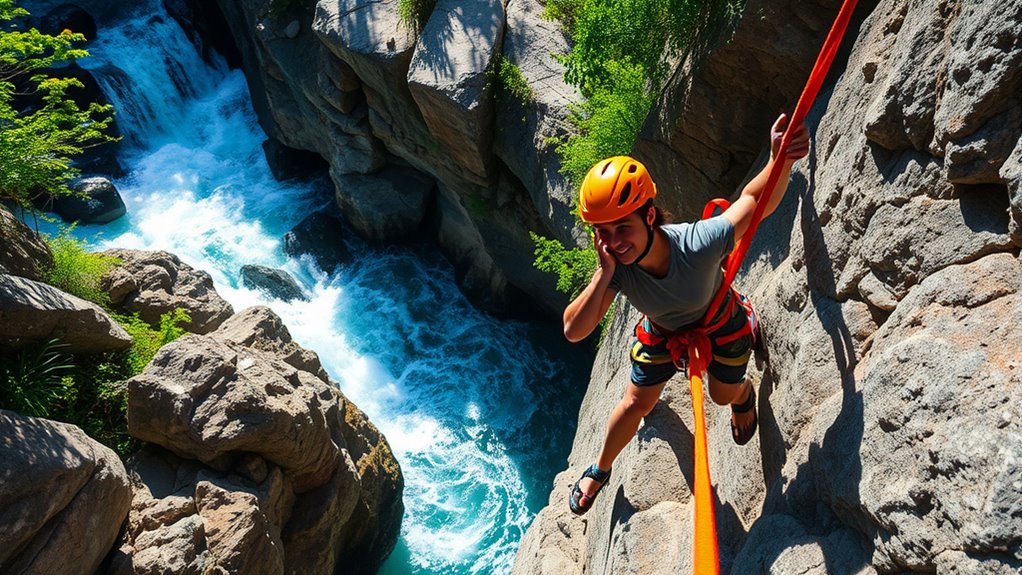
Are you prepared to enjoy adventure sports safely? If you’re eager to dive into activities like rock climbing, white-water rafting, or mountain biking, making safety your top priority is essential. The first step is ensuring your equipment inspections are thorough and consistent. Before every session, take the time to check your gear carefully. Inspect harnesses for frays or tears, ensure helmets sit snugly without cracks, and verify that ropes and carabiners are in good condition. Proper equipment inspection isn’t just about avoiding equipment failure; it’s about building confidence and reducing risk. When your gear is reliable, you can focus on the thrill without lingering doubts about safety.
Alongside equipment checks, emergency preparedness plays a vital role in adventure sports safety. No matter how skilled you are, accidents can happen, so having a plan in place is crucial. Familiarize yourself with the safety procedures specific to your activity. Carry a first aid kit suited to the environment, and learn basic first aid skills, such as how to treat cuts, sprains, or hypothermia. Make sure someone in your group knows how to contact emergency services and has a clear understanding of the location’s access points. It’s smart to set up a communication plan, whether that involves carrying a whistle, a fully charged cell phone, or a satellite device if you’re venturing into remote areas.
Preparing for emergencies also means respecting the environment and knowing your limits. Don’t push beyond your experience level, and always inform someone outside your group about your plans and expected return time. When you’re aware of potential hazards and have a safety strategy in place, you’re better prepared to handle unexpected situations calmly and efficiently. Additionally, regular equipment maintenance can prevent unexpected failures and ensure your gear remains in optimal condition.
Being proactive about safety doesn’t mean you have to dampen your enthusiasm for adventure sports; it means you approach them with mindfulness and responsibility. Regularly updating your skills, practicing emergency responses, and maintaining your gear will make your adventures more enjoyable and less risky. Remember, thrill-seeking is about the excitement, but it shouldn’t come at the cost of safety. By prioritizing equipment inspections and emergency preparedness, you set yourself up for memorable experiences that end with stories of adventure, not accidents. So gear up, stay vigilant, and embrace the adrenaline with confidence, knowing you’ve done everything possible to stay safe.
Top picks for "adventure sport safety"
Open Amazon search results for this keyword.
As an affiliate, we earn on qualifying purchases.
Frequently Asked Questions
How Do I Choose the Safest Adventure Sport for Beginners?
To choose the safest adventure sport for beginners, start with a thorough risk assessment to identify activities suited for your skill level. Look for options that require beginner certification, ensuring qualified instructors guide you. Opt for well-established companies with good safety records, and prioritize activities with lower inherent risks. By doing so, you’ll enjoy the thrill while minimizing potential dangers, making your first adventure both exciting and safe.
What Are the Signs of Overexertion During Adventure Activities?
Like a flickering flame, your energy dims when overexertion strikes. You might notice signs of fatigue, such as heavy limbs or blurred vision, and dehydration symptoms like dry mouth or dizziness. These signals warn you to pause, hydrate, and listen to your body’s call for rest. Ignoring them risks serious harm. Stay alert, stay safe, and keep your adventure enjoyable by recognizing these vital early signs.
How Often Should Safety Gear Be Inspected or Replaced?
You should inspect your safety gear regularly, ideally before each adventure, to make certain gear maintenance is up to date. Replace equipment as recommended by the manufacturer, typically every few years, to account for equipment lifespan. Look for signs of wear, damage, or deterioration, and don’t hesitate to replace gear if it shows any issues. Proper maintenance and timely replacements keep you safe and enhance your adventure experience.
Can Adventure Sports Be Safely Enjoyed Alone?
You can enjoy adventure sports alone, but beware—solo adventures ramp up the risk. Before setting out, conduct a thorough risk assessment and prepare meticulously. Without a partner, you rely solely on your judgment and safety measures, making it essential to be extra cautious. Always inform someone about your plans and check your gear. While solo adventures offer freedom, they demand heightened awareness and preparation to guarantee your safety.
What Emergency Contacts Should I Have Before Starting?
Before starting your adventure, you should have emergency contact information readily accessible. Make sure you have local emergency numbers, such as 911, and contacts for nearby medical facilities. Share your plans with a trusted friend or family member for emergency preparedness. Carry a fully charged phone, a portable charger, and consider a GPS device or personal locator beacon in remote areas. Being prepared guarantees you can get help quickly if needed.
Conclusion
Remember, safety is your trusty compass guiding every leap and turn. With preparation and caution, you’re the captain steering your adventure through wild waters and soaring peaks. Trust your gear, listen to your instincts, and don’t let excitement cloud your judgment. When you respect the risks, every adrenaline rush becomes a story worth telling—like a daring kite dancing high in the sky, your safe journey promises more thrilling tales to cherish forever.