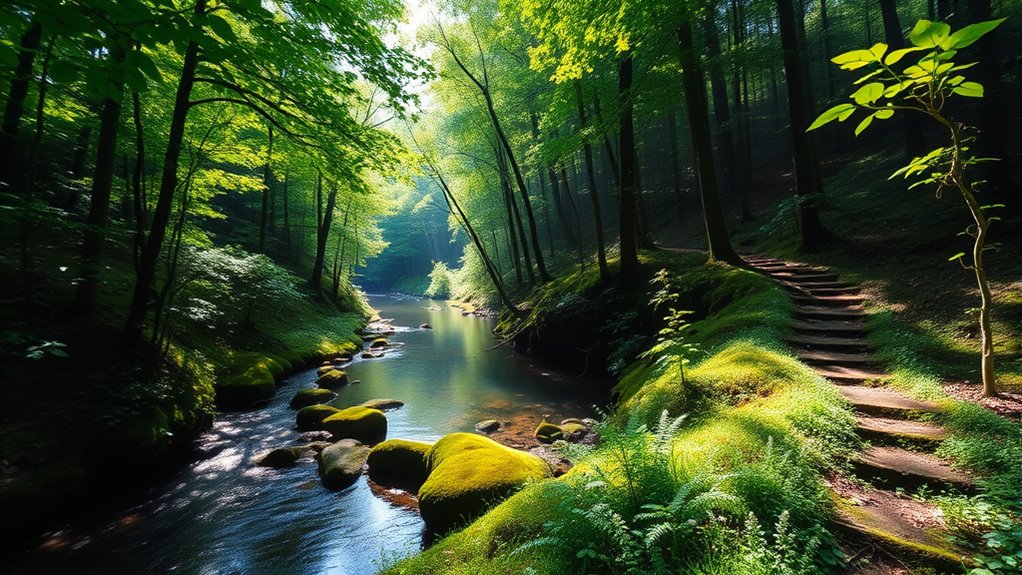

Connecting regularly with nature through mindful outdoor experiences can substantially reduce stress, boost your mood, and improve overall well-being. By slowing down, engaging your senses, and focusing on the present moment, you can deepen your bond with the environment and foster emotional resilience. This simple practice offers a natural way to recharge your mind and body without special equipment. Keep exploring how embracing outdoor mindfulness can release the healing power of the outdoors for your health and happiness.
Key Takeaways
- Engaging with nature through mindful activities reduces stress, lowers cortisol, and boosts immune function.
- Forest bathing and outdoor mindfulness enhance emotional resilience and foster gratitude for natural surroundings.
- Connecting deeply with nature calms racing thoughts and promotes mental clarity without needing special equipment.
- Regular outdoor mindfulness practices support overall mental and physical well-being long-term.
- Nature serves as a accessible, natural sanctuary for renewal, peace, and self-care.

Have you ever wondered how spending time in nature can boost your mental and physical well-being? If so, you’re not alone. Many people have discovered that immersing themselves in the natural world offers more than just a pretty view—it can profoundly impact your health. One powerful way to harness nature’s benefits is through forest bathing, a practice that encourages you to slow down and fully experience your surroundings. Instead of rushing through a hike or a walk, you take deliberate moments to engage your senses—feeling the texture of bark, listening to birdsong, inhaling the scent of pine. This mindful approach to outdoor exploration, often called outdoor mindfulness, helps you connect deeply with nature, reducing stress and enhancing your mood.
Forest bathing isn’t about exercise or achieving a particular goal; it’s about being present in the moment. As you wander through the trees, pay attention to what you see, hear, smell, and touch. Notice how the cool breeze feels on your skin or how sunlight filters through leaves. This intentional awareness allows your mind to quiet down from worries and racing thoughts. Scientific studies show that this kind of outdoor mindfulness can lower cortisol levels, which are associated with stress, and boost your immune system. It’s an easy, accessible way to recharge mentally and physically, and it doesn’t require any special equipment—just your willingness to slow down and observe. Incorporating evidence-based insights into your outdoor routine can further enhance these benefits.
Being present outdoors reduces stress and boosts immunity naturally.
Engaging in forest bathing can also help you develop a greater appreciation for the environment. As you spend more time immersed in nature, you begin to notice the small details—the intricate patterns on leaves, the chorus of insects, the gentle sway of grasses. This heightened awareness fosters a sense of gratitude and interconnectedness, which can improve your emotional resilience. Additionally, outdoor mindfulness encourages you to step away from screens and daily distractions, giving your mind a much-needed break. You’ll find that even short periods of mindful outdoor activity can leave you feeling refreshed, more centered, and better equipped to handle life’s challenges.
Incorporating forest bathing and outdoor mindfulness into your routine isn’t complicated. Start with a simple walk in a nearby park or forest, and set an intention to be fully present. Take deep breaths, listen closely, and slow your pace. Allow yourself to truly experience your environment without judgment or distraction. Over time, these practices can become a essential part of your self-care toolkit, helping you reconnect with nature’s healing power whenever you need it. The outdoors offers a natural sanctuary where you can find peace, clarity, and renewal—one mindful step at a time.
Frequently Asked Questions
How Long Should a Nature Therapy Session Last for Optimal Benefits?
For ideal benefits, a nature therapy session should last about 60 to 90 minutes. This session duration allows you to fully immerse yourself in the environment, reducing stress and enhancing mental clarity. Shorter sessions can still be beneficial, but longer durations often deepen the healing effects. You’ll find that maintaining this ideal length helps you recharge and reconnect with nature, leading to improved emotional well-being and overall health.
Are There Any Risks or Contraindications for Outdoor Therapy?
You should be aware that outdoor therapy carries some risks, so a thorough risk assessment is essential. Contraindication management helps identify conditions like severe allergies or mental health issues that might require special precautions. Always consult with a qualified therapist to tailor the experience safely. By proactively addressing potential contraindications, you can enjoy the benefits of nature therapy while minimizing risks and ensuring a safe, healing experience.
Can Nature Therapy Replace Traditional Mental Health Treatments?
Imagine stepping into a world where nature connection offers profound mental health benefits. While outdoor therapy can’t fully replace traditional treatments, it complements them beautifully. Nature’s healing power boosts mood, reduces stress, and fosters mindfulness. You shouldn’t rely solely on it, but integrating outdoor activities with therapy can enhance your mental well-being. Think of it as adding a dash of pioneer spirit to your mental health journey, enriching your overall healing process.
What Specific Environments Are Most Beneficial for Healing?
You’ll find forest therapy and beachside retreats particularly beneficial for healing. Forest therapy immerses you in lush greenery, reducing stress and boosting mood through sensory engagement. Beachside retreats offer calming ocean sounds and expansive views that promote relaxation and mental clarity. Both environments help you disconnect from daily stressors, encouraging mindfulness and emotional restoration. By choosing these settings, you actively facilitate your healing process in natural, rejuvenating spaces.
How Can Urban Dwellers Access Effective Outdoor Therapy Options?
Think of urban parks and community gardens as your personal healing oasis. To access effective outdoor therapy, you can simply spend time walking, meditating, or practicing mindfulness there. Join local groups that organize nature walks or gardening sessions. These spaces make it easy to reconnect with nature, reduce stress, and boost your well-being right in your city. Make it a habit, and your mental health will flourish like a garden in full bloom.
Conclusion
As you step back into the embrace of nature, imagine it as a gentle healer, wrapping you in its soothing, green arms. The trees stand like quiet guardians, their leaves whispering secrets of renewal. When you connect with the outdoors, you’re planting seeds of calm and clarity in your mind. Let nature’s timeless rhythm remind you that, like the changing seasons, healing is always within reach—waiting patiently, just outside your door.