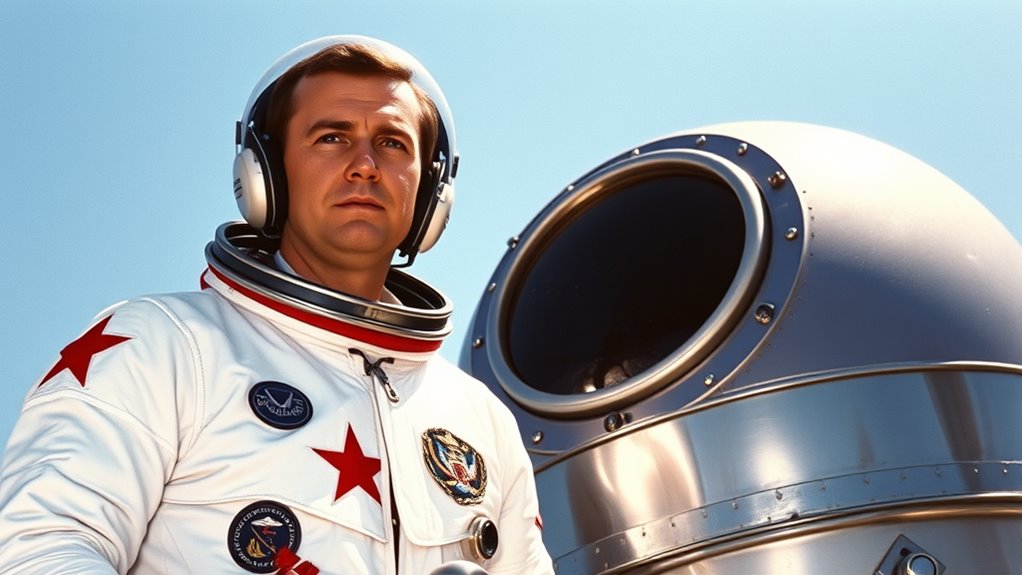

In 1961, humanity took a huge step into space when Yuri Gagarin became the first person to orbit Earth. This achievement was driven by Cold War rivalry and showcased the importance of intense cosmonaut training, including simulations and physical preparedness. Gagarin’s flight symbolized technological and ideological success for the Soviet Union. If you keep exploring, you’ll discover how this milestone shaped future space efforts and inspired generations worldwide.
Key Takeaways
- 1961 marked humanity’s first manned spaceflight with Yuri Gagarin orbiting Earth.
- Gagarin’s success resulted from extensive cosmonaut training simulating space conditions.
- The event intensified Cold War space race rivalry between the USSR and USA.
- Gagarin’s flight showcased Soviet technological and ideological achievements.
- The milestone inspired future space exploration and solidified Gagarin as a global hero.
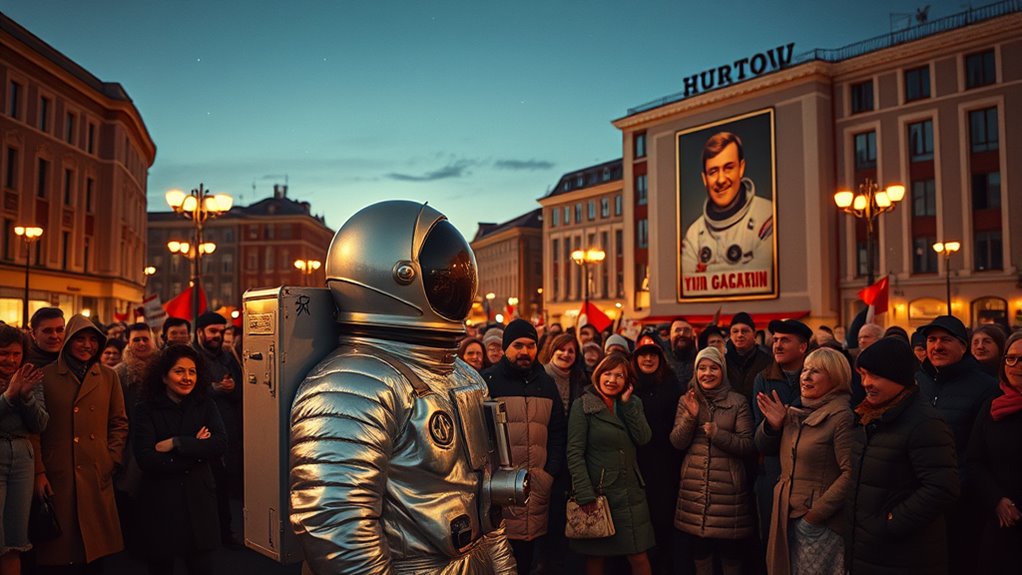
In 1961, humanity took a giant leap into space, marking a pivotal moment in history with the remarkable achievement of Yuri Gagarin becoming the first person to orbit the Earth. This historic event didn’t happen by chance; it was the result of intense preparation, rigorous training, and fierce competition between superpowers. As you explore the story, you’ll see how cosmonaut training was a critical element in preparing Gagarin and others for the unforgiving environment of space. These training programs were designed to simulate every possible scenario, from zero gravity to emergency procedures, ensuring that cosmonauts could handle unpredictable situations. The Soviets understood that success depended not just on technological innovation but also on the readiness of their personnel. You’d witness how the training emphasized physical endurance, mental resilience, and technical knowledge, often pushing cosmonauts to their limits. Every step was meticulously planned to maximize safety and performance, reflecting the intense space race dynamics of the Cold War era. The competition with the United States wasn’t solely about technological supremacy; it was about demonstrating ideological dominance, inspiring national pride, and achieving global prestige. This urgency drove the Soviets to accelerate their space program, leading to rapid advancements in rocket technology and astronaut preparation. You might imagine Gagarin’s training process as a high-stakes, intense journey where every detail mattered. From centrifuge tests that conditioned him to withstand high G-forces to simulated spacecraft systems checks, each task prepared him for the real ordeal. The space race dynamics created a sense of urgency and innovation that propelled both superpowers to push boundaries. The Soviets, in particular, prioritized speed, often rushing to beat their rivals to historic milestones. You’d see how this competitive environment fostered a culture of excellence, where cosmonauts like Gagarin became national heroes overnight, symbolizing Soviet scientific prowess. The combination of advanced training methods and relentless pursuit of victory in the space race made Gagarin’s historic flight possible. It wasn’t merely about reaching space; it was about doing it first, with precision and confidence. The intense focus on cosmonaut training and the development of specialized programs demonstrated the importance of human preparation in achieving space exploration milestones. Through this lens, you understand that Yuri Gagarin’s journey was a triumph not just of technology but of human preparation and determination amid the tense, competitive atmosphere of the early 1960s. His successful orbit marked the culmination of years of dedicated training and fierce rivalry, setting the stage for future exploration and inspiring generations to look toward the stars.
Top picks for "year yuri gagarin"
Open Amazon search results for this keyword.
As an affiliate, we earn on qualifying purchases.
Frequently Asked Questions
What Inspired Yuri Gagarin’s Pioneering Space Mission?
You’re inspired by the intense cosmonaut training and the drive for spaceflight motivation that pushed Gagarin to become a pioneer. His desire to explore the unknown and represent Soviet achievements fueled his determination. The challenge of mastering spaceflight techniques and overcoming fears motivated him to push boundaries. His passion for discovery and national pride inspired him to take that historic leap, making him a symbol of human curiosity and courage.
How Did the Soviet Union Prepare Gagarin for Launch?
You’re prepared for the launch through intensive training methods that include physical fitness, technical skills, and simulations. The Soviet Union also emphasizes psychological training, helping you stay calm and focused under pressure. You undergo mock missions and mental conditioning to handle the stresses of space travel. This thorough preparation ensures you’re ready physically and mentally, giving you confidence to face the challenges of your historic journey.
What Were the Global Reactions to Gagarin’s Flight?
You’d see global awe and heightened Cold War tensions after Gagarin’s flight. Countries worldwide celebrated his achievement, viewing it as a monumental milestone in space exploration. The Soviet Union’s success intensified competition with the US, fueling fears and ambitions in space race rivalries. This historic moment shifted perceptions, making the world realize that space was no longer the future, but the present, commanding global attention and reshaping international dynamics.
What Technology Enabled Gagarin’s Historic Orbit?
Imagine you’re on the edge of history, propelled by cutting-edge spacecraft systems and pioneering launch technology that launched Gagarin into orbit. These advanced systems, including the robust rocket engines and precise navigation controls, made his historic flight possible. You see, it was a perfect symphony of engineering marvels—engineered to withstand the chaos of launch and the silence of space—firing him into the cosmos with a single, daring push.
How Did 1961 Influence Future Space Exploration Efforts?
Your efforts in space exploration are shaped by 1961’s impact on the space race and technological advancements. That year’s achievements pushed nations to invest heavily in new tech, like rockets and spacecraft, accelerating progress. It inspired you to pursue innovation, collaboration, and competition, leading to breakthroughs like lunar landings and space stations. Overall, 1961’s milestones fostered a global drive to uncover the universe’s secrets and expand humanity’s reach into space.
Conclusion
You might think that 1961’s space achievements are just historical milestones, but they truly transformed how we see our place in the universe. By daring to reach beyond Earth’s bounds, you can appreciate the courage and innovation that continue to inspire today’s space explorations. Even if you believe technology has advanced far enough, remember that each breakthrough builds on those early leaps. Ultimately, 1961 remains a affirmation to human curiosity and our unyielding pursuit of discovery.