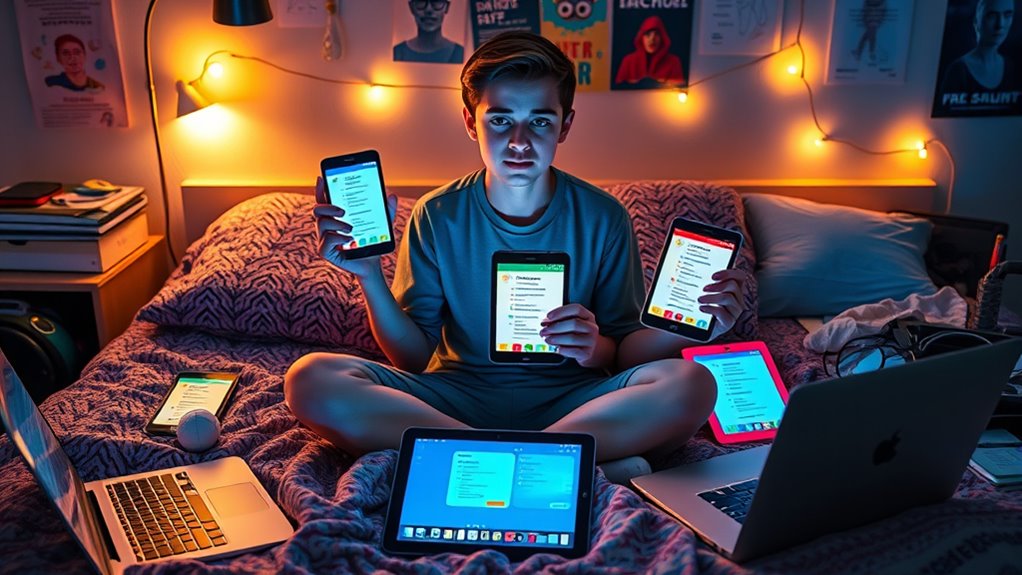

In today’s social media-driven world, you often turn to personality tests for fun and self-discovery. While sharing results helps you connect and engage online, not all assessments are scientifically valid or meaningful. Many tests lack proper validation, making their results oversimplified or misleading. Recognizing which tests are reliable can protect you from false labels. If you’re curious about trusting these quizzes, there’s more to discover that can guide your understanding.
Key Takeaways
- Social media popularizes quick, shareable personality tests that promote engagement but often lack scientific validation.
- Many tests shared online are unvalidated, risking misleading results about individual traits.
- Users tend to rely on viral quizzes for entertainment, sometimes confusing them with accurate psychological assessments.
- Validated personality tests offer more reliable insights but are less commonly shared on social platforms.
- Critical evaluation of test sources and methodology is essential for meaningful self-awareness through online personality quizzes.

In today’s social media-driven world, personality tests have become a popular way for many to explore their identity and share insights with others. You might find yourself taking quizzes on platforms like Instagram or Facebook, enthusiastic to discover what your results say about you. While these tests can be fun and engaging, it’s crucial to consider their test accuracy. Not all personality assessments are created equal, and some lack the scientific backing needed to produce reliable results. When a quiz claims to reveal your true self, ask yourself: how accurate is it? Many online tests are designed more for entertainment than for genuine psychological insight, which means their validity can vary widely. This is where online validation comes into play. You should look for tests that have been validated through research or have a reputation for consistency. Without proper validation, the results might be misleading or overly simplistic, giving you a skewed view of your personality.
The popularity of these tests is partly fueled by the ease of sharing results on social media, which encourages others to try the quiz and see what they learn about themselves. But, as someone who’s taken numerous online personality tests, you might notice that some results seem too broad or generic to be meaningful. This lack of precision can stem from a failure to verify test accuracy or from poorly designed questions that don’t truly measure what they intend to. If you’re interested in gaining genuine insights, look for tests that have undergone rigorous online validation, meaning they’ve been tested against established psychological frameworks or validated with diverse populations. This validation helps ensure the test’s reliability across different groups, giving you a more accurate picture of your traits.
It’s tempting to trust flashy, viral personality tests, but remember: not all are scientifically sound. When evaluating a test, consider its source and whether it has been validated through reputable online validation processes. The best tests are those that are transparent about their methodology and backed by research. Being cautious about test accuracy doesn’t mean you shouldn’t enjoy the process, but it does mean you should approach results with a critical eye. After all, your self-identity is complex, and a quick online quiz might not capture that full depth. Instead, use these tests as a starting point for self-reflection, while keeping in mind that validated, research-backed assessments provide a more trustworthy view of who you truly are.

abshoo Big Student Laptop Backpack For College Women Middle High School Teen Girls Bookbag Travel Daypack (Black)
- Large Capacity: Fits 15.6-inch laptops and essentials
- Durable Water-Resistant Fabric: Made with oxford material for durability
- Breathable, Adjustable Straps: Relieves shoulder pressure for comfort
As an affiliate, we earn on qualifying purchases.
Frequently Asked Questions
How Accurate Are Online Personality Tests Compared to Professional Assessments?
Online personality tests vary in accuracy, often relying on self-report bias, which can skew results. While some tests have good test validity, they might not match professional assessments‘ depth and precision. You should use them as a fun or insightful tool rather than a definitive measure. Remember, professional assessments typically provide more reliable, all-encompassing results because experts tailor evaluations and account for factors like self-report bias.
Do Social Media Algorithms Influence the Results of Personality Tests?
Social media algorithms do influence your personality test results; studies show algorithms shape your self-presentation, which can skew test outcomes. About 70% of users alter their online profiles based on algorithm bias, making your self-perception less authentic. This means your test results might reflect your curated online persona rather than your true personality. Be mindful that algorithms subtly guide how you present yourself, impacting your test accuracy.
Can Personality Tests Predict Future Behavior or Success?
Personality tests can offer some insight into your tendencies, but their predictive validity for future behavior or success isn’t foolproof. They can assist in behavioral forecasting, giving clues about how you might respond in certain situations. However, you shouldn’t rely solely on them to predict your future achievements. Your actions, environment, and growth play significant roles, making personality tests useful tools but not definitive predictors.
How Do Cultural Differences Affect Personality Test Outcomes?
Imagine you’re taking a personality test developed in the U.S., but you’re from Japan. Cross-cultural biases and language barriers can skew your results, making traits seem different than they truly are. Cultural differences influence how questions are understood and answered, impacting accuracy. So, you might get a test outcome that doesn’t reflect your core personality, highlighting how cultural context plays a vital role in interpreting test results accurately across diverse populations.
Are There Ethical Concerns With Sharing Personality Test Results Online?
Yes, sharing personality test results online raises ethical concerns. You might face privacy concerns if your results reveal sensitive information, and consent issues if you haven’t properly authorized sharing. Always consider who can see your results and whether you’re comfortable with that. Protect your data by understanding privacy policies, and never share details without clear consent to avoid potential misuse or misunderstandings.

YOREPEK Large Laptop Backpack for Men, Heavy Duty Travel Backpack
- Laptop Compatibility: Fits up to 17-inch laptops
- Organized Storage: Multiple compartments and pockets
- Quick Access: Front organizer for essentials
As an affiliate, we earn on qualifying purchases.
Conclusion
As you navigate social media, remember that personality tests shape how you see yourself and others. Interestingly, a 2022 survey found that 65% of social media users have taken a personality test online, often to better understand themselves. While these tests can be fun and insightful, stay aware of their limits. Keep questioning and exploring your true self beyond the digital domain, and don’t let online labels define you entirely.

JanSport Laptop Backpack - Computer Bag with 2 Compartments, Ergonomic Shoulder Straps, 15” Laptop Sleeve, Haul Handle - Navy
- Trusted Brand with Lifetime Warranty: JanSport offers lifetime warranty for repairs or replacements
- Iconic Ergonomic Design: Features S-curve shoulder straps and padded back panel
- Durable and Stylish: Made with durable fabric, zippers, and straps in various colors
As an affiliate, we earn on qualifying purchases.