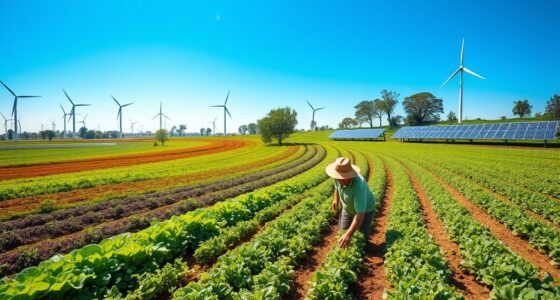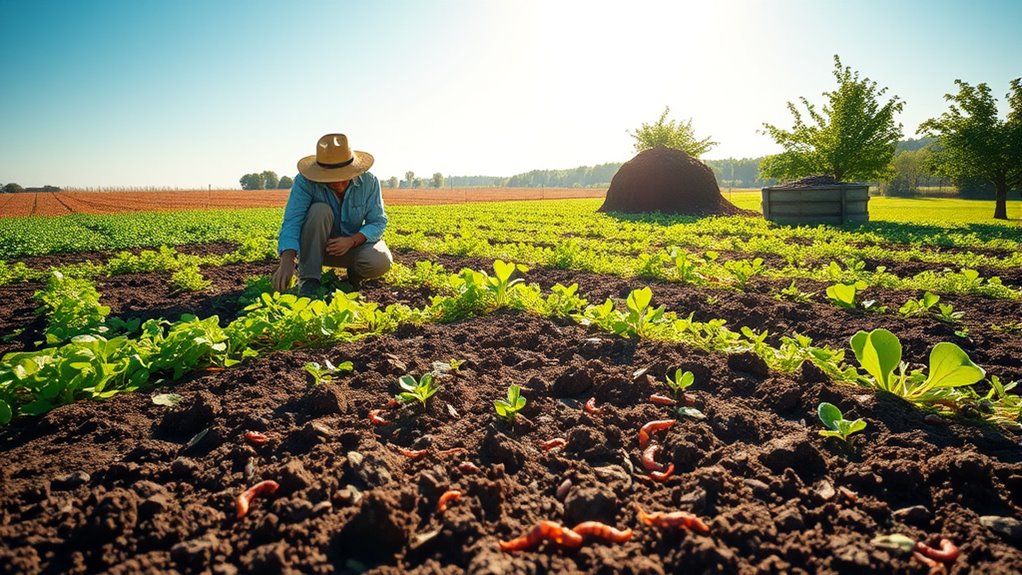

Regenerative agriculture focuses on actively restoring soil health by increasing organic matter, sequestering carbon, and encouraging crop diversity. Techniques like cover cropping, reduced tillage, and compost application boost soil fertility, water retention, and microbial life. These practices create resilient ecosystems that improve crop yields and reduce reliance on chemicals. As you explore how these methods work together, you’ll discover key ways to transform degraded soils into vibrant, sustainable landscapes that support future generations.
Key Takeaways
- Implementing cover cropping, reduced tillage, and compost application increases soil carbon and enhances soil fertility.
- Crop diversity and crop rotation improve microbial ecosystems, nutrient cycling, and soil structure.
- Sequestering soil carbon boosts water retention, reduces erosion, and strengthens land resilience.
- Regenerative practices decrease reliance on chemical inputs, promoting healthier, more sustainable soils.
- Long-term adoption of these methods restores soil organic matter, supporting sustainable crop yields and climate mitigation.
Have you ever wondered how farming can restore the health of the land instead of depleting it? With regenerative agriculture, you have a powerful way to turn degraded soil into a thriving, resilient ecosystem. One key aspect is increasing soil carbon, which plays a essential role in improving soil fertility and structure. When farmers adopt practices that rebuild soil carbon, they’re not just storing carbon— they’re creating a healthier environment where plants can grow stronger and more resilient. Cover cropping, reduced tillage, and compost application are some methods that help sequester carbon in the soil, leading to better water retention and nutrient availability. As soil carbon levels rise, so does the land’s capacity to support diverse crops, which is fundamental for creating a resilient farming system.
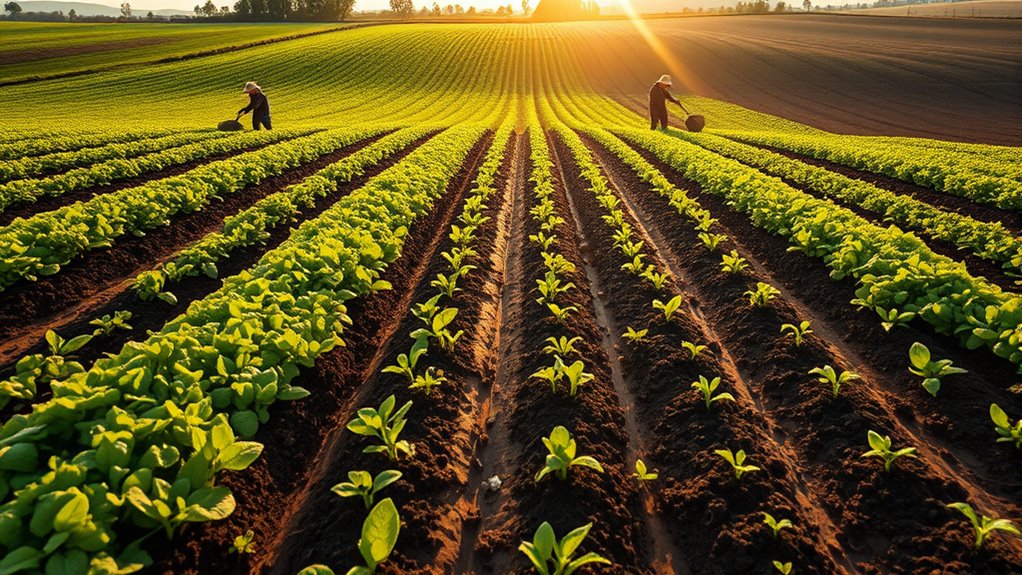
Crop diversity is another cornerstone of regenerative agriculture. Instead of monoculture, you’re encouraged to plant a variety of crops that work together to improve soil health. Diverse plant roots penetrate the soil at different depths, breaking up compacted layers and encouraging a richer microbial ecosystem. This microbial activity is essential because it enhances nutrient cycling, making minerals more accessible to plants. When you rotate crops and include legumes, you also naturally fix nitrogen in the soil, reducing the need for synthetic fertilizers. This diversity not only boosts productivity but also makes the land more resilient to pests and diseases, which tend to thrive in uniform planting systems. By embracing crop diversity, you’re fostering a balanced ecosystem where beneficial insects, microbes, and plants coexist, creating a self-sustaining system that improves year after year.
Incorporating crop diversity and focusing on soil carbon creates a positive feedback loop that restores soil health over time. As the soil becomes richer in organic matter, it can better withstand droughts and floods, reducing erosion and runoff. This cycle supports a sustainable farming system where productivity improves without the need for chemical inputs that harm the environment. Your role in this process is essential—you can choose to adopt these regenerative practices that prioritize the land’s long-term health. By doing so, you’re not only producing healthier crops but also contributing to climate change mitigation through enhanced soil carbon storage. This approach transforms farming into a regenerative act that benefits the land, the climate, and future generations.
Top picks for "regenerative agriculture restor"
Open Amazon search results for this keyword.
As an affiliate, we earn on qualifying purchases.
Frequently Asked Questions
How Does Regenerative Agriculture Impact Water Conservation?
Regenerative agriculture improves water conservation by enhancing soil moisture and water retention. As you adopt practices like cover cropping and reduced tillage, your soil becomes better at holding water, reducing runoff and evaporation. This means you’ll need less irrigation, saving water and energy. Over time, healthier soil retains moisture more effectively, supporting crops during droughts and contributing to sustainable water use in your farming system.
Can Regenerative Practices Be Applied to Small-Scale Farms?
Yes, you can apply regenerative practices to small-scale farms, but be prepared for challenges. Imagine revitalizing your soil with cover crops, composting, and minimal tillage—techniques that fit within your resource limitations. Small-scale implementation allows you to focus on local changes that make a big difference. With creativity and dedication, you’ll see improved soil health and sustainability, proving that regenerative agriculture isn’t just for large farms—it’s for everyone willing to start small.
What Are the Economic Benefits of Adopting Regenerative Agriculture?
You’ll find that adopting regenerative agriculture offers significant economic incentives, like reduced input costs and improved crop yields over time. It opens up new market opportunities for organic and sustainably produced products, attracting eco-conscious consumers willing to pay premium prices. Additionally, healthier soils enhance resilience against weather fluctuations, minimizing losses. These benefits help you boost profitability, sustain your farm long-term, and align your practices with growing consumer demand for sustainability.
How Does Regenerative Agriculture Influence Biodiversity?
Think of regenerative agriculture as a vibrant garden where biodiversity blooms like a rainbow. You enhance habitat diversity by nurturing soil microbes, which in turn support a variety of plants and animals. This approach creates a balanced ecosystem, encouraging beneficial insects, birds, and other wildlife. As a result, you boost resilience against pests and climate change, making your land more sustainable and alive with diverse life forms.
Are There Any Risks or Drawbacks to Regenerative Farming Methods?
You should be aware that regenerative farming methods can pose some risks, like potential soil erosion if not managed properly. Additionally, while they often reduce pesticide use, improper implementation might lead to crop losses or pest outbreaks. However, these methods generally promote healthier soils and biodiversity. To minimize drawbacks, you need to carefully plan practices, monitor soil health, and adapt strategies to ensure sustainable, effective results.
Conclusion
By embracing regenerative agriculture, you can see your land thrive again—like a patient healing after a wound. Yes, it might seem slower at first, but think of it as planting seeds today for a healthier tomorrow. Just as a gardener tends to each plant with care, your efforts restore soil significance, ensuring better yields and a sustainable future. So, don’t hesitate—your commitment can turn degraded land into a lush, resilient landscape.