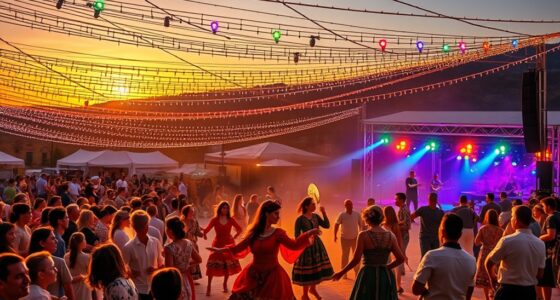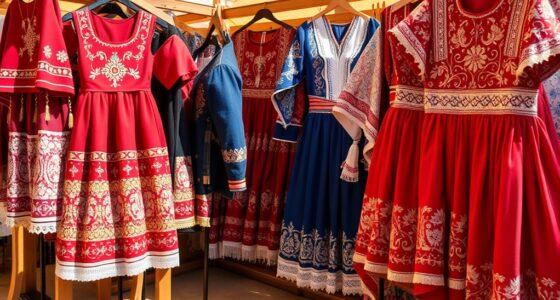
At Sardinian markets and food stands, you get to experience genuine local craftsmanship and culinary traditions. You’ll find handmade jewelry, ceramics, and woven baskets crafted with passion, alongside authentic dishes like pane carasau, porceddu, and seadas. Engaging with artisans and cooks gives you insights into their stories and techniques, helping you understand and appreciate Sardinia’s rich cultural heritage. Keep exploring to uncover more about this vibrant island’s unique traditions.
Key Takeaways
- Sardinian markets showcase handcrafted goods that reflect centuries-old traditions and cultural stories.
- Food stalls offer authentic recipes like pane carasau and seadas, emphasizing local ingredients and age-old techniques.
- Interacting with artisans and cooks provides insights into Sardinia’s cultural heritage and craftsmanship.
- Markets serve as community hubs, celebrating and preserving Sardinian culinary and craft traditions.
- Visiting these markets offers an immersive cultural experience, blending craftsmanship, cuisine, and local history.
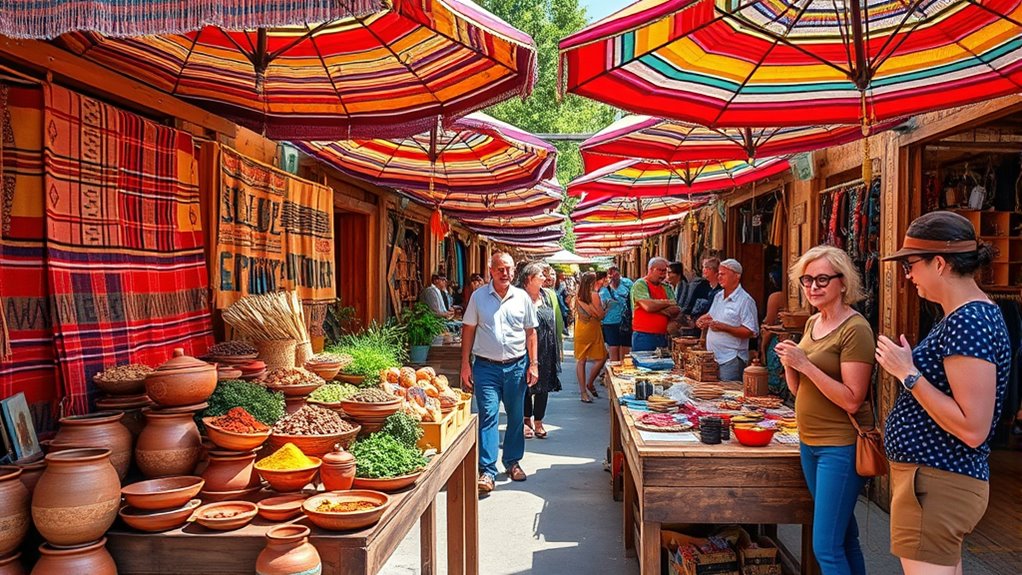
Artisan markets and food stands offer a vibrant glimpse into local culture, where handcrafted goods and fresh, flavorful foods come together in one lively space. As you explore these bustling venues in Sardinia, you’ll notice the rich display of local craftsmanship. Artisans showcase their skills through intricate jewelry, woven baskets, and ceramics that reflect centuries-old traditions. These handcrafted items aren’t just souvenirs—they’re stories of the island’s heritage, created with passion and precision. When you pick up a piece, you’re holding a fragment of Sardinia’s cultural identity, crafted by artisans who have inherited their skills from previous generations.
Discover Sardinia’s rich craftsmanship through handcrafted jewelry, woven baskets, and ceramics that tell stories of cultural heritage.
The food stalls are just as enchanting, offering an array of traditional recipes that have stood the test of time. You’ll find vendors passionately preparing local delicacies, often using age-old methods passed down through generations. Each bite introduces you to authentic Sardinian flavors—crispy pane carasau, flavorful porceddu, and fragrant seadas. These dishes highlight the island’s culinary history, blending simple ingredients into extraordinary tastes. Many vendors take pride in using locally sourced produce, ensuring that every dish is fresh and true to tradition. It’s not just about eating; it’s about experiencing Sardinia’s culinary soul through every mouthful.
As you wander through the market, you’ll likely have the chance to chat directly with artisans and cooks. This personal connection allows you to learn about the stories behind their crafts and recipes. They often share how their techniques have been preserved or adapted over the years, giving you a deeper appreciation for their work. Watching a ceramic artist shape a pot or a cook prepare a traditional recipe in front of you makes the experience even more authentic. These interactions make the market not just a place to buy goods and food but a lively community hub where Sardinian culture is alive and thriving.
You’ll also notice how these markets serve as a celebration of local craftsmanship and culinary traditions. They’re a tribute to the island’s dedication to preserving its unique cultural identity amidst modern influences. Supporting local artisans and food vendors helps maintain these cultural traditions, ensuring they are passed down to future generations. Whether it’s purchasing a handcrafted necklace or savoring a dish made from recipes handed down through generations, your participation becomes part of the ongoing story of Sardinia’s rich heritage. Visiting artisan markets and food stands isn’t just about shopping or eating; it’s about immersing yourself in the genuine spirit of Sardinia—where craftsmanship and tradition are intertwined in every corner.
Top picks for "artisan market food"
Open Amazon search results for this keyword.
As an affiliate, we earn on qualifying purchases.
Frequently Asked Questions
What Are the Best Months to Visit Sardinian Markets?
The best months to visit Sardinian markets are from May to September, during the peak season. You’ll enjoy lively markets with fresh local produce, crafts, and vibrant atmosphere. Summer months bring warm weather, making it perfect to explore stalls and indulge in regional delicacies. Visiting during this time guarantees you experience the full charm of the markets while enjoying the island’s lively summer vibe.
Are There Gluten-Free Options Available at Food Stands?
You’ll be amazed by the gluten-free snacks and allergy-friendly options available at Sardinian food stands! Truly, they go above and beyond to cater to all dietary needs, ensuring everyone can indulge without worries. From savory treats to sweet delights, you’ll find plenty of safe choices that make your experience worry-free. So, rest assured—you won’t miss out on delicious flavors just because you need gluten-free options!
Can I Find Authentic Sardinian Souvenirs at These Markets?
Yes, you can find authentic Sardinian souvenirs at these markets. They showcase genuine Sardinian craftsmanship, ensuring souvenir authenticity. You’ll discover handcrafted jewelry, traditional textiles, and unique ceramics that truly reflect Sardinian culture. Take your time exploring stalls, ask vendors about their craftsmanship, and you’ll find meaningful keepsakes. These markets offer a perfect opportunity to bring home a piece of Sardinian heritage, making your visit memorable and authentic.
Are Credit Cards Widely Accepted at Artisan Stalls?
While cashless payments are becoming more common, many artisan stalls still prefer cash, so it’s wise to carry some. You’ll find that mobile payment options like credit cards are increasingly accepted, making transactions smoother and more convenient. To avoid any surprises, bring a mix of cash and cards. That way, you can enjoy the vibrant market atmosphere without worry, knowing you’re prepared for any payment method.
How Do Local Artisans Source Their Ingredients and Materials?
You’ll find that local artisans source their ingredients and materials through local sourcing, which supports their community and guarantees freshness. They often build relationships with nearby farmers, fishermen, and craft suppliers, choosing quality over quantity. This approach allows artisans to maintain authentic craftsmanship, blending traditional techniques with locally available resources. By prioritizing local sourcing, they preserve Sardinian culture and produce unique, high-quality goods that reflect the island’s rich heritage.
Conclusion
Immerse yourself in the delightful diversity of Sardinia’s artisan markets and food stands. Savor the sensational scents, sample the superb specialties, and surrender to the spirited spirit of local life. Let the lively laneways and luscious flavors linger in your memory long after you leave. Embrace the enchanting energy, experience the authentic atmosphere, and enjoy every exquisite encounter. Sardinia’s markets aren’t just a visit—they’re a vibrant voyage you’ll vividly value forever.